A stingy budget airline and stingy employees, a pair of ill-fated lovers
"A 20 - inch suitcase was blocked at the boarding gate, and an overweight fee of 200 yuan was paid on - site."
Low - cost airlines are on the hot search again, and this time it's still about suitcases.
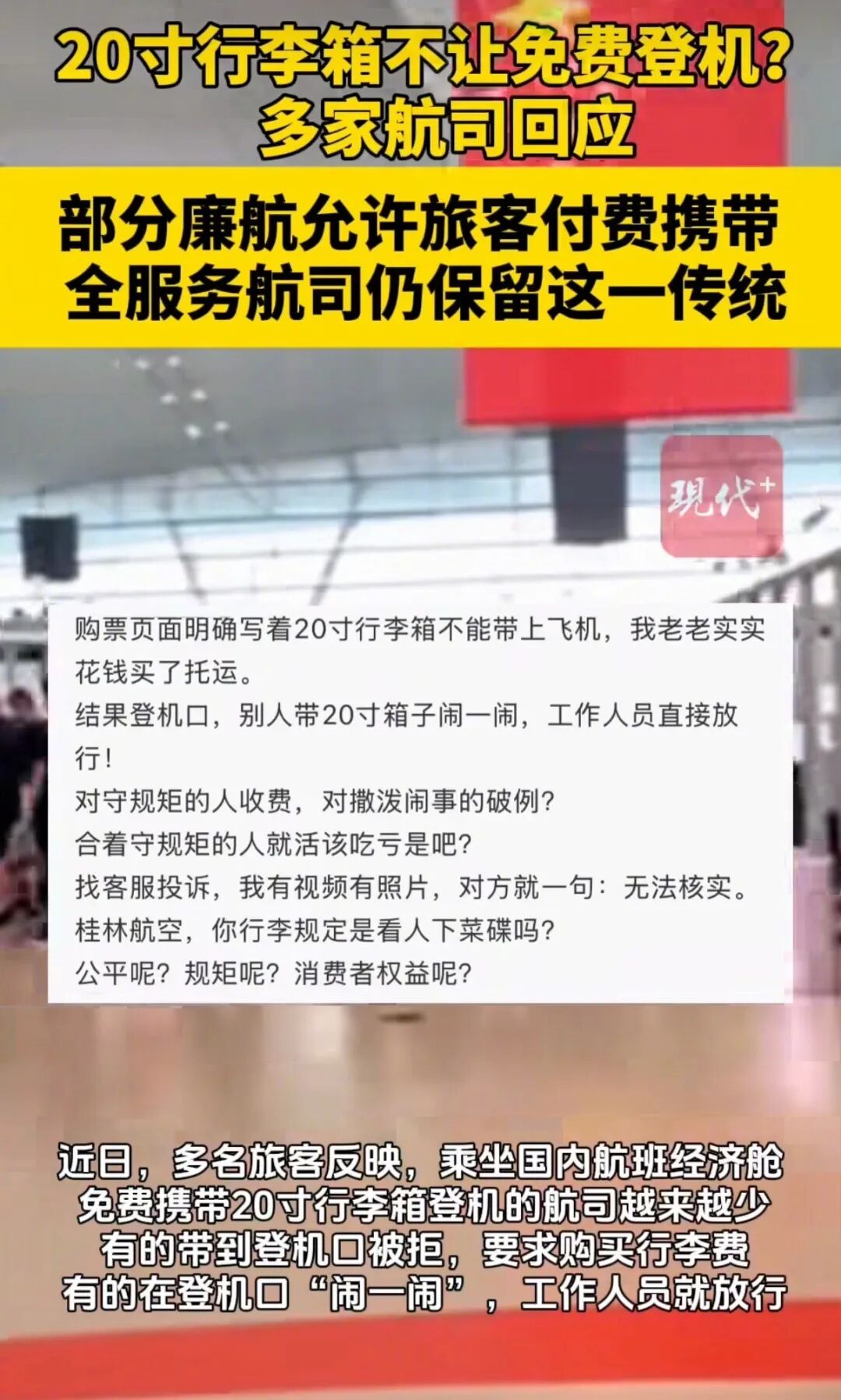
"Can a 20 - inch suitcase be taken on the plane?" Low - cost airlines say pay first. (Photo/Weibo @Modern Express)
In an era that values the sense of experience and service attitude, the poor flight experience created by low - cost airlines is enough for office workers to write eight hundred negative reviews. However, when the extremely cost - effective air ticket prices come along, no matter how many complaints there are, in many cases, they can't stop the "It's really great" feeling that is firmly rooted in people's hearts.
However, not all low - cost airlines can always survive on the "It's really great" feeling.
At 3 a.m. local time on May 2nd, Spirit Airlines, a well - known low - cost airline in the United States, suddenly announced the cancellation of all flights and immediately began to stop operations in an orderly manner. This established low - cost airline, which operates about 300 flights per day, explained the reason for the suspension of operations like this: "Despite the company's efforts to cope, the recent sharp rise in oil prices and other business pressures have still seriously affected the company's financial prospects."
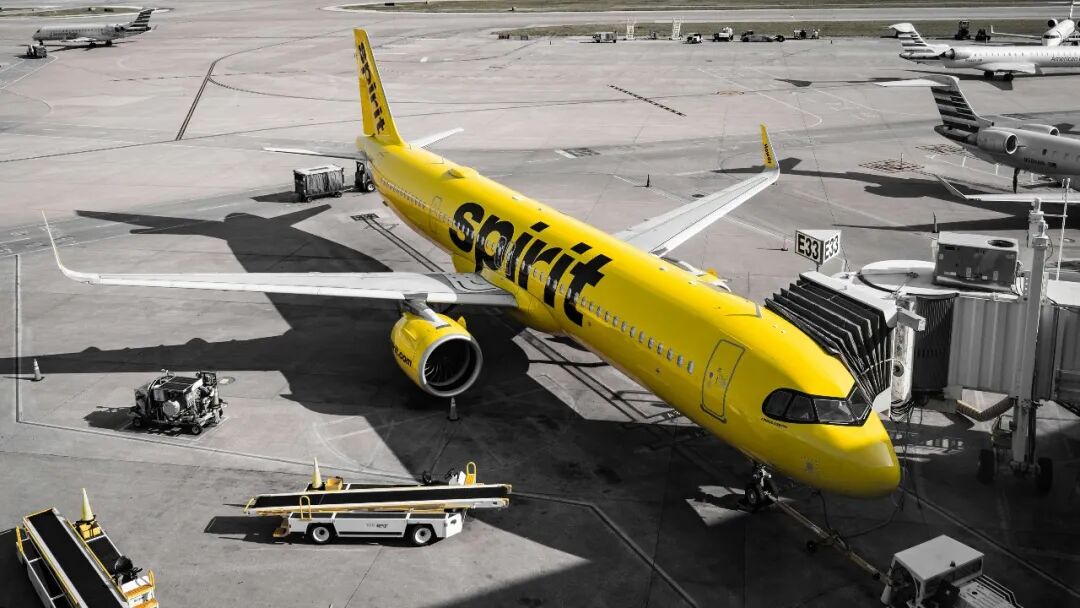
Spirit Airlines is known for its yellow - painted fuselage. Before the suspension of operations, it was famous for its low - price air tickets and the "no - additional - service" model. (Photo/Unsplash)
The rise in oil prices is not new. In fact, in the face of the aviation fuel price soaring to a high of $200 per barrel, many well - known international low - cost airlines have been actively responding. For example, they are increasing the fuel surcharge on one hand and reducing costs and increasing efficiency on the other.
However, even so, the collapse of low - cost airlines is still an unexpected big news and has caught all passengers off guard.
Some people received text messages from low - cost airlines canceling flights on the eve of the "May Day" holiday, and their "low - cost overseas vacations have come to nothing"; some people quickly stocked up on tickets after receiving the news of price increases from low - cost airlines, but when they opened the ticketing platform, they found that the prices had already doubled. "Buying air tickets is more frustrating than buying funds." (For details, see our previous article: The fuel surcharge has skyrocketed five times, and thrifty young people have stocked up on next year's air tickets.)
As the travel cost becomes more and more expensive, the low - cost airlines' old reliance on low prices can no longer hold up.
01
Under the cost crisis,
the joys and sorrows of low - cost airlines are not the same
Even though there are various complaints about low - cost airlines, for most ordinary people around the world, the emergence of low - cost airlines has indeed greatly expanded the travel radius. After all, enduring a few hours of flight to save a large amount of travel expenses, any bad flight experience can be ignored.
Mu Ji, an office worker, has a deep understanding of this. Ten years ago, when she was studying in Europe, she accidentally found a large number of air tickets priced at around 20 euros on the ticketing platform, which was less than 200 yuan in RMB. "I first learned that there were such cheap air tickets. I asked my classmates and found out that they were from low - cost airlines." After some hesitation, she bought a ticket from Ryanair, a well - known European low - cost airline, and started her journey after making sufficient preparations.
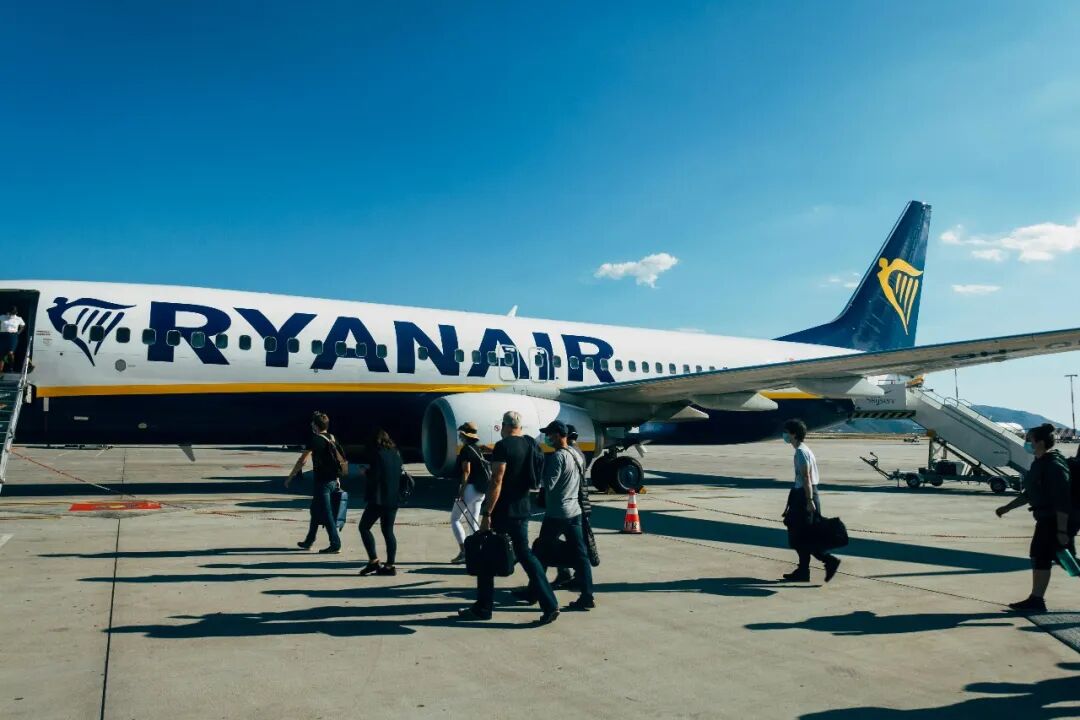
Ryanair is the largest low - cost airline group in Europe. (Photo/Unsplash)
"Apart from the lack of additional services, there were no travel safety issues throughout the journey. The most important thing is that the price was cheap enough." Mu Ji said that this experience opened a new world for her. During the following holidays, she fulfilled her wish to travel around European countries by relying on low - cost airlines, and her flight record book was filled with various low - cost airline ticket stubs.
However, at present, with the drastic change in oil prices brought about by the geopolitical conflict, the popularity of "traveling at will" has begun to cool down.
The price of aviation kerosene has been rising all the way. Countries with strong financial resources can rely on fiscal power to centrally purchase fuel, conduct hedging to lock in prices, or ensure energy supply through policies.
But most low - cost airlines don't have such good luck. The doubling of fuel costs is like taking away the firewood from under the pot for them. In order to survive, low - cost airlines have adjusted ticket prices, cut flights, and reduced seats. Even more, Jeju Air in South Korea has required some flight attendants to take unpaid leave in May and June due to the large - scale cancellation of flights and reduction of capacity.
However, not all low - cost airlines are struggling. On the verge of the collapse of Spirit Airlines, Spring Airlines, a representative of domestic low - cost airlines, has gained a lot of attention because of "doing well".
The first - quarter financial report of Spring Airlines in 2026 released on April 29th shows that the revenue in that quarter exceeded 6 billion yuan, a year - on - year increase of 14.16%, and the net profit increased by more than 45% year - on - year. Its strong profitability is not accidental. The annual report of 2025 released half a month ago shows that the annual net profit attributable to the parent company was 2.317 billion yuan, firmly sitting on the throne of the "most profitable airline" in China.
Chinese people are not unfamiliar with Spring Airlines. Its nickname of "the green - skinned train in the air" makes it a legendary existence. And its ability to maintain a profit margin is not entirely due to "ripping off" passengers. It also relies on long - term use of only one type of Airbus A320 series aircraft, a daily aircraft utilization rate of up to 10 hours, and the opening of new routes in second - and third - tier cities. Even to reduce fuel consumption, Spring Airlines' pilots often fly the plane as high as possible on the premise of ensuring safety.
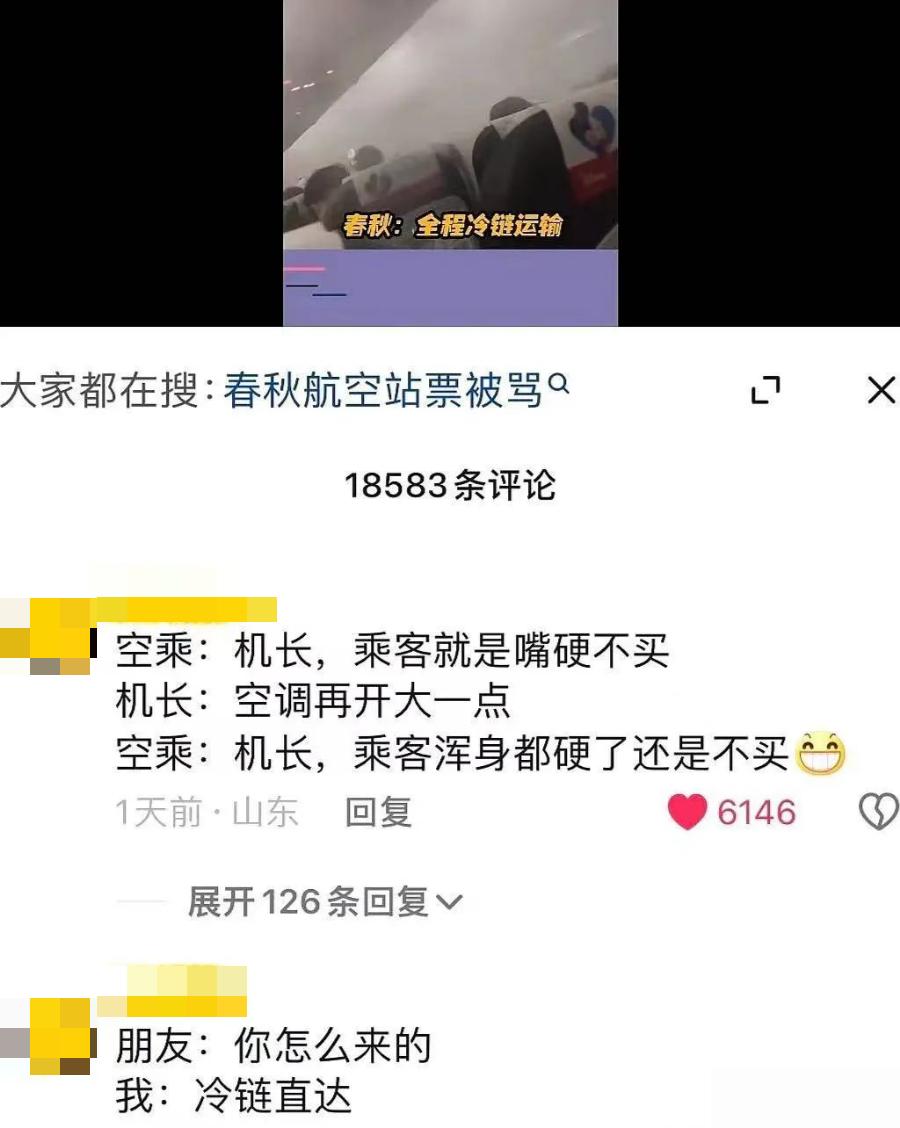
There are countless joking paragraphs about Spring Airlines on social media. (Photo/Social media screenshot)
Affected by oil prices, it has become normal for airlines to increase revenue and reduce expenditure and live a hard life. However, some low - cost airlines have decided to do the opposite. According to foreign media reports, AirAsia, a well - known low - cost airline headquartered in Malaysia, was heavily in debt after a recent restructuring. Recently, it suddenly placed an order for 150 more fuel - efficient A220 airliners from Airbus, as if an ordinary person were bottom - fishing in funds and expecting to turn the situation around.
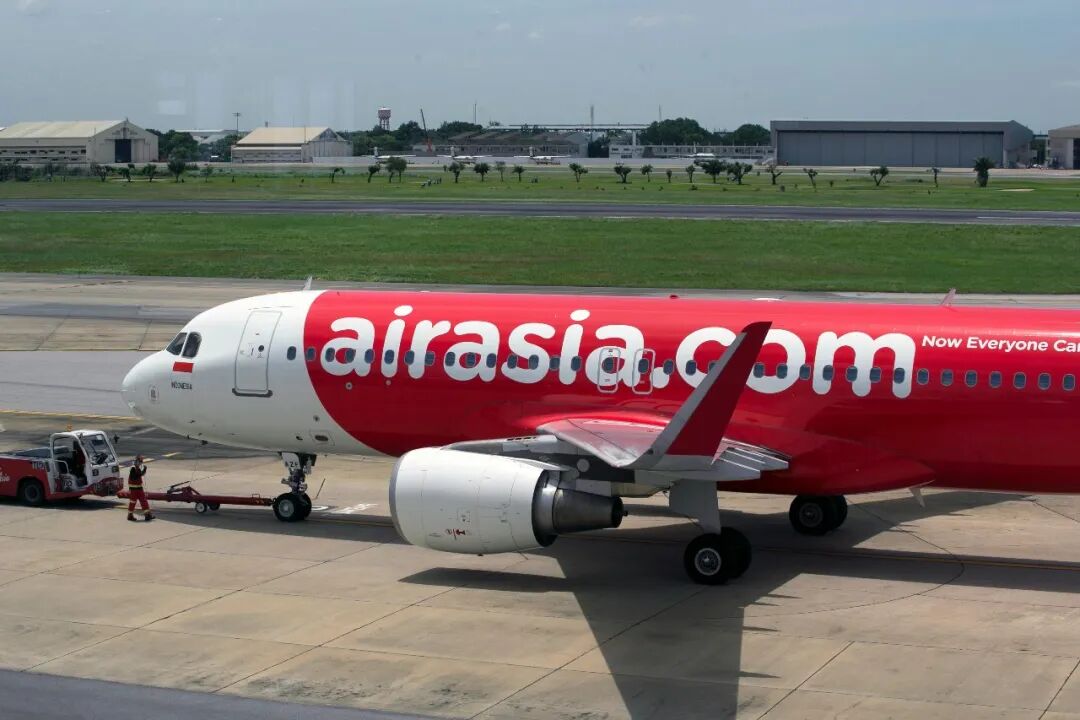
AirAsia, headquartered in Malaysia, is the preferred choice for many Chinese people to travel to Southeast Asia. (Photo/Pexels)
The joys and sorrows of airlines are not the same. And it is certain that the collapse of some low - cost airlines will not turn into a tsunami that affects all low - cost airlines and even the entire industry in the foreseeable future.
At least, the "stingy tricks" that low - cost airlines have used repeatedly have long been copied by traditional airlines.
02
"Everyone looks down on low - cost airlines,
but everyone wants to be a low - cost airline"
Yes, traditional airlines may look down on low - cost airlines in words, but they are very good at learning from them, and their actions are even more unsightly.
The most controversial issue is the seats. Although no "outlaws" dare to implement Spring Airlines' crazy idea of "selling standing tickets on the plane", almost all airlines have learned how to charge for seats.
When checking in on the airline's App, almost every economy - class seat closer to the exit, with a slightly larger space, and the always - locked first row of the economy class are all marked with prices (or points) secretly. The free seats are either in the middle or at the back of the plane.
There are even fewer free seats on international flights. A report in Beijing Business Today in 2023 revealed that only 6% of the seats on an international flight of a traditional airline could be selected for free, and it was considered that this move was "unsightly".
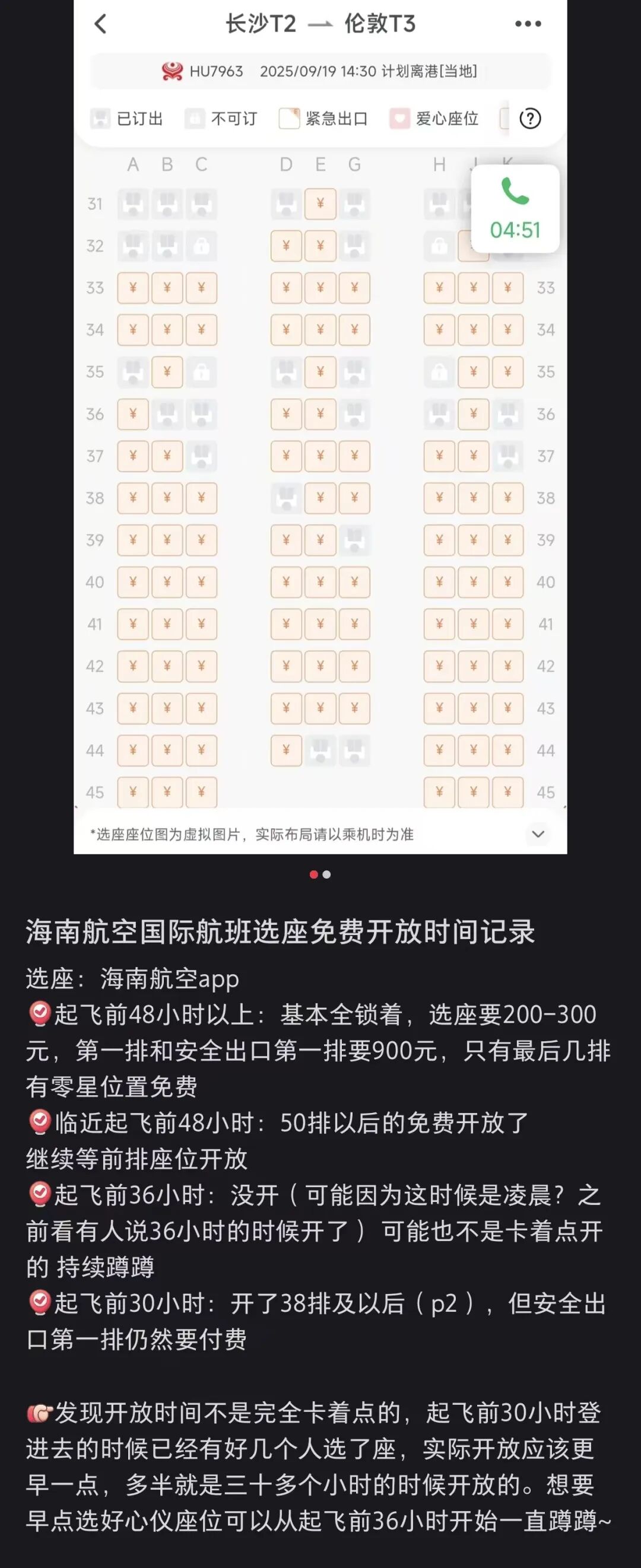
Many netizens have shared the opening time of free seat selection on social media, saying that "the closer it is to the departure time, the more free seats there are". (Photo/Social media screenshot)
Although the China Consumers Association publicly criticized such behavior at the beginning of 2025, the trend of "paid seat selection" is still spreading. Some people criticized full - service airlines for turning convenience into a business in order to generate revenue: "I'm locked out of seat selection. Should I sit in the luggage compartment?"
It's possible, but it will probably cost money, and even more.
A netizen once shared his experience of being "stabbed in the back" when taking Air China to Bangkok for a vacation. Everything went smoothly on the outbound flight of the round - trip ticket he bought, but when checking in for the return flight, he found that the return ticket did not include a free checked - luggage allowance. In the end, he had to spend more than 800 yuan to buy the luggage allowance.
Afterwards, the netizen reviewed and blamed himself for not reading the ticket type carefully when buying the ticket, "swallowing the bitter lesson of 'not being careful when buying tickets' with tears in his eyes".
In fact, the three major state - owned airlines, including Air China, China Southern Airlines, and China Eastern Airlines, all launched a value - added service called "brand fares" before the epidemic, setting a basic economy class with the lowest price for some popular outbound routes.
The ticket prices of these classes are cheaper than those of ordinary economy classes, but they do not include a free checked - luggage allowance. After the epidemic ended and outbound tourism resumed, more and more passengers were caught in the trap, and the "luggage assassins" set by airlines have attracted wide attention.
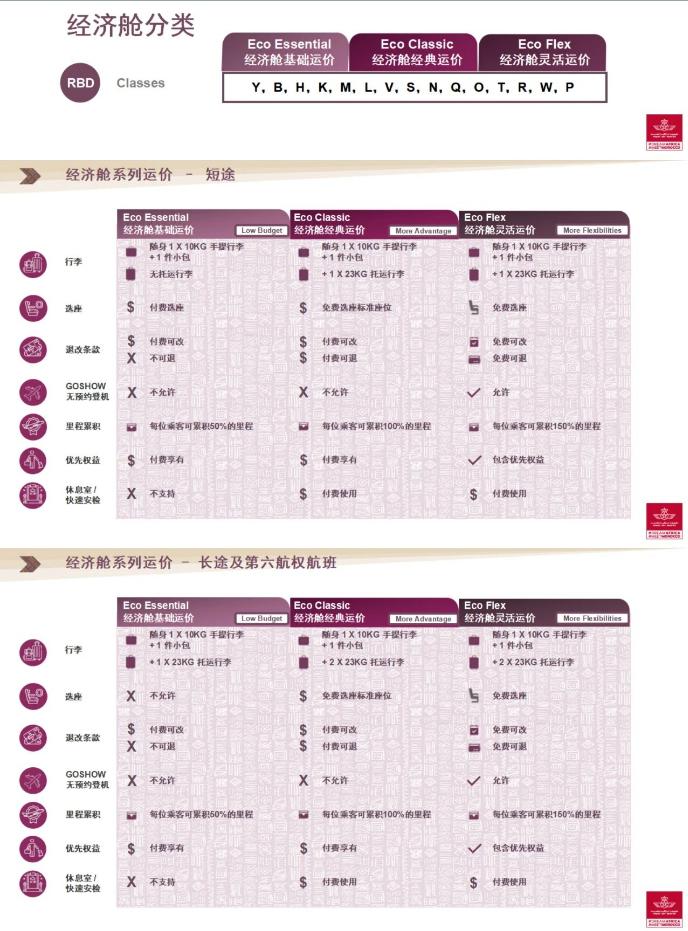
Most airplanes have different classes, and even the economy class is divided into different levels. (Photo/Kenya Airways)
Even if you swallow your anger and pay for the seat and luggage allowance, you may not be able to be a decent flyer on the plane. The free in - flight meals are getting worse and worse, the drinks are only half a paper cup, and some traditional airlines have recently removed the in - flight TVs, and the emergency demonstration has changed from playing a video to an in - person demonstration.
Of course, in the eyes of passengers who are used to flying, these marginal services may be dispensable - if the in - flight meal is not good, you can choose a "green flight".
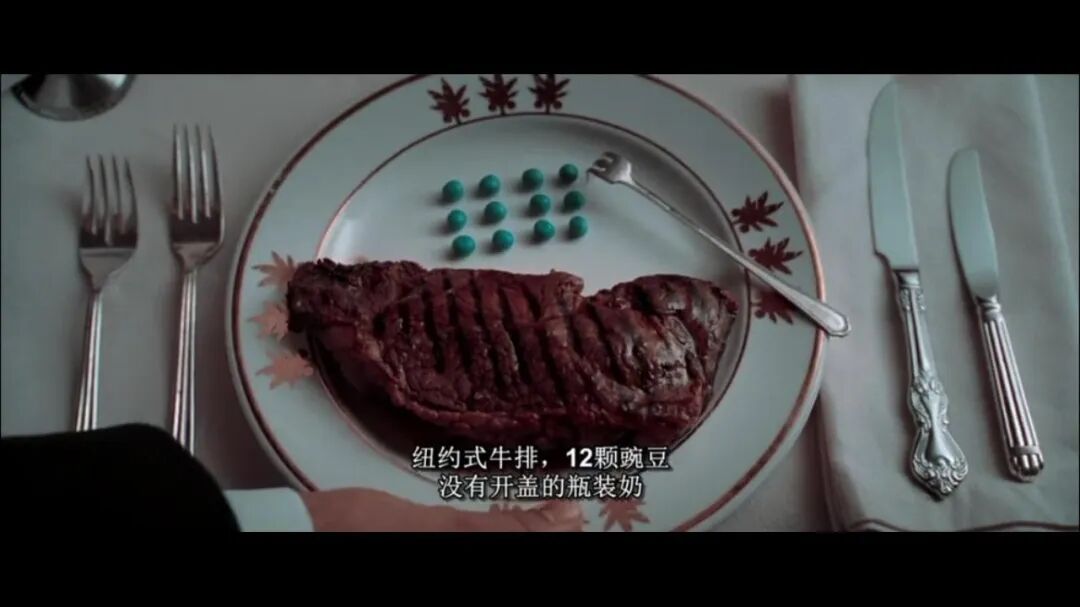
Do you want a full - course meal on the plane? I advise you to give up this idea. (Photo/Aviator)
If various additional services are just copying the superficial aspects of low - cost airlines, then readjusting the seat layout is a high - level tribute from traditional airlines to low - cost airlines.
In March last year, some netizens found that the economy class of some flights of China Southern Airlines had been changed to "ultra - thin seats", which triggered extensive discussions. China Southern Airlines publicly responded a few days later, explaining that the "ultra - thin seats" were only replaced on some flights. In addition to reducing fuel consumption, it could also add a few more seats, and the planes with the replaced seats would operate all - economy - class flights.
After that, some netizens found that Shenzhen Airlines under Air China also began to transform the cabin, removing all first - class and business - class seats and turning them into all - economy - class cabins.
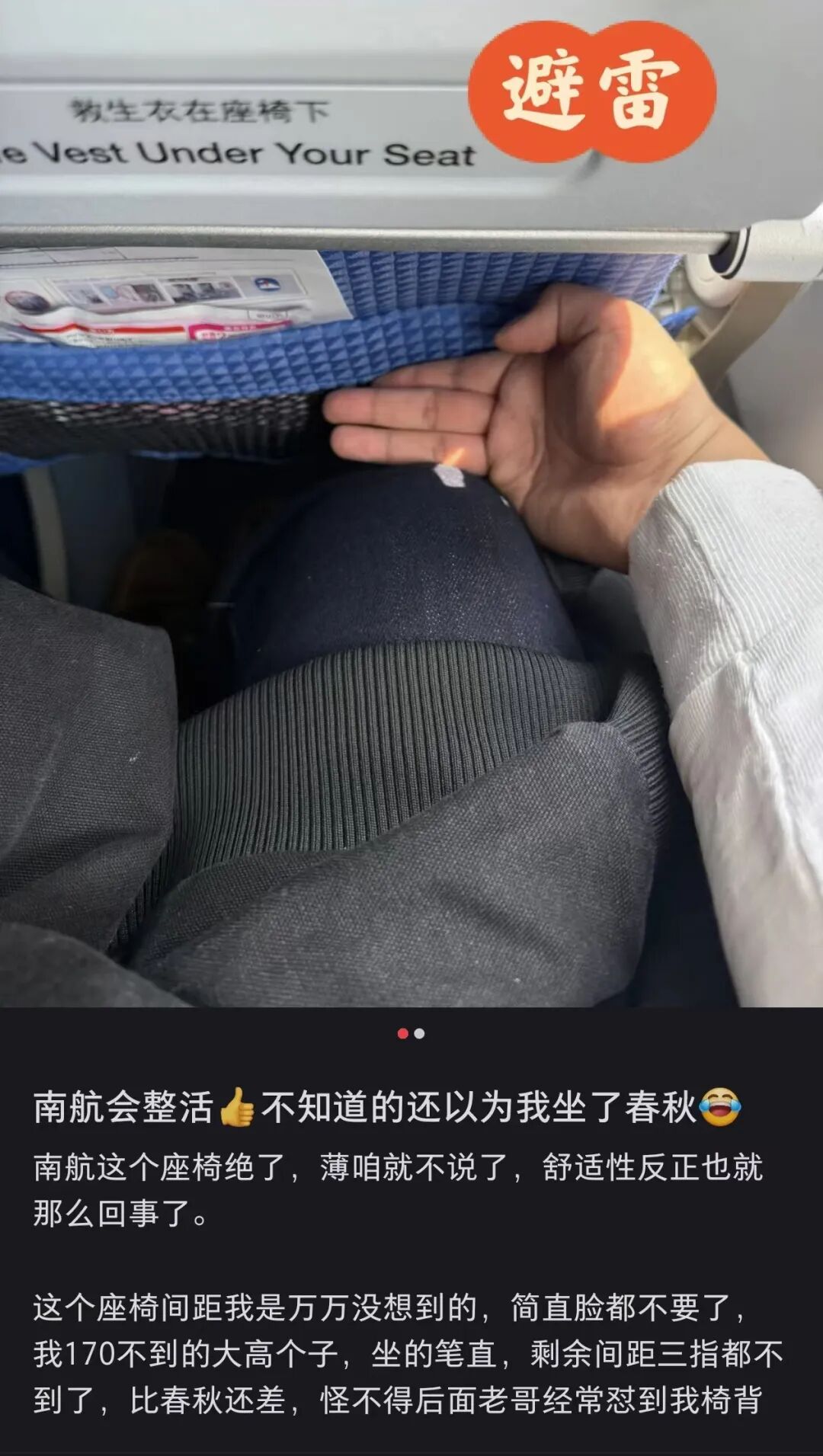
Many netizens complained that China Southern Airlines' ultra - thin seats were "worse than those of Spring Airlines", but it did not affect the pace of traditional airlines in promoting all - economy - class flights. (Photo/Social media screenshot)
From now on,