Investors are scrambling for unprofitable AI companies: A high-stakes gamble for the "right to define the future"
According to a report by the Financial Times in early May, the National Integrated Circuit Industry Investment Fund is in talks to lead DeepSeek's first-round financing, with a post-investment valuation locked at $45 billion, equivalent to approximately 307.8 billion yuan. In just a few weeks, this figure jumped from $10 billion to $20 billion and then to $45 billion - nearly a fivefold increase.
Previously, according to The Information, founder Liang Wenfeng plans to personally invest up to 20 billion yuan to hold about 40% of the shares. In April, when Reuters first reported that DeepSeek had launched external financing, its valuation was only "just" over $10 billion.
Why is a company that has been established for less than three years and has only 160 to 200 employees worth 300 billion yuan?
If you ask this question about DeepSeek, and then ask the same question about Zhipu, MiniMax, and Kimi, you'll get similar answers.
According to the Hong Kong Stock Exchange, Zhipu's latest market value has exceeded HK$500 billion (approximately 430 billion yuan), compared to only HK$52.8 billion at the time of listing, a nearly tenfold increase in four months. According to a report by the Shanghai Securities News, MiniMax's latest market value exceeds HK$250 billion (approximately 223.5 billion yuan), a nearly fourfold increase in four months since listing.
According to a report by LatePost, Kimi's latest round of $2 billion financing was led by Meituan Longzhu, and its valuation has exceeded $20 billion (approximately 136 billion yuan). It has raised over $3.9 billion in total within six months, making it the startup in the domestic large model industry with the most financing.
The combined valuation of the four companies exceeds 1 trillion yuan.
This is not a solo performance by one company but a capital tsunami sweeping across the entire Chinese AI industry. The National Big Fund is leading the investment in DeepSeek, and China Mobile is participating in the investment in Kimi. State-owned capital is pouring in intensively - in short, this is no longer just a VC/PE game but a bet at the national strategic level.
Meanwhile, internet giants such as Tencent, Alibaba, and Meituan are also voting with real money, afraid of missing this train. Tencent is in talks to participate in the investment in DeepSeek, Alibaba has participated in the investment in Kimi multiple times, and Meituan Longzhu has invested over $200 million on its own - while the giants are burning money to develop their own models, they are also "buying tickets" through investment.
Interestingly, in a research report released on April 22, JPMorgan Chase made a judgment: The window period for "the only way to invest in Chinese AI" is about 6 to 12 months. Once subsequent companies such as Kimi and Jieyue Xingchen go public, the scarcity premium of Zhipu and MiniMax will decline structurally. To put it simply: If you don't buy now, you may not have the chance later.
What exactly are investors buying? This question is worth discussing.
1. Trillion-dollar Valuation: Investors Compete for the "Right to Define"
Let's first look at a set of eye-catching data.
According to Zhipu's annual report and MiniMax's prospectus, Zhipu's revenue in 2025 was 724 million yuan, a year-on-year increase of 131.85%. Its net loss attributable to the parent company was 4.698 billion yuan, and its R & D expenditure was 3.18 billion yuan, which means it spent 4.4 yuan on R & D for every 1 yuan earned.
MiniMax's revenue in 2025 was $79.038 million, a year-on-year increase of 158.9%. It had a loss of $1.872 billion, with the loss amplitude increasing by 302.3% year-on-year.
Although Kimi has not disclosed its complete financial report, its parent company, Yuezhianmian, has raised over 37.6 billion yuan in total, so it's easy to imagine its money-burning speed.
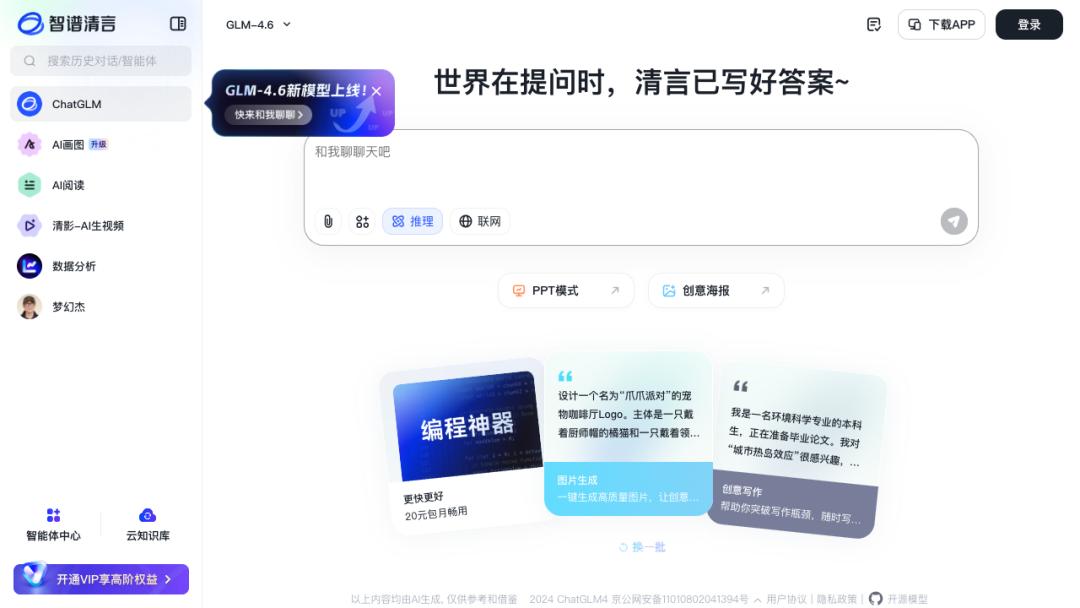
The product interface of Zhipu Qingyan AI Assistant, Photo/Zhipu AI official website
Interestingly, according to iFlytek's annual report, iFlytek's revenue in 2025 was 27.1 billion yuan, with a net profit of 839 million yuan, and its total market value was approximately 118.7 billion yuan. A company that earns 800 million yuan a year has a market value of less than 120 billion yuan, while a company that loses 4.7 billion yuan has a market value of over 500 billion yuan.
How to calculate this?
To be honest, traditional valuation models basically fail here. DCF (Discounted Cash Flow) is like using an abacus to calculate the rocket's orbit for these companies - the tool itself is okay, but the scenario is wrong. Investors are not buying today's revenue or even next year's profit but an option for the "right to define the future."
There is a core judgment in JPMorgan Chase's research report: The scarcity premium of large AI models has a window period of about 6 to 12 months. It cited a precedent - Cambricon was once the only pure AI chip listed company in the A-share market, and its stock price was about 1,500 yuan at the end of November 2025. Subsequently, Moore Threads, Muxi Co., Ltd., and Biren Technology went public one after another. Although Cambricon's revenue and profit forecasts were both increasing, its stock price has still fallen by about 2% since the beginning of the year, and its valuation multiple has shrunk by 25% to 30%. Once competitors go public, the scarcity disappears.
This logic also holds for the "Four Little Dragons." Zhipu and MiniMax are currently the only two pure cutting - edge large AI model listed companies in the world. What they enjoy is not a "performance premium" but a "uniqueness premium." Once Kimi goes public and DeepSeek opens up for financing, this scarcity will be diluted. So, investors are rushing to invest now, not for certainty but for "securing a position."

Photo/MiniMax official website
To put it simply, this trillion - dollar valuation frenzy is essentially an auction for the "right to define the future." Whoever can define technical standards, business models, and user habits in the AI era may become the next Microsoft or Google. What the "Four Little Dragons" are doing now is to use huge financing to secure their own positions before the window closes.
2. From "PPT Companies" to "Revenue - Generating": Progress in Technology and Profit - Making Ability
In 2023, large model companies were still ridiculed as "PPT companies" - they told great stories but had almost zero revenue. Two years have passed, and the situation has changed.
According to a report by People's Daily, in March 2026, China's daily average Token usage exceeded 140 trillion, while at the beginning of 2024, this figure was only 100 billion, a more than thousand - fold increase in two years. Token is the smallest unit for large models to process information and the core pricing unit for industry commercialization. Simply put, the increase in Token usage is equivalent to the rise in the overall industry level.
This level is directly reflected in the income statements of each company.
According to Wang Xinyu, a partner at Meituan Longzhu, after the update of the K2.5 model, Kimi's ARR (Annual Recurring Revenue) exceeded $100 million in March this year and increased to $200 million in April. With four rounds of financing in half a year and a total of over $3.9 billion, being the startup in the domestic large model industry with the most financing - this itself is the market's recognition of its commercialization ability. The K2.6 model supports 300 sub - Agents to run in parallel and 4,000 collaborative steps, taking a big step forward in code ability and Agent cluster ability.
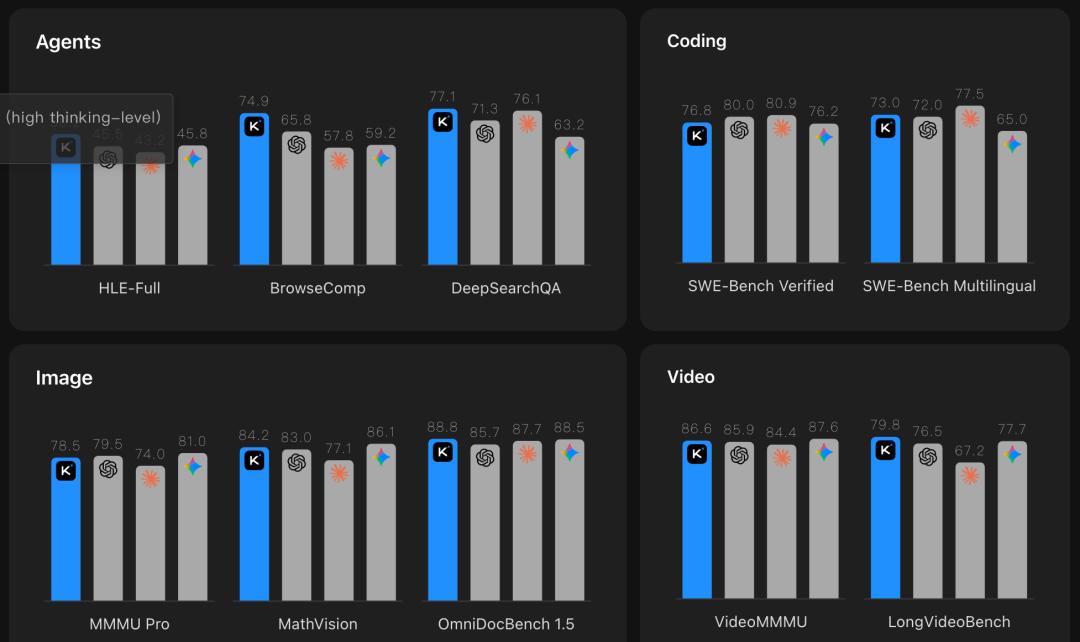
Photo/Kimi official website
Zhipu's data is even more exaggerated. According to the company's disclosure, the ARR of its MaaS platform API is approximately 1.7 billion yuan (about $250 million), a 60 - fold increase year - on - year and a 6.4 - fold increase since the beginning of the year. Within 24 hours after the release of GLM - 5, leading platforms such as ByteDance TRAE, Alibaba Qoder, Tencent CodeBuddy, Meituan CatPaw, Kuaishou Wanqing, Baidu Smart Cloud, and WPS Office have all officially connected. Nine out of the top ten Internet companies in China have deeply called the GLM model.
As of March 2026, the number of registered enterprises and users on Zhipu's platform has exceeded 4 million, serving over 218 countries and regions around the world. In February 2026, Zhipu actively raised the API price by 30% and cancelled the first - purchase discount, but the demand was still in short supply - this is a rare signal in the global AI industry, indicating that customers are willing to pay for more certain productivity. According to JPMorgan Chase's research report, Zhipu's API pricing power is becoming "much more stable," and the pricing environment is far healthier than a year ago.
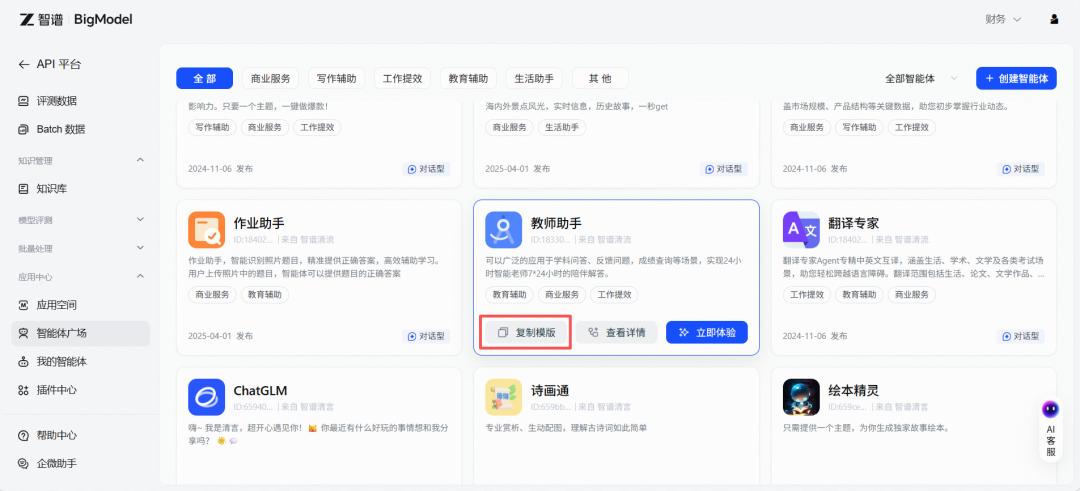
Zhipu AI BigModel Open Platform, Photo/Zhipu AI official website
MiniMax takes a different approach. According to MiniMax's annual report, its revenue in 2025 was $79.038 million, with overseas revenue accounting for more than 70%, and its gross profit margin has turned positive from negative to 25.4%. It has developed two global products on the C - end, Talkie and Conch AI, following the "AI - native application" route. As of the end of 2025, MiniMax's products have served approximately 236 million users in total, and the number of enterprise customers and developers has exceeded 214,000. Founder Yan Junjie has publicly stated that he expects the Token consumption to experience an explosive growth of one to two orders of magnitude, and the company's ARR is expected to enter the $1 - billion range.

The interface of MiniMax Conch Video APP, Photo/MiniMax official website
Technological progress is the underlying support for the revenue explosion.
DeepSeek V4 ranks first among open - source models and ninth globally in code ability in the Vals AI evaluation, achieving approximately a tenfold performance leap compared to the previous generation V3.2. In the Agentic Coding evaluation, the delivery quality of V4 - Pro is close to that of Claude Opus 4.6 in non - thinking mode, and the user experience is better than Sonnet 4.5. More importantly, it's about the cost - the output of V4 Flash only costs $0.28 per million tokens, about 1% of Claude Opus. According to the calculation of the developer community, the monthly usage cost of V4 Flash can be as low as $504. In contrast, the cost of Kimi for the same usage volume is about eight times that, and GLM is about four times that. This level of cost advantage is almost overwhelming in the API pricing war.
However, third - party evaluations also show that DeepSeek V4 still lags behind the world's top models. In the Arena.ai comprehensive ranking, V4 ranks 14th, still some distance from cutting - edge models such as GPT - 5.4 and Claude Opus 4.6. Its text ability ranks 20th, and multi - modal ability is a shortcoming of V4. As the developer community commented, "It's no longer a surprise to be the best among open - source models. What people hope to see is that DeepSeek can compete with the three strongest AIs."
To put it simply, the "Four Little Dragons" are currently doing two things simultaneously: one is to catch up in model ability, and the other is to reduce the inference cost. The former determines whether customers are willing to use it, and the latter determines how much customers can afford to use. Once these two things are done well, the question is not whether there will be revenue but how fast the revenue will grow.
Of course, the problem is that the losses are also expanding simultaneously. Zhipu's R & D expenditure in 2025 accounted for as high as 439% of its revenue, and MiniMax's adjusted net loss was $250 million. For most enterprises, this level of money - burning speed is unsustainable - but the "Four Little Dragons" are a special case outside the "majority." Their logic is simple: first, create a technological gap, then build a cost advantage, and finally, it's time to calculate the accounts.
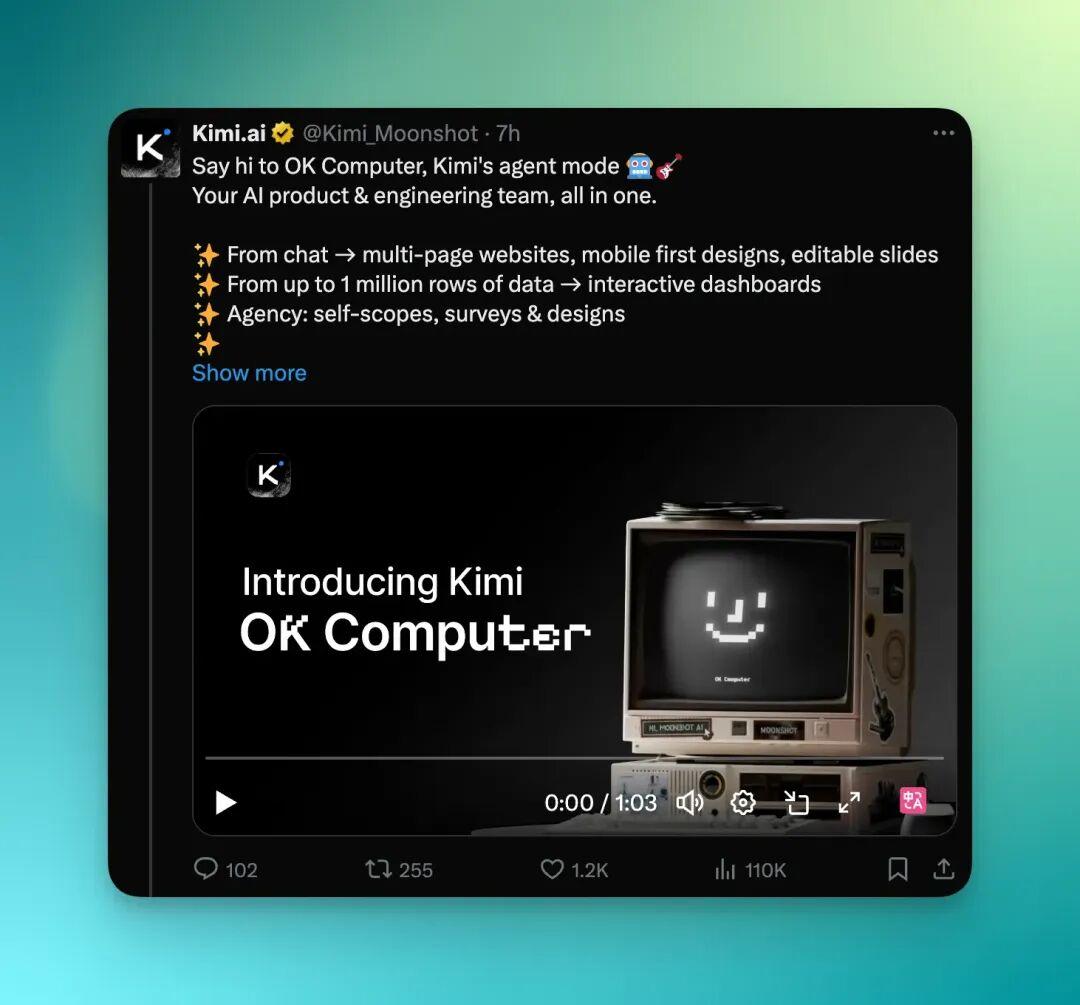
The release of Kimi OK Computer Agent product, Photo/Yuezhianmian official website
3. Scramble between Large and Small Companies: A Sober Reflection Behind the Frenzy
As the valuations of the "Four Little Dragons" keep rising, the mood of large Internet companies is a bit complicated.
On May 13, 2026, Tencent held its general meeting of shareholders. According to a report by National Business Daily, when asked about the progress of its AI business, Ma Huateng said, "A year ago, we thought we were on the boat, but later we found the boat was leaking. Now we feel we're on it, but we can't sit down. We still hope the boat can go faster." On the same day, Alibaba released its quarterly financial report, and CEO Wu Yongming said in a conference call, "The first quarter of 2026 was a quarter for Alibaba where there was much more'sowing' than 'harvesting'."
One says the "boat is leaking," and the other says "more sowing than harvesting." In other industries,