What supports the 41x price-to-sales ratio of Yun Shen Chu, the maker of "robot dogs"?
In 2026, the wave of financing in the field of embodied intelligence has been surging, and most of the spotlights have been on humanoid robots.
The shipment volume of Unitree Technology's humanoid robots has exceeded 5,500 units. The valuations of Zhipu Robotics, Galaxy Universal, and Xingdong Era have all exceeded 10 billion yuan. Bain predicts that the global humanoid robot market will reach $120 billion by 2035.
In most people's perception, humanoid robots are more likely to represent the ultimate form and carry a grander capital narrative.
Little do they know that a subtle divergence is taking place beneath the surface.
On May 18th, DeepRobotics Co., Ltd., one of the "Six Rising Stars in Hangzhou," officially had its IPO application on the Science and Technology Innovation Board accepted. DeepRobotics plans to issue no less than 82.98 million shares and raise 2.503 billion yuan. According to the prospectus, DeepRobotics had a revenue of 337 million yuan in 2025 and achieved annual profitability for the first time, with a net profit attributable to the parent company of 28.684 million yuan.
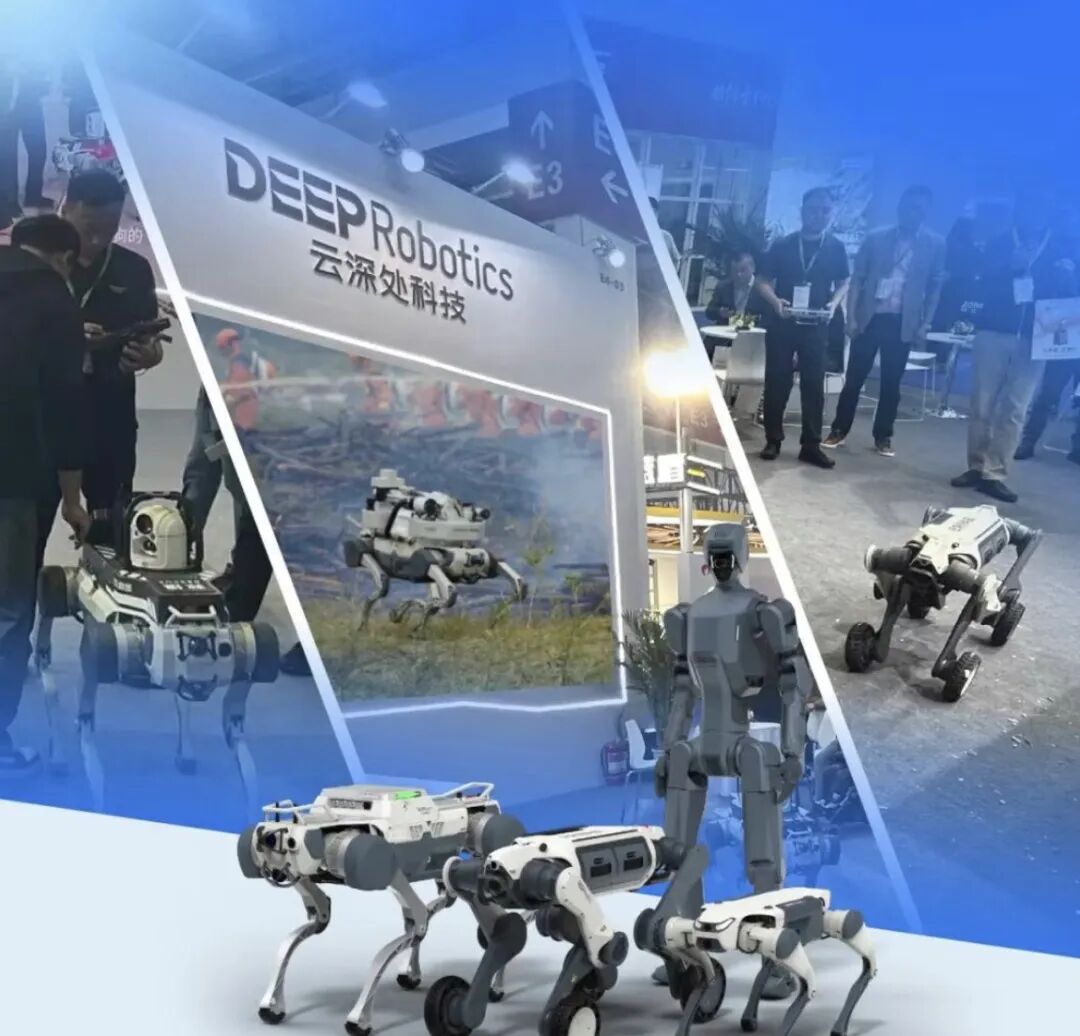
Image source: DeepRobotics' WeChat official account
Although this scale is not large in the entire embodied intelligence industry, what surprises the market is DeepRobotics' price-to-sales ratio as high as 41 times.
Based on a revenue of 337 million yuan and a valuation of 13.9 billion yuan, DeepRobotics' corresponding price-to-sales ratio is about 41 times. In contrast, Unitree Technology, which is also sprinting for an IPO during the same period, has a revenue of 1.708 billion yuan and a valuation of 42 billion yuan, with a price-to-sales ratio of about 25 times. This means that DeepRobotics' valuation multiple is about 60% higher than that of Unitree.
The price-to-sales ratio generally reflects the capital market's attitude towards a company. A high price-to-sales ratio means that the capital market is optimistic about the company's future and is willing to give it a higher valuation premium.
However, what supports DeepRobotics' price-to-sales ratio is not the popular humanoid robots in the capital market, but a series of "robotic dogs." Looking through DeepRobotics' prospectus, almost all the real revenues come from quadruped robots in the scenarios of power inspection and emergency fire protection. Only four humanoid robots were sold in two years.
Around the second half of 2023, quadruped robots were not favored by the capital market due to the limited imagination space of B2B scenarios. Now, however, their price-to-sales ratio is much higher than that of Unitree. What exactly supports this premium?
The commercialization degree and imagination space of quadruped robots and humanoid robots have become the key to re-understanding the future of the embodied intelligence industry.
DeepRobotics' IPO: Quadruped Robots Support a Business Worth 337 Million Yuan
A prospectus has brought DeepRobotics, a relatively low-key embodied intelligence company, into the spotlight.
To answer the question of "which has more imagination, quadruped robots or humanoid robots," DeepRobotics' prospectus provides a rare observation window.
Opening DeepRobotics' prospectus, the first intuitive feeling is that the growth is indeed rapid. From 2023 to 2025, the company's operating revenue increased from 50.1126 million yuan to 337 million yuan, with a compound annual growth rate of 159.51%.
Against the background of widespread money-burning and losses in the embodied intelligence industry, DeepRobotics achieved profitability for the first time in 2025, with a net profit attributable to the parent company of 28.684 million yuan.
The core driving force for DeepRobotics to switch from losses to profitability comes from the continuous increase in the gross profit margin of quadruped robots and the gradual release of scale effects.
From 2023 to 2025, DeepRobotics' gross profits were 16.7776 million yuan, 40.0034 million yuan, and 178 million yuan respectively, with comprehensive gross profit margins of 33.48%, 38.76%, and 52.83% respectively. The gross profit margins of embodied intelligence robots (including quadruped, wheeled-legged, and humanoid robots) were 32.73%, 38.08%, and 52.60% respectively.
The leap in the gross profit margin is not evenly distributed across all product lines. The real profit engine is the Jueying X series for industry applications. The unit price of this industry-level quadruped robot was 287,500 yuan in 2025, with a gross profit margin of 54.35%. A total of 681 units were sold throughout the year, contributing 58.11% of the company's revenue.
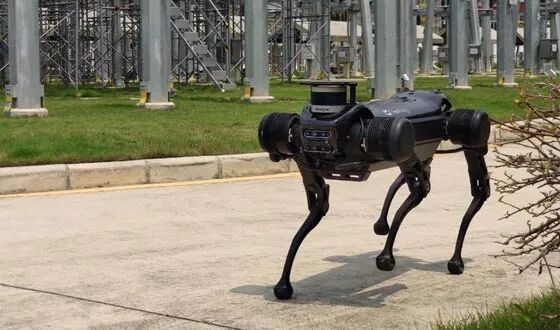
Image source: DeepRobotics' official website
Another profit highlight is the wheeled-legged robot Lynx M series, which was launched in April 2025. The unit price is 197,600 yuan, with a gross profit margin as high as 57.50%. 377 units were sold in the year of its launch, contributing 22.11% of the revenue. These two high-margin products together support more than 80% of the company's revenue.
What is more worthy of scrutiny is the revenue structure. In 2025, the embodied intelligence robot business of DeepRobotics contributed 95.69%. Among the embodied intelligence robots, quadruped robots and wheeled-legged robots together contributed 95.45% of the revenue. The DR series of humanoid robots only had an income of 823,000 yuan, accounting for 0.24%.
Regarding humanoid robots, the prospectus reveals that only four DR series humanoid robots were sold in total in 2024 and 2025, three in 2024 and one in 2025.
In contrast, Unitree Technology, which is also sprinting for the Science and Technology Innovation Board during the same period, has shipped more than 5,500 humanoid robots, ranking first in the world. In 2025, the revenue from humanoid robots exceeded that from quadruped robots for the first time, becoming the largest source of revenue.
To put it simply, what supports DeepRobotics' growth is not the hotly hyped humanoid robots in the market, but the seemingly less cool quadruped robots.
At the application scenario level, the data in the prospectus also points to a conclusion: DeepRobotics is not a general robot platform, but a company highly focused on vertical scenarios.
In 2025, the revenue from industry applications of DeepRobotics accounted for as high as 79.33%, while scientific research and education accounted for only 14.86%, and commercial services accounted for 5.81%. The industry application scenarios are highly concentrated in three major fields: power inspection, emergency fire protection, and police security, among which power inspection occupies a core position.
According to Sullivan's data, in 2025, DeepRobotics ranked first in the world in terms of revenue from the industry application field of quadruped robots, second in the world in terms of comprehensive revenue from quadruped robots, and fourth in the world in terms of revenue from embodied intelligence robots.
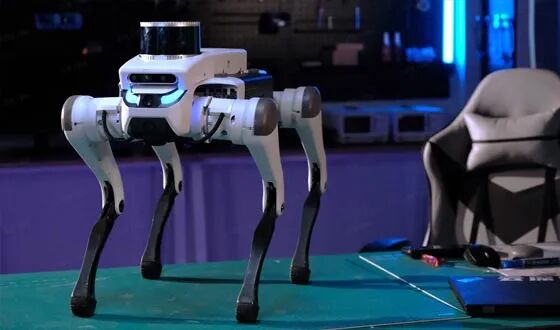
Image source: DeepRobotics' official website
Objectively speaking, out of the net profit attributable to the parent company of 28.684 million yuan in 2025, the non-recurring net profit attributable to the parent company was only 15.1232 million yuan, and non-recurring gains and losses accounted for nearly half. Government subsidies are an important part of it. After excluding these factors, the recurring profit of the company's core business is only a little over 15 million yuan. For a company with a valuation of 13.9 billion yuan, this profit base is obviously still very thin.
More importantly, this highly concentrated revenue structure also brings an unavoidable risk exposure. DeepRobotics frankly states in the prospectus that the revenue from its real commercial application scenarios highly depends on the three major fields of power, emergency, and security. If the investment in the downstream industries slows down or the cooperation with customers changes, it will directly impact the operating performance. In addition, the concentration of the top five customers is relatively high. If a single important customer is lost during the reporting period, the short-term performance fluctuation risk cannot be ignored.
At present, DeepRobotics is more like a company that has made money from high-margin quadruped robot products but still has a small business radius. DeepRobotics has proved that it can make money from robotic dogs in three years, but the prospectus does not answer how long and how much it can earn.
Can DeepRobotics Meet the High Expectations of Investors?
Looking at DeepRobotics' performance alone, it is inevitable for the market to be confused. However, if we put Unitree Technology and DeepRobotics together, the attitude of the capital is obvious.
DeepRobotics had a revenue of 337 million yuan in 2025, and its IPO valuation is 13.9 billion yuan, corresponding to a price-to-sales ratio of about 41 times. Unitree Technology had a revenue of 1.708 billion yuan during the same period, and its IPO valuation is about 42 billion yuan, corresponding to a price-to-sales ratio of about 25 times.
As embodied intelligence enterprises sprinting for an IPO during the same period, both DeepRobotics and Unitree Technology have achieved profitability and have relatively high gross profit margins. These two companies are also regarded as comparable competitors.
DeepRobotics' revenue is less than one-fifth of Unitree's, and its profit is less than one-tenth. However, its valuation multiple is 60% higher. In other words, the capital market is willing to pay 1.64 times the price for every 1 yuan of DeepRobotics' revenue compared to Unitree Technology.
This is difficult to explain under the traditional valuation framework. Usually, the larger the company, the higher the valuation premium it can enjoy, and the smaller the company, the more it has to bear the liquidity discount.
What kind of business logic can support this premium for DeepRobotics? To answer this question, we need to jump out of the valuation figures themselves and analyze the capital market's attitude towards the revenue quality and business models of these two companies.
The answer lies in the completely different revenue structures of the two companies.
In the prospectus, DeepRobotics divides the main revenue sources of quadruped robots into three parts: industry applications, scientific research and education, and commercial services. In 2025, DeepRobotics' industry application revenue of 258 million yuan was slightly higher than Unitree's 231 million yuan in terms of amount, and its proportion in the total revenue was approaching 80%. Among Unitree Technology's total revenue of 1.708 billion yuan, the industry application revenue accounted for only 13.5%, and the remaining 86.5% came from the consumer-grade robot and scientific research and education markets.
The biggest difference is that the fields where DeepRobotics has an advantage are the order revenues from large state-owned enterprises and government departments such as the State Grid and the Fire Brigade. These orders have long cycles, large amounts, and high repurchase rates. In contrast, the consumer-grade market where Unitree Technology has an advantage is highly competitive, with rapid product iteration and low user loyalty.
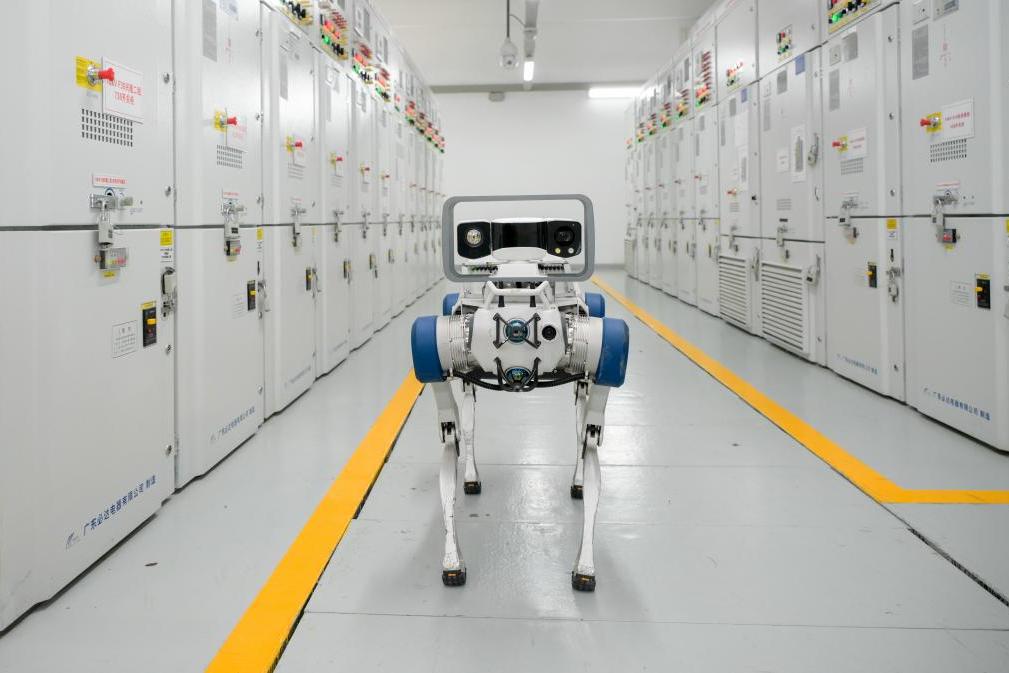
Image source: DeepRobotics' WeChat official account
More importantly, the revenue from industry applications comes from real production and operation scenarios. Customers are willing to pay a premium to solve practical pain points, and once a cooperation relationship is established, it is difficult for competitors to enter.
Therefore, in the long run, DeepRobotics has a higher certainty of growth.
This pursuit of certainty is essentially a microcosm of the fundamental change in the risk preference of the capital market in 2026. In the past two years, the embodied intelligence industry has experienced a round of crazy concept hype. The capital was willing to pay a high premium for the trillion-level long-term imagination space of humanoid robots, even if these enterprises had no revenue, no profit, and even no mass-produced products.
However, since 2026, as the financing in the primary market has cooled down and the valuation in the secondary market has returned to rationality, the patience of the capital is running out, and it pays more attention to the current commercialization ability and cash flow health of enterprises.
For DeepRobotics, in addition to being already profitable, the framework agreements signed with state-owned enterprises such as the State Grid have locked in its future revenue in advance. According to the prospectus, DeepRobotics signed a five-year framework agreement worth 1 billion yuan with the State Grid in 2023, aiming to provide intelligent inspection solutions for more than 1,000 substations across the country.
In contrast, although Unitree Technology has a larger scale and more profits, the uncertainty of its revenue is also higher. The competitive landscape of the consumer-grade market is changing rapidly, and there are also many variables in the commercialization process of humanoid robots. The lower valuation multiple given by the capital market to Unitree is actually a discount for these uncertainties.
In addition, although DeepRobotics' profit is meager, its growth curve is steep, which is the most attractive feature of early-stage high-growth technology enterprises. In contrast, although Unitree Technology's growth rate is not slow, its scale is approaching 1.8 billion yuan, and its marginal growth rate in the future is likely to gradually slow down.
For early-stage investors in the primary and secondary markets, the slope of growth is often more important than the current absolute value. A steep profit curve not only verifies the profitability of the business model but also indicates that the company will enter a profit explosion period in the next 3 - 5 years. The higher valuation premium given by the capital market to DeepRobotics is essentially paying for its growth potential.
However, although being favored by the capital market, DeepRobotics also faces challenges.
Currently, the three major industries of power, emergency, and security contribute nearly 80% of DeepRobotics' revenue. In particular, it is highly tied to the power scenario. Although the 6.8 billion yuan procurement from the State Grid provides short-term certainty, the number of substations in China is ultimately limited, and the penetration rate of a single scenario will eventually reach its peak. Once the investment in the downstream industries slows down, DeepRobotics' performance growth will face pressure.
More urgently, there is market competition. Unitree Technology's revenue from quadruped robots in 2025 was 695 million yuan, more than twice that of DeepRobotics. Although DeepRobotics' industry application revenue reached 258 million yuan last year, Unitree's industry application revenue also reached 231 million yuan.