"My elders' gasoline-powered cars have been in use for over a decade, while I have to replace mine after just four years." The rapid iteration of new energy vehicles has led to a "lose-lose" situation. Can the pace be slowed down? Industry insiders: It's not that easy.
Some new energy vehicle owners have reported that while fuel-powered vehicles can be used for over a decade, their new energy vehicles only lasted for 4 years. They had to replace the vehicles due to insufficient computing power of the in-vehicle chips. The rapid iteration of new energy vehicles has indeed caused considerable trouble for consumers.
Currently, the R & D cycle of Chinese new energy vehicle manufacturers has been significantly shortened compared to traditional automakers. A large number of new cars will be launched between 2025 and 2026. However, the rapid iteration has also led to a series of problems: old car owners feel "stabbed in the back", complaints about iteration disputes have skyrocketed, the resale value of used cars has declined, and vehicle maintenance and software upgrades have been affected. Automakers, on the other hand, face profit pressure and supply - chain imbalances, ultimately resulting in a lose - lose situation for users, automakers, and the supply chain.
Currently, automakers such as XPeng are trying to slow down the iteration pace and optimize their products through OTA upgrades. However, industry insiders say that due to factors such as market competition, it is quite difficult for the industry to truly slow down. They expect policies to become the key regulatory variable.
"My uncle's Santana was driven for 15 years, and my father's Camry was used for 10 years. But for me, I had to change my car in the fourth year, not because it was broken, but because the computing power of the in - vehicle chip couldn't keep up and didn't support the new system. When I went to the used - car market, the car dealer said that although the car was only 4 years old, it was already considered very old." Recently, Ma Xiao (a pseudonym), a new energy vehicle owner, told a reporter from NBD (National Business Daily) about his frustrating experience.
What confuses him is: "Is the lifespan of a car now determined by the iteration speed?"
In response, automakers have their own logic: software defines the car, making hardware a replaceable carrier; Moore's Law has been applied to the automotive field, making computing power the new displacement standard.
However, enterprises have also felt the pressure brought by the rapid iteration speed. Li Bin, Chairman of NIO, said bluntly: "In the past, fuel - powered vehicles were iterated only once every five or seven years. The investment and cost - sharing cycle was long, and the pressure on enterprises was relatively small. But in the era of smart electric vehicles, the iteration speed is increasing exponentially."
Behind the experiences of "Ma Xiaos", the logic of automobile consumption is being reconstructed - the iteration speed of cars is moving from being a "family asset" towards being an "electronic fast - moving consumer good".
Are "Yearly - Disposable Electric Cars" Born?
Automaker Executives: Safety and Durability Are Always the Primary Standards
The most direct manifestation of the accelerated iteration speed of cars is the sharp increase in the number of new product launches.
According to incomplete statistics, more than 230 new cars (including all - new, facelifted, and replacement models) will be launched intensively in 2025. This pace has continued to accelerate in 2026. In March alone, there were nearly 80 automotive industry press conferences, and over 60 new cars were launched. At this year's Beijing Auto Show, 1,451 vehicles were exhibited, including 181 global premiere vehicles and 71 concept cars, showing a significant increase compared to 117 and 41 in 2024 respectively.
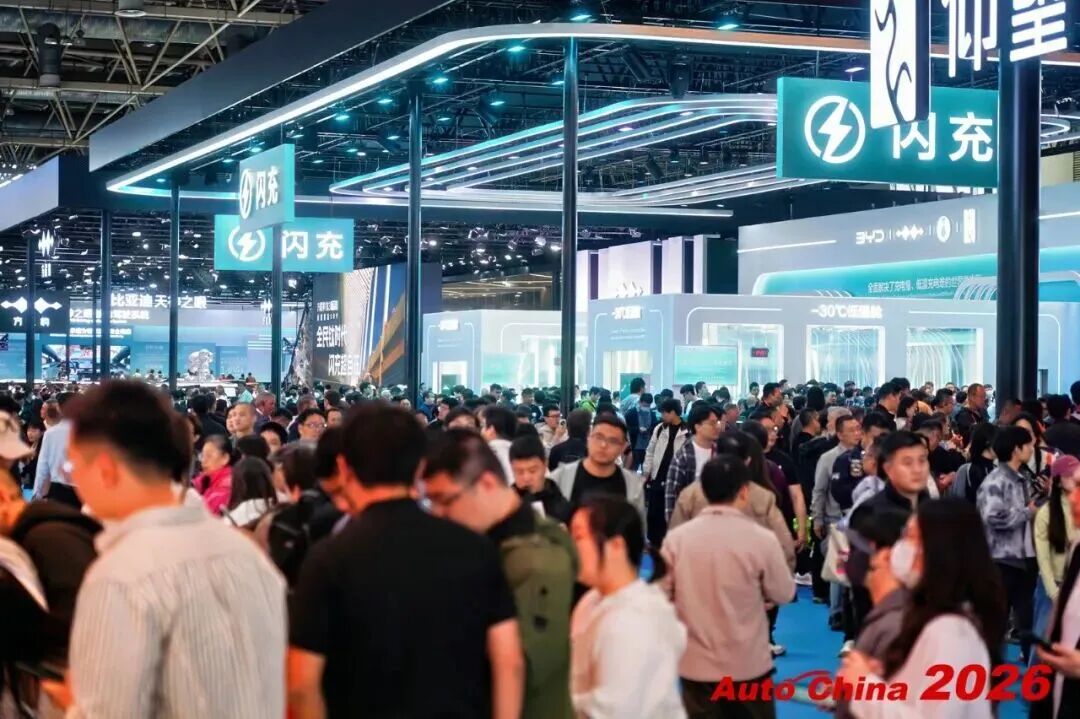
Image source: Official website of the Beijing Auto Show
Regarding the reason for the intensive release of new cars, Qin Lihong, Co - founder and President of NIO, said: "The concentrated explosion of new cars is a leap forward for the Chinese automotive industry. When everyone is launching new products simultaneously, it is very difficult for any company to have its own rhythm. Two or three years ago, people predicted the accelerated evolution of the competition in the Chinese smart electric vehicle market, and product innovation is the top priority to cope with the competition."
"Ten years ago, I felt that new energy vehicles were still a long way off. But now, every time I return to China, I can feel that Chinese technology and Chinese automakers are constantly moving forward, and the product iteration speed is very fast." Chris Mason, CEO of the World Automotive Engineers' Society Federation, sighed that the development of Chinese new energy vehicles is rapid, and the product iteration speed has exceeded consumers' expectations.
As Chris Mason said, new energy products are the main driving force behind the accelerated iteration speed of cars. Data released by the China Automobile Dealers Association shows that the replacement cycle of traditional fuel - powered vehicles in China is 6 - 8 years, while that of new energy vehicles is only 3 - 5 years.
The trend of the accelerated iteration speed of new cars is also intuitively reflected in the trading structure of the used - car market. Public data shows that in December 2025, used cars with a vehicle age of less than 3 years accounted for 28.74% of the transactions, and those with a vehicle age of 3 - 6 years accounted for as high as 42.97%. The combined share of these two types of vehicles in the overall transaction volume exceeded 70%, becoming the absolute main force in the used - car market.
This "ultra - fast iteration" has also made consumers wonder: Has the car become a fast - moving consumer good? Some netizens even joked that "yearly - disposable pure electric vehicles" have emerged.
In the view of Li Xiang, Chairman of Li Auto, there is a fundamental difference between automotive products and consumer electronic products such as mobile phones. Cars are directly related to the safety of users' families. There is a large amount of verification work in the development process, which must go through long - term repeated testing and refinement. It is impossible to follow the rapid iteration logic of mobile phones.
Li Xiang took the common car - disassembly process as an example and pointed out that automakers will disassemble a large number of road - test vehicles to repeatedly verify whether their mechanical and electronic systems meet the design specifications. Obtaining a sufficient number of road - test vehicles with a long enough mileage and complex enough test conditions is itself a project that requires a large amount of time and cannot be artificially compressed by other means.
Lu Fang, Chairman of VOYAH believes that even if users change cars more frequently, safety, durability, and reliability are still the primary standards. This means that enterprises cannot develop cars using the logic of fast - moving consumer goods. Car - making must always meet the "automotive - grade" standard, rather than the "consumer - grade" standard.
Changing the Global Automotive R & D Rhythm:
Chinese New Energy Automakers Halve the R & D Cycle
Although the industry generally believes that cars are not fast - moving consumer goods, it is undeniable that the current automotive R & D system has undergone a profound transformation.
Previously, European and Japanese automakers once controlled the rhythm of the global automotive industry - a minor facelift every three years and a full - model change every five years, with linear development, stable supply, and multi - level approvals. It was not until Chinese new energy vehicles entered the market that this model was completely rewritten.
A report by McKinsey shows that emerging Chinese automakers focusing on new energy have compressed the cycle from concept verification to product launch of new models to about 24 months, which is twice as fast as the 40 - 50 months of traditional automakers.
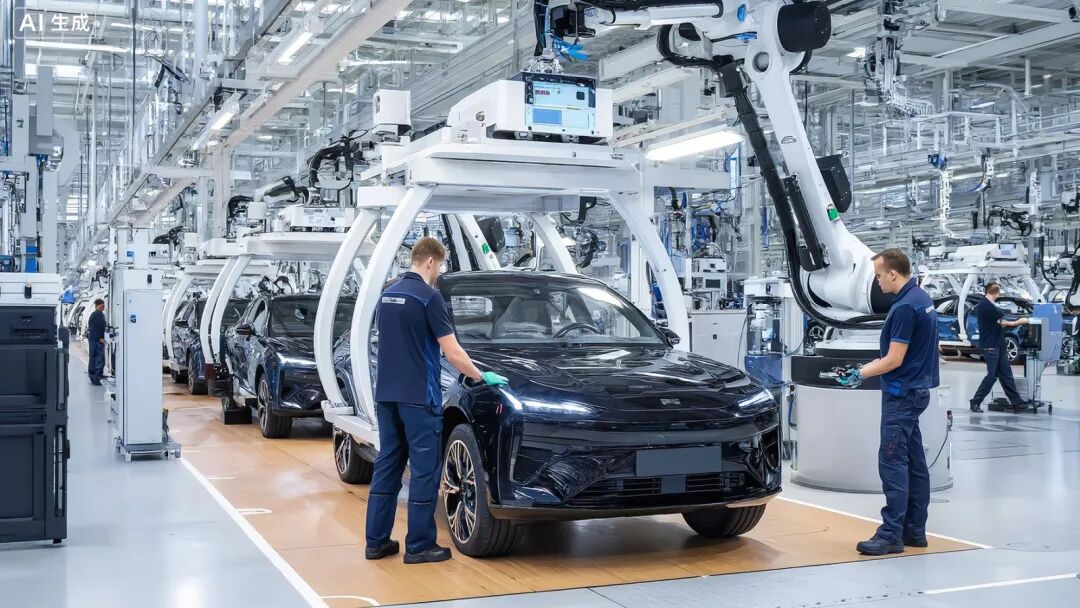
Image source: AIGC
The reporter also learned that Chinese new - force brands can compress the cycle from project establishment to mass production of models to 20 - 24 months, and some brands only need 18 months. In contrast, traditional luxury brands usually need 48 - 60 months to develop a brand - new model.
In this regard, Jim Farley, President of Ford Europe believes that Chinese automakers can increase the speed because they use more common components. Although the appearance of their new models may not be very different from the previous versions, the more important changes are reflected in software and other digital technologies.
In the era of software - defined cars, electronic components account for 60% - 70% of the cost of smart electric vehicles, and the improvement of software development efficiency has significantly accelerated the vehicle development rhythm.
McKinsey believes that nowadays, the improvement of software technology has also shortened the R & D cycle to a certain extent. Many new energy automakers use technologies such as computer - aided design, virtual simulation, and digital twin to replace some traditional test and verification links.
In order to keep up with this rhythm, traditional automakers have accelerated their R & D, but their paths vary. For example, GAC Group has improved the product planning efficiency by 30%, the product project review efficiency by 67%, the demand decision - making efficiency by 85%, and shortened the new - car development cycle to 18 - 21 months through methods such as reconstructing the IPD (Integrated Product Development) process.
Volkswagen Group has chosen the cooperation route. The CEA (Centralized Electronic Architecture) jointly developed with XPeng has increased the vehicle development efficiency by up to about 30%. According to Thomas Schäfer, CEO of Volkswagen Passenger Cars in China, "We have integrated the supply chain in China and continuously improved the overall efficiency. Based on this, we have shortened the new - car launch cycle to 24 months."
In addition, both Toyota and Nissan have compressed their development cycles from 3 - 5 years to 24 months, and Nissan has transferred the product development leadership to the Chinese team for the first time. "Speeding up R & D is 'crucial', especially for smaller companies. This is also the key to building highly cost - competitive cars because it can reduce the engineering R & D time and thus lower the cost," said Jeremy Papin, former CFO of Nissan.
It is understood that in order to get closer to the average 18 - 20 - month R & D cycle of the Chinese automotive market, traditional automakers have started to use digital tools for virtual design and testing. However, many executives of foreign automakers believe that the greater change lies in the cultural aspect. Enterprises need to learn from China to respond to market changes more quickly and flexibly.
Radical Iteration Backfires on the Market,
Supply - Demand Mismatch Triggers a Crisis of Consumer Trust
However, the overly rapid iteration speed of new cars also has hidden concerns. Zhu Huarong, Chairman of Changan Automobile once said that although the Chinese new energy vehicle market is developing rapidly, there are many problems behind it. Frequent product updates, and even the inability to continuously iterate and upgrade existing products, have reduced consumers' experience.
From the consumers' perspective, this situation not only causes a psychological gap but also triggers a crisis of trust.
Public data shows that in the first 11 months of 2025, the number of complaints about disputes over the iteration of old and new car models was about 39,300, nearly 82 times higher than the same period in 2024. Typical cases include the launch of a new version of the Zeekr 001 only 5 months after its initial release, and the iteration of the AITO M7 in only 8 months, which led to a sharp drop in the value of old car owners' vehicles, and they felt "stabbed in the back".
"I picked up my car in mid - January this year, and it's only been a little over two months, and the new car has already been iterated." "It became an 'old model' less than 3 months after I picked up the car." "In the past, it took three years to develop a car, but now they can develop three cars in a year."... Complaints about the overly rapid iteration speed of new cars can be seen everywhere on social media.
The root cause of this situation is that after the launch of a new car, a large number of orders are quickly accumulated. However, due to problems such as production capacity ramping up and supply - chain issues, many orders cannot be delivered for a long time. During this period, automakers launch even newer products.
Image source: Photo by Liu Guomei, NBD (File photo)
Ji Xuehong, Director of the Automotive Industry Innovation Research Center at North China University of Technology believes that new energy vehicles are in a double - overlapping stage of the "active innovation period" and the "rapid iteration period", resulting in obvious "late - comer advantages". New car models will have more advantages in terms of price and technology compared to old models, and current consumers prefer new models. This is also regarded as one of the reasons for consumers' dissatisfaction with automakers' "new - product launch" rhythm.
Another analysis suggests that the outbreak of complaints about disputes over the iteration of old and new car models is essentially a deep - seated contradiction between the "Moore's Law - like" technological leap of new energy vehicles and consumers' expectations for asset preservation. This contradiction is also reflected in the used - car valuation system.
A used - car dealer said that in the era of fuel - powered vehicles, there was a relatively stable evaluation model for vehicle resale value. Now, many new energy models have upgraded and facelifted versions launched less than half a year after their initial release. The early versions have become "niche models" with extremely low production volume. Used - car dealers are reluctant to buy them, and even if they do, they only dare to offer extremely low prices.
What worries consumers more is the guarantee of subsequent vehicle maintenance and software updates. Due to the low production volume of some early - version models, subsequent parts supply and software upgrades may be affected. Some consumers have reported that after the iteration of certain models, the OTA upgrade frequency of old models has significantly decreased, and some promised functions have not been fulfilled for a long time.
The "New - Product Launch" Rhythm Slows Down,
Automakers Explore a Steady Development Path
Enterprises have not been immune to the negative impacts of the "rapid iteration" of new cars.
"On the other hand, rapid iteration brings the risk of a forced shortening of the product life cycle," McKinsey said. Traditional automakers usually launch multiple derivative models under the same vehicle model, with a product life cycle of up to 7 - 10 years. This rhythm provides sufficient buffer for stable production, supply - chain optimization, and cost sharing of tooling molds and upfront investment. In today's market, consumers expect brand - new models every two to five years, which undoubtedly brings greater pressure to automakers and suppliers.
"The iteration logic of smart electric vehicles is quite different from that of traditional fuel - powered vehicles. When the intelligent chips are iterated, the cars have to be updated; when the battery technology improves, or the lights and interiors are updated, the cars also have to be iterated. This brings great pressure to the supply chain, and it is very difficult to balance supply and demand," Li Bin said bluntly.
In addition, Li Bin also said: "When enterprises need to increase production volume, supply - chain partners work overtime in three shifts, invest in equipment, and recruit employees, and they are extremely busy. But after a few months, when sales decline, they have to lay off employees, leave equipment idle, and the pressure of production conversion is also very high."
When a new car is launched, it often receives a warm market response, and orders pour in. However, when the production capacity ramps up and the delivery becomes stable, the demand begins to decline. It is extremely difficult to balance supply and demand. Li Bin described this phenomenon as "flowers don't stay in bloom for a hundred days".