Die älteren Generationen fahren ihr Benzinauto schon über 10 Jahre, während ich mein Auto schon nach 4 Jahren ersetzen muss. Die zu schnelle Iterationsgeschwindigkeit der Elektromobile führt zu einem "Mehrfachverlust". Kann die Geschwindigkeit verlangsamt werden? Branchenexperten: Das ist nicht so einfach.
Some owners of electric vehicles have stated that gasoline vehicles can be operated for over ten years, while their electric vehicle had to be replaced after only four years due to insufficient computing power of the vehicle computer. The rapid iteration speed of electric vehicles actually causes considerable problems for consumers.
Currently, the development time span of Chinese electric vehicle manufacturers has been significantly shortened compared to traditional automobile manufacturers. Between 2025 and 2026, numerous new vehicles will be launched on the market. However, the overly rapid iteration has caused a series of problems: Old customers feel "stabbed in the back", the number of complaints due to iteration disputes has skyrocketed, the residual value rate of used cars has decreased, and the maintenance and software updates of the vehicles are affected. On the contrary, automobile manufacturers face difficulties in making profits and an unbalanced supply chain, which ultimately leads to a "triple loss" for customers, manufacturers, and supply chain partners.
Currently, automobile manufacturers such as XPeng are trying to slow down the iteration speed and optimize the product through OTA updates. However, some industry experts have stated that due to factors such as market competition, it is difficult to actually slow down the industry. They hope that policies can play a key role in regulation.
"My uncle drove his Santana for fifteen years, and my father used his Toyota Camry for ten years. But for me, I had to replace the car in the fourth year, not because it was broken, but because the computing power of the vehicle computer was insufficient to support the new system. When I wanted to sell it on the used - car market, the dealer said that although the car was only four years old, it was already considered very old." Recently, Ma Xiao (pseudonym), an owner of an electric vehicle, reported his frustrating experience to a reporter from the "Daily Economic News".
What confuses him is the question: "Is the lifespan of a car now determined by the iteration speed?"
Automobile manufacturers have their own logic: Software defines the car, and hardware becomes an interchangeable carrier; Moore's Law is applied in the automotive field, and computing power becomes the new standard for engine performance.
But companies also feel the pressure caused by the rapid increase in iteration speed. Li Bin, Chairman of NIO, said openly: "In the past, gasoline vehicles were only renewed every five to seven years. The investment and cost - distribution period was long, and the pressure on companies was relatively low. But in the era of intelligent electric vehicles, the iteration speed has increased exponentially."
Behind the experiences of "Ma Xiao" and others, the logic of automobile consumption is being re - defined - the iteration speed of cars is approaching that of "electronic fast - moving consumer goods" rather than "household assets".
Is there an "electric vehicle to be replaced annually"?
Top managers in the automotive industry: Safety and longevity are always the top priority
The most direct manifestation of the accelerated iteration speed of cars is the rapid increase in the number of new products.
According to incomplete statistics, in 2025, more than 230 new vehicles (including new models, facelifts, and new generations) will be launched on the market. In 2026, this rhythm will be further accelerated. Only in March, there were nearly 80 automobile presentations, and more than 60 new vehicles were introduced. At this year's Beijing Auto Show, 1,451 vehicles were exhibited, including 181 world premieres and 71 concept vehicles, which is a significant increase compared to 117 and 41 in 2024.
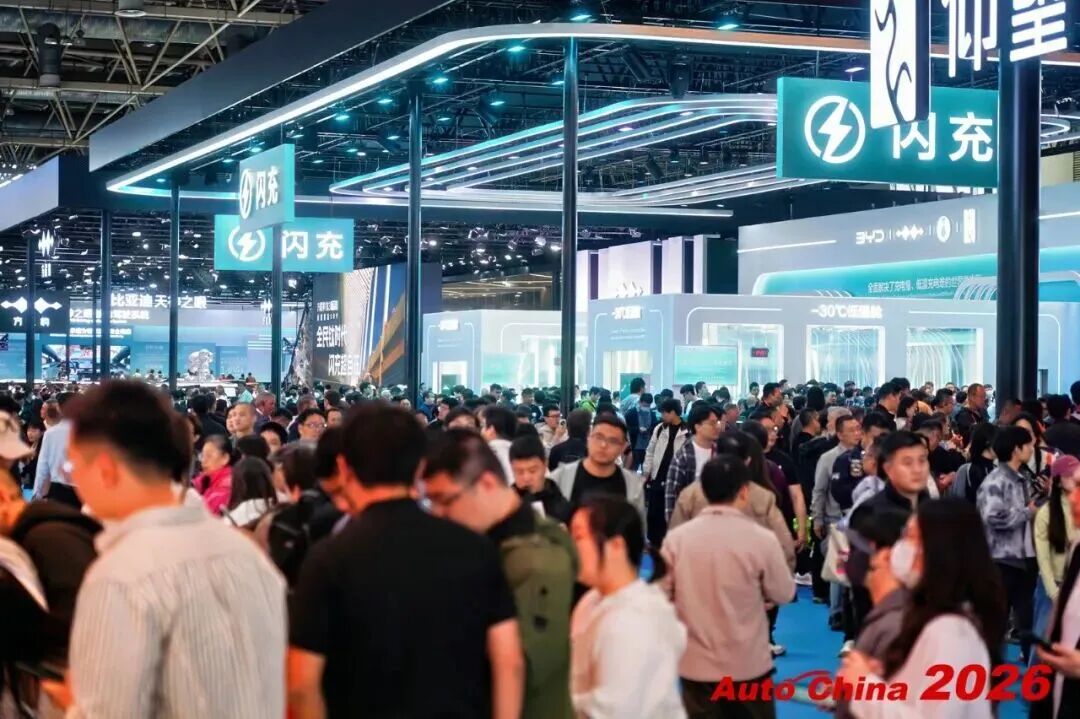
Image source: Official website of the Beijing Auto Show
Regarding the frequency of new product presentations, Qin Lihong, co - founder and President of NIO, said: "The concentration of new product presentations is a leap in the Chinese automotive industry. When all companies introduce new products simultaneously, it is difficult for each company to maintain its own rhythm. A few years ago, we already predicted that the competition in the field of Chinese intelligent electric vehicles would accelerate, and product innovation is the top priority to meet the competition."
"Ten years ago, I thought that electric vehicles were still very far away. But now, every year when I return to China, I can feel how Chinese technology and Chinese automobile manufacturers are progressing. The product iteration speed is very high." Chris Mason, CEO of the World Automotive Engineers Society, sighed that the development of Chinese electric vehicles is progressing rapidly, and the product iteration speed exceeds consumers' expectations.
As Chris Mason correctly pointed out, electric vehicles are the main drivers of the accelerated iteration speed of cars. Data released by the China Automobile Dealers Association shows that the replacement period for traditional gasoline vehicles in China is 6 to 8 years, while the replacement period for electric vehicles is only 3 to 5 years.
The trend of the accelerated iteration speed of new vehicles is also directly reflected in the transaction structure of the used - car market. Official data shows that in December 2025, the proportion of used cars less than three years old in transactions was 28.74%, and the proportion of used cars 3 to 6 years old was 42.97%. These two types of vehicles together accounted for over 70% of the total transactions and were the absolute main players in the used - car market.
This "extremely rapid iteration" also makes consumers wonder whether cars have already become fast - moving consumer goods. Some Internet users have even ironically said that there are already "pure electric vehicles to be replaced annually".
In the view of Li Xiang, Chairman of Li Auto, there is a significant difference between automobiles and consumer electronics products such as mobile phones. Cars are directly related to the life safety of users' families, and numerous validations must be carried out during the development of cars. It must be tested and refined back and forth for a long time, and it is impossible to follow the rapid iteration logic of mobile phones.
Li Xiang cited the example of the usual vehicle disassembly process and pointed out that automobile manufacturers disassemble many vehicles that have been tested on the road and repeatedly check whether all mechanical and electronic systems meet the design criteria. Creating a sufficient number of vehicles for road testing, which have a sufficient driving distance and complex test conditions, is in itself a project that requires a lot of time and cannot be artificially shortened.
Lu Fang, Chairman of VOYAH believes that safety, longevity, and reliability always remain the top priority, even if consumers replace their cars more frequently. This means that companies cannot apply the logic of fast - moving consumer goods when developing cars. Building cars must always comply with "automobile standards", not "consumption standards".
The global automotive development is being re - defined:
The development time span of Chinese electric vehicle manufacturers is halved
Although the industry generally believes that cars are not fast - moving consumer goods, it is undeniable that the current automotive development system has undergone profound changes.
In the past, European and Japanese automobile manufacturers controlled the rhythm of the global automotive industry - a small change every three years, a new generation every five years, linear development, stable supply, and step - by - step approval. Only when Chinese electric vehicles entered the market was this model completely changed.
A report by McKinsey shows that Chinese new automobile manufacturers specializing in electric vehicles have shortened the time span from concept validation to market launch of a new model to about 24 months, which is twice as fast as the 40 to 50 months of traditional automobile manufacturers.
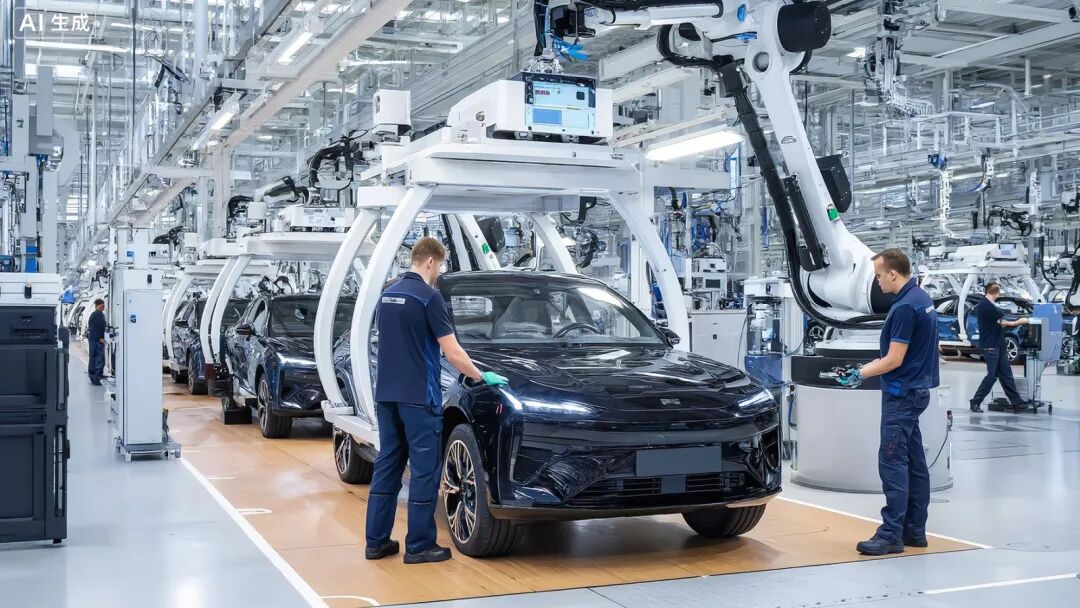
Image source: AIGC
The reporter has also learned that Chinese new brands can shorten the time span from project initiation to mass production of a model to 20 to 24 months, and some brands only need 18 months. In contrast, traditional luxury brands usually need 48 to 60 months to develop a new model.
In the view of Jim Baumbick, President of Ford Europe, Chinese automobile manufacturers can increase the speed because they use more standard components. Although the appearance of their new models may not be very different from the previous versions, the more important changes lie in software and other digital technologies.
In the era of software - defined cars, electronic components account for 60% to 70% of the costs of intelligent electric vehicles, and the improvement of software development efficiency has significantly accelerated the development of the entire vehicle.
McKinsey believes that the improvement of software technology has also shortened the development time span to a certain extent. Many electric vehicle manufacturers use technologies such as computer - aided design, virtual simulation, and digital twins to replace some traditional testing and validation steps.
To follow this rhythm, traditional automobile manufacturers are accelerating their development, but the ways are different. For example, the GAC Group has improved the efficiency of product planning by 30%, the efficiency of project initiation evaluation by 67%, and the efficiency of demand decision - making by 85% through the transformation of the IPD (Integrated Product Development) process and shortened the development time span for new vehicles to 18 to 21 months.
The Volkswagen Group has chosen the cooperation route. The joint development of the regional control electronics architecture - the CEA architecture - with XPeng has improved the development efficiency of the entire vehicle by up to 30%. According to Thomas Schäfer, CEO of Volkswagen Passenger Cars in China: "We integrate the supply chain in China and continuously improve the overall efficiency. On this basis, we have shortened the time span to market launch of a new vehicle to 24 months."
In addition, both Toyota and Nissan have shortened the development time span from 3 to 5 years to 24 months, and Nissan has transferred the product development power to the Chinese team for the first time. "Accelerating the development speed is 'crucially important', especially for smaller companies. This is also the key to manufacturing cost - effective cars, as it can reduce the time for engineering development and lower the costs." Jeremy Papin, former Chief Purchasing Officer of Nissan, said.
To get closer to the average development time span of 18 to 20 months in the Chinese automotive market, traditional automobile manufacturers are beginning to use digital tools for virtual design and testing. Many executives of foreign automobile companies believe that the greater change lies at the cultural level. Companies must learn from China to respond more quickly and flexibly to market changes.
The radical iteration harms the market,
The mismatch between supply and demand leads to a consumer trust crisis
But the overly rapid iteration speed of new vehicles also poses risks. Zhu Huarong, Chairman of Changan Automobile, once stated that although Chinese electric vehicles are developing rapidly, there are many problems behind them. The constant updating of products and the lack of continuous iteration and updating of existing products reduce the user experience.
From the consumers' perspective, this situation not only creates a psychological distance but also causes a trust crisis.
Official data shows that in the first 11 months of 2025, the number of complaints due to iteration disputes between old and new vehicles was about 39,300, which is almost 82 times higher than in the same period in 2024. Typical examples are the presentation of the new Zeekr 001 only five months after its market launch and the iteration of the AITO M7 only eight months later, which led to a dramatic drop in the vehicle value of old customers and made them feel "stabbed in the back".
"I took delivery of the car in mid - January this year, and only two months later, a new model was introduced." "My car has become 'old' only three months after I took delivery." "In the past, one 'forged a sword in three years', now one can 'forge three swords in one year'."... There are comments everywhere on social media about the overly rapid iteration speed of new vehicles.
The reason for this situation is that after a new vehicle is launched on the market, a large number of orders are quickly received, but due to problems such as capacity expansion and supply chain delivery, many orders cannot be delivered for a long time. In the meantime, the manufacturer presents a new product.
