After 15,000 tests with large language models, why do all the AI-generated suggestions you get turn out to be clichés?
God Translation Bureau is a translation team under 36Kr, focusing on fields such as technology, business, workplace, and life, and mainly introducing new technologies, new ideas, and new trends from abroad.
Editor's note: Tweaking prompts and building workflows, you think you're iterating on productivity, but in fact, you're just pulling the slot machine. Don't let the junk content generated by AI erode your judgment. This article is a compilation.
I started researching AI mainly for two reasons.
First, I'm worried that if I don't understand this thing, I'll eventually lose my footing in the workplace.
Second, I'm not young anymore. As early as four years ago, I felt the cruelty of the workplace, and it will only get harder in the future. So I think if I don't learn something new, I'm likely to "graduate early" from the workplace.
I follow every tool, large language model, and various skills that I can name without exception.
Every time there's a new update, I'll look it up and try it. I'm completely obsessed. I hardly sleep, always worried that I might miss something in my analysis. I feel like I'm going crazy.
Subsequently, my body started to show warning signs - I developed gastritis, and even the general practitioner couldn't find the cause. It took three weeks of trouble before I finally recovered.
This reminds me of the sudden death cases I've seen. I know this may sound extreme, but based on all the data I've seen so far, I'm not the only one who feels exhausted in the face of technological anxiety.
The Mental Impact of AI
This is the latest survey data from Harvard Business Review. They surveyed about 1,500 professionals across various industries in the United States. Here is the summary chart:
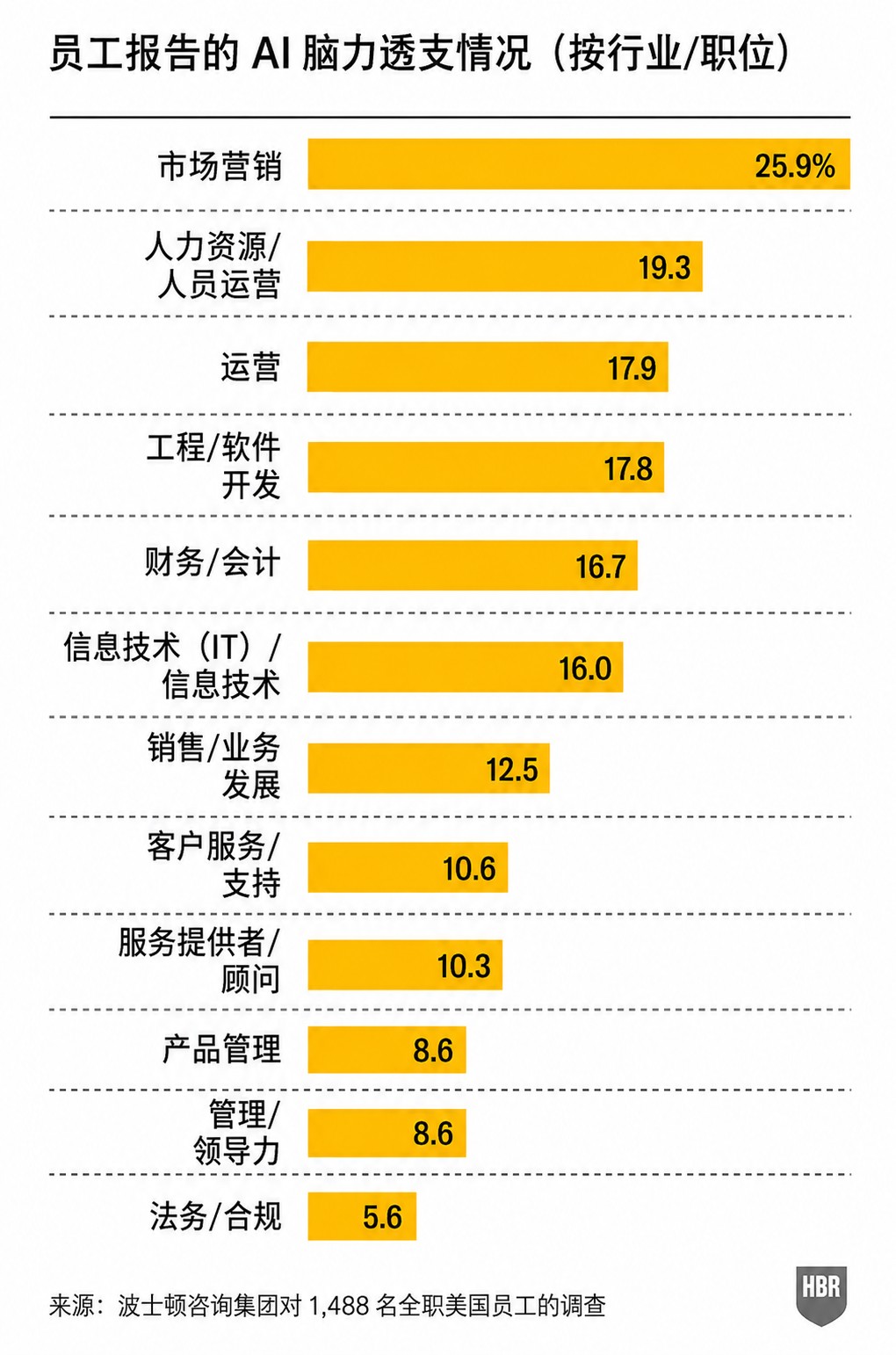
Maybe you just don't pay much attention or are too busy to face it, but that doesn't mean you're not under pressure. The shoddy AI junk content, the overwhelming hype, and the workplace pressure of "doing more with less" are all silently torturing you. Or maybe you thought this pain was just temporary and you could get through it by gritting your teeth.
"AI brain meltdown" won't earn you any honorary medals. It's just "workplace burnout" in a fancy package.
Using generative AI to generate better pictures or code has the same addictive mechanism as scrolling through TikTok or pulling a slot machine. You input prompts, regenerate, fine - tune, and regenerate.
Three out of the four generated pictures are useless, and only one is barely passable. So you can't help but pull the slot machine lever again.
Moreover, I think the burnout caused by AI addiction is even more terrifying because it wears the badge of "improving productivity", making you think that re - inputting prompts again and again is "product iteration". Coupled with the fact that the images in your mind are originally vague and subjective, you always think that "the next time will definitely be closer to perfection". Generative AI also consumes time and computing power quotas, and this sunk cost makes it harder, not easier, to give up.
After my body sent out an alarm and I heard the anxiety stories of my friends around me, I think it's time to slow down - after four years of hard chasing.
Meanwhile, the more I learn about AI, the more immune I become to product demonstrations and new product launches.
Here are some insights I've sorted out.
First: There's no point in deliberately learning "how to use AI".
Because the models are updated so quickly that any skills you learn will become obsolete every few months.
The ultimate goal of AI development is to enable anyone to complete tasks through everyday plain language (natural language). Therefore, any so - called usage threshold will be completely eliminated in the next technological iteration.
Teaching others how to do "vibe coding" or using AI for film, television, and painting creation is an even more desperate thing. Once the tools are updated, the skills become invalid. What really never goes out of style is knowing what good engineering practices are, what effective visual designs are, and what well - argued articles are.
Only these underlying abilities can give you the confidence to judge any new things that appear in the future - including the AI - generated content in front of you.
Researchers conducted a test in 2026. They trained a model with the personal paintings of visual artists and then let the two compete. As a result, the artists still won by a large margin in terms of originality, inspiration, and aesthetic performance.
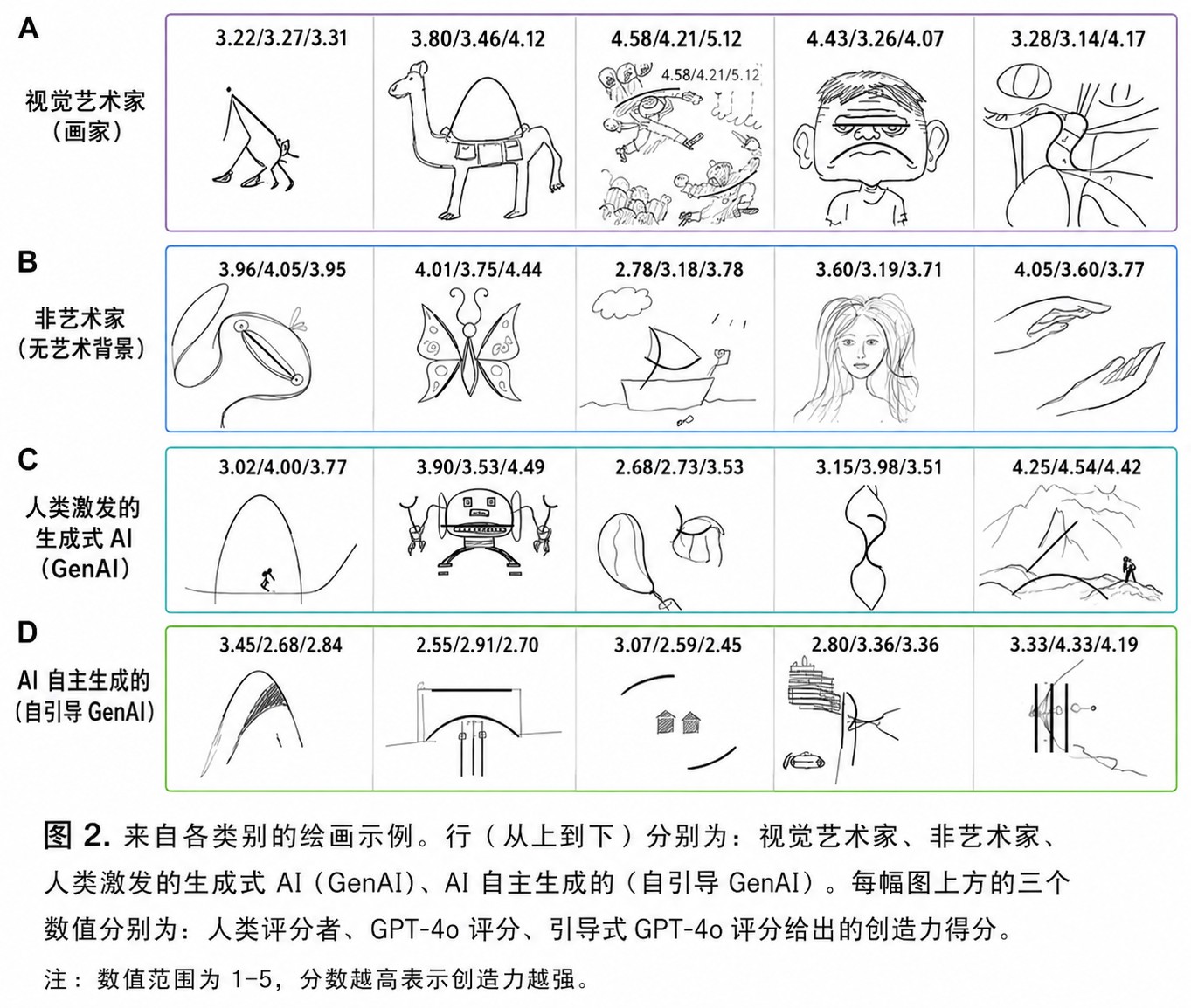
The model has their style but cannot replicate their keen perception.
Without that intuition and aesthetic sense, you're just learning to operate a tool that will be completely different in six months.
Once you understand this, simply delving into how to manipulate generative AI loses its meaning. The time you spend researching AI workflows would be better spent reading a good book or learning an underlying theory.
This will be a hundred times more useful to you in the future.
Second: Relying entirely on AI to do your work is also futile.
In order to make AI perform a certain task perfectly, you need to make great efforts, at least I did before.
You create folders, set rules, and configure skills. Finally, you manage to run a workflow that can produce results as expected. But the next time the model is updated, it directly "absorbs" all your efforts (and knowledge). Now anyone can get the same effect just by saying a word.
If you were an early adopter, think back to all the GPTs you chased crazily in 2023, and then look at some of the skills or OpenClaw projects that keep you up at night now. Everything you've done has actually been mercilessly replaced by the next - generation technology. The most value you've provided is just feeding high - quality training materials to the model.
Moreover, before you have a chance to enjoy the competitive advantage brought by the carefully tuned AI agents (workflows, skills), the gap between you and others is quickly leveled.
It's like your colleagues who never bother to study Claude or Cursor. Their understanding of AI is limited to occasionally glancing at news headlines. They still do their work in the old - fashioned way, and the time you saved with Claude and the in - depth thinking you thought you did more actually don't make any substantial difference in the eyes of the management compared to what they've done.
All that's left is to use those seemingly clumsy but truly solid hard - core skills.
There is indeed a valuable way to involve AI, but it's completely different from the above two approaches.
Don't rush to learn every new tool as soon as you see it, and don't spend a lot of time building skills or workflows around it.
You just need to be restrained and use it regularly to figure out where its "ability ceiling" is. That ceiling is the secret that is never mentioned in all the glamorous product demonstrations. And it's the only thing worth understanding.
One way to figure out this ceiling is to notice when you reach for AI - sometimes you don't really need it. It's just that when facing a difficult problem, sitting there thinking hard makes you feel anxious and uncomfortable.
I've started to notice that once I encounter a problem, I'll subconsciously open the dialog box. Inputting prompts has become my refuge to avoid thinking. And when I try to force myself to wait for five minutes, I usually already know what I really want to express.
As for AI, it just wraps my thoughts in more long - winded nonsense and gives them back to me.
The same problem exists when using AI for brainstorming. It can be said that "brainstorming" is the most common AI usage scenario I've heard, so I'll use it as an example.
Every idea generated by AI actually already floods every corner of the Internet. What it gives you is just the most reasonable and mediocre answer statistically. And when you're trying to find a unique perspective that no one else has ever taken, these popular ideas are exactly what you don't need.
Researchers have conducted rigorous data calculations on this. They selected seven mainstream large models, including ChatGPT, Claude, DeepSeek, Gemini, Grok, Mistral, and GPT - 5, and conducted thousands of tests on real strategic issues in various industries, using various prompts with different sentence structures and frameworks.
However, the conclusions drawn each time are quite similar: differentiation, cooperation, long - termism, innovation, and centralized management. As you can see in the following chart:
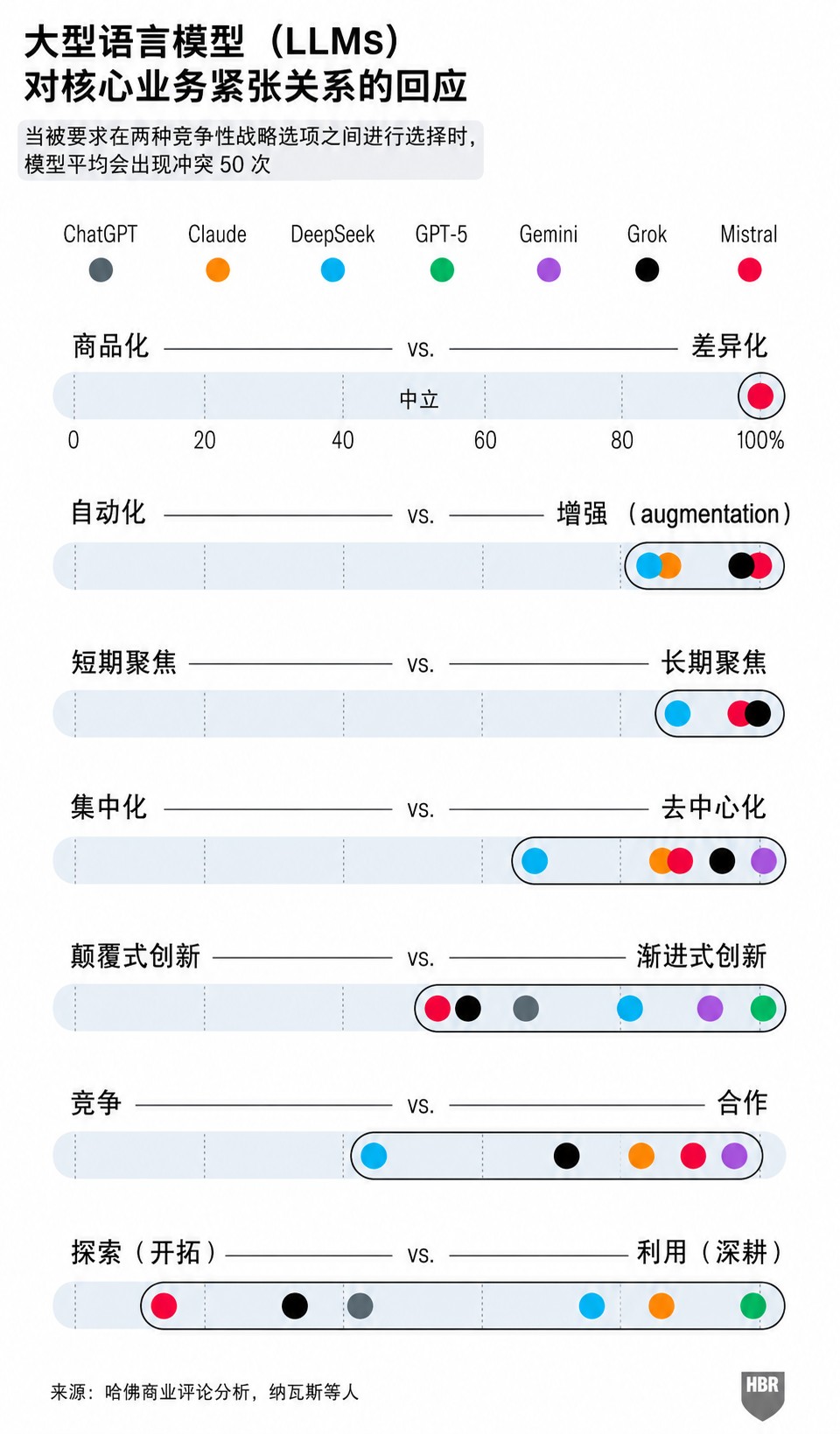
You don't actually need to conduct 15,000 tests like the researchers to see this. You just need to pay attention and see if what you get is just clichés that are at the average level of the Internet.
No matter what industry background you provide and how your prompts change, the suggestions given by the model will inevitably converge on those high - sounding but actually empty popular buzzwords.
Besides brainstorming, I believe some of you may be amazed at how GPT - Image2's current capabilities have surpassed nano banana.
I spent a few hours experiencing GPT - Image 2. It can indeed draw a picture close to what's in your mind, but only if your instructions are extremely specific, so specific that you've actually completed all the creative concepts yourself. After all the trouble, I found that the time spent was even longer than directly finding a reference picture and communicating with a designer.
Both of these scenarios are very worthy of deep thought (you may also find similar moments of your own). And you don't need to be an AI expert to see through these.
The truly worthy way to interact with AI should be like this:
Try new technologies when they are just mature enough to have real significance, and figure out their real advantages, disadvantages, and costs.
Then think carefully and decide whether it should become part of your work. This is fundamentally different from blindly chasing every new product launch. Moreover, it's much gentler on your nervous system and won't drive you crazy.
Write fewer prompts and do more in - depth thinking.
After the blind following and futile frenzy of AI passes
The models will continue to be upgraded, and new product launches won't stop.
But after I started using these tools seriously, I've increasingly realized that AI can indeed help me produce things more efficiently. But it can never tell me what things are really worth doing.
In the end, most of the content generated by AI is often thrown into the trash can by me without hesitation.
That's why the most core competitiveness - in the past and always in the future - is our "judgment": knowing what to pursue, what to complete, and what to give up decisively. Judgment will always be the ultimate bottleneck. As I mentioned in the article about how to "squeeze out" the core value of your colleagues.
Judgment is the ceiling that no next - generation technology release can break through.
This is not because AI companies aren't working hard enough, but because this is simply not a problem that can be solved by engineering technology.
Once you see this clearly, those so - called major technology releases won't stir up any waves in your heart. Instead, when something new comes out, you can just have a look, roughly understand what it does, and then calmly turn around and continue to focus on the truly important thinking at hand.
This may sound like a cliché, but the key to the problem has never been "which tool is the fastest", but always "what you actually want to use it for".
Translator: boxi.