Netflix is "plotting" an AI studio. Why start with animation?
In the arms race of AIGC among film and television giants, Netflix has stepped on the accelerator again. According to foreign media The Verge, Netflix established a studio called "INKubator" in March this year. This is also the first animation production department centered on generative artificial intelligence among global streaming giants.
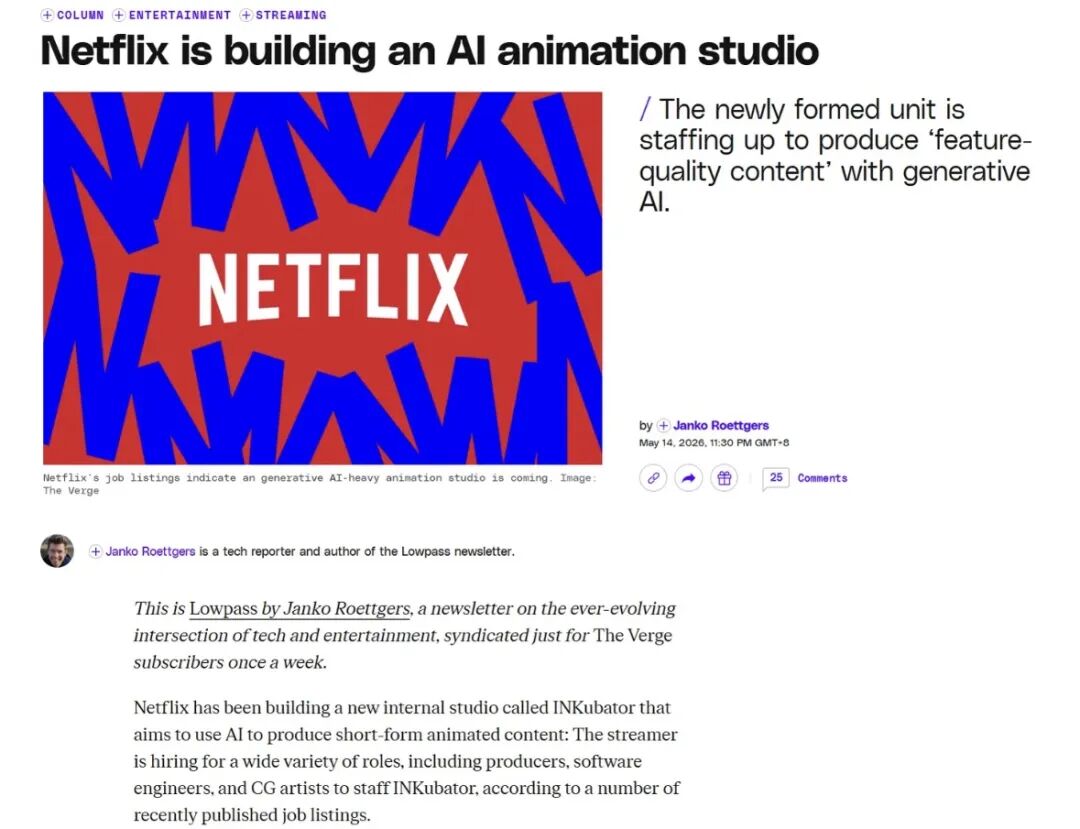
This move quickly caused a stir in the global entertainment industry. Although established Hollywood players like Disney had previously extended an olive branch to top - tier technology companies like OpenAI, it is the first case in the streaming industry for a company like Netflix to directly establish an AI studio in the "vertical animation track".
The resistance to AI in Hollywood is still ongoing. Why did Netflix choose animation for this "reverse move"? In this global AI wave, what different AI divides have overseas streaming giants represented by Netflix and domestic long - form video and content platforms with different strategies taken? Behind the bet on technological efficiency is a speculation on the logic of content production.
Netflix's "Sneak Start"
In the middle of this month, The Verge traced the job openings on Netflix's official website and found that this streaming giant had quietly launched its "native generative AI animation studio" INKubator.
In terms of leadership configuration, Netflix has made great efforts. INKubator is helmed by industry veteran executive Serrena Iyer, who has served as the head of strategy and operations at DreamWorks Animation, A24, and MRC Studios. She has an extremely solid background in traditional film production and business operations.
In addition, the studio is currently recruiting a large number of on - site positions covering the entire industrial chain, including machine - learning - assisted animators, CG artists, software engineers, technical directors, and technical supervisors.
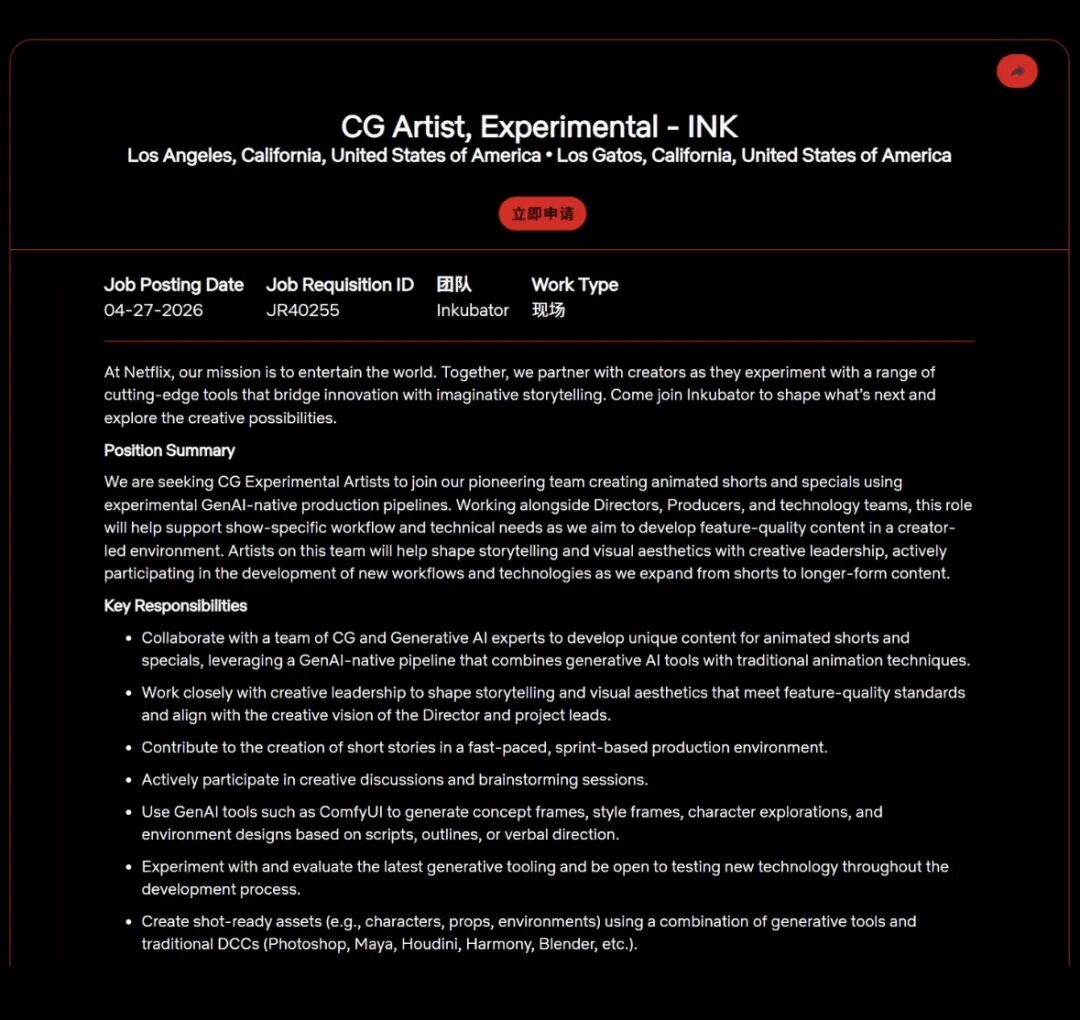
In terms of business path, INKubator has formulated a clear "two - step" strategy. It is understood that in the short term, the studio will focus on using an experimental native generative AI production line to develop animated shorts and specials based on Netflix's existing mature IPs. However, the recruitment notice for its technical supervisor clearly states that this technology investment aims to support multiple concurrent projects, and Netflix's ultimate ambition is to expand significantly into high - quality feature - length content.
To ease external concerns, Netflix has repeatedly emphasized in its responses that the theatrical - grade movies of its animation studio will continue to be produced using traditional animation techniques. This means that INKubator is not intended to completely replace the traditional approach but is positioned as a parallel "genetic improvement chamber", attempting to create a new, faster, more cost - effective, and more efficient content production paradigm through a hybrid production model that combines traditional animation practices with emerging AI tools.
However, INKubator's radical debut shows a subtle yet intense tension with its established policy. Just over a year ago, Netflix's AI usage guidelines still had a strong "defensive color", strictly defining generative AI as a "creative assistant tool". The guidelines were full of caution regarding legal review, copyright protection, and human supervision, trying hard to send a reassuring signal to the outside world.
But now, INKubator's recruitment list has completely torn off this gentle veil and turned to an all - out "offensive stance". The previous guidelines focused on risk management and cautious defense, while the current INKubator is justifiably focused on building industrial pipelines at the studio level, improving scalability, and deeply integrating generative AI into every core link from development, visual development, mid - production to post - production.
Although Netflix promises to provide creators with an "artist - centered" experimental environment to enhance their narrative ability with new tools, its described AI workflow that covers almost the entire animation process has undoubtedly touched the most sensitive nerves of traditional artists and industry unions in the current severe labor - management environment in Hollywood.
For this huge streaming machine, the temptation of efficiency and cost is too great to resist. The birth of INKubator officially announces the arrival of the "native AI production era" for streaming media.
Why Animation?
In today's Hollywood, resistance to generative AI is not uncommon.
An AI talent studio once tried to launch a virtual actress named Tilly Norwood created by AI, which was immediately met with a storm of angry condemnation from within the industry. At the institutional level, after months of long - lasting strikes, the Screen Actors Guild - American Federation of Television and Radio Artists and the Writers Guild of America have successfully required producers to obtain informed consent and pay for digital replicas, strictly restrict AI from rewriting human scripts, and more than 400 top filmmakers have jointly urged the federal government to prevent AI platforms from using copyrighted works for training without permission.
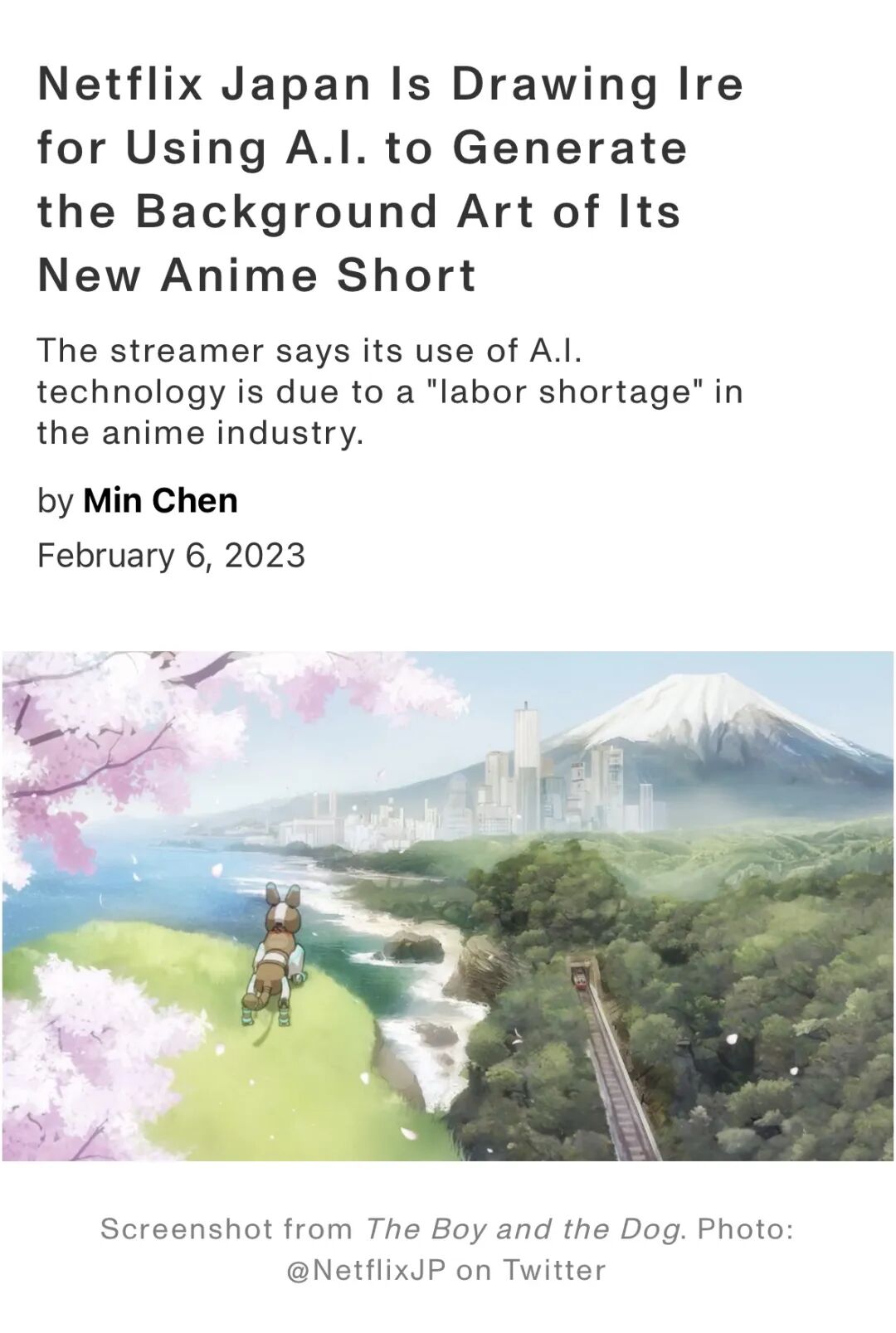
In such a sensitive and volatile ecosystem, Netflix is also treading on thin ice when publicly talking about AI. However, its strategy is often to "do it first and then talk". In July last year, Ted Sarandos, its co - CEO, only mentioned after the fact when explaining the hit show "The Admiral" that with the help of AI tools, the completion speed of its visual effects sequences was 10 times faster than the traditional workflow. Although Netflix was also attacked by public opinion for the Japanese AI - assisted short film "Dog and Boy" in 2023, in the face of the huge temptation of "high efficiency", Netflix obviously doesn't intend to back down.
Since AI experiments in the live - action film and television track are fraught with perils, animation naturally becomes Netflix's most ideal strategic breakthrough and safe haven. The establishment of INKubator is a typical example of such a surprise and covert strategy.
First of all, the animation track does have natural flexibility in avoiding the fierce rebound from live - action actor unions.
More importantly, compared with live - action film and television full of uncertainties, animation production naturally has highly process - oriented and industrialized characteristics. From the word - by - word deconstruction of the script, to the frame - by - frame drawing of the storyboard, and then to 3D modeling and asset rendering, every aspect of animation production has long been structured. Its strong digital attributes and strict assembly line make it a "natural sandbox" for running AI models and training data streams.
In fact, the huge assets accumulated by traditional Hollywood giants over the decades are the golden nourishment needed for the iteration of generative AI. This data advantage is more concretely reflected in the derivative development of mature IPs. For example, Netflix plans to develop the derivative animation "85 Past" of "Stranger Things" and the previous derivative animation "The Witcher: Nightmare of the Wolf" of "The Witcher".
For such projects, the live - action TV series have laid an extremely solid foundation for the script, world - view setting, and even the tone of the character art style. In the traditional model, even for a 20 - minute derivative short film, the original painters need to redraw tens of thousands of storyboards according to the images of live - action actors, which takes months. If AI is used, it will surely achieve twice the result with half the effort.
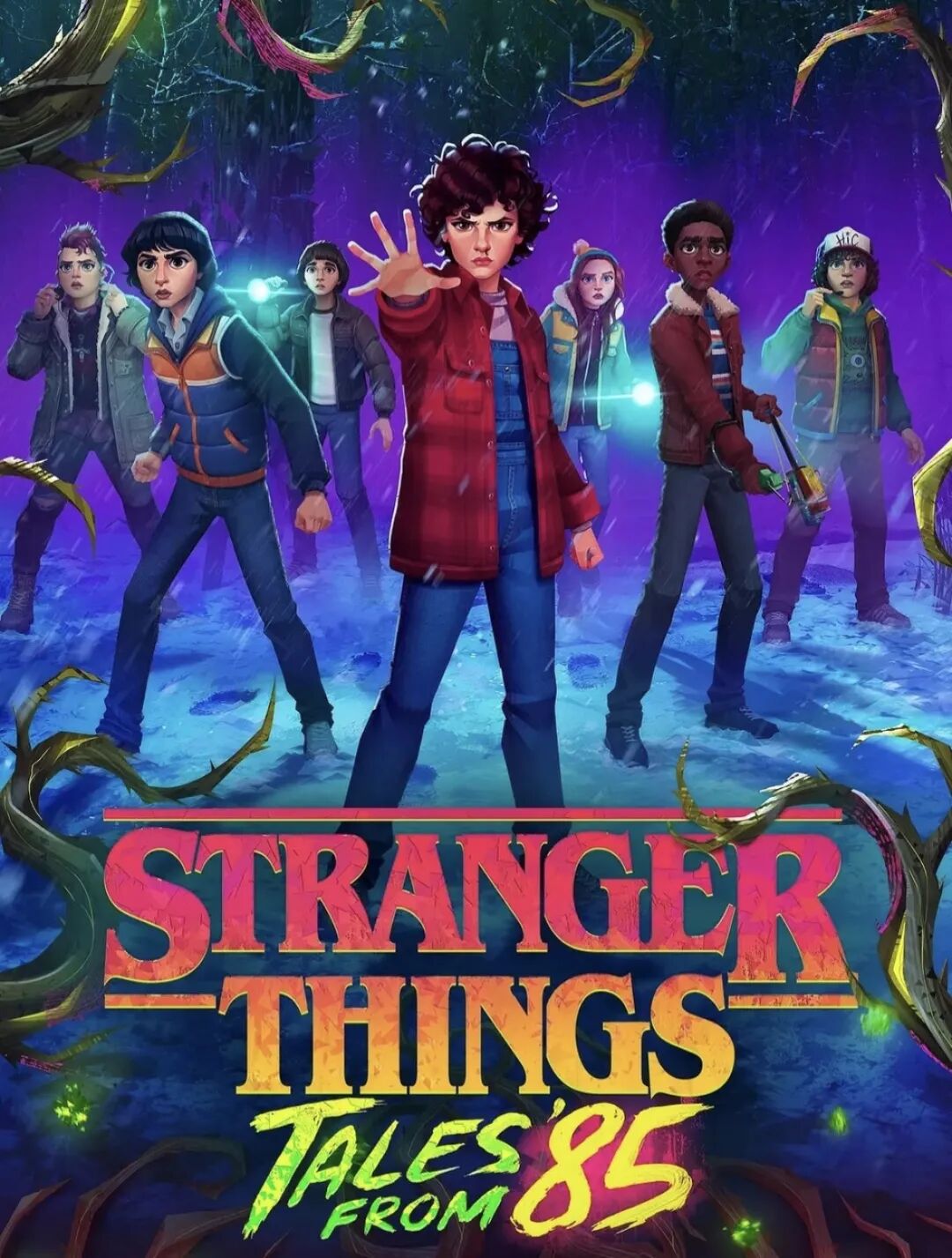
Of course, animation has a stronger ability to break through international boundaries in the global market than live - action content. Netflix is not without confidence in the animation field. In recent years, its in - house animation studio has produced a number of top - notch original works such as "Klaus", "The Willoughbys", and "Rio", which provide strong internal talent support and good word - of - mouth support for it.
Therefore, investing in AI animation is not only a shelter for Netflix to avoid the labor - management war in Hollywood but also an experimental field for it to reshape content production with technology.
The AI Content Empire
Netflix is not satisfied with just dipping its toes in AI investment.
In addition to establishing the native AI animation studio INKubator, Netflix has adopted a dual - track model of "open - source" and "large - scale mergers and acquisitions" at the technical level. On the one hand, Netflix previously open - sourced the AI tool VOID for the first time; on the other hand, in March this year, Netflix spent $600 million to directly acquire InterPositive, a startup founded by Hollywood superstar Ben Affleck and focusing on post - production AI technology.
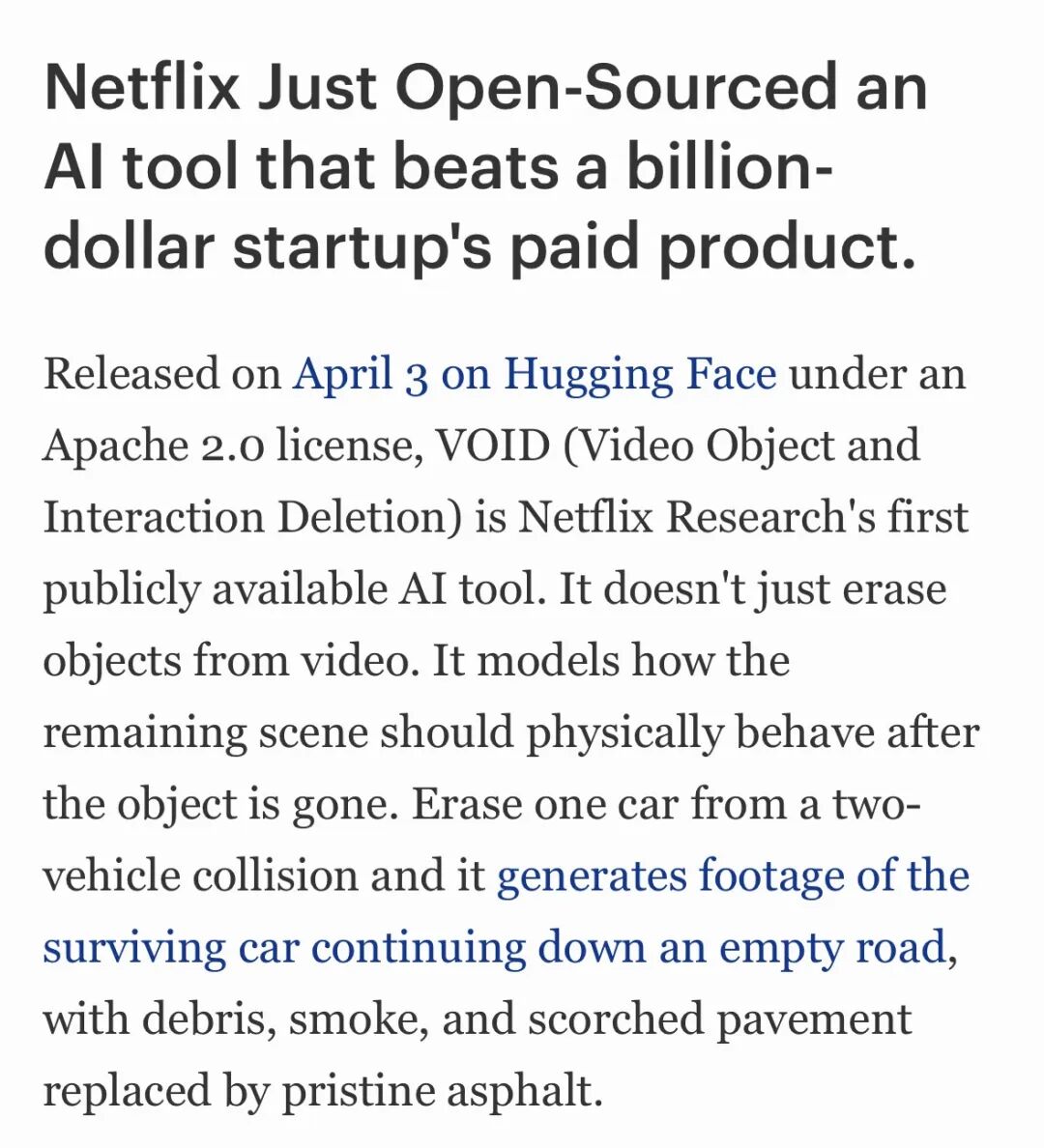
On the one hand, it uses a large amount of funds to acquire proprietary technologies to improve the speed of visual effects, sound effects, and localization translation; on the other hand, it builds a native AI studio. Netflix's content competition strategy is no longer to snatch IPs at high prices from established studios like Warner Bros. but to selectively channel core resources into the industrial construction of AI tools.
The reason why Netflix is so determined in the face of fierce resistance in Hollywood is that the criteria for judging its commercial value by the outside world have changed.
The biggest players in Hollywood are all competing to place bets. Disney previously invested $1 billion to license more than 200 characters such as Marvel and Pixar to OpenAI's Sora platform. For current investors, evaluating Netflix's value no longer simply depends on the single dimension of "number of subscribers" but on how it uses technology and capital to improve human efficiency. Therefore, Netflix's idea is to use self - developed technology and mergers and acquisitions to become a real "content technology platform". It aims to reduce special effects costs and shorten the production cycle through AI.
This transformation path of parallel development of content and technology coincides with the AI layout strategy of domestic streaming media.
Domestic long - form video giants are also on a path of "producing content while developing self - developed technology". The most typical example is iQiyi. In late March this year, iQiyi officially launched "Nadou Pro", the first professional intelligent platform for film and television production in China, applying its self - developed large - scale model to script evaluation and content generation.
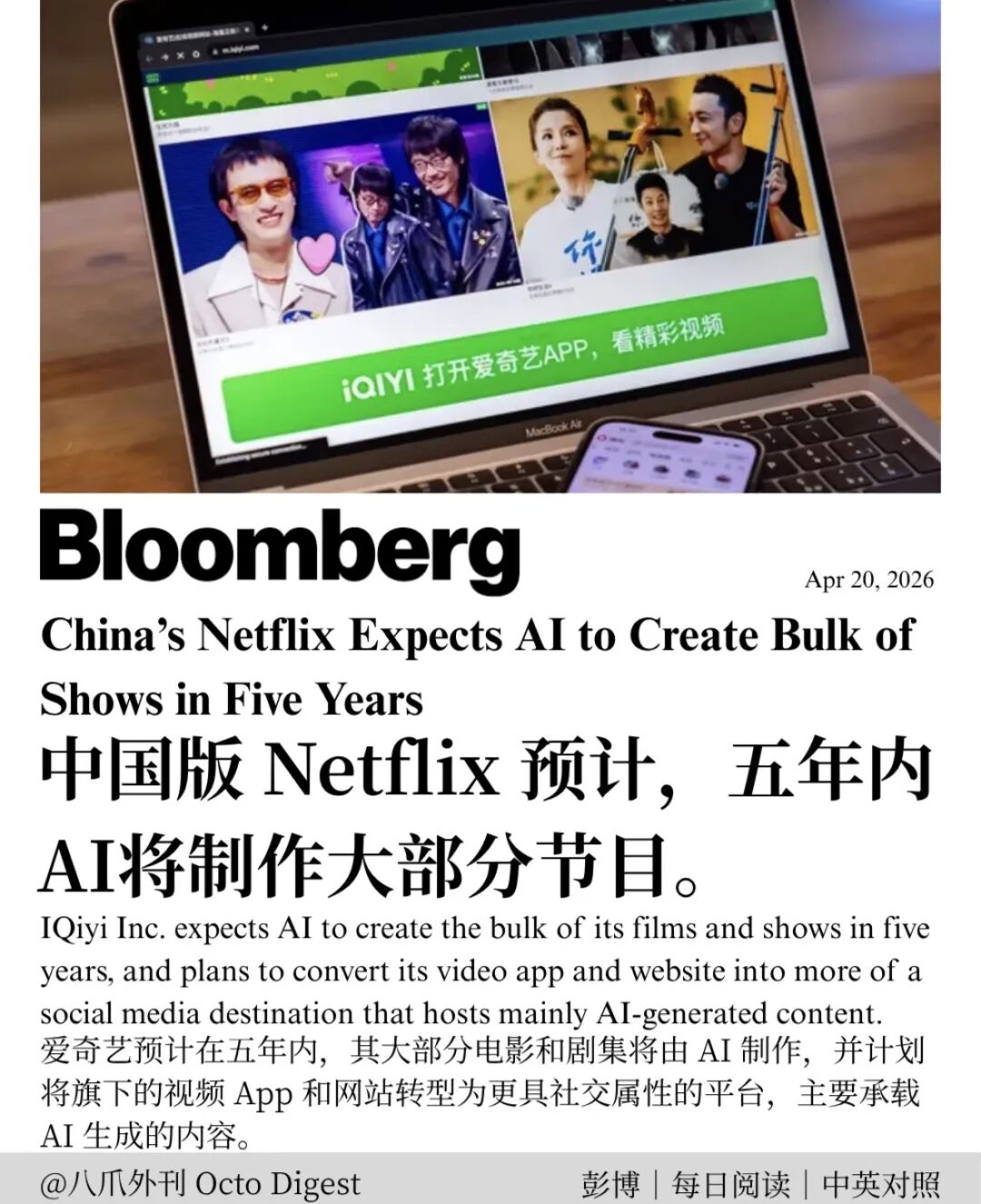
Chinese and foreign streaming media have reached a certain consensus at this moment. However, there are still differences in the specific AI layout logic.
Netflix's biggest anxiety lies in how to continuously supply new and attractive original products. If it always relies on traditional IP development, content costs and production cycles will become an unbearable burden. Therefore, the ultimate logic of its native AI content production is "technologization of content assets".
In contrast, the AI attempts of domestic streaming platforms still have a strong logic of "traffic and content distribution" at present. People are more used to analyzing existing online novel IPs and popular online hits. Currently, they have not used AI to create an original content product with long - term vitality from scratch. Technology here is more used as a harvester to accelerate traffic monetization.
Although the logics and entry points have different focuses, the collective shift of Chinese and foreign streaming media indicates an irreversible industry trend. The entertainment industry may not be completely replaced by AI, but its production chain and power structure are being reshaped. In this AI arms race, whoever can first establish a commercial closed - loop with technology will get the ticket to the next film and television empire.
This article is from the WeChat official account "Guduo Online Film and Television" (ID: guduowlj), written by the Guduo Editorial Department. It is published by 36Kr with authorization.