The hotter the brain-computer interface gets, the more "nervous" the local state-owned assets become?
At the beginning of 2026, Strong Brain Technology, known as one of the "Six Little Dragons in Hangzhou", completed a large - scale financing round of 2 billion yuan with high - profile , setting the second - largest global financing record in the brain - computer interface field outside of Neuralink.
For a moment, the industry was in an uproar, and everyone was discussing the positive signals released behind this sky - high financing. However, the more bustling the market became, the stronger the sense of urgency among a group of local state - owned assets became. It is reported that on the day when the 2 - billion - yuan financing was disclosed , at least 25 state - owned institutions actively contacted Arterial Network and tried to squeeze into the list of investors in subsequent rounds.
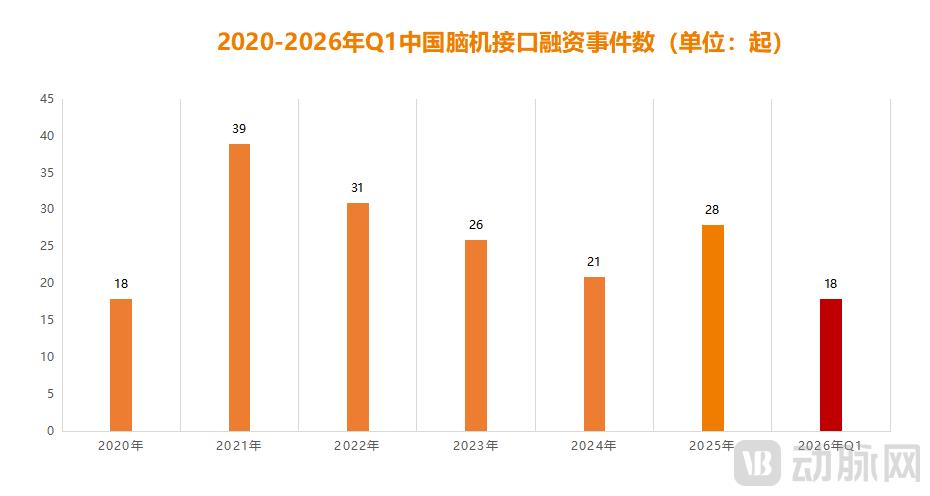
Figure 1. Number of financing events in the brain - computer interface field in China from 2020 to the first quarter of 2026 (Data source: Arterial Orange Database)
This is not just following the trend. According to incomplete statistics from the Arterial Orange Database, as of April 20th, 24 financing events have been completed in the domestic brain - computer interface field this year, with a total financing amount exceeding 4.5 billion yuan, which has already exceeded the total of the whole year of 2025. It is worth mentioning that among the 24 financing events, as many as 14 were directly participated by state - owned assets, including well - known institutions such as Shanghai State - owned Assets Investment, Suzhou State - owned Development Venture Capital, Beijing Medical and Health Fund, Chengdu Tianfu International Biotech City Investment, and Zhuhai High - tech Venture Capital.
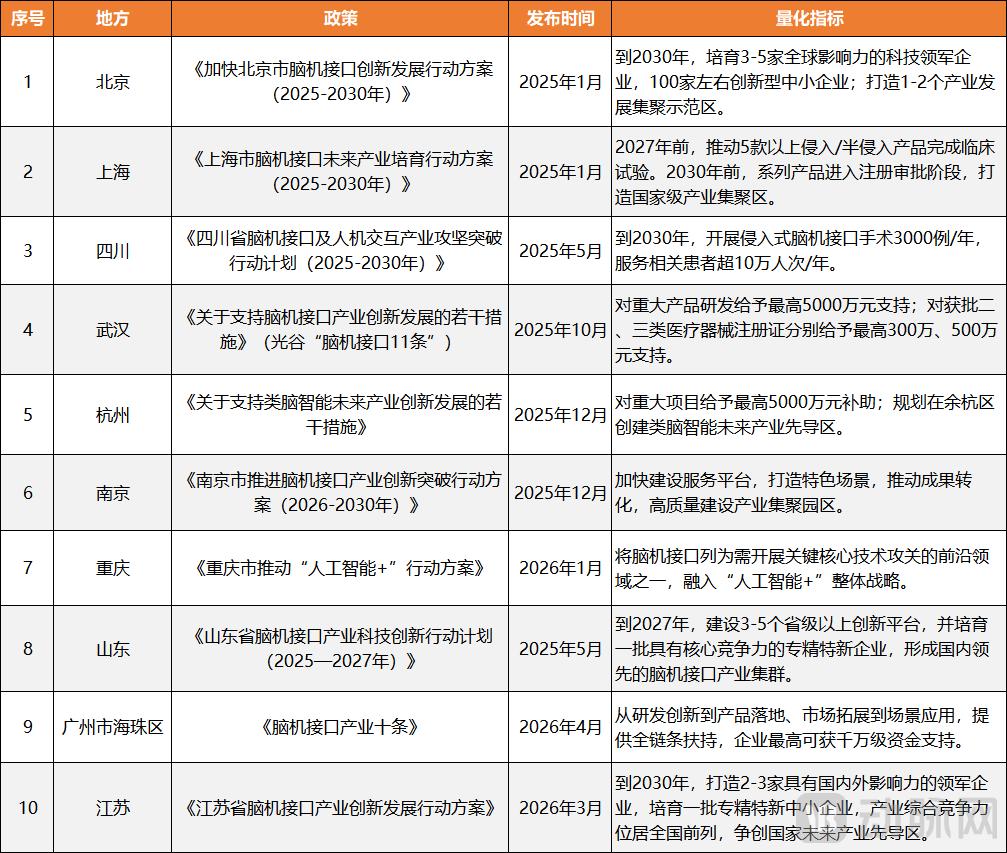
Figure 2. Special policies for brain - computer interface in various regions in the past year
In addition to investment, local governments have other means to seize the opportunity in the brain - computer interface industry, and they have also been very active. For example, at the policy level, since this year , Beijing, Shanghai, Nanjing, Chengdu, Shenzhen, Tianjin, Hangzhou, Wuhan, Hefei and other places have successively introduced special policies for brain - computer interface, making all - round arrangements in terms of capital subsidies, talent introduction, technological breakthroughs, and clinical applications. In addition, in the construction of the industrial ecosystem, important carriers such as brain - computer interface industrial parks, key laboratories, pilot platforms, and clinical trial bases have also sprung up across the country.
For this reason, a person in charge of state - owned assets sighed, "After experiencing the capital winter in the past few years, it has been a long time since we last saw such a bustling scene where local governments concentrated and high - profilely laid out a medical industry." Enterprises also deeply feel the same. A founder said, "Since this year, the number of state - owned institutions that have actively contacted us has increased significantly, and they are all very professional. They no longer just talk generally about investment promotion policies, but will deeply discuss specific topics such as technical routes, clinical application scenarios, and future market strategies."
It is not difficult to see that local governments across the country are going all out to seize the high - ground in the brain - computer interface industry. So, how did local state - owned assets start to take an interest in the brain - computer interface?
Why are they "eyeing" the brain - computer interface?
It is reported that the first city in China to get involved in the brain - computer interface field was Tianjin. Around the beginning of this century, the team from the School of Precision Instrument and Opto - electronics Engineering of Tianjin University began to focus on the research of feature extraction and decoding algorithms for electroencephalogram signals of steady - state visual evoked potential (SSVEP) and motor imagery, which is regarded as the beginning of the industrial research on brain - computer interface in China.
However, this was just a beginning. For a long time after that, the brain - computer interface almost disappeared in China. It was not until 2019 that the brain - computer interface really entered the mainstream vision and was written into the important strategies for local industrial development many times.
Still, Tianjin took the lead. In September 2019, the "Tianjin Brain Science and Brain - like Research Center" was officially established, which was the first provincial - level brain science innovation center in China; in October 2022, Shanghai released the "Special Support Policy for Key Technologies and Industrialization of Brain - Computer Interface", which was the first provincial - level industry - specific regulation in the country; in July 2023, the Shenzhen Brain Science and Brain - like Intelligence Industry Fund with a total scale of 1 billion yuan was officially established, which was the first special fund for brain - computer interface in China; in December 2023, the National Technology Standard Innovation Base was officially approved and started construction in Beijing, which was the first national - level standardization platform in the brain - computer interface field in the country.
However, this was still a small - scale exploration. It was not until the past one or two years that the upsurge of layout in the brain - computer interface industry really started across the country. Almost every local government's guiding document will not miss the "brain - computer interface" as a future track.
So, why did everyone suddenly reach a consensus?
In fact, when a local government decides to enter a niche field, there are no more than three reasons: First, support or mandatory requirements at the national level; second, the field itself has the gene of innovative technology and has great market potential; third, it can link the local industrial chain and help the regional economic transformation and upgrading. As a future industry with great strategic foresight and industrial explosive power, the brain - computer interface just meets each of these three points.
Let's start with national support. As early as 2016, the "13th Five - Year Plan Outline" listed "brain science and brain - like research" as a major national scientific and technological innovation project and project, officially marking the full - scale launch and implementation of the "China Brain Project". Since then, policies have been continuously strengthened: in 2021, the "14th Five - Year Plan" established brain science as an important strategic direction; in January 2024, seven departments including the Ministry of Industry and Information Technology issued the "Implementation Opinions on Promoting the Innovative Development of Future Industries", listing the brain - computer interface as one of the top ten innovative landmark products, releasing a strong signal from the laboratory to industrial implementation; in February 2026, the brain - computer interface was written into the government work report for the first time, ranking alongside quantum technology, embodied intelligence, and 6G, becoming an important part of the national future industrial system.
It can be said that the brain - computer interface has now rapidly risen from a simple scientific research vision to a key direction of the national strategic layout. As carriers of scientific and technological innovation and industrial transformation, local governments of course need to undertake the core tasks of key technological breakthroughs and achievement implementation.
Secondly, let's focus on the technical and market realization levels. As the ultimate form of human - machine interaction, the brain - computer interface has the significant characteristics of multi - disciplinary cross - integration, high technical barriers, and a complex industrial chain, and is known as one of the most disruptive innovative technologies in the 21st century.
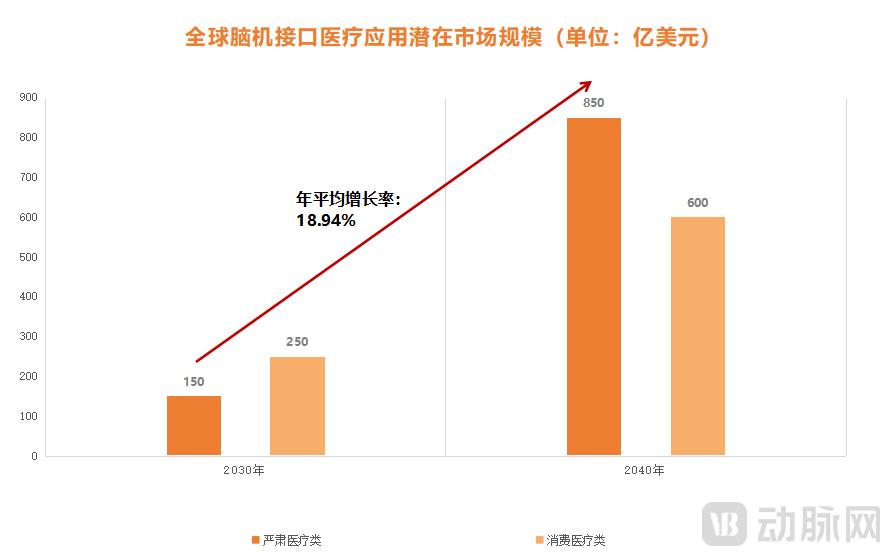
Figure 3. Potential market size of global brain - computer interface medical applications (Data source: McKinsey)
Of course, its market space also matches the grand narrative of the "ultimate interaction form". According to McKinsey's prediction, the global market size of brain - computer interface in the medical application field will reach 40 billion US dollars in 2030 and will exceed 145 billion US dollars by 2040. Looking at the domestic market, based on comprehensive data from multiple sources, the market size of China's brain - computer interface will exceed 10 billion yuan by 2030, and the annual growth rate will also remain at around 20%. Undoubtedly, it is a blue - ocean market with great potential.
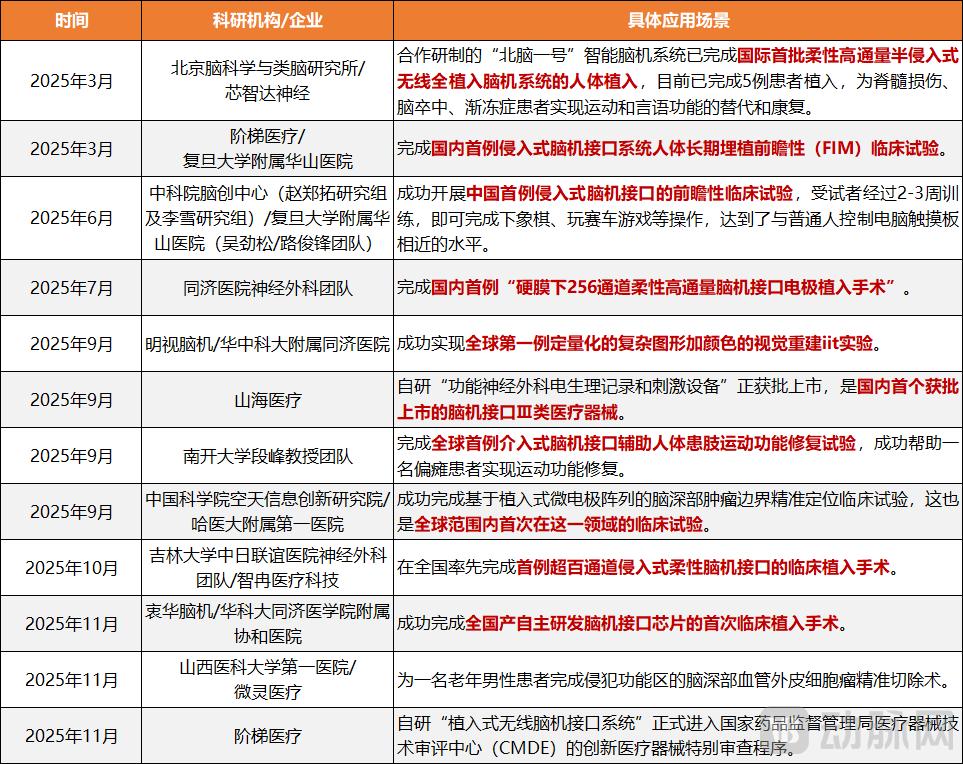
Figure 4. Breakthrough clinical research in the domestic brain - computer interface field in 2025
More importantly, the brain - computer interface is currently accelerating the transformation from "speculating on expectations" to "seeing implementation", and a large number of important clinical research and product approvals are being successively implemented. In March 2026, the National Medical Products Administration approved the listing of BrainCo's NEO system. This is the first semi - invasive brain - computer interface product officially approved for release globally. Immediately afterwards, JPMorgan Chase released an industry report, defining this event as a watershed for the brain - computer interface to move from laboratory demonstration to a viable product. In addition, in the past nearly one year, at least more than 20 breakthrough clinical studies in the domestic brain - computer interface field have made key progress, which further verifies that the industrial ecosystem is accelerating the formation of a closed - loop.
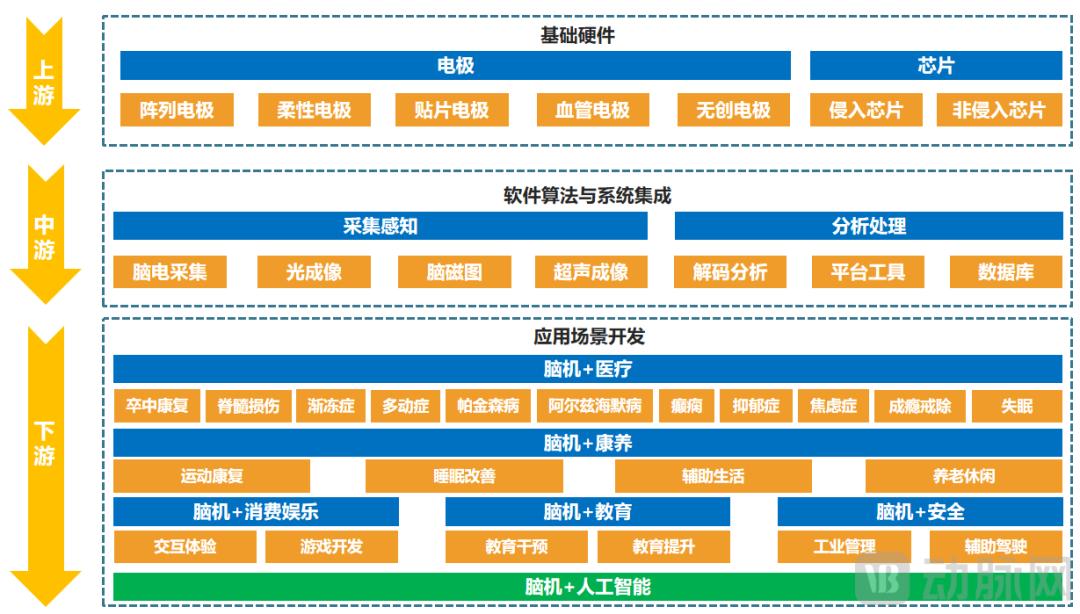
Figure 5. Upstream and downstream industrial chains of the brain - computer interface (Drawn by Arterial Network)
The last point is that it can drive the coordinated development of the upstream and downstream industrial chains. It is reported that the brain - computer interface involves multiple niche industries such as electrodes, chips, biological materials, device manufacturing, algorithms, AI model training, and software systems. Any one of these industries alone is an independent track capable of supporting a market worth hundreds of billions. Therefore, to some extent, seizing the brain - computer interface is equivalent to seizing a trillion - level industrial ecosystem chain that runs through basic materials, core devices, intelligent algorithms, and terminal applications, which is of course what local governments are very willing to see.
So, the fact that local governments across the country are now sparing no expense and rushing to invest in the brain - computer interface is actually a comprehensive consideration of multiple factors. It is not only a strategic foresight to seize the high - ground of future industries but also a practical choice to cope with regional industrial transformation and upgrading.
Who are the targets to compete for? And what are the bargaining chips?
Investment is obviously the most direct way to layout the industry.
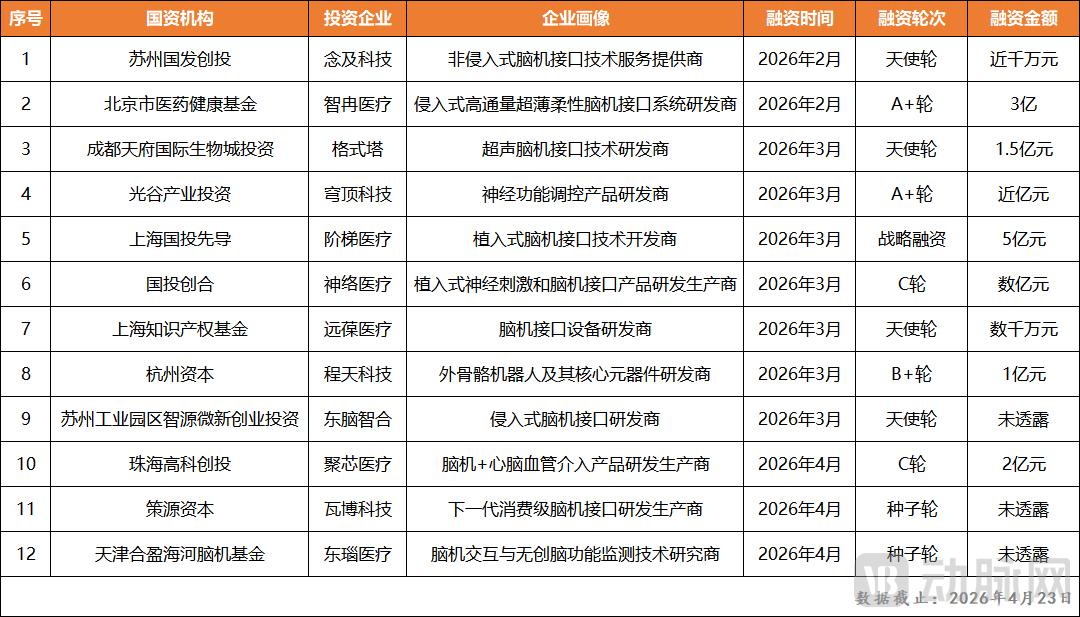
Figure 6. Cases of local state - owned assets investing in brain - computer interface enterprises in 2026
According to incomplete statistics from the Arterial Orange Database, since 2020, more than a hundred local state - owned assets have successively participated in the investment in the domestic brain - computer interface field. Among them, Shanghai State - owned Assets Investment is definitely the most active local institution. Through direct or indirect investment, it has successively bet on representative enterprises such as Step Medical, BrainCo, Brain Tiger Technology, Yuanbao Medical, and Yansi Brain - like Technology. Taking Step Medical as an example, Shanghai State - owned Assets Investment completed two rounds of financing in less than three months, with a total investment of more than 500 million yuan.
Taking this as an example, we can clearly outline the specific portrait of local state - owned assets' layout of brain - computer interface enterprises at present, that is, advancing along three different technical paths - invasive, semi - invasive, and non - invasive, with a result - oriented approach.
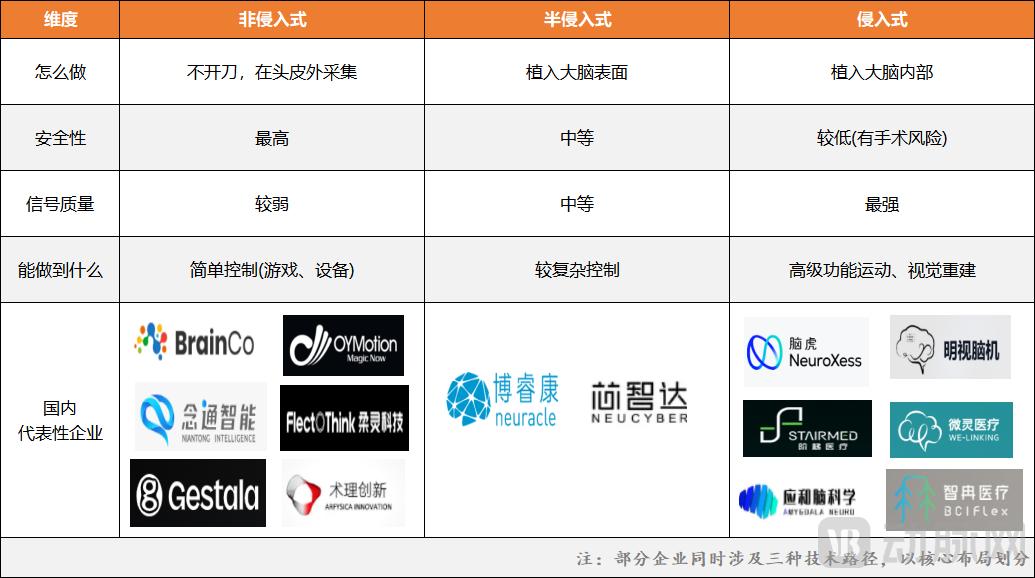
Figure 7. Representative enterprises of the three technical paths (Drawn by Arterial Network)
Let's start with the invasive approach. Undoubtedly, it is the "hardest nut to crack", with the highest technical barriers and the greatest clinical risks. However, once a breakthrough is made, the rewards will be the most disruptive. Therefore, local state - owned assets choose to "take a gamble", mainly because they value that the enterprise has a clear technical path and has sufficient medical verification in terms of effectiveness and safety. Taking Step Medical as an example, its independently developed ultra - flexible neural electrode technology has achieved a leading breakthrough globally. With this technology, it completed the first long - term implantable prospective (FIM) clinical trial of an invasive brain - computer interface system in China in March 2025, and the results were good, with no negative reactions such as infection, electrode failure, or severe immune rejection.
Next, let's focus on the semi - invasive approach. It is between the invasive and non - invasive approaches, so it has achieved a certain balance between clinical risks and technical performance. Therefore, when local state - owned assets choose to bet, they mainly look at whether the enterprise can transform this balance into more verifiable and repeatable clinical efficacy. A typical representative is BrainCo, which has the world's first medical device registration certificate for a semi - invasive brain - computer interface (NEO system). With the design of "electrodes attached to the outside of the dura mater, no battery inside the body, and wireless power supply outside the body", it achieves high - precision signal acquisition without damaging the brain tissue at all. Currently, BrainCo's NEO system is rapidly moving from the clinical trial stage to commercial implementation and will be applied on a large scale in clinical fields such as epilepsy, paralysis rehabilitation, and neural regulation in the future.
Finally, the non - invasive approach has the simplest technical path, so the industrial scale - up is also the fastest. Therefore, when local state - owned assets choose investment targets, what they are most concerned about is actually the enterprise's ability to achieve commercial implementation and rapid replication and expansion. For example, Strong Brain Technology collects electroencephalogram and neural electrical signals through an external "super sensor" without the need for a craniotomy. It has significant advantages in terms of safety, cost, and public market acceptance. Currently, its core products cover three major fields: bionics, health, and education, and it has achieved large - scale mass production of the world's first intuitive - control intelligent bionic hand. It is one of the earliest teams in China to promote commercialization and has the most abundant product matrix.
In this regard, a senior investor said, "In fact, no matter which technical path the brain - computer interface takes, leading enterprises can emerge. So for local state - owned assets, the main difference in investment lies in the difference in risk