Je beliebter die Hirn-Maschine-Schnittstelle wird, desto "ängstlicher" werden die örtlichen staatlichen Vermögensverwaltungen?
At the beginning of 2026, the powerful brain technology known as the "Six Dragons of Hangzhou" successfully completed a round of financing worth 2 billion yuan and thus achieved the second-largest financing record worldwide in the field of brain-computer interfaces outside of Neuralink.
Suddenly, the industry has triggered strong reactions, and everyone is actively discussing the positive signals released behind this expensive financing. The more vibrant the market becomes, the stronger the concerns of a series of regional state-owned enterprises. According to information, on the day the 2 billion yuan financing was announced, at least 25 state-owned institutions actively approached the Arterial Network and attempted to enter the list of investors in subsequent rounds.
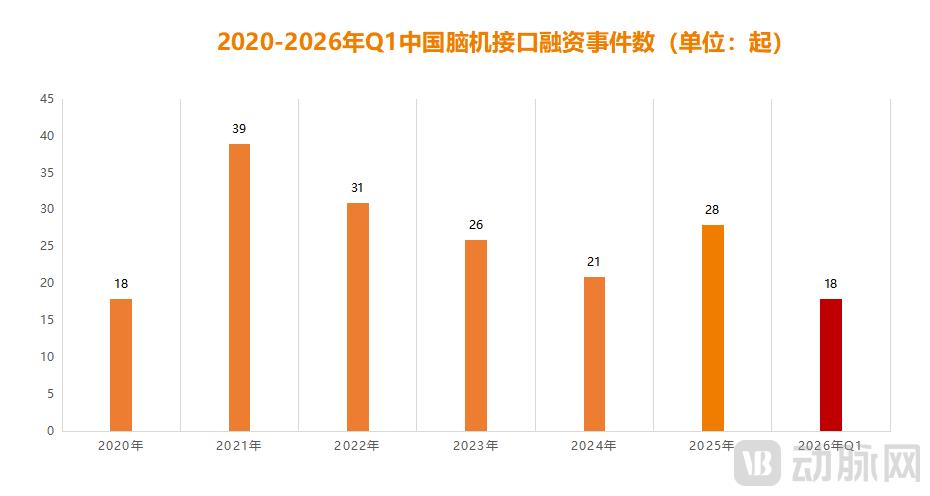
Figure 1. Number of financing events in the field of brain-computer interfaces in China from the first quarter of 2020 to 2026 (Data source: Arterial Orange Database)
This is not just a casual participation. According to incomplete statistics from the Arterial Orange Database, as of April 20th this year, the Chinese brain-computer interface field has completed 24 financings, and the total financing volume has exceeded 4.5 billion yuan, which is already more than the total result of 2025. Notably, in 14 of the 24 financings, state-owned enterprises were directly involved, including well-known institutions such as Shanghai State Investment, Suzhou State Development Venture Capital, Beijing Pharmaceutical and Health Fund, Chengdu Tianfu International Bio-City Investment, and Zhuhai High-Tech Venture Capital.
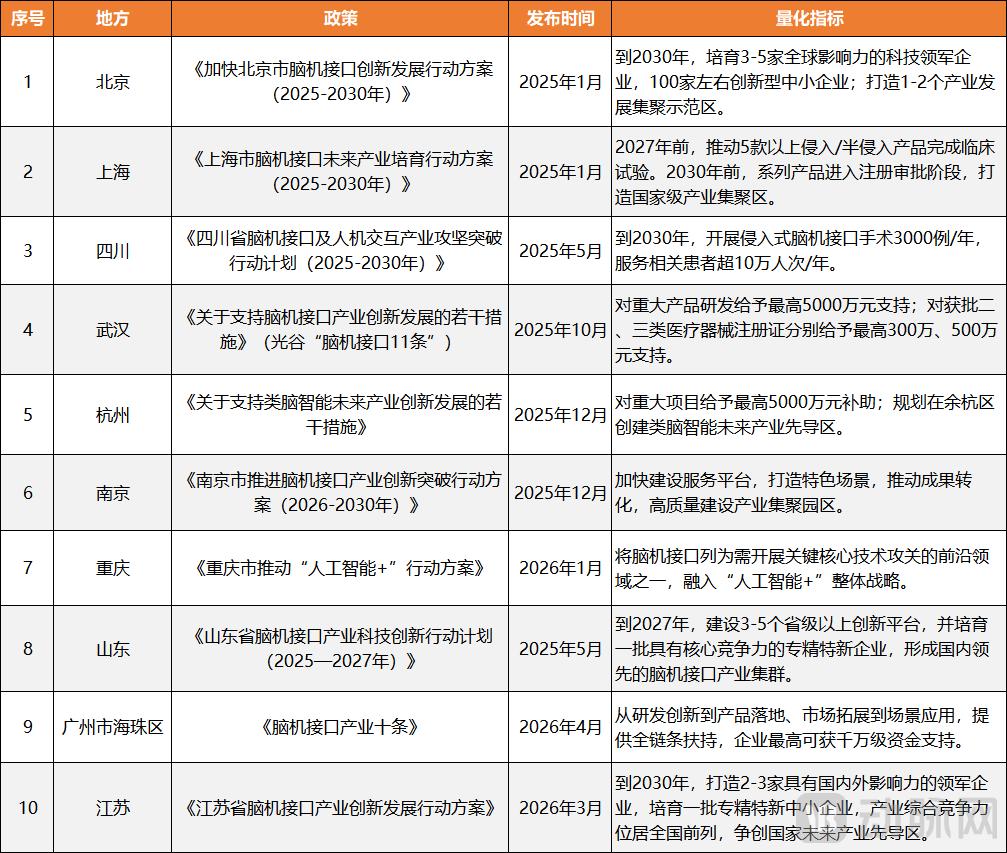
Figure 2. Special policies for brain-computer interfaces in different regions in the past 12 months
In addition to investments, regional governments also have other means to gain the leading position in the brain-computer interface industry and often implement measures. For example, at the policy level, since this year, cities such as Beijing, Shanghai, Nanjing, Chengdu, Shenzhen, Tianjin, Hangzhou, Wuhan, and Hefei have successively formulated special policies for brain-computer interfaces and taken comprehensive measures regarding financial subsidies, talent immigration, technology development, and clinical applications. Moreover, in the construction of industrial ecosystems, including brain-computer interface industrial parks, key laboratories, pilot platforms, and clinical trial sites, they have developed like mushrooms after the rain in various parts of the country.
Therefore, a person in charge of a state-owned enterprise sighed and said, "After the capital winter of the past few years, we haven't experienced such a vibrant situation where regional governments are so eager to build a medical industry for a long time." Enterprises also agree with this. An entrepreneur said, "Since this year, the number of state-owned institutions actively approaching us has significantly increased, and they are all very professional. They not only discuss general investment promotion policies but also delve deeply into technical routes, clinical application cases, and future market strategies."
It is not difficult to see that regional governments are making every effort to gain the leading position in the brain-computer interface industry. But how did it start that regional state-owned enterprises focus on the brain-computer interface?
Why do regional governments "fixate" on the brain-computer interface?
According to information, Tianjin was the first Chinese city to enter the field of brain-computer interfaces. Around the turn of the century, the team from the School of Precision Instruments at Tianjin University began to focus on the extraction and decoding of EEG signals from steady-state visual evoked potentials (SSVEP) and motor imagery. This is regarded as the beginning of industrial research on brain-computer interfaces in China.
But this was just the beginning. In the following years, the brain-computer interface in China almost disappeared. It was not until 2019 that the brain-computer interface actually entered the mainstream and was included in the important strategies of regional industrial growth planning several times.
Once again, Tianjin was the first to take the first step. In September 2019, the "Tianjin Brain Science and Brain-like Research Center" was officially established. This was the first provincial-level innovation center for brain research in China. In October 2022, Shanghai released the "Special Support Guidelines for Key Technologies and Industrialization of Brain-Computer Interfaces," which was the first industry-specific law at the provincial level in China. In July 2023, the Shenzhen Brain Science and Brain-like Intelligence Industry Fund with a total volume of 1 billion yuan was officially established. This was the first special fund for brain-computer interfaces in China. In December 2023, the National Technology Standards Innovation Center in Beijing was officially approved and its establishment was started. This was the first national standardization platform in the field of brain-computer interfaces in China.
But this was still a small-scale research. It was not until the last one or two years that the trend of the brain-computer interface industry development actually began in various parts of the country. Almost every regional government's policy does not leave out the "brain-computer interface" as a future competition.
Why have everyone suddenly agreed? In fact, when a regional government decides to enter a specific field, there are essentially three reasons: First, the support or binding requirements at the national level; second, the innovative technology of the field and its high market potential; third, the ability to connect the local industrial chain and transform and upgrade the regional economy. As a future industry with high strategic foresight and industrial strength, the brain-computer interface exactly meets these three points.
First, the national support. As early as 2016, the "13th Five-Year Plan" listed "brain research and brain-like research" as national important technology projects and programs, marking the official start of the "Chinese Brain Plan." Since then, the policy has become stronger and stronger. In 2021, the "14th Five-Year Plan" defined brain research as an important strategic direction. In January 2024, seven ministries such as the Ministry of Industry and Information Technology released the "Implementation Guidelines for Promoting the Innovation and Development of Future Industries," in which the brain-computer interface was listed as one of the ten innovative flagship products, sending a strong signal for the transformation from the laboratory to industrial implementation. In February 2026, the brain-computer interface was included in the government work report for the first time and stands alongside quantum technology, embodied intelligence, and 6G as an important part of the future national industrial system.
It can be said that the brain-computer interface has quickly changed from a simple scientific vision to an important direction of national strategic planning. As the carriers of technological innovation and industrial implementation, regional governments naturally have to undertake the core tasks of technological breakthroughs and result implementation.
Second, let's focus on the technological and market implementation. As the ultimate form of human-machine interaction, the brain-computer interface is characterized by multi-disciplinarity, high technological barriers, and complex industrial chains and is regarded as one of the most revolutionary innovative technologies of the 21st century.
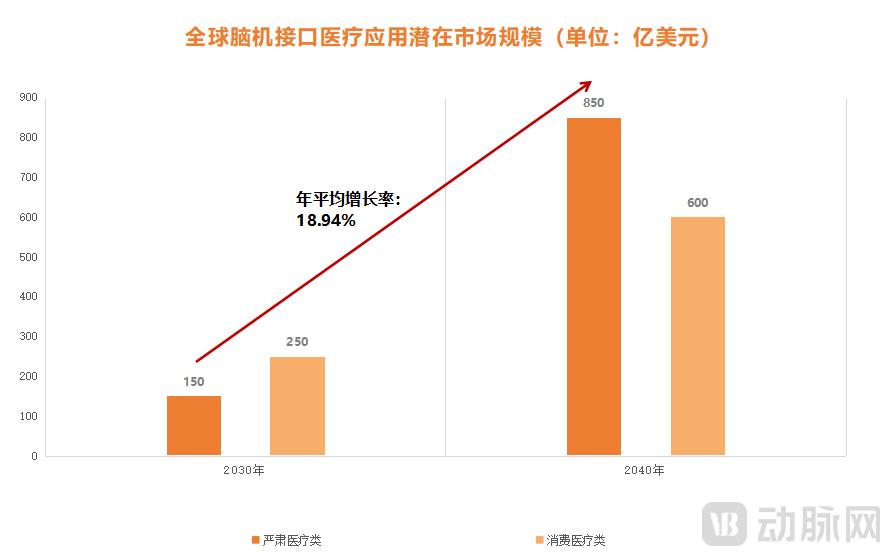
Figure 3. Potential market value of global medical applications of brain-computer interfaces (Data source: McKinsey)
Naturally, the market also corresponds to the grand narrative of the "ultimate interaction form" - according to McKinsey's forecast, the global market for medical applications of brain-computer interfaces will reach 40 billion US dollars in 2030 and exceed 145 billion US dollars in 2040. In the Chinese market, the market volume of brain-computer interfaces will exceed 10 billion yuan in 2030, and the annual growth rate will remain at about 20%. It is undoubtedly a high-potential blue ocean market.
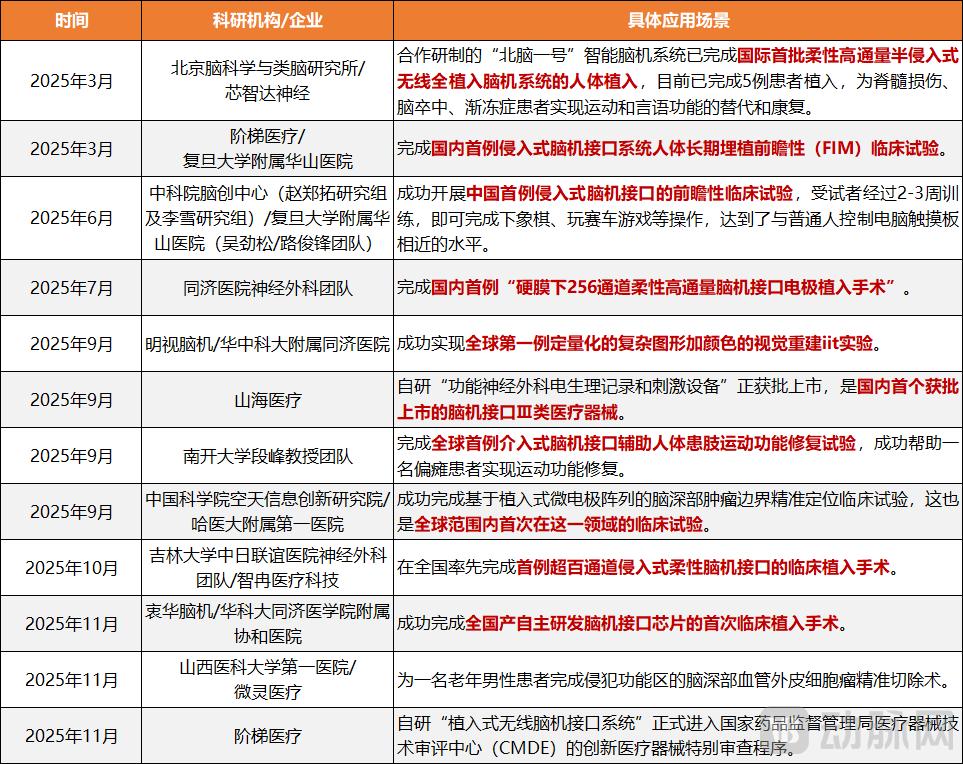
Figure 4. Breakthrough clinical research in the Chinese brain-computer interface field in 2025
What is even more important is that the brain-computer interface is currently accelerating from "expectation speculation" to "implementation." Numerous important clinical researches and products are being approved one after another. In March 2026, the national drug administration approved the market launch of the NEO system of Borui Kang. This is the first semi-invasive brain-computer interface product officially released worldwide. Immediately, J.P. Morgan released an industry report and defined this event as the turning point from laboratory presentation to a practical product. In addition, in the past 12 months, at least 20 breakthrough clinical researches in the field of brain-computer interfaces in China have achieved important progress, confirming the acceleration of the formation of a closed-loop in this industrial ecosystem.
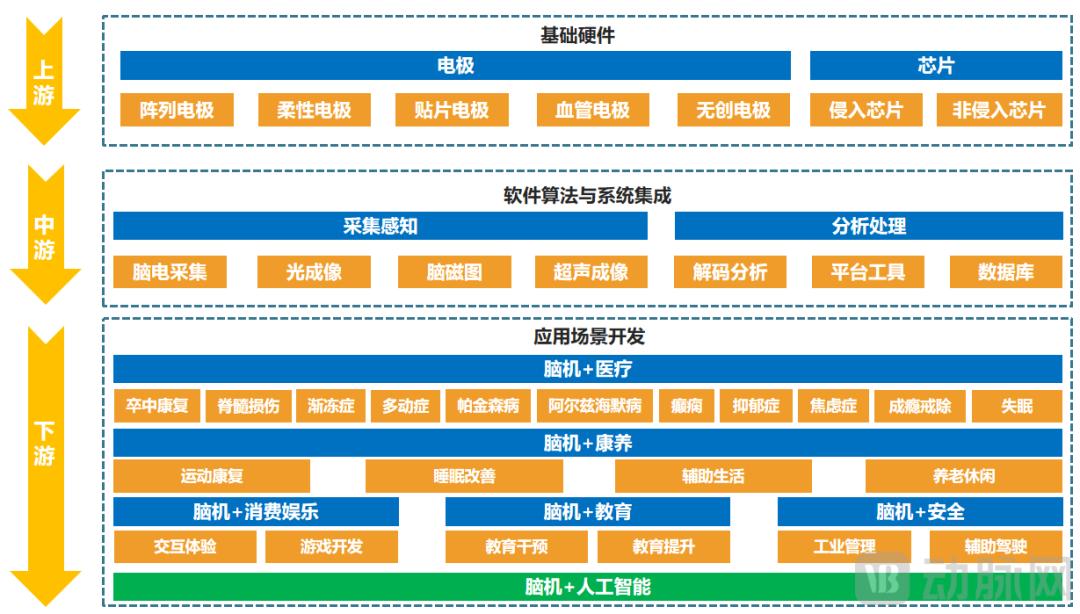
Figure 5. The industrial chain of brain-computer interfaces (Drawing by Arterial Network)
The last is the ability to promote the upstream and downstream industrial chains. According to information, the brain-computer interface involves several special industries such as electrodes, chips, biomaterials, device manufacturing, algorithms, AI model training, and software systems. Each of these industries can build a billion-dollar market. Therefore, in a sense, if one grasps the brain-computer interface, one also grasps a trillion-dollar industrial ecosystem chain from basic materials, core components, intelligent algorithms to end applications. This is surely something that regional governments are very happy to see.
Therefore, it is a comprehensive consideration for various reasons that regional governments are currently willing to spend a lot of money and invest in the brain-computer interface. This is both a strategic foresight to gain the leading position in the future industry and a realistic choice to handle the regional industrial restructuring and upgrading.
Who does one want to win? And what are the negotiation chips?
Investment is obviously the most direct way to place the industry.
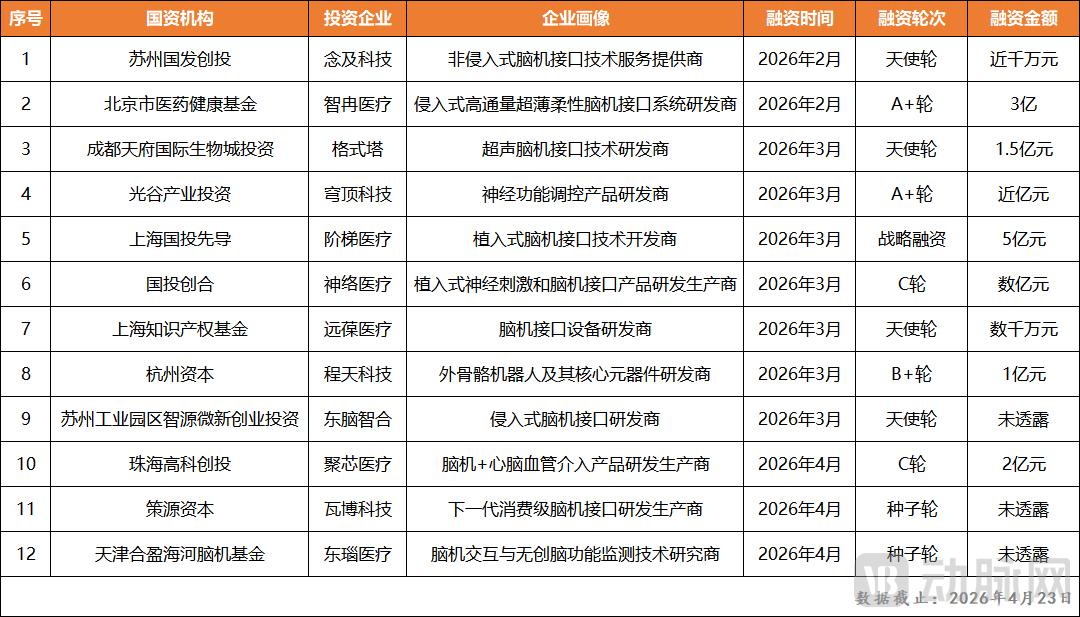
Figure 6. Examples of investments by regional state-owned enterprises in brain-computer interface companies in 2026
According to incomplete statistics from the Arterial Orange Database, since 2020, more than 100 regional state-owned enterprises have participated in investments in the Chinese brain-computer interface field. Among them, Shanghai State Investment is the most active regional institution. Through direct or indirect investments, it has successively invested in representative companies such as Jieti Medical, Borui Kang, Brain Tiger Technology, Yuanbao Medical, and Yansi Brain-like Technology. Especially in the case of Jieti Medical, Shanghai State Investment completed two rounds of financing in less than 3 months, and the total investment volume exceeded 500 million yuan.
Based on these examples, we can also clearly draw the current profile of regional state-owned enterprises in placing brain-computer interface companies, that is, it is driven along three different technical routes - invasive, semi-invasive, and non-invasive - towards results.
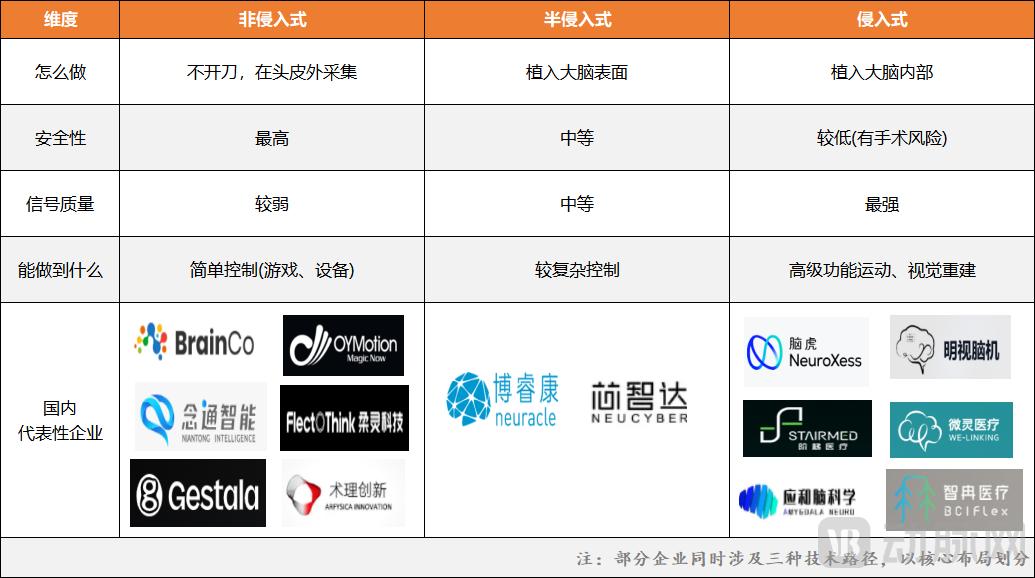
Figure 7. Representative companies for three technical routes (Drawing by Arterial Network)
First, the invasive route. This is undoubtedly the most difficult... (The text seems to be incomplete here)