Humanoid robots enter industrial manufacturing: Co-cultivating new quality productivity
In the past decade, we were asked, "Why develop humanoid robots?" Now, we're being pressed with, "How to implement them in real - world scenarios?" Tan Min told us how UBTECH, a "long - term player" in the humanoid robot field, aims to anchor application implementation and gradually introduce humanoid robots into the real world, enabling China to stand at the top of the global embodied intelligence innovation chain.
• Main body:
From being the first in the world to achieve mass production of full - size humanoid robots and deliver over a thousand units last year, to aiming for mass production of ten thousand units this year, UBTECH is using continuous industrial scenario training and three generations of product iterations to prove that the entry of humanoid robots into factories is not science fiction but a necessity. Tan Min pointed out in his speech that the core labor shortage in China's intelligent manufacturing industry has exceeded 30 million. The role of humanoid robots is not to replace humans but to fill the "labor shortage" gap.
The following is the speech content of Tan Min, the Chief Brand Officer of UBTECH, compiled and edited by 36Kr:
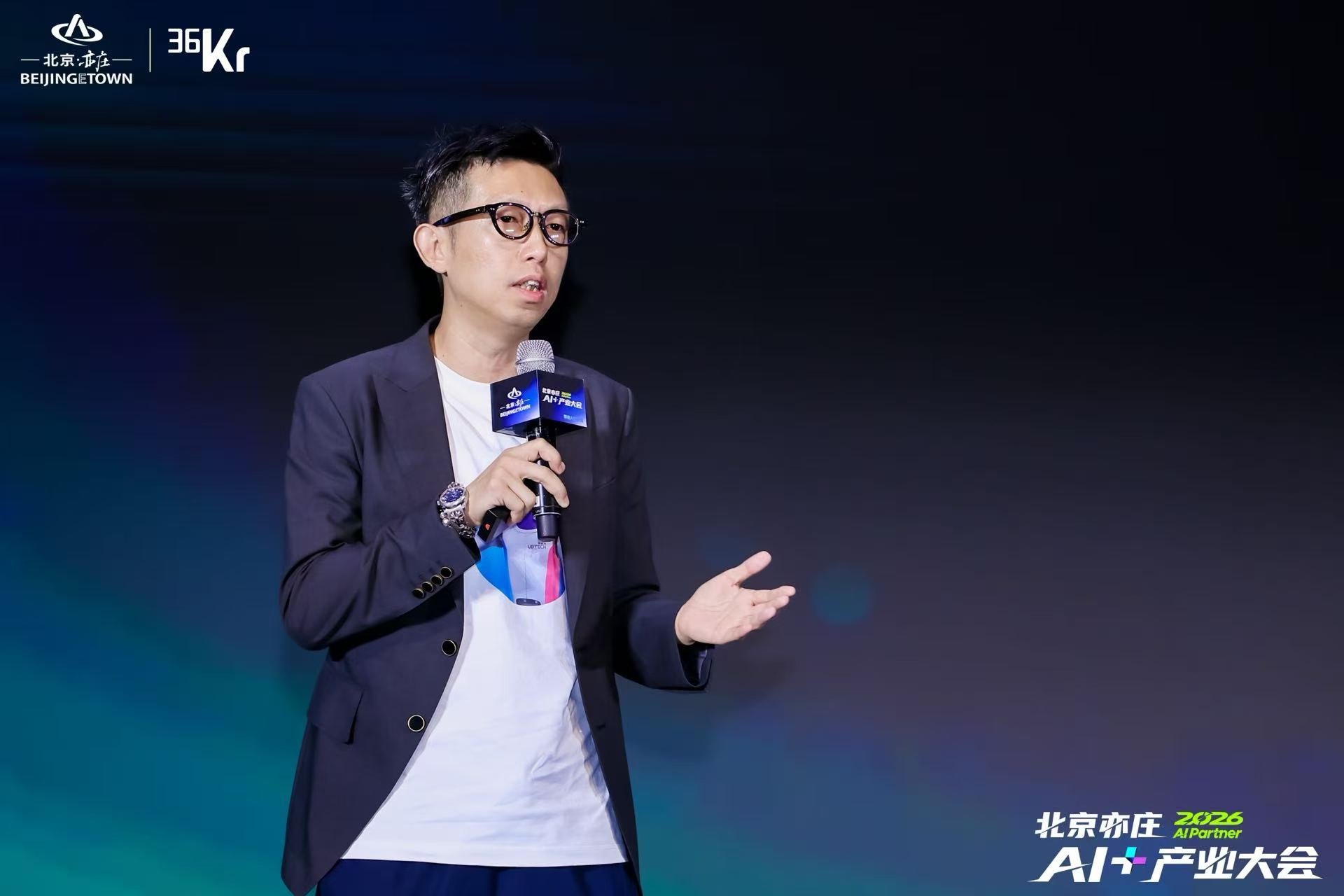
Tan Min | Chief Brand Officer of UBTECH
Good morning, everyone. I'm Tan Min from UBTECH. I'd like to share with you how we've gradually targeted the implementation of humanoid robots in our 14 - year entrepreneurial journey and found the intelligent manufacturing industry as a breakthrough point. At the same time, I also want to share why we believe humanoid robots are the core representatives of new - quality productivity and how we can make humanoid robots an important part of new - quality productivity and even the global innovation chain.
Next, I'll share some experiences to inspire you and resonate with you during your entrepreneurial journey, especially on the long - term journey of embodied intelligence.
Currently, the humanoid robot market seems to be a red ocean. However, in the first 10 years of UBTECH's 14 - year entrepreneurial journey, people would ask why we were developing humanoid robots. Now, it's widely recognized that humanoid robots have a large - scale market, even larger than that of smartphones and new - energy vehicles. They connect the upstream and downstream industries and the global ecosystem, as well as the global value chain. The value is very clear, and we can gradually see the economies of scale.
Humanoid robots have been identified as a key part of the "15th Five - Year Plan". Yesterday, when watching the News Broadcast, I saw that Premier Li Qiang visited the implementation of humanoid robots and embodied intelligence in Yizhuang. In the "15th Five - Year Plan", the key thing is not to see what else humanoid robots can do, but to think about how to put them into scenario applications and how to connect with specific scenarios. This is the most crucial part.
In 2035, ten years from now, humanoid robots will undoubtedly become a huge blue ocean with the largest global market increment. In addition to the estimates from different institutions, cities like Beijing, Shanghai, Shenzhen, Guangzhou, and others have included humanoid robots as a key point in the "15th Five - Year Plan" to promote high - quality development as new - quality productivity.
Currently, there is a global consensus that around 2030, five years from now, artificial intelligence will accumulate enough breakthrough technologies to reach the inflection point of AGI. This inflection point will drive significant economic expansion. Whether it's humanoid robots, embodied intelligence, or AI scenarios, we're all looking for the connection between computing power, data, especially the combination of "computing power + data + scenario". Only when these three are combined can we truly find the node for the new - generation technological breakthrough of large models. This node may not be the world model we see, nor necessarily LLM or VLA. All these are in the process of verification. Everyone is groping in the dark, looking at how to more efficiently combine real data and simulation data. The answers to all these lie in the scenarios.
Take UBTECH's experience as an example. A few years ago, we mapped out the path for the implementation of humanoid robots. The intelligent manufacturing industry is relatively simple, with a lot of repetitive work and a real closed - loop of scenario data. Then, we move on to commercial scenarios and family scenarios. These scenarios are not small closed - loops but larger, richer, and more diversified data closed - loops. Humanoid robots first form a closed - loop in the industrial scenario, gradually training the robot's brain, cerebellum, and overall motion control, making the humanoid robot more intelligent, dexterous, and capable. Only then can it move towards commercial services and finally enter the family. We believe that in the family, with the support of language models, humanoid robots will first provide companionship. After the technology becomes more mature, they will gradually move towards providing services. There are two pre - conditions for this, namely, how to make humanoid robots safer and more stable. These two conditions are prerequisites, which means that it's also challenging for humanoid robots to enter family services.
The entry of humanoid robots into factories is not to replace humans but to solve the core problems currently faced by China's intelligent manufacturing industry, including labor shortages, difficulties in recruitment, process management, and training. Data released by the Ministry of Human Resources and Social Security, the Ministry of Education, and the Ministry of Industry and Information Technology in 2025 shows that the core labor shortage in China's intelligent manufacturing industry exceeds 30 million. If we distribute these 30 million to more than 100 Chinese humanoid robot companies, each company will have a huge supply demand. From the demand side to the supply side, there is a very large market development space.
How to solve this problem? We're taking it step by step. Last year, UBTECH was the first in the world to achieve mass production and delivery of full - size humanoid robots, with a production and delivery of over a thousand units. This year, we'll continue to strive for the mass production of ten thousand units. Even if we achieve ten thousand units this year, looking at the global data from last year, the shipment volume of full - size humanoid robots was only a few thousand. Reaching tens of thousands or even hundreds of thousands of units this year is still far from meeting the demand of the 30 - million labor shortage in the Chinese market alone. No matter how we look at the booming development of humanoid robots in China, we still underestimate the real demand.
I won't go into details about what humanoid robots can do. Simple tasks that don't require a lot of complex data, are highly repetitive, have a small working space, and don't involve precise operations are the most suitable positions for humanoid robots to take on.
We have many global partners, and I've listed the five most important points. We need to see if we can truly understand the scenario requirements, have autonomous capabilities, dexterous operations, and be stable and reliable. We've conducted more than 24 months of POC, and this is the second year of mass production and delivery. We hope to reach a certain scale of mass production and ensure consistency so that we can invest in more production.
Why do we repeatedly emphasize these conditions? It's because a humanoid robot company needs to have full - stack technical capabilities, not just one - way capabilities. From a single - point perspective, whether it's the brain, cerebellum, body, or dexterous hand of a humanoid robot, it's very difficult to enter real - world scenario applications. A complete closed - loop is needed for the overall system to truly enter the scenario, achieve mass production and delivery, and enable humanoid robots to make long - term and continuous breakthroughs in the scenario.
Today, there's no need for UBTECH to provide more explanations. Embodied intelligence is not a single point. It involves the brain's autonomous perception and decision - making, the cerebellum's movement, and the execution of actions. It's a series of processes. Whether it's investors or customers, when looking at embodied intelligence and humanoid robots today, they're looking at the development of this industry from a complete closed - loop perspective.
On this basis, I'd like to emphasize the world model. Humanoid robots are the best carriers of embodied intelligence in the real world. They can help artificial intelligence enter the real space and connect all the data in the real world, thus gradually building the various parts of the world model. These parts will first be built step by step like a jigsaw puzzle in the industrial manufacturing scenario, then in commercial services, family companionship, and finally in family services. This is the big jigsaw. As Jensen Huang said, the world is a big factory. Our AI equips the factory with an AI brain, and humanoid robots and embodied intelligence give AI a body to connect with the real world, so that we can more efficiently build the world model that we hope AI can understand through the two - way combination of real data and virtual simulation data. This is a very efficient path.
Through three generations of product iterations, from the first - generation UBTECH industrial humanoid robot Walker S, to Walker S1, and now to Walker S2, we've innovatively launched the world's first autonomous three - minute hot - swap battery technology on Walker S2. Currently, we have the most training scenarios in the world and have cooperated with many Fortune 500 companies, including Texas Instruments in the United States, Airbus in Europe, Honda Trading in Japan, and BYD in China. Currently, we're in the first "Five - Year Plan" for the application implementation of humanoid robots, and we're in the fourth year. We believe that after five years, we can approach the real large - scale mass production of humanoid robots.
For our country, humanoid robots and embodied intelligence are now at the top of the global value innovation chain. We cherish this opportunity very much. This is also the first time in history that our country's industry can change the global standard of technological innovation. In this industry, Chinese humanoid robot practitioners can truly promote the key process of global AI and play a key role. We can use embodied intelligence and humanoid robots to enter the real world, help artificial intelligence truly understand our real world, and let artificial intelligence with a body serve humanity and create higher value for us, rather than engaging in price competition, which is not the time yet.
We come to the 36Kr stage every year. We believe that the humanoid robot field is a long - term track. It needs to combine with artificial intelligence and embodied intelligence in the long - term development, gradually enter the intelligent manufacturing industry, promote the formation of a new paradigm for China's intelligent manufacturing, and create more efficient value for global technological innovation, thus becoming a new technological innovation system. This is the possibility and infinite upgrade of the development of Chinese humanoid robots in the next ten years from our perspective today.
Thank you!