Is New World quietly "letting go" of three hotels under Hyatt?
In the past year, selling assets to replenish cash has always been the core speculation about New World in the market. From the rumor that Rosewood Hotels & Resorts would be invested in and taken over by Blackstone to the current situation where the core equity of three branded hotels under Hyatt is on the trading table, the hotel portfolio of this old - style Hong Kong - funded real estate company has repeatedly become the focus of the market. If the HK$15.6 billion transaction is finally completed, how much real cash can New World recoup from it? This account may hold the key to the half - century ups and downs of Hong Kong - funded real estate hotels.
Is New World, unable to hold back, planning to "replenish cash" HK$2.3 billion with three hotels?
Entering the Hong Kong Convention and Exhibition Centre through the intricate corridors of Admiralty MTR Station, the Grand Hyatt Hong Kong is located in a "concave" - shaped building with a full - glass facade. Thanks to its location advantage, this hotel has hosted numerous international conferences and business negotiations. The window view overlooking Victoria Harbour has also enabled it to maintain an occupancy rate of over 90% all year round.
Across from it is the Renaissance Harbour View Hotel Hong Kong, also managed by Marriott International. Among them, Dynasty, which offers Cantonese delicacies, the Mirage bar and restaurant that combines Eastern and Western flavors, and the executive lounge designed with the concept of "a home in the hotel" have attracted numerous celebrities to dine and stay here.
Across Victoria Harbour, the Hyatt Regency Tsim Sha Tsui (formerly known as the Hyatt Regency Hong Kong), the first hotel of Hyatt outside the United States, is located in the K11 Complex, which combines retail and high - end residential apartments.
On April 29, 2015, the asset portfolio of the three hotels was initially taken over by a joint venture jointly established by New World Development and HIP Company Limited, a wholly - owned subsidiary of the Abu Dhabi Investment Authority. The total transaction price at that time was HK$18.5 billion, and New World Development contributed approximately HK$10.082 billion.
Now, New World Development Company Limited (hereinafter referred to as New World) is considering selling 50% of the equity of these three luxury hotels at a price of approximately HK$15.6 billion (about US$2 billion). The potential buyer is Aravest Pte, a real - estate management company headquartered in Singapore, which is supported by Sumitomo Mitsui Financial and Leasing Company and currently manages assets worth approximately US$9.3 billion.
In response to the intense speculation in the market, New World Development issued a clarification announcement in early May, confirming that the company had indeed received approaches from potential buyers. However, the current interaction between the two parties is only in the preliminary exploration stage, and no legally binding agreement that must be disclosed under the listing rules has been concluded for any sale.
Over the 11 - year operation cycle, the profits from selling assets are difficult to calculate in detail, but it is still possible to simply estimate New World's possible profit. It is estimated that if the transaction with Aravest is finally completed, after deducting relevant debts, New World Development is expected to achieve a net cash inflow of approximately HK$2.34 billion (about US$300 million), which will undoubtedly provide valuable "ammunition" for its subsequent debt repayment and financial repair.
Selling assets, especially hotels, has always been the core speculation about New World's debt - resolution path in the market in the past year. Previously, the market's attention was more focused on New World's luxury hotel brands, New World Hotels and Resorts, and Rosewood Hotels & Resorts. There were once rumors that this asset package might be invested in and taken over by Blackstone. Although this rumor was quickly denied by the controlling shareholder, Chow Tai Fook, the high value and high liquidity of Rosewood, the "golden signboard" of Hong Kong - funded real - estate hotels, is still a card that cannot be ignored in New World's hand.
Now, New World's selling target has shifted to the core equity of three branded hotels under Hyatt. These three hotels are all located in core business districts and have stable revenues. They have achieved considerable property appreciation during the real - estate cycle in the past decade. Behind the shift of the selling target from self - owned luxury brands to the core equity of third - party managed hotels, there may be the secret to the half - century ups and downs of this old - style Hong Kong - funded real - estate developer.
High leverage and high debt: New World may only sell assets and not seek financing
At the beginning of this year, rumors about Blackstone's investment in New World resurfaced. At that time, the focus of industry discussions was whether the controlling stake of this old - style Hong Kong - funded real - estate company would fall into the hands of foreign giants. However, after nearly a year of negotiations, the investment talks between the two sides finally broke down.
According to the market - circulated plan, Blackstone planned to invest approximately US$2.5 billion in a newly established special purpose vehicle (SPV) to become the largest shareholder of New World Development, while the Cheng family would need to contribute an additional US$1 - 1.5 billion. However, this arrangement would mean that the Cheng family would give up the controlling stake in New World.
/ Soaring leverage ratio: "Blood - making" ability fails to offset losses
This aborted financing negotiation is like a mirror, reflecting the complex choices faced by an old - style Hong Kong real - estate family in a downward real - estate market and under high debt.
In the past few decades, the approach in Hong Kong's real - estate market relied on the "fast - building and fast - selling" model of "winning land - high - density development - riding the upward cycle", which supported the rise of several generations of real - estate families in Hong Kong, where land is scarce and the population is large. During the upward cycle, New World relied on debt expansion, land reserves, commercial real - estate development, and branded projects to achieve rapid expansion in the past few decades.
Currently, this model is facing fundamental challenges: high land costs, longer sales cycles, pressure on office buildings and commercial real - estate, rising interest rates, and a decrease in the capital market's tolerance for highly leveraged real - estate companies.
The financial deficit reflects New World's decline in this real - estate cycle. In the fiscal year 2024 (from July 2023 to June 2024), New World recorded an annual loss for the first time in nearly 20 years, with a loss attributable to shareholders of approximately HK$19.683 billion.
In the fiscal year 2025, the losses continued. New World's revenue decreased by 22.64% year - on - year to HK$27.681 billion, and the loss amounted to HK$16.3 billion. The interim results for the fiscal year 2026 showed that the revenue in the second half of 2025 was HK$8.391 billion, a significant year - on - year decrease of 50%. The loss attributable to shareholders was HK$3.729 billion, although it narrowed by 44% compared with the same period of the previous year, it was the third consecutive fiscal year of interim losses.
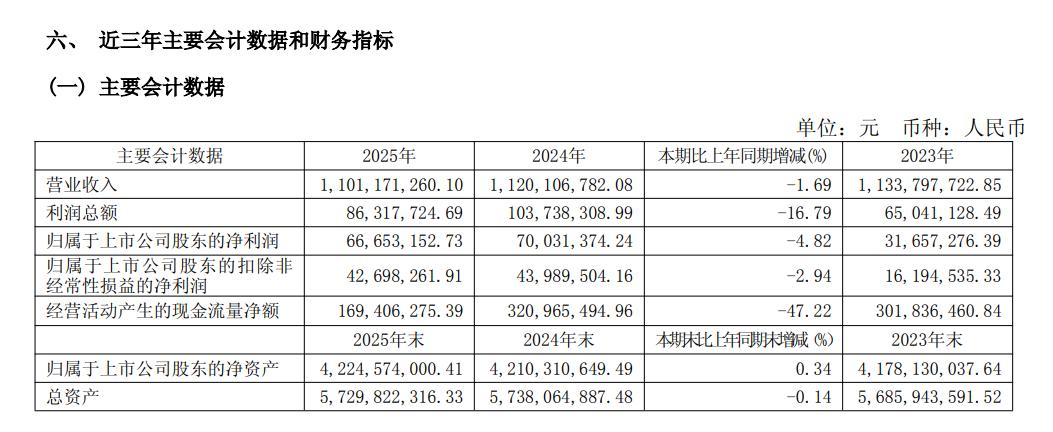
* Key accounting data from New World's 2025 annual report
During the same period, the company's "blood - making" ability in operations was also very weak. In the second half of 2025, the net cash flow from operating activities of New World was only HK$2.32 billion, a sharp year - on - year decrease of 48.3%, which was unable to cover the interest expenses of up to HK$2.96 billion in the same period.
Data from Bloomberg Intelligence shows that by the middle of 2025, New World Development's net debt was close to 98% of shareholders' equity, making it one of the most highly leveraged large - scale real - estate developers in Hong Kong. As of December 31, 2025, New World Development's total debt was as high as approximately HK$144.3 billion, of which HK$7.633 billion was due within 12 months.
/ Unwilling to cede control: The "seven - step plan" of the Cheng family shows initial results
Although New World is facing unprecedented debt pressure, the Cheng family still intends to hold the core assets. LSEG data shows that the family holds 45.24% of the shares of New World Development through its private investment flagship, Chow Tai Fook Enterprises.
Facing Blackstone's investment strategy, an investment of US$4 billion would mean the right to lead the post - investment restructuring. For the Cheng family, it is almost impossible to cede control.
Of course, Blackstone is not the only option for New World to resolve its debt through investment. Since March, the company has been conducting parallel negotiations with multiple potential investors. Among them, RRJ Capital proposed to acquire less than 30% of New World's equity through a share sale without asking for the controlling stake. Ares Management proposed to inject capital into the company to strengthen its balance sheet but required the Cheng family to use its shares as collateral and invited some Asian sovereign funds to join the consortium.
Obviously, New World is currently mainly focused on reshaping its balance sheet and operating structure and does not want the investors to hold a controlling position in the future.
However, the debt - related risks still loom large and even affect New World's real - estate development. Currently, New World urgently needs to resolve a huge debt related to the long - term lease agreement of the Hong Kong Airport Shopping Centre, approximately HK$70 billion, which is regarded as a prerequisite that must be addressed before any transaction can proceed. New World Development said that it is still in discussions with the Hong Kong Airport Authority regarding the K11 SKIES project to explore the possibility of changing the contract arrangements, but no agreement has been reached yet.
Under unprecedented pressure, New World Development's Chief Executive Officer, Wong Siu - mui, once introduced a "seven - step debt - reduction plan", including selling development projects and non - core assets, unlocking the value of agricultural land, improving rental returns, streamlining costs, suspending dividend payments, and actively managing finances. The company once stated in an announcement that it has been actively selling non - core assets since the second half of 2019 as part of its de - leveraging strategy.
In terms of selling non - core assets, the Cheng family recently sold the Australian power generation company Alinta Energy for US$4.3 billion, which has enhanced its financial flexibility. It is not surprising that the industry is paying attention to the possibility of New World further selling its hotel assets, as hotels are highly liquid "cash cows".
In terms of hotel performance, Hyatt Hotels Corporation said that the average occupancy rate of the Hyatt Regency Hong Kong in 2025 was close to 90%, an increase of approximately 3% compared with 2024. The room revenue from November to December recorded a growth of over 10%. Yu Derli, the President of Hyatt Hotels Corporation Asia - Pacific, said that the MICE (Meetings, Incentive Travel, Conventions, and Exhibitions) market has become an important growth driver. Taking the Grand Hyatt Hong Kong adjacent to the Wan Chai Convention and Exhibition Centre as an example, MICE guests have brought considerable revenue to the hotel, demonstrating Hong Kong's attractiveness in the international exhibition market.
For New World, which wants to "replenish cash" through its own assets, hotels are undoubtedly assets that are worthwhile to hold or sell. Moreover, the three hotels managed by Hyatt themselves have extremely high brand value and long - term operation value, and it is not difficult to find good buyers.
Considering the progress of New World's recent discussions with external investors, the market has not ruled out the possibility that it may finally abandon introducing external investors and instead complete the capital injection through a rights issue. However, the urgent pressure is that New World needs to come up with a clearer plan before the end of June. By then, the company's annual audit report will be released, and the banks will need to reset the loan terms based on the latest balance - sheet data.
The 50 - year ups and downs of Hong Kong - funded real - estate hotels: Where is the future?
The history of the ups and downs of Hong Kong - funded real - estate developers is actually also half of the growth history of Hong Kong - funded real - estate hotels. Not only New World, but also the "Four Big Families" in Hong Kong's real - estate industry have more or less laid out their own hotel portfolios.
/ Hotels have long been a standard for Hong Kong's "Four Big Families"
Sun Hung Kai Properties, another old - style Hong Kong - funded real - estate developer, has been continuously building its own hotel system in the past half - century. Its self - owned hotel brand, Empire Hotels Group, has opened five hotels in different districts of Hong Kong, namely Empire Hotel, Emperor Hotel, Imperial Hotel, Regency Hotel, and Royal Garden Hotel, and they still maintain good operating conditions.
In addition, Sun Hung Kai Properties is also the owner of Hyatt Place Hong Kong Victoria Harbour, Four Seasons Hotel Hong Kong (one of the owners), The Ritz - Carlton, Hong Kong, W Hong Kong, and Crowne Plaza Hong Kong Kowloon East. In terms of brands, the group has a preference for Marriott and Hyatt.
CK Hutchison of the Li Ka - shing family among the "Four Big Families" also established the Harbour Plaza Hotels (International) Management Group in 1998. It has Harbour Plaza Metropolis, Harbour Plaza North Point, Horizon, Grand Stanford Hotel, Rambler, and Sheraton Hong Kong Hotel in Hong Kong, and manages Great Wall Hotel, Harbour Plaza Shanghai, and Westin Shenyang in the Chinese mainland.
Henderson Land Development of the Lee Shau - kee family holds Miramar Hotel & Investment Company Limited. It has The Mira Hong Kong and Mira Moon in Hong Kong and a Miramar apartment in Shanghai. The Yumin Construction Co., Ltd., subordinate to its construction department, also built two Miramar hotels for the group in the 1990s, namely Miramar Hotel Hong Kong and Miramar Hotel Kowloon.
The Swire Group, which originated in the UK and is based in Hong Kong, also holds two self - owned hotel brands, the House Collective and the East series. The Temple House in Shanghai of the House Collective is jointly held by Swire and another developer, Hong Kong Industrial Investment Corporation. In addition, Swire almost wholly owns its own brand hotels.
In addition, the hotels wholly owned by Swire also include Hotel ICON Hong Kong and Mandarin Oriental, Guangzhou. The jointly - owned hotels include Grand Hyatt Hong Kong, Shangri - La Hotel, Hong Kong, JW Marriott Hotel Hong Kong, Novotel Citygate Hong Kong, and Mandarin Oriental, Miami.
It is not difficult to find the common mindset of these old - style Hong Kong - funded companies when it comes to hotels, that is, "strong self - holding + jointly holding some international brand flagships". The reason is simple. As a high - end supporting facility, hotels can add attractiveness and added value to real - estate projects, and can also stabilize cash flow and increase asset value. At the same time, self - owned hotel brands also help reduce the dependence on and cost of external brand management.
/ Building hotels vigorously in the upward cycle, but reluctant to sell in the downward cycle
This idea of vigorously developing self - owned hotels in the upward real - estate cycle is similar to that of real - estate developers in the Chinese mainland. At the same time, there is also a similar trend in the cash - out thinking of Hong Kong - funded real - estate developers in the downward cycle.
When the policy tides ebbed in the Chinese mainland and debt problems began to emerge, Evergrande has successively sold off many of its hotel assets in the past two years, including two Aman hotels, The St. Regis Chengdu, the Fairmont Le Château Montebello in Canada, and 22 self - operated Evergrande hotels. Country Garden, which is at the "center of the storm", has also been continuously selling off its hotel assets. These assets, which once symbolized strength, have now become chips for debt repayment.
However, the trend is just a trend. Countless rumors of "New World selling hotels" circulated online or in the industry have been strongly refuted later, which undoubtedly reveals New World's mindset of "reluctant to sell".
Sun Hung Kai Properties, another Hong Kong - funded real - estate developer, has indeed faced certain debt pressure in recent years. As of June 30, 2025, its net debt was approximately HK$102.2 billion, with a net debt ratio of 13.5%. Although the total debt is relatively high, the debt structure is relatively reasonable, and the proportion of debt due within one year is approximately 13%, so the short - term debt - repayment pressure is controllable.
To optimize its debt structure, Sun Hung Kai Properties has raised funds through syndicated loans and other means on multiple occasions. For example, in May 2024, it obtained