Deep Sea Crisis: A Country Disappears from the Global Digital Map for 38 Days
The story of Tonga has told the world that the breakage of a single submarine cable can make a country disappear from the digital map.
On January 15, 2022, a loud noise erupted from the seabed in the South Pacific. An undersea volcano violently erupted, and the shockwaves and tsunamis instantly snapped the only submarine cable connecting Tonga to the outside world. Nearly 80 kilometers of the cable was broken into several pieces and buried deep under the volcanic ash. This island nation with a population of about 100,000 instantly "disappeared" from the internet map.
For 38 days, there was a communication blackout. There were no bank transfers, no international calls, and no internet connection. A glass fiber with a diameter smaller than an adult's palm determined whether a country was "online or offline."
As the "information arteries" carrying 99% of intercontinental data transmission, although submarine cables are hidden beneath the sea, they are the key communication infrastructure that affects the global digital economy.
There are approximately 500 submarine communication cables globally, with a total length exceeding 1.7 million kilometers, which can circle the Earth's equator more than 40 times. They are truly the "undersea lifelines." However, a ship's anchor dragging across the seabed, a submarine landslide, a regional conflict, or a geopolitical game could all become the "guillotine" to cut off the information flow, and for each country, it could be an unbearable communication disaster.
In the deep - sea battlefield full of intertwined risks, how to protect the undersea lifelines and enhance the resilience of digital infrastructure has become a global proposition that must be jointly answered in this era.
Frequent "Injuries"
The vast ocean creates an illusion of protection for submarine cables. However, beneath the calm sea surface, cable damage occurs almost every day. According to data from the International Cable Protection Committee (ICPC) and the International Telecommunication Union (ITU), the number of global submarine communication cable failures ranges from 150 to 200 per year, with an average of about 3 cables needing repair each week.
"Human - induced cable failures account for 70% to 80% of the total. Fishing trawling and merchant ship anchoring are the main sources of damage." Chen Liang, the deputy general manager and senior engineer of China Submarine Cable Construction Co., Ltd. (hereinafter referred to as "Cable Company"), told a reporter from IT Times.
There is an under - construction international submarine cable off the coast of Shanghai Lingang. Due to its long project cycle, it has not been connected to the main system and is not marked on the electronic nautical chart. When the Sino - British Submarine Cable Company recently participated in the repair, they found that the cable was severely damaged by the anchor of a ten - thousand - ton ship, with multiple fiber optic breaks, making the repair extremely difficult.
A shocking "anchor strike" incident in Europe brought the vulnerability of submarine cables to the public eye.
On Christmas Day in 2024, the Estlink 2 power line and four key communication cables between Finland and Estonia were cut by the dragging anchor of an oil tanker. The 11 - ton anchor dragged nearly 90 kilometers along the seabed, causing losses of over 70 million euros and interrupting regional power and the internet for several days.
To address this persistent problem, the Cable Company's operation and maintenance team's main daily task is "preventive patrols." Chen Liang introduced that the team uses a remote monitoring system to check in real - time whether there are ships operating in the cable protection area. Once an abnormality is detected, they immediately dispatch patrol boats along the route to persuade the ships to leave and cooperate with law - enforcement forces such as the coast guard, maritime authorities, and fishery administration for control, forming a complete protection process from monitoring and early warning to on - site disposal.
However, facing the complex global sea conditions, local protection cannot achieve full coverage. In addition, due to long - term seawater corrosion, ocean current scouring, and the influence of marine organisms, the natural aging risk of submarine cables continues to accumulate, and sudden failures cannot be completely eliminated, posing a hidden danger for large - scale network outages.
This vulnerability is essentially an inevitable result of the over - concentration of internet infrastructure.
Sangita Abdul Chaudhry, a scholar from the University of California, Irvine, told a reporter from IT Times that "Global data centers and submarine cables are highly concentrated in Europe and the United States, and network services are controlled by a few giants. A single - point failure can easily trigger a chain - reaction paralysis."
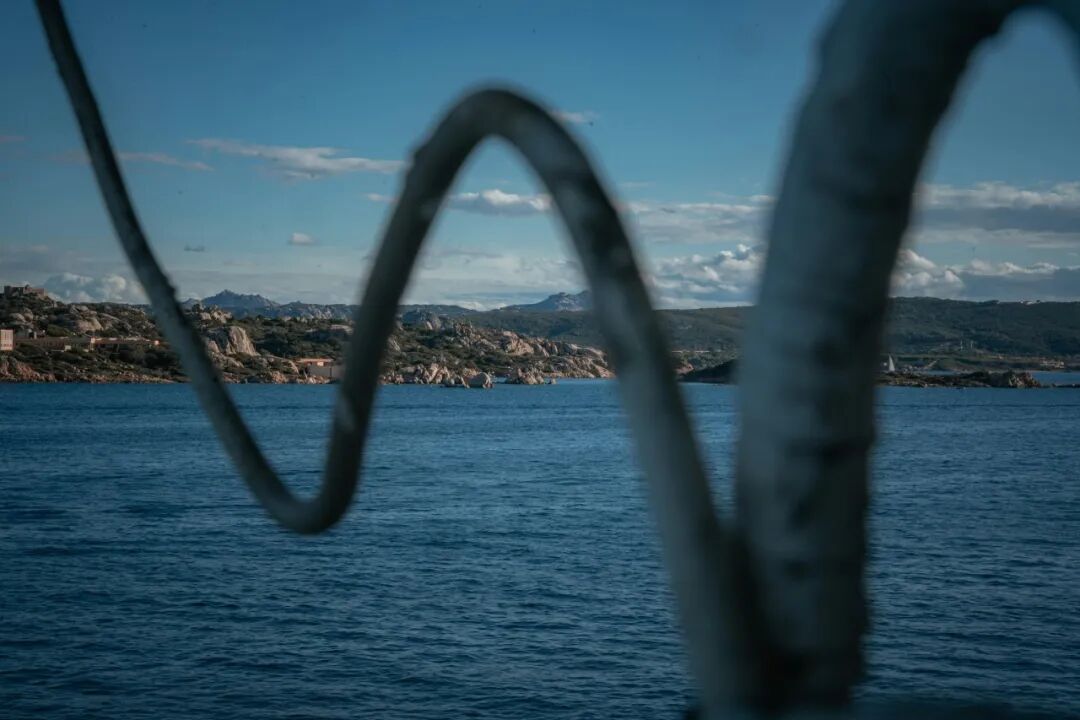
Image source: unsplash
Searching for Cables in the Deep Sea
If ship anchoring is a preventable "hidden injury," then the damage caused by extreme natural disasters and deep - water geological disasters is an unpredictable "fatal blow."
CBS News detailed the difficulties in the repair after the Tonga volcanic eruption in a 2022 report: The cable was buried under 30 centimeters of silt and displaced 5 kilometers. It took the repair ship 20 days to replace a 91 - kilometer - long damaged cable. Due to the shortage of spare cables, full repair may take 6 to 9 months.
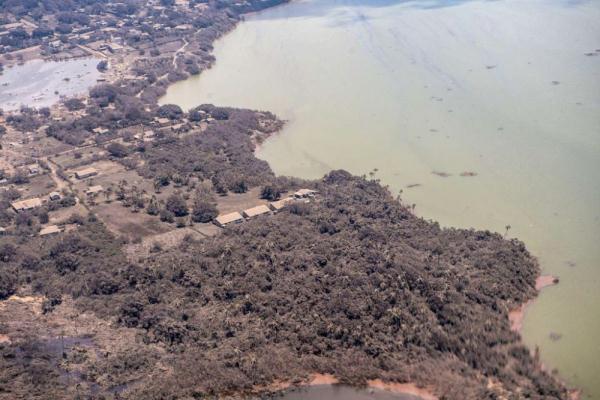
Tongatapu Island, the main island of Tonga, photographed on January 17, 2022. Image source: New Zealand Ministry of Defense
On the western coast of the Pacific Ocean, the difficulty of deep - water repair is also astonishing. In 2016, a submarine landslide occurred in the eastern waters of Taiwan, China. Submarine cables at a depth of 2000 to 4000 meters were snapped horizontally. Zhang Zhe, the general manager of the operation department of the Cable Company, recalled that the standard process for cable repair is to salvage the cable, cut off the faulty section, splice the spare cable, and rebury it. However, the most difficult part is not the splicing but "finding it."
"In long - distance offshore areas, the positioning error of shore - based testing can range from several kilometers to more than ten kilometers," Zhang Zhe explained. With a depth of thousands of meters and the surging sediment turbidity current, it is almost impossible for the remotely operated vehicle (ROV) to locate the cable. Operators can only rely on the lifting cable of the surface ship for "blind fishing," and it took more than half a month just to salvage the cable.
This difficulty of "finding the broken cable" in the dark deep sea is not an isolated case.
The repair personnel of the Sino - British Submarine Cable Company also experienced a repair operation after a major earthquake in the Philippine Sea. The water depth in the affected area was two to three thousand meters. The strong earthquake triggered a large - scale submarine landslide, and a large amount of earth and rock buried the cable. The detection equipment could not capture the cable's position at all, and the repair work was once in a desperate situation like "looking for a needle in a haystack." They could only try to recover the cable one kilometer at a time along the pre - determined route. It took a month to salvage both ends of the broken cable ashore.
"The salvaged cable was completely unrecognizable. The originally corrosion - resistant outer sheath was eroded by the heavy pressure and turned completely gray - black, indicating that it had been buried and squeezed on the seabed for a long time and under great stress," Zhang Lei, a training instructor of the Sino - British Submarine Cable Company, told a reporter from IT Times. In the face of extreme natural conditions, one can only proceed steadily and step by step, using the most clumsy but reliable method to regain the deep - sea communication lifeline bit by bit.
Typhoons, huge waves, ocean currents, etc. may interrupt the operation at any time; it is necessary to coordinate the closure of the shipping lane in densely trafficked areas; after the fishing ban ends, fishing boats go out to sea in large numbers, and the repair window closes... When a fault occurs at a global data bottleneck, the consequences are even more disastrous.
In 2024, a local conflict occurred in the Red Sea region, damaging four cables. 25% of the telecommunications traffic in West Asia and North Africa was interrupted, and 25% of the data traffic between Asia and Europe was affected. Due to the conflict area, the repair work was almost impossible to carry out.
"Aging" Crisis
"The most difficult part of submarine cable repair is not the splicing technology, but waiting for ships and waiting for certificates," said Yan Xiang, the president of Zhongshi Technology. There are only about 60 professional ships globally with the ability to repair in deep - sea areas over 3000 meters, and they are mainly concentrated in developed regions. Regions such as Africa, Latin America, and the Middle East have almost no independent repair capabilities. After a fault occurs, they can only "wait in line for repair," and the waiting period can even be as long as several months.
This is also the shortcoming of internet resilience that Chaudhry is worried about: There is no globally balanced protection and repair system. Once there are concentrated failures in key areas, it will be in a helpless situation.
The maintenance area in Yokohama, Japan, managed by the Sino - British Submarine Cable Company is the area with the densest international submarine cables in China. Ships from China, Japan, and South Korea take turns on standby, but there are still tense situations where "the cable breaks again right after it is repaired." The high - density fishing operations in international waters keep the repair pressure saturated.
What is even more troublesome is cross - border approval. "Technology can be standardized, but administrative barriers cannot," Yan Xiang revealed. In 2024, there was a submarine cable repair that was delayed by layers of approval, taking a total of 947 days, far exceeding the time required for the actual repair of the fault.
The shortage of spare parts also restricts the repair efficiency. Some of the materials required for submarine cable repair, such as spare cables and splicing boxes, rely on overseas production. The procurement and transportation cycle can be as long as several months, and sometimes the repair window may be missed. "Once there are consecutive failures, the spare consumables will be quickly exhausted, and we can only wait," a repairman told a reporter from IT Times.
After a submarine cable breaks, it is a competition of the speed and scheduling of repair resources. However, the global submarine cable repair ships are quietly entering an "aging crisis." The overall ship age is relatively high, and the construction cycle of new ships is several years.
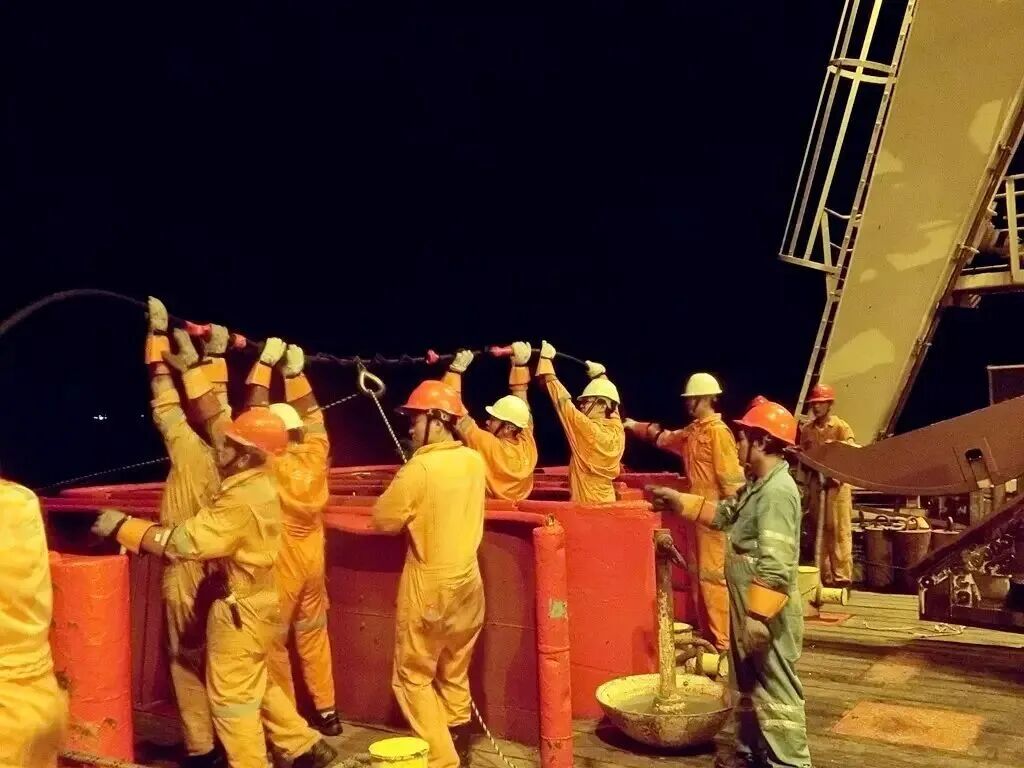
Image source: Shanghai Telecom
The report "The Future of Submarine Cable Maintenance" jointly released by TeleGeography and Infra - Analytics in 2025 shows that by 2040, the total kilometers of cables deployed in the global ocean will increase by 48% net. By then, about two - thirds of the global cable maintenance ships will reach the end of their service life. The remaining half of the fleet will also be close to the 40 - year retirement age.
For the Chinese fleet, "strengthening combat capabilities" is on the agenda. The "Tianyi Navigator," which was launched on New Year's Day this year and is planned to be officially put into operation in June, is the first large - scale submarine cable engineering ship in China with the ability to construct and repair at a water depth of 5000 meters. This 18,000 - ton submarine cable ship with unlimited navigation area realizes localization, digitalization, and intelligence, and is equipped with a full - set electric propulsion system and a DP - 2 dynamic positioning system. "It directly improves the delivery and repair efficiency of the entire submarine cable system," Chen Liang said. However, he also admitted that compared with developed countries, Chinese submarine cable enterprises still have a gap in the number of ships and technical accumulation in terms of overall construction capabilities.
Deep - Sea "Offensive and Defensive Battle"
Physical damage tests the hardware resilience of submarine cables, while geopolitical games target the "sovereign resilience" of the global digital network. Submarine cables have been included in the scope of geopolitical competition.
In August 2025, the US Federal Communications Commission (FCC) passed new regulations, prohibiting the use of equipment and services provided by "foreign adversaries" in submarine cable systems and encouraging the preferential use of trusted technologies from the United States and its allies. This is the first major and comprehensive revision of submarine cable - related rules since 2001.
In fact, restrictive arrangements for submarine cables have been in place for a long time. In August 2020, the United States launched the "Clean Network" initiative, listing submarine cables as one of the six key areas to be suppressed. Since 2021, the United States has repeatedly abused state power, without proper justification, and based solely on subjective speculation and suspicion, taken unreasonable measures to suppress China Telecom, such as revoking the 214 license. In 2022, Huawei Marine Networks was included in the Entity List. In 2024, the United States joined with multiple countries to sign the "New York Joint Declaration," requiring the selection of allied contractors for submarine cable components and services.
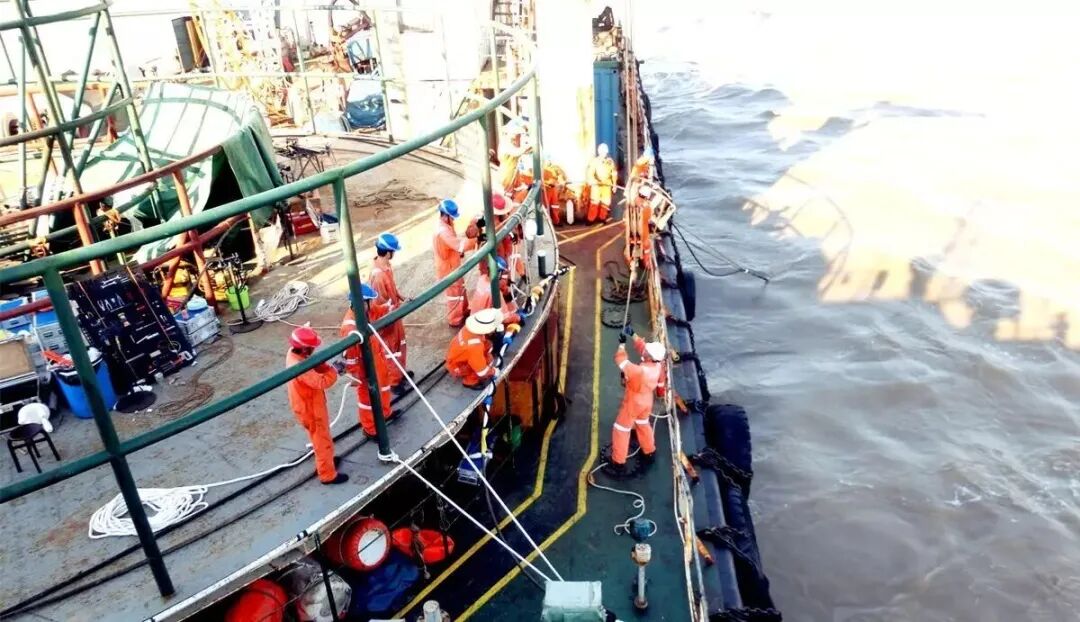
Image source: Shanghai Telecom
This geopolitical "exclusion of China" is most directly reflected in the submarine cable route planning. Gao Xin (a pseudonym), an insider in the submarine cable industry, told a reporter from IT Times that in the past, the shortest route was preferred for submarine cable laying. However, affected by geopolitics, foreign submarine cable route planning now deliberately avoids Chinese waters. For example, the Intra - Asia Marine Cable project from Japan to Singapore deliberately chooses to go south around the eastern part of Taiwan, China, the Philippines, and Borneo, bypassing the "nine - dash line" area in the South China Sea.
"As long as a Chinese telecom operator participates in the investment, or even if the cable only lands in the Chinese mainland or Hong Kong, China, these submarine cable projects face the risk of partners withdrawing due to US regulations," Gao Xin said. European and American internet giants also tend to "bypass China" when building new systems. Huawei Marine Networks, which was once powerful, now "doesn't even have the opportunity to bid."
In the view of an analyst, the core purpose of exclusive construction is to build a data corridor for a "values alliance." By controlling the submarine cable routes, landing points, and supply chains, an "independent cable belt" that does not pass through specific regions is created. This is not only a business competition but also a division of "spheres of influence" in the digital age, ensuring that every node through which data flows is under "trusted" sovereign control.
"In essence, it is to instrumentalize civilian infrastructure to serve the great - power competition," the analyst told a reporter from IT Times.
However, China is not completely passive. In November 2025, the Southeast Asia - Hainan - Hong Kong (SEA - H2X) international submarine cable project landed in Tseung Kwan O, Hong Kong. This approximately 6000 - kilometer - long cable, equipped with 8 pairs of main optical fibers, connects Hainan, China, Hong Kong, China, the Philippines, Thailand, and Singapore, breaking the restrictions of geopolitical blockade on China's participation in international submarine cable construction.
Resilience "Firewall"
Facing natural risks, repair shortcomings