"One-person companies" are booming. Who has earned the first pot of gold with AI employees?
From Suzhou to Shenzhen, and from Chengdu to Shanghai, an entrepreneurial paradigm called OPC (One Person Company) is sweeping across the country at an unprecedented speed.
Statistics prove it: More than 700 OPC communities have emerged nationwide. Among them, the WeOPC platform has gathered over 450,000 OPC entrepreneurs and AI developers. In March this year, the first OPC Creators' Conference was held in Beijing, bringing together nearly a thousand entrepreneurs from more than 30 cities. The event was as lively as a roadshow for unicorn companies - except that each "company" might only consist of one person.
"One person, 50,000 yuan, and a 30-square-meter office." This set of data frequently appears in various entrepreneurial stories, like a standardized fairy-tale formula - one person, with a minimal startup fund, can embark on a business adventure empowered by AI.
But what about the other side of the story? Behind the boom, controversies follow closely. The quiet exit of the first batch of OPC entrepreneurs has also made many people start to take a wait-and-see attitude towards this boom.
From "Digital Nomads" to OPC
"One person and one mobile phone are all it takes to start a one-person company. There's no need for a fixed workstation, no need to punch in for work, and no need to be chased by KPIs." Xiaoyu, a blogger, used to be a tutoring teacher. Now, she has chosen the cultural and tourism sector and established her own one-person travel agency. Before that, she once thought that "working in the tourism industry meant being tied to fixed routes, helping others realize their dreams of seeing the world while being trapped in the office." But with the help of AI, she found that "one person can be an entire travel agency. There's no need to pay for store rent or deal with complex processes. One mobile phone can handle everything online."
Currently, Xiaoyu uses AI tools to complete the entire process of customer communication, itinerary customization, plan modification, and private domain promotion. "My office can be a studio in Guangzhou, a café in Shenzhen, or any destination I'm about to set off for in the next second."
Ruirui, who worked as a training manager in a listed company for 10 years, has also become part of the "one-person company" boom. As an independent AI trainer, Ruirui initially even used her home study as an office. "Taking two or three orders a month can cover the expenses. I'll expand gradually after it stabilizes."
Now, Ruirui has developed a standardized solution. And AI is her best free assistant. "I can ask AI to help with the solution framework, teaching design, and PPT courseware. It only takes me half an hour to create a course plan now, which allows me to have more time to communicate and connect with customers." Since she is an AI trainer herself, Ruirui is very familiar with how to use AI efficiently. "Many people are still at the stage of using tools in a scattered way like searching on Baidu. But to really improve efficiency, we need to turn AI into a workflow and let AI complete chain tasks."
There are more and more new-generation entrepreneurs like Xiaoyu and Ruirui.
On Xiaohongshu, under topics such as #One-Person Company Entrepreneurship #AI Helps Me Be the Boss, tens of thousands of posts share the easy entrepreneurial stories of "One person + AI = One company". The screenshots of monthly incomes of tens of thousands or even hundreds of thousands of yuan posted by bloggers constantly stimulate the public's entrepreneurial nerves. On Douyin, short videos such as "A 90s guy's one-person company is valued at over 100 million after 5 months of operation" and "A 00s has 254 AI employees" are going viral, completely breaking people's traditional perception that "entrepreneurship must involve gathering a team, having funds, and knowing technology."

Image source: Xiaohongshu
There are also legendary stories frequently reported in the newspapers: In Quanzhou, Diwantans Trading Co., Ltd. uses AI to collect global platform data and analyze consumer preferences. All repetitive tasks such as product listing and customer service are handed over to AI. The company's order conversion rate has increased from 9.96% to 21.67%, the input-output ratio has increased by 2.4 times, and the revenue in 2025 exceeded 40 million yuan. In the "China Digital Valley · Future Digital Intelligence Port" in Hangzhou, a monitor and a host are all the assets of two companies, "Jushenzhijia" and "Cailiaome". But with the help of AI data collection tools and intelligent matching systems, one person can complete the entire process of demand docking, plan design, data sorting, and customer maintenance. Two months after its establishment, it has received three orders from bearing companies, robot companies, etc., with a revenue of over 200,000 yuan.
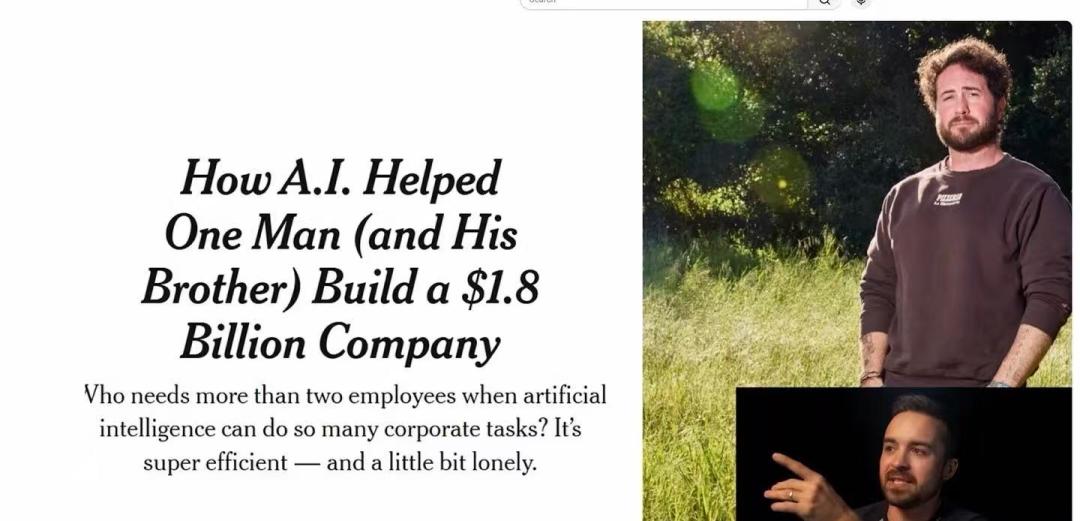
Reports on "one-person companies" abroad
In fact, a "one-person company" is not a traditional self-employed individual or a sole proprietorship enterprise. It refers to a new entrepreneurial model led by a core entrepreneur, relying on an AI tool chain to complete the entire process of product R & D, marketing, and financial management, and achieving a business closed-loop. Its explosive popularity mainly stems from two variables: the full support at the policy level and the disruptive empowerment of AI technology.
According to the big data of Southern Metropolis Daily, it is a typical path for individual entrepreneurs to purchase a small amount of APIs for model invocation, content generation, and automated services, and achieve profitability through subscription or paid docking. Some people encapsulate industry knowledge into vertical small models, some sell or host prompt template resources, and some provide SaaS tools based on tokens, charging by the number of invocations or monthly.
Policy Dividends and AI Technology Pave the Way for Entrepreneurship
The concentrated outbreak of "one-person companies" in 2026 is by no means accidental. It is the inevitable result of the superposition of four factors: full support at the policy end, maturity of AI at the technology end, demand transformation at the market end, and change of employment concepts at the social end. Among them, policy support and AI iteration are the two most core driving forces.
In 2026, the "new form of intelligent economy" was written into the government work report for the first time. "Artificial intelligence +" has been a key deployment in the government work report for three consecutive years, clearly sending a signal that the AI industry will fully empower the economy. As an important carrier for AI to land in the entrepreneurial field, "one-person companies" have become the core means for local governments to layout the intelligent economy and cultivate new economic growth points.
At the legal level, China's Company Law has long clarified the legal status of "one-person limited liability companies", allowing a natural person or a legal person to invest in and establish a limited liability company. Shareholders only bear limited liability within the scope of their capital contributions, providing basic legal protection for "one-person companies". From 2025 to 2026, many places further simplified the registration process of one-person companies. The whole process can be handled online, with zero yuan for registration and certificates issued on the same day. The minimum registered capital requirement was cancelled, significantly lowering the threshold for entrepreneurship.
Moreover, policies in various places have been implemented intensively.
As of March 2026, more than 20 cities have intensively introduced special support policies for OPC. All first-tier cities such as Beijing, Shanghai, Guangzhou, and Shenzhen have introduced policies. The policy coverage rate in new first-tier cities such as Hangzhou, Chengdu, Wuhan, and Nanjing has reached 80%, and the coverage rate in second-tier cities such as Suzhou, Hefei, and Chongqing has also reached 55.6%.
Among them, the Beijing Municipal Administration for Market Regulation has launched an integrated intelligent registration system. It has integrated and launched 12 characteristic theme packages such as "OPC + Large Model Development Company" from more than 2,000 standardized business scope terms. Entrepreneurs only need to select the business theme, and the system can automatically generate a standardized combination of business scopes. The whole process of business license application, seal engraving, and bank account opening can be handled "without face-to-face contact and at zero cost".
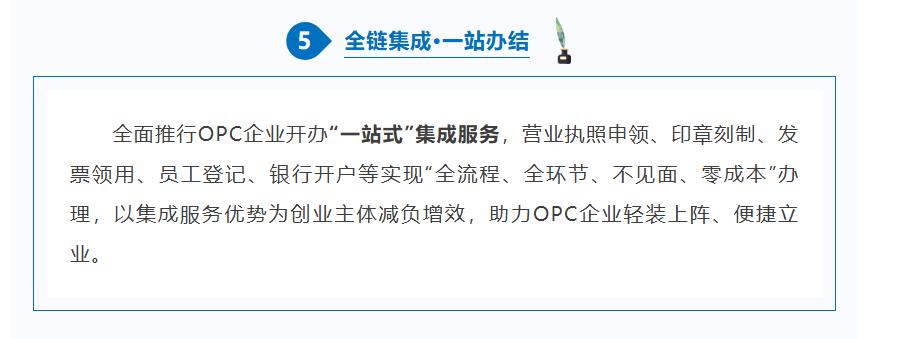
Image source: Beijing Municipal Administration for Market Regulation
Guangzhou and other places provide a 50% subsidy for OPCs' use of large model computing power, with an annual upper limit of 200,000 yuan, reducing the cost of using AI tools. Haizhu District in Guangzhou offers a maximum reward of 5 million yuan for high-quality OPC projects. Qingdao has established the first AI - OPC science and technology innovation fund with a scale of 50 million yuan, adopting a "precise small - scale investment model of 50,000 - 500,000 yuan"...
If policies are the soil for "one-person companies", then the maturity and popularization of AI technology are the seeds that give birth to OPCs. From 2025 to 2026, the explosive iteration of generative AI, large models, AI agents, and AIGC tool chains has completely reconstructed the production mode of entrepreneurship, making it a reality for "one person to do the work of a team".
Today's AI tools have achieved full coverage of the entire entrepreneurial process. Traditional essential positions in a team such as copywriting, design, development, operation, finance, and customer service can all be replaced by AI. Large models such as ChatGPT and Wenxin Yiyan can quickly generate business plans, promotional copy, official account articles, and short - video scripts, increasing efficiency by 5 - 10 times. Tools like Midjourney, Stable Diffusion, and AI poster design tools can generate posters, logos, product images, and short - video frames by inputting text, without the need for professional design skills.

Meanwhile, the post - 95s and Generation Z have become the main force in entrepreneurship. Their employment concepts have undergone fundamental changes. They reject involution, dislike the "996" work schedule, pursue work freedom, and desire to realize self - value. The traditional employment model has slow salary growth, limited promotion space, and high work pressure. In contrast, the "one - person company" model offers free time, a high income ceiling, independent control of the business, and the ability to turn interests into a career, perfectly meeting the employment needs of young people.
As reported by the incubator of the Zhongguancun AI North Latitude Community, most of the OPC entrepreneurs in the community are young people, mostly from domestic and foreign universities and technology companies. They either have a background in AI R & D or possess professional capabilities in niche fields. Young people have become the core entrepreneurial group of "one - person companies", driving the OPC wave to continue to heat up.
Hidden Risks
"Recently, many places across the country have introduced OPC support policies and accelerated the implementation of OPC communities. Using one - person companies to digest the inventory of commercial real estate and using cheap office space to support the growth of one - person companies is a mutually beneficial thing. Of course, this process is also a process of exploration and not necessarily a successful shortcut or a guaranteed formula for success." This is a warning from a commentary article in Cover News.
In fact, behind the carnival of "one - person companies", risks and opportunities coexist, and traps and hopes are intertwined. Behind the narratives of get - rich - quick myths and easy entrepreneurship, there are always five major types of risks: legal, fiscal and tax, commercial, cognitive, and fraud. Many entrepreneurs have fallen into "traps" from their "entrepreneurial dreams" due to neglecting these risks.
"They have the excitement, and I have nothing." This sentence may be very appropriate in the "one - person company" wave in 2026. When countless individual entrepreneurs rush into the track with the dream of "being empowered by AI and earning one million yuan a year alone", a somewhat ironic reality gradually emerges: Those who really make a fortune in this boom are not the OPC entrepreneurs who are struggling on the front line, but the training institutions and community operators who sell them the "methodology of dreams".
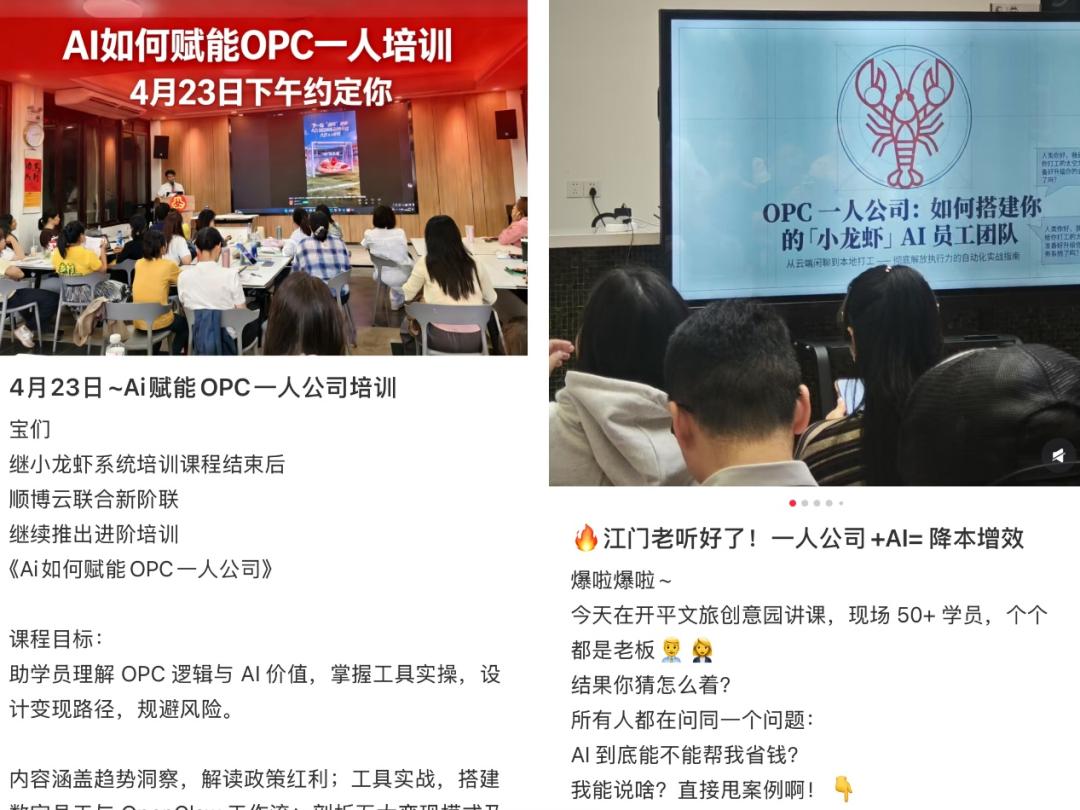
One - person company training courses emerging in various places
Zinc Scale noticed that when searching for "one - person company" on platforms like Xiaohongshu, the top - ranked posts almost all point in the same direction - courses, communities, and accompanying services. "Quit my job and do OPC, made 200,000 yuan in 3 months, here's my practical review", "As a liberal arts student without coding skills, how can I start a one - person company with AI? Click here to get the materials", "Get started with OPC from scratch, build your money - making system from 0 to 1 in 7 days"... Under each carefully crafted popular post, there is a private message drainage entrance.
Most of these training courses don't have core content. The course content is either free AI tool usage tutorials available online or copied entrepreneurial cases from others. They repeatedly instill false narratives of "earning money while lying down" and "getting rich overnight", but gloss over the truly crucial legal compliance, fiscal and tax regulations, and customer acquisition skills, and even deliberately avoid entrepreneurial risks.
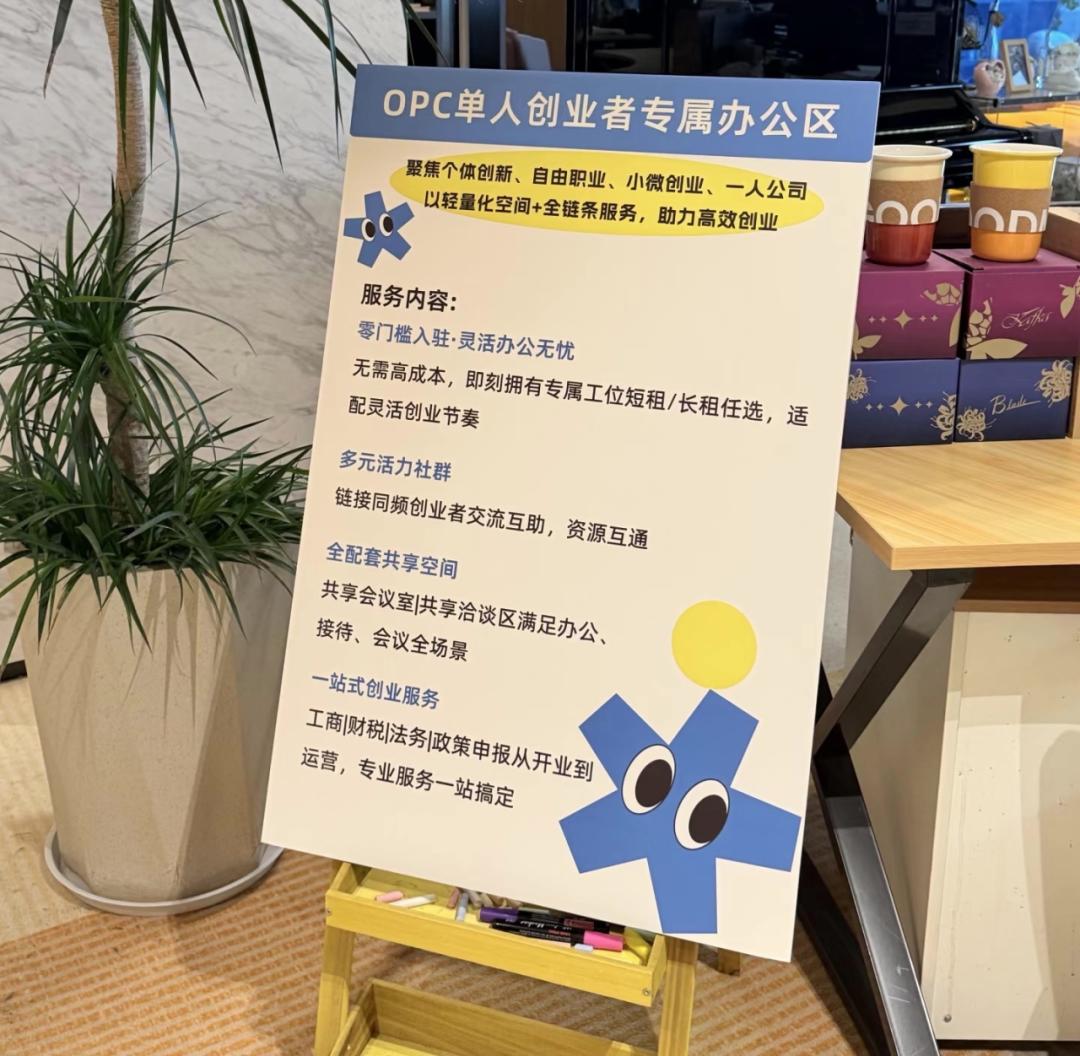
Combined with the industry observation of the knowledge - payment track in 2026, the demand for various "one - person company wealth - creation courses" has increased sharply. Leading training institutions can easily achieve monthly revenues of over one million yuan through large - scale operations. Even more ironically, most of the "success stories" claimed by these training courses are carefully packaged lies - the so - called "one - person companies earning over 50,000 yuan a month" are often teams with multiple people collaborating, not truly single - person operations. Among the students who buy the courses, most are still working for others half a year later, and only a few can barely achieve profitability.
The statistical report released by the Sichuan Provincial Consumers' Association shows that there were 3,739 complaints related to "AI +" training in 2025, a year - on - year increase of 2.21 percentage points, and the deceived young group was relatively large.
In visible evidence, the AI + one - person model obviously has epoch - making industrial value.
But regarding this OPC wave as simply an upgraded version of "going