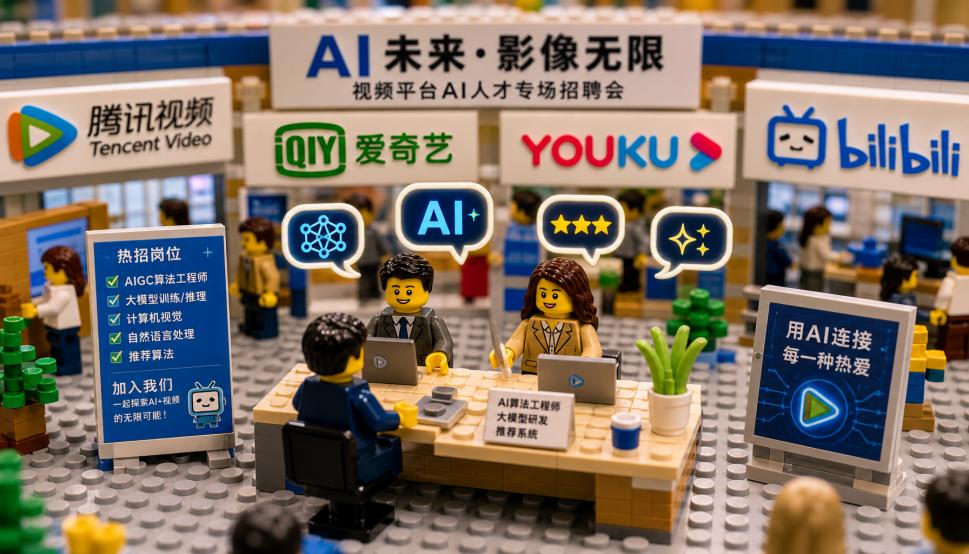
Interpretation of iQiyi, Tencent Video, Youku, and Bilibili's recruitment: The understanding of AI among these four companies is diverging.
In the current context of the rapid iteration of AI, the drastic changes in audience demands, and the adjustment period faced by the industry, what kind of AI talents have become the "hot commodities" for entertainment companies? How do major entertainment companies understand AI? And what exactly are the new businesses emerging in this booming field?
The answers lie in the latest recruitment notices of each company.
After specially launching the "Talent Trend Indicator" series (for iQiyi, Youku, Tencent Video, and Bilibili) during the 2025 summer recruitment season, this year, Entertainment Capital Theory continues to analyze the job openings of major companies in the entertainment industry, with a particular focus on decoding AIGC-related positions. We aim to answer the above questions for readers who aspire to work in the field of AI in the entertainment industry.
For every 4 job openings released by long - video platforms, 1 is for an AI talent.

AI by Entertainment Capital Theory
As of the end of April, Entertainment Capital Theory has counted that Tencent, iQiyi, Youku, and Bilibili have released a total of 1,873 job openings, among which 468 are AI-related, accounting for 25% of the total. Specifically, AI-related positions in campus recruitment account for 35.8%, 26.3% in social recruitment, and 15.9% in internships. The platforms are actively recruiting the post-00s "AI native talents" who are accustomed to using tools.
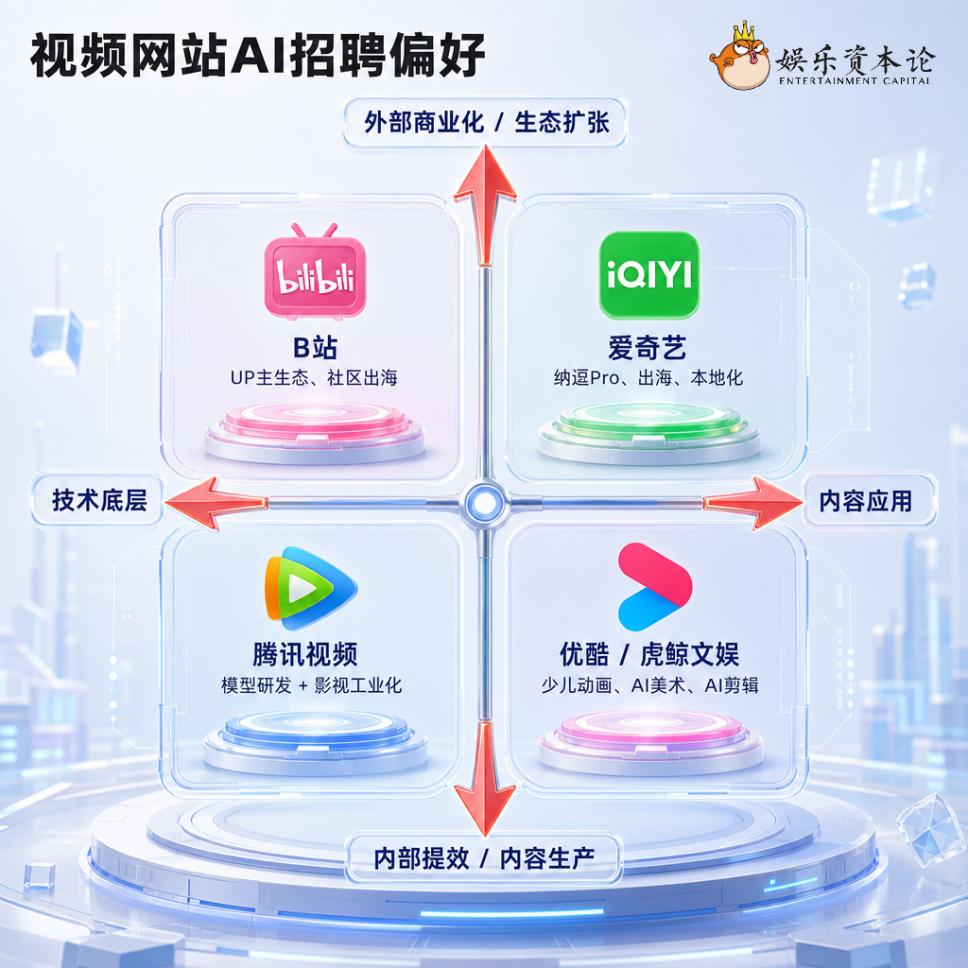
However, the four companies are not vying for the same type of people.
Tencent Video aims to make AI an infrastructure for film and television production. Its recruitment covers the entire chain from the underlying R & D models, middle - layer promotion technologies, to the application - layer content output. It is targeting a new generation of video and 3D models that surpass Seedance 2.0. At the same time, it is recruiting AI short - drama creators in the style of a "one - person crew" and intends to introduce AI production in top - level S - class TV dramas and animations.
iQiyi wants to turn AI into a salable tool for overseas expansion and commercialization. It has set up positions to use AI for overseas work such as localization translation and has specifically established a sales position to sell the "Nadou Pro" intelligent agent, aiming to transform AI from a cost center into a profit center.
Bilibili intends to embed AI into the community ecosystem and the creation process of UP owners. Its AI video creation tools and video editing intelligent agents are about to be promoted in the market. Danmaku (bullet comments) will be translated into more languages such as Arabic through a combination of AI and manual operation. At the same time, it is also focusing on directions such as voice/music model training, AI search and recommendation, and intelligent agent deployment.
Youku/Huijing Entertainment is pushing AI into content practice. Its job openings are mainly targeted at content talents such as screenwriters, directors, and editors who understand AI. Applicants (including interns) are required to submit AI - created short films with "complete narratives". Due to its high fault tolerance rate, emphasis on painting styles, and simple narratives, children's animation has become the first - tier breakthrough point for the implementation of AIGC content.
AI positions account for 1/4 of the total recruitment, and 36% of campus recruitment positions are related to AI
During the summer recruitment season one year ago, the proportion of AI positions at iQiyi was only 9.4%. Now, among the 87 social recruitment positions, 32 are AI - related, accounting for as high as 37.6%. There are also reports that among the more than 7,000 offers in Alibaba Group's campus recruitment for the class of 2026, AI - related positions account for more than 60%.
AI ability has changed from a "bonus item" in the exploration stage one year ago to a "must - have item" for all positions. In the future, the most competitive entertainment talents must be compound talents with domain expertise, AI control ability, and creative judgment.
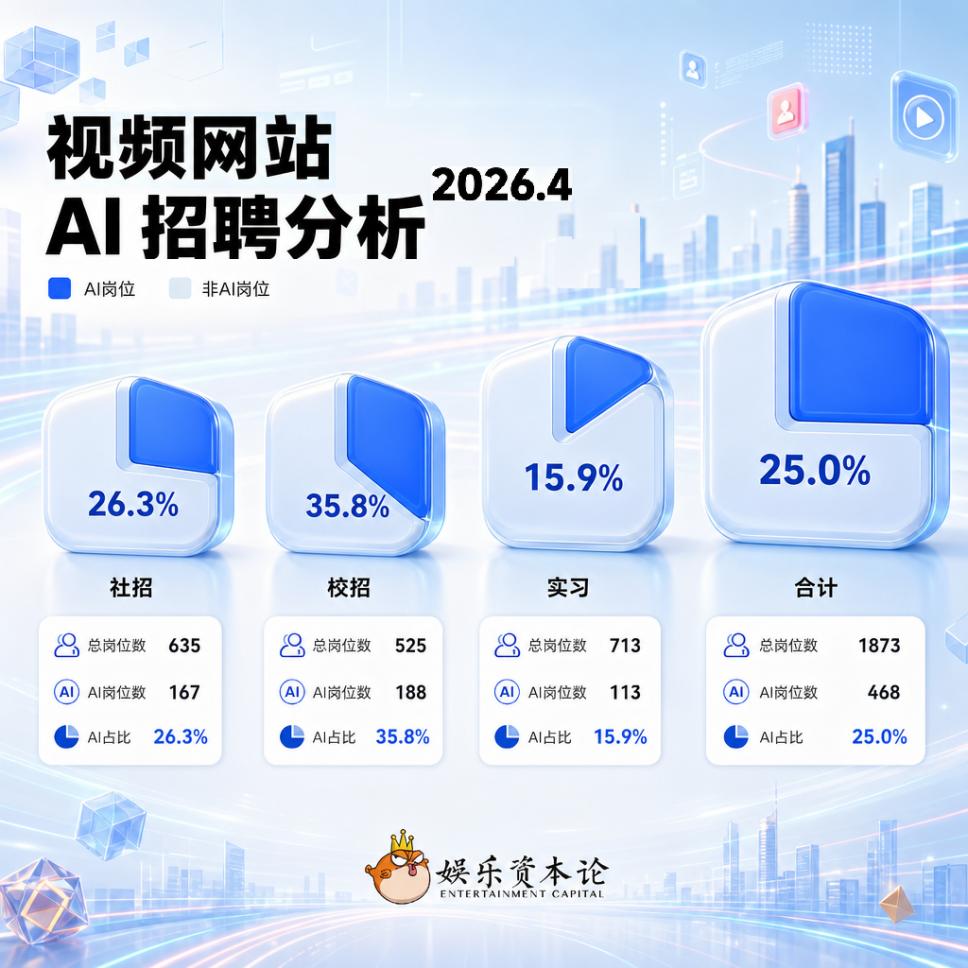
Here, Entertainment Capital Theory has specifically noticed that AI positions account for 35.8% of the total campus recruitment positions of the four major companies. The platforms are recruiting a large number of "AI native talents" through campus recruitment. It should be noted that in Europe and the United States, technology companies such as Palantir have aggressively bypassed traditional higher education and directly recruited high - school graduates.
According to Entertainment Capital Theory, Tencent's "Qingyun Plan" for graduates of the class of 2026 provides cutting - edge research topics and one - on - one guidance from senior researchers. One of the positions, "Tencent Video - Research on Unified Multimodal Video Generation and Editing Models", aims to develop audio - video models comparable to Nano Banana and Seedance 2.0.
What other interesting insights are hidden in the recruitment data of each company?
Tencent Video: Recruiting both model developers and comic - drama creators
The AI positions at Tencent Video present a three - layer structure: underlying R & D models, middle - layer promotion technologies, and direct content production at the application layer.
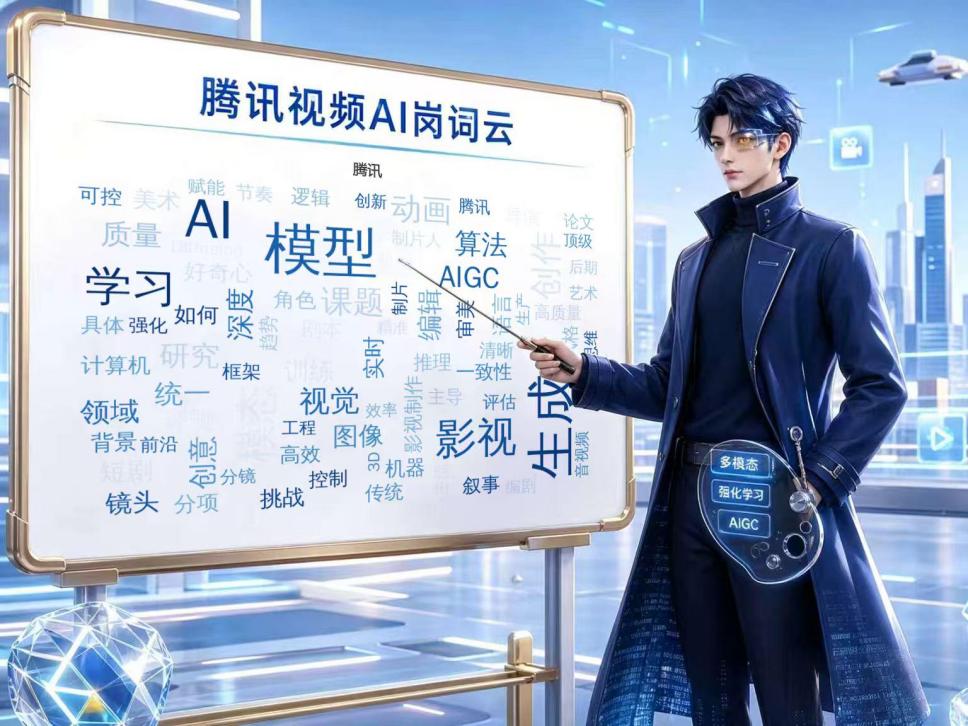
Positions such as the person - in - charge of video generation models and AIGC algorithm researchers are under the Tencent Video business line, rather than the Yuanbao side. This shows Tencent's ambition to conduct comprehensive competition in the field of AI video. While most positions in the Tencent Group are being concentrated from all over the country to the Shenzhen headquarters, the model technology positions are being recruited in Hangzhou, which clearly targets DeepSeek.
The job content includes: leading the application of DiT, unified understanding - generation architecture, etc. in the film and television field, constructing video generation/editing models and 3D generation models with high realism, strong controllability, and long - term sequence consistency.
Furthermore, these positions also require formulating a long - term technical route for model R & D for video generation and post - production editing. They need to optimize the models in terms of model iteration, controllable module R & D, and performance acceleration according to the company's own products and business needs, solve key algorithm problems in the application and implementation of business scenarios, and assist in the productization of algorithms.
In the job description, in addition to its own HunyuanVideo, competitors such as wan2.2/2.5 and SkyReels V2, as well as video editing models such as VACE and wan - animate, are also mentioned.
The "AI technology producer" serves as a bridge between technology and content. Its core responsibility is to embed AI capabilities into the traditional film and television production process. It needs to sort out the existing full - process of production, design and implement AI - empowered solutions, and build an AI tool system; construct an AIGC pipeline for film and television production and "participate in the AI production of top - level S - class TV dramas and animations". This means that Tencent Video will firmly introduce AI production in its future top - level S - class dramas, but how to avoid audience dissatisfaction will become a major issue.
The application layer mainly consists of positions for AI short - drama, comic - drama, and animation production. Tencent Video is reluctant to set up even one more position for a single task. Each position hopes for all - around talents who can handle all aspects of the work. Entertainment Capital Theory has found that the descriptions of positions such as producers, directors, and creators repeatedly mention "full - process management", "full - process sorting", and "overall full - process coordination". Although Tencent Video emphasizes the discovery of "creative teams", it seems that each member of the team should be able to complete tasks independently.
The producer position also needs to build a small and flexible creative team and coordinate resources for the team. The general requirements are: rich experience in using AIGC tools, proficiency in at least two mainstream AI image and video generation tools, in - depth understanding of AI generation logic and prompt engineering, and practical experience in AI - led content creation. It is preferable to apply with hit works or award - winning experiences in competitions. The production requirements are detailed to the extent of "understanding the characteristics of various models and skills for optimizing prompts".
iQiyi: AI's journey is "going global" and "selling shovels"
If Tencent Video's AI strategy is to "dig deep", iQiyi's is to "break out". Its core AI application directions are targeted at the overseas market and commercial monetization, with the Nadou Pro intelligent agent being a typical example.
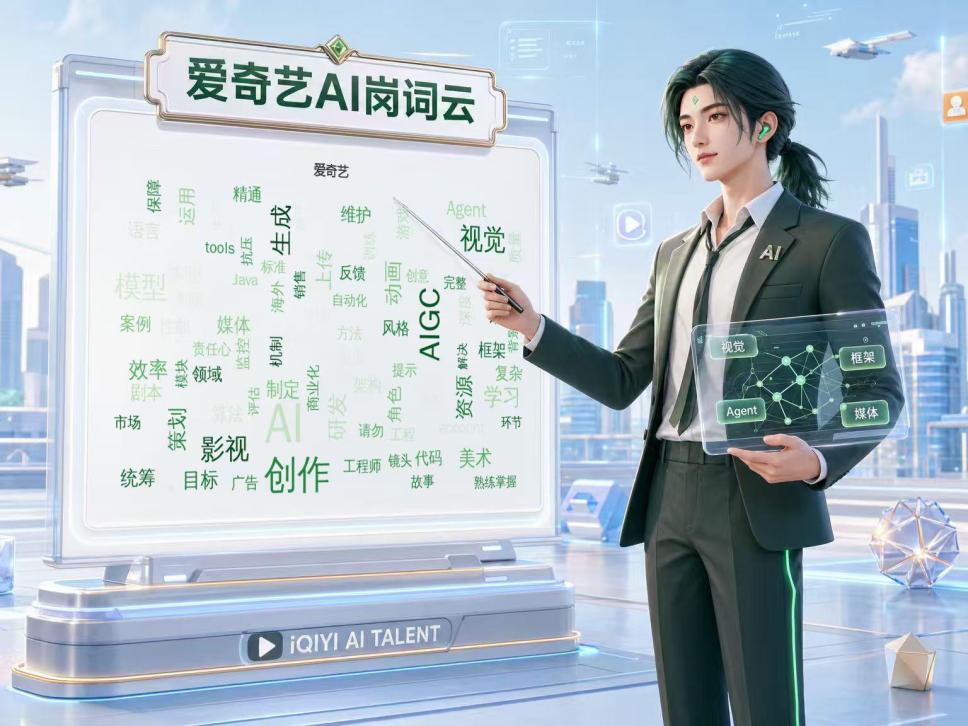
The overseas business line has operation positions such as "YouTube content operation (Thai/Portuguese/Indian/Vietnamese, etc.)" and "overseas social media content designer". These positions generally require candidates to handle the production, translation, and dubbing of materials using AIGC tools.
Among the 11 sales - related positions, 6 clearly require the ability to use AI tools. The "Sales Manager (AIGC Creation Platform)" is mainly responsible for promoting "Nadou Pro" to top - level film and television companies, animation studios, and MCN agencies. It is preferred that candidates have a producer background or relevant technical service experience. Nadou Pro was launched in March this year as a flagship product and is highly expected by the company. The official says that it is not only a model aggregator but also integrates iQiyi's professional film and television production methodology into the creative workflow.
iQiyi is also recruiting AIGC content leaders at the studio level to produce first - party content. It requires candidates to have more than 5 years of experience and practical experience in successful AIGC projects. Interestingly, at the end of the job description, it emphasizes three times: "Do not upload non - AI - assisted creative works."
From the job requirements, iQiyi expects first - party AI content to "ensure that the work reaches a professional level in the three aspects of story, character, and emotion - with smooth narration, clear logic, and engaging plots; unified, coherent, distinct, and growth - arc - having character images; and outputting real emotional value to resonate with and satisfy the audience". What exactly does it look like? Perhaps we can refer to the existing projects led by Director Pao Tak - hei.
Bilibili: Developing AI video - editing agents, training voice models, and translating danmaku with memes
Bilibili's AI positions are strongly influenced by the "UP owner" and community culture, and many job requirements are closely related to the community atmosphere and danmaku features.
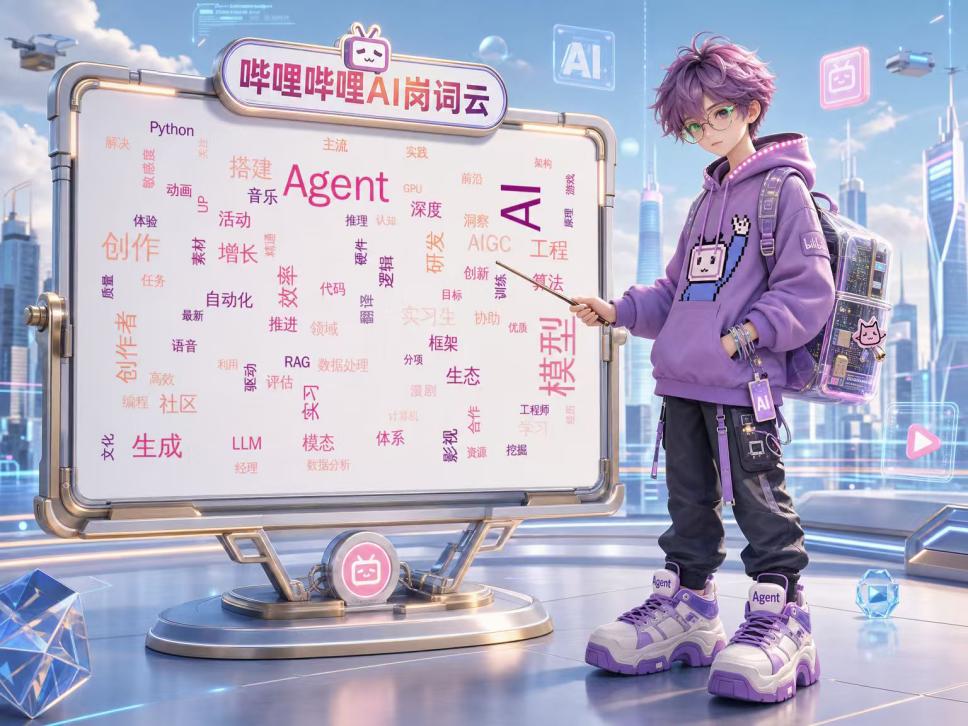
In Q4, the viewing time of AI - assisted creative videos on Bilibili's platform increased by 100 times year - on - year. Its AI investment directions include: enhancing content understanding, matching user preferences, and discovering high - quality content; implementing and promoting AI - assisted creative tools, including AI video translation. These directions can be seen from the recruitment requirements.
For example, the specially developed AI video creation tools (including AI video editing agents) will be accompanied by corresponding marketing personnel, focusing on the core goal of user growth and deeply engaging with user groups such as UP owners. Whether there will be a competitive alternative to Jianying depends on you!
The "Arabic AI Translation Operation Intern" is required to use AI to solve the problems of cross - cultural content, meme culture, and danmaku translation. It seems that phrases like "High - energy ahead", "I'm dying of cuteness", and "Double - fan ecstasy" are also expected to go global.
Bilibili's AI positions also include voice and music model training, AI infrastructure architecture experts, and the development of AI search and recommendation functions. It mentions AI programming tools such as Cursor and Copilot. It also recruits an AI strategy manager who has a more "theoretical" role, observing the general trends of AI development at home and abroad and formulating strategies.
According to the job description, Bilibili already has a self - developed intelligent agent development platform (graphical and code - based orchestration). The main deployment method is OpenClaw implementation, which is also known as "raising lobsters". Moreover, previous development platforms such as Dify, n8n, and Coze are still in use. An official member of OpenClaw once told the media that many large Chinese companies are running their businesses directly on OpenClaw, which is not commonly seen elsewhere.
Huijing Entertainment: From computing power reserve to content practice, focusing on children's animation
Wu Qian, the president of Youku, once said that she hopes to find "super creators who can both master creativity and control technology". This is reflected in a large number of content production - end positions.
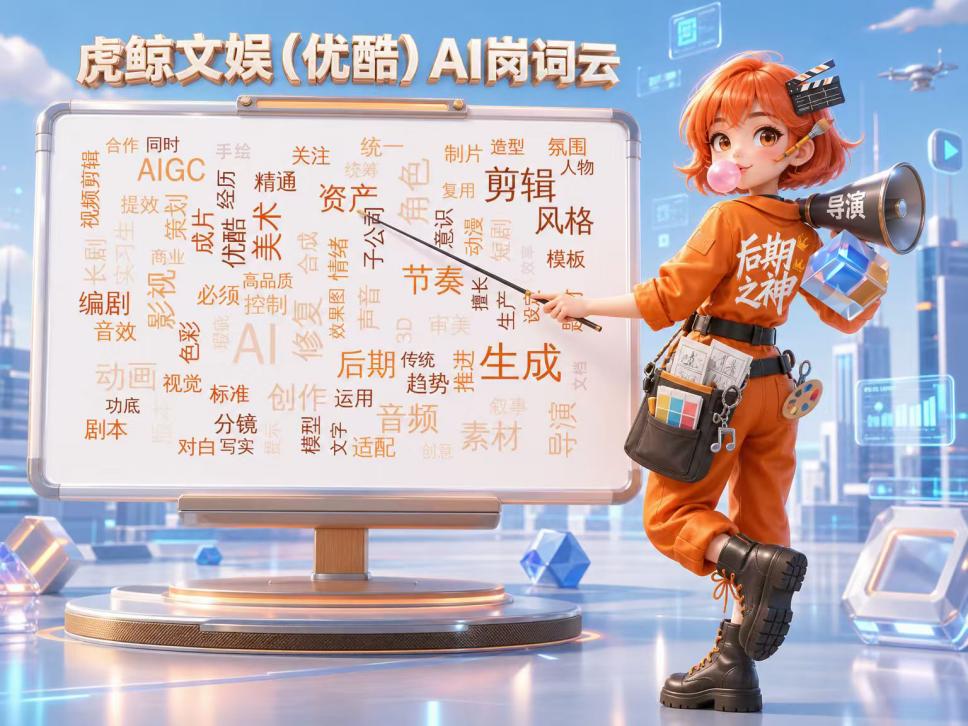
AI art designers need to use AI to generate 3D art asset images. AI character designers need to be proficient in tools such as liblib, Jimeng, and banana, and form a process of "AI generation + manual refinement". Screenwriters need to be familiar with the development process of AI technology. Creative production interns are required to be proficient in tools such as Suno Udio/Midjourney Runway/ComfyUI, and their resumes should include a "5 - minute AI - produced short film with a complete narrative + a 500 - word creative description document".
Youku has recruited multiple technical middle - platform positions such as AI infrastructure engineers, AI intelligent agent optimization engineers, and voice multimodal large - model algorithm engineers. AI data engineers need to handle the cleaning, annotation, and enhancement of hundreds of billions of video, image, and text data. They are also developing AI models that integrate voice, text, and image multimodality for scenarios such as intelligent dubbing and AI character voice generation.
It is worth mentioning that Youku has also formed a refined