Reacquaint with the Yangtze River Delta
The G40 Yangtze River Tunnel-Bridge is a major transportation artery connecting Shanghai's urban area and Chongming Island, passing through Changxing Island. During holidays, it often causes severe traffic congestion that can leave people with psychological shadows. Heading west along the Yangtze River from Changxing Island, you'll reach the area with the highest concentration of shipyards in China.
Shipyards line the riverbank, steel mills stand in great numbers, and supporting companies are scattered everywhere, forming an unprecedented industrial cluster.
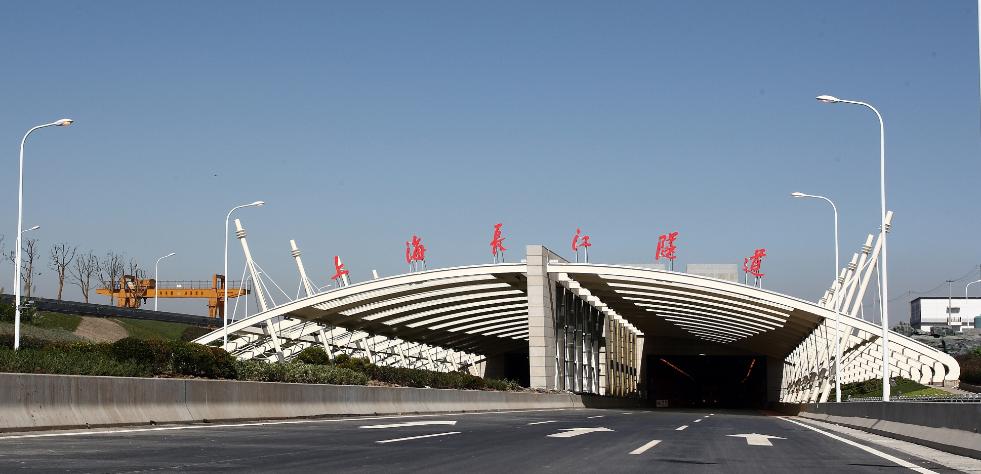
Shanghai Yangtze River Tunnel
On both sides of the Yangtze River estuary, there are enterprises such as Waigaoqiao Shipbuilding, China Resources Dadong Dockyard, and Shanghai Shipyard. Jiangnan Shipbuilding, Hudong-Zhonghua Shipbuilding, and COSCO Shipping Heavy Industry are located on Changxing Island. Along the upper reaches of the Yangtze River and across the entire Yangtze River Delta region, there are countless related industrial chain enterprises.
In 2025, the "Implementation Plan for Building Changxing Island into a World-Class Modern Shipbuilding Base in Shanghai (2025 - 2027)" was officially issued. It is estimated that by 2027, the scale of the shipbuilding and marine industry on Changxing Island will exceed 120 billion yuan, accounting for more than 70% of Shanghai's total.
Centered around Changxing Island, the shipbuilding industry in the entire Yangtze River Delta is also growing rapidly in the context of the integration of the Yangtze River Delta.
In March 2026, the second domestic large cruise ship, "Adora Magic City II", was launched from the dock and is scheduled to be delivered by the end of this year. The construction cycle has been shortened by 8 months compared to the first ship. Behind this is a huge industrial cluster with Shanghai as the core for R & D and final assembly, and Jiangsu, Zhejiang, and Anhui providing key supporting facilities.
The super factories in the global shipbuilding industry are becoming a world-class hub for innovation and production capacity coordination. At the same time, a geographical unit encompassing high-tech industries such as large aircraft, shipbuilding, integrated circuits, and energy equipment is becoming increasingly prominent on China's industrial map.
Beyond the trends and prosperity, industry and innovation remain the underlying codes of the Yangtze River Delta.
The Industrial Chain Behind a Cruise Ship
In May this year, "Adora Magic City II" embarked on a 12-day trial voyage. As the second domestic large cruise ship, "Adora Magic City II" has a total tonnage of 141,900 tons and can accommodate more than 5,000 passengers at full capacity. It will be delivered for operation by the end of the year and will start its maiden voyage from Nansha, Guangzhou.
There are many types of ships. Bulk carriers, container ships, and oil tankers in the field of civil transportation are currently the mainstream ship types, accounting for more than 80% of the shipping capacity. However, they have low technical barriers and relatively low added value.
Ship types such as liquefied natural gas (LNG) carriers, chemical tankers, ro-ro passenger ships, and cruise ships, although accounting for a relatively small proportion, have high single-ship prices, high technical content, and higher profit margins.
Among them, aircraft carriers, LNG carriers, and large cruise ships are regarded as the three pearls of the shipbuilding industry. "Adora Magic City II" belongs to the category of large cruise ships.
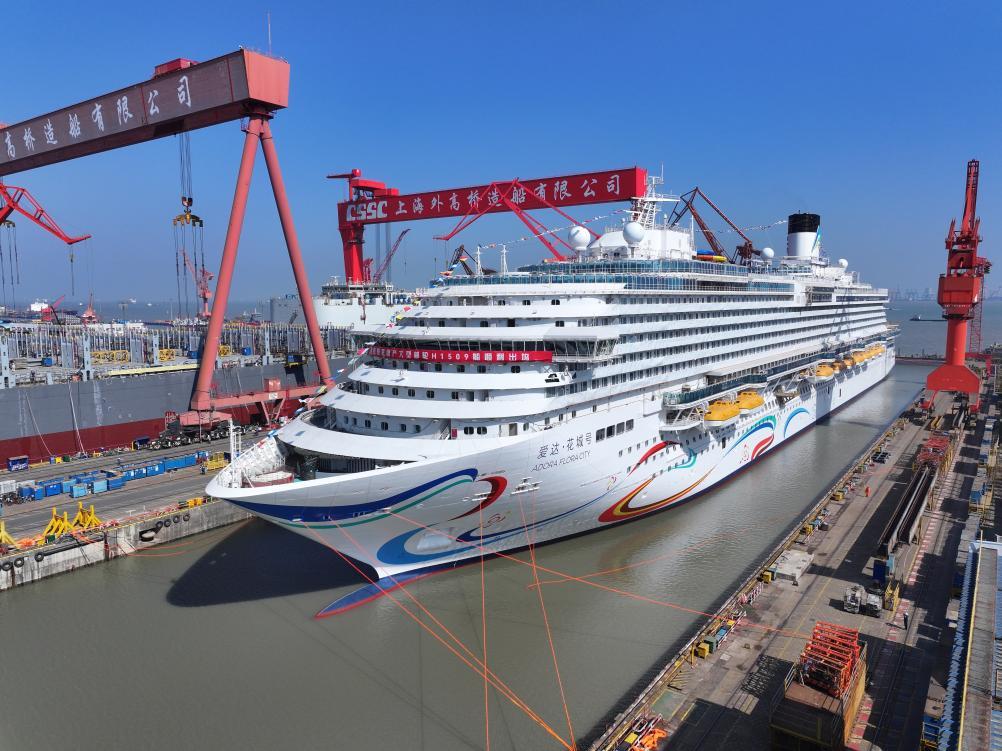
"Adora Magic City II" was launched from the dock in Shanghai
During the shipbuilding process, Waigaoqiao Shipbuilding and the R & D team of the Institute of Marine Equipment of Jiangsu University of Science and Technology jointly overcame a technical problem: Thin plate flattening technology.
Thin plate flattening is one of the most difficult manufacturing processes in the construction of large passenger cruise ships. On the one hand, cruise ships need to build up to a dozen floors of passenger cabins within a limited draft depth, so ultra-thin steel plates of 4mm - 8mm must be used. At the same time, the cabin decoration has extremely high requirements for the flatness of the floor, with an error of no more than a few millimeters.
In other words, the steel plates need to be both thin enough and flat enough.
However, in the production process, the thinner the steel plate, the more likely it is to deform due to local high temperatures during the welding process. Currently, the mainstream electromagnetic flattening technology uses an alternating electromagnetic field in combination with mechanical pressing to cause plastic deformation of the steel plate in a short period of time to restore its flatness.
For a long time, large electromagnetic flattening equipment has been monopolized by European manufacturing powers such as Germany, and the equipment procurement and post-maintenance costs are extremely high.
During the production process of "Adora Magic City II", Waigaoqiao Shipbuilding opened up its most core production scenarios and test data, and Jiangsu University of Science and Technology carried out algorithm modeling and hardware tape-out, forming a joint R & D mechanism of "front-end R & D in Jiangsu, mid - end testing in Shanghai, and back - end application feedback in the Yangtze River Delta".
The result of this joint R & D mechanism is the JHZY - 40 series of electromagnetic flattening equipment, which can accurately heat a 6mm steel plate to 750°C within 6 seconds, reaching the international advanced level. At the same time, independent intellectual property rights have been formed in key control algorithms, electromagnetic induction coil design, and other aspects.
During the later stage of the construction of the first domestic large cruise ship, "Adora Magic City", this equipment had already participated in some key tasks. On "Adora Magic City II", the domestic electromagnetic flattening equipment has become the absolute main force.
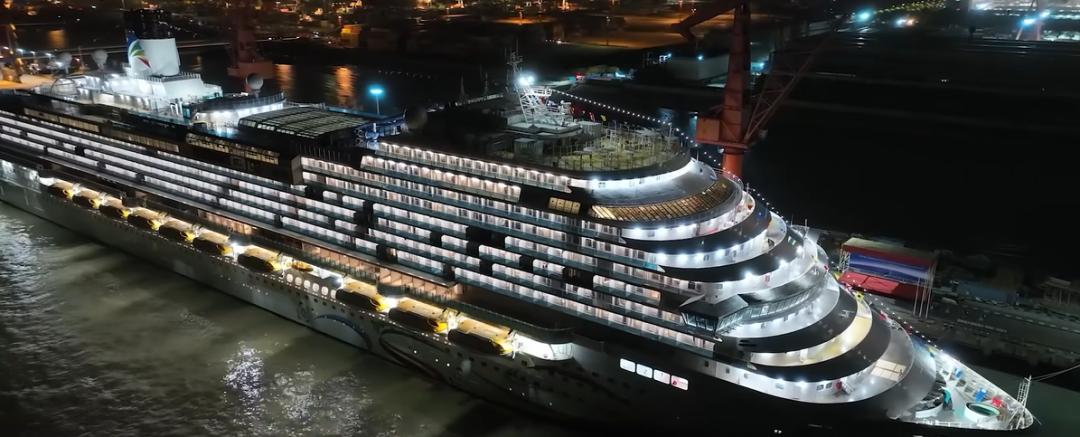
In 2023, "Adora Magic City" returned from its trial voyage
This ship is larger in size and uses more lightweight thin plates. The working area for electromagnetic flattening has increased significantly to 300,000 square meters compared to the first cruise ship.
With the launch of "Adora Magic City II", an industrial cluster covering the Yangtze River Delta is gradually taking shape: "1 final assembly enterprise + 100 general contractors + 1,500 suppliers" are collaborating in a division of labor and complementing each other in resources during this process, and the number of suppliers from the Yangtze River Delta accounts for 82%.
Behind a domestic cruise ship lies a set of complex systematic engineering organizational capabilities, the ability to localize the supply chain, and the ability to iterate high - end ship types in batches.
System, Cluster, and Ecosystem
In 2019, China's "North and South Shipbuilding Groups" were officially merged to form China State Shipbuilding Corporation. At the same time, the upstream and downstream of the shipbuilding industry were also being integrated. In 2015, COSCO Group and China Shipping Group merged to form China COSCO Shipping Corporation. In 2016, Baosteel Group and Wuhan Iron and Steel Group merged to form China Baowu Steel Group.
After the merger, the headquarters of these three giants are all in Shanghai. With the completion of capacity cleanup and the concentration of forces, the Chinese shipbuilding industry has begun to move towards the overall goal of the second - stage battle: Continue to capture more market share and take the last high - ground of high - value - added ships.
The shipbuilding industry is a traditional strength of South Korea. In the past two decades, South Korea's shipbuilding output has far exceeded that of Japan, and in the first decade, it also far exceeded that of China.
After 2000, the Chinese shipbuilding industry began to grow at a high speed. In 2008, its completion volume exceeded that of Japan, and in 2010, it exceeded that of South Korea to become the world's number one. Since then, South Korea has gradually abandoned low - value - added ship types and focused on expanding its market share in high - value - added ship types, further eroding the high - end markets of Europe, the United States, and Japan.
During the same period, the major integration of the Chinese shipbuilding industry was coming to an end, and it also targeted the three pearls of the shipbuilding industry. From a global industrial structure perspective, shipbuilding has completely become a game between China and South Korea.
There are three shipbuilding clusters in China, namely in Liaoning, Guangdong, and the Yangtze River Delta, with the Yangtze River Delta being the pioneer. Similar to the automotive industry, shipbuilding places great emphasis on upstream and downstream supporting, and it is easy to form industrial clusters based on geographical units, such as the Busan - Ulsan - Geoje cluster in South Korea and the Tokyo Bay - Seto Inland Sea cluster in Japan.
In simple terms, the so - called upstream and downstream supporting means that the supply chain will always move to where the demand is.
The reason why Fuyao Glass built a factory in the United States was attributed to the lower land and energy costs in the United States. Of course, there was also a rather peculiar interpretation like "not having to give gifts to leaders". But the real reason is only one: the transportation of glass is too difficult, so factories must be built close to the vehicle assembly plants.
The shipbuilding industry is similar. In addition to the 82% proportion of suppliers from the Yangtze River Delta for "Adora Magic City II", the regional supporting rate and localization rate of high - end offshore engineering ships such as the "New Sea Sturgeon" exceed 90%. In the field of LNG carriers, South Korea once won 94% of the global orders, but currently, China's share of newly received orders has rapidly increased to 42.3%, which is still supported by the complete supply chain in the Yangtze River Delta.
On the other hand, after the industry integration and consolidation, enterprises in the final assembly stage such as Hudong - Zhonghua Shipbuilding and Jiangnan Shipbuilding can rely on their own scale to support upstream suppliers, increase the localization rate, reduce costs, shorten the construction period, and even achieve innovation in some fields, thereby winning more market share.
The most typical example is Invar steel with a thickness of only 0.7mm. Natural gas must be stored at extremely low temperatures, and Invar steel can effectively prevent the ship hull from cracking in ultra - low - temperature environments. This technology has long been monopolized by Aperam, and the control of this company is in the hands of Indian steel magnate Lakshmi Mittal.
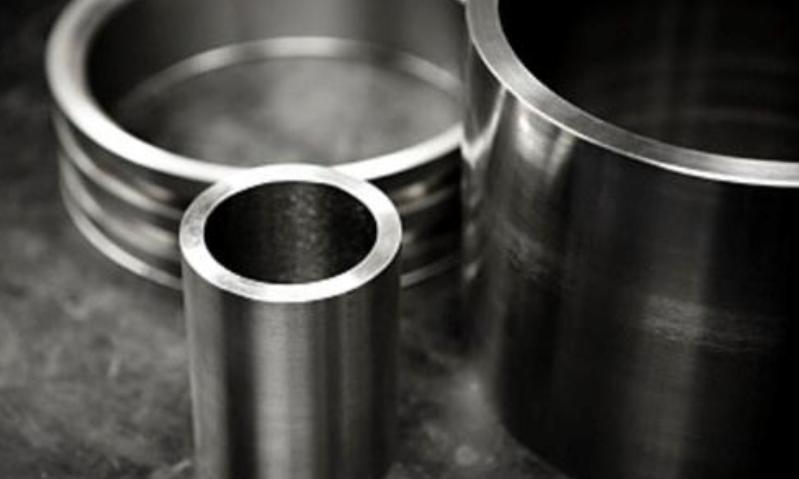
Invar steel pipe fittings
For this reason, Hudong - Zhonghua Shipbuilding approached the upstream giant Baowu Group and promised to ensure the use of domestic Invar steel on ships. Through research and development, Baowu Special Steel successfully became the second manufacturer of Invar steel in the world. Through the same model, Hudong - Zhonghua Shipbuilding has cultivated a large number of local supply chain enterprises, greatly accelerating the construction speed of LNG carriers.
In late 2023, the total construction period of the "Emei" delivered by Hudong - Zhonghua Shipbuilding had been reduced to 17 months and 8 days, catching up with the most advanced level in South Korea.
To date, the Yangtze River Delta has formed a division of labor of "one core and multiple poles", with Shanghai focusing on final assembly and integration, Jiangsu accounting for more than 40% of the national shipbuilding completion volume, Zhejiang focusing on ship repair, and Anhui cultivating new - energy - powered ships. This systematic innovation ability has gone beyond pure upstream and downstream supporting and formed a unique industrial cluster model.
The Yangtze River Delta has also become the core area for domestic ship orders. Among the newly received orders of enterprises such as Hudong - Zhonghua Shipbuilding and Waigaoqiao Shipbuilding, green ships such as LNG dual - fuel and methanol - powered ships account for more than 55%.
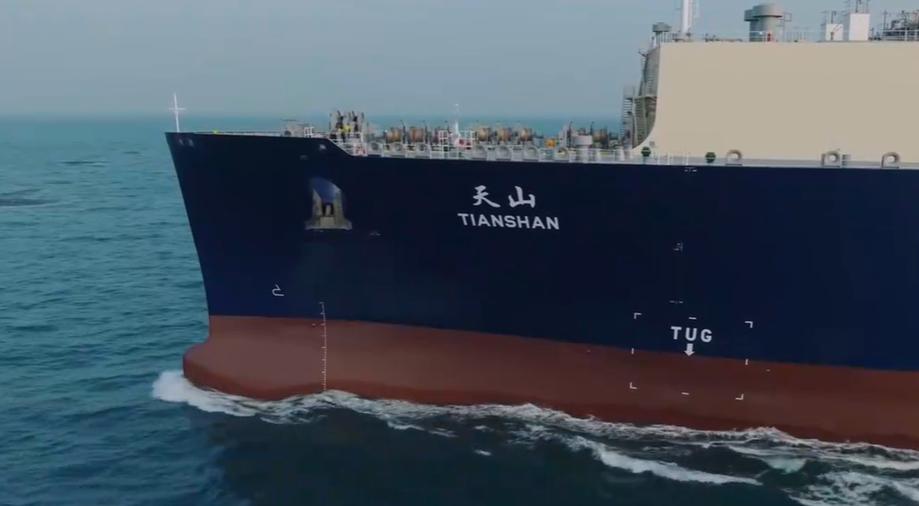
In January this year, the LNG carrier "Tianshan" was successfully delivered
In the green power track such as LNG, the Yangtze River Delta has formed a full - link ecological closed - loop of "R & D and design in Shanghai + large - scale final assembly in Jiangsu + offshore engineering transformation in Zhejiang + material and power supporting in Anhui", which is unique in the country.
The clear goals, detailed plans, in - depth understanding of the manufacturing industry, and active participation in market - based competition all determine the position of Shanghai and even the Yangtze River Delta in the global manufacturing map.
The Underlying Color of the Yangtze River Delta
In March 2025, at the Third High - Tech Ship and Offshore Equipment Industry Technology Innovation and Development Conference, the shipbuilding engineering societies of Taizhou, Anhui, Shanghai, Zhejiang, and Jiangsu signed an agreement to establish the "Yangtze River Delta Shipbuilding and Marine Engineering Organization Alliance".
Against this background, the Yangtze River Delta has formed an institutional carrier for technology sharing, production capacity coordination, and standard mutual recognition across regions. Joint research on specific projects will become a regular mechanism.
Although the vast hinterland at the mouth of the Yangtze River lacks the wealth - creating frenzy of the mobile Internet era, the stories of high - tech manufacturing and technological innovation have never been absent.
Zhangjiang Hi - Tech Park is filled with various chip design, manufacturing, and service companies, and its output value once reached half of the national industry. Looking at the map, most of China's leading chip companies are concentrated in Shanghai.
At the same time, innovation practices in emerging fields such as biomedicine and artificial intelligence have also been successively implemented in Zhangjiang, showing a cluster effect covering the entire industrial chain.
Similarly, through the R & D and production of the domestic large aircraft C919, a division of labor of "one core and multiple poles" of "final assembly in Shanghai, supporting in Nanjing/Hangzhou/Hefei and other places" has been established. The large aircraft industrial cluster in the Yangtze River Delta has attracted more than one - third of the large aircraft supporting enterprises in the country.
Meanwhile, a series of policy adaptations, such as the classified subsidies for supply chain airworthiness certification by local governments, the airworthiness capability certification system for suppliers by the main manufacturers, and the mutual recognition and coordination mechanism of airworthiness service nodes in the Yangtze River Delta, are also being gradually established and improved.
Whether it is a city, a region, or an economy, the strength and thickness of an industry are always interrelated. What determines them is not a single indicator but long - term decision - making and long - term perseverance.
Behind the spectacular industrial cluster of the C919 is the repeated attempts and failures of Shanghai and the Yangtze River Delta in the field of commercial large aircraft. This land has witnessed the miraculous take -