OPC prototype verification enters the "second-level era"
In October last year, Xu Heng officially became an entrepreneur of an OPC (One-Person Company). Working alone, he quickly fell into a typical "founder's dilemma": in the initial stage, it's difficult for an individual to find an efficient and low-cost way to "promote" their core value.
"Those who understand technology are not good at expressing themselves, and those who are good at expressing themselves don't understand technology." Xu Heng felt that there was a wall between the two. "The ideas are clear in the mind, but they are seriously distorted during the transmission process."
It wasn't until he found a new solution: "When you don't know how to explain, 'crafting' it out is the fastest way."
Here, "crafting" refers to using the Lingguang App's "Flash Application" to instantly materialize abstract ideas through natural language. Even on mobile devices, Lingguang can "craft" a fleeting inspiration into an interactive flash application within 1 minute.
In today's era where AI has leveled the technical threshold, creativity has become the most valuable currency, and "crafting applications" is the best outlet for creativity.
Now, Xu Heng has internalized "crafting applications" into a daily habit. In half a month, he output more than 20 applications as frequently as writing a diary: from the "Guide to Making Laoyou Rice Noodles" to the "Encyclopedia of Preventing Elderly from Being Defrauded", from the "Medicine Collection and Connectivity" combined with Gaode Map to the "Preference Archive" for recording life preferences... These Demos born during his commuting not only record his inspirations but also become his natural "electronic business cards" - without much explanation, the works themselves are the best interpretation of the OPC's execution ability.
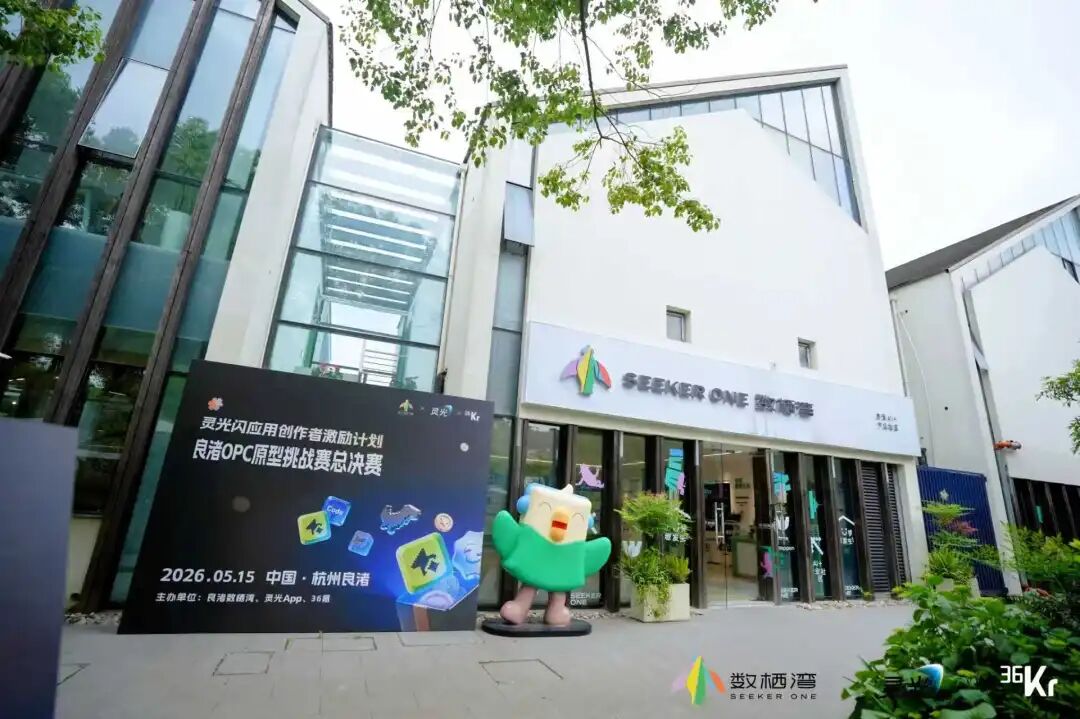
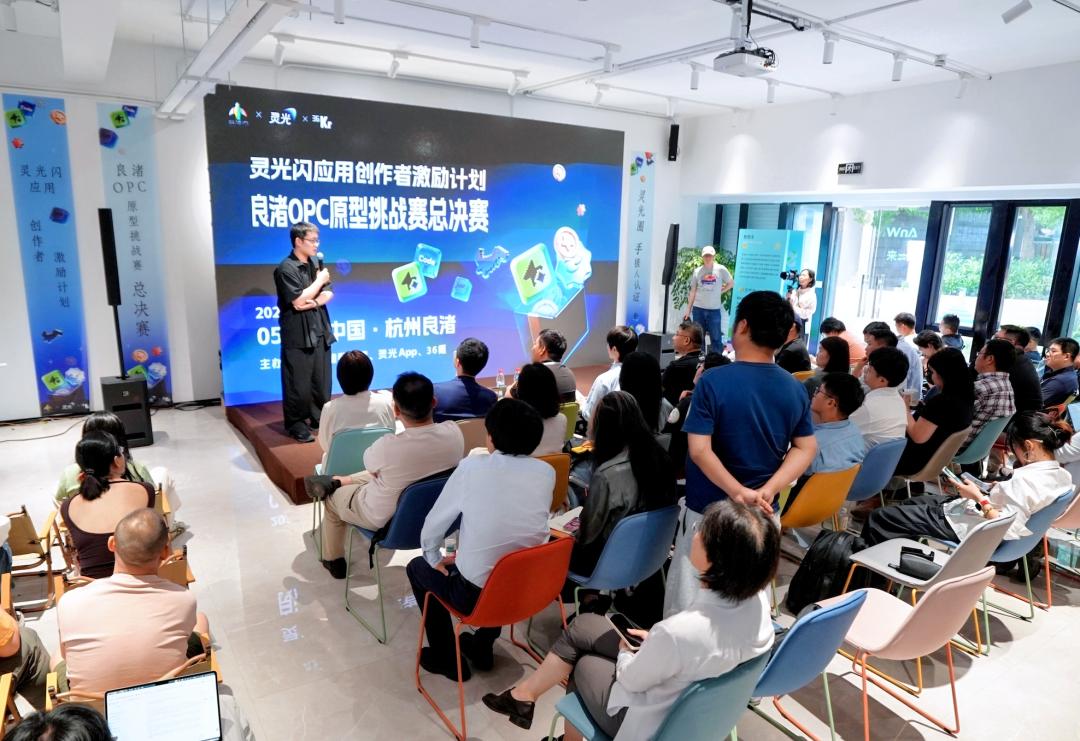
On May 15th, Lingguang App, in collaboration with 36Kr, held a Flash Application Prototype Challenge in Liangzhu Digital Habitat Bay, known as the "Paradise for Entrepreneurs". The top 12 contestants selected from hundreds of imaginative flash applications stood in front of the judges with their ideas. This competition is not only a contest of creativity but also a vivid demonstration of how Lingguang empowers the entire OPC ecosystem - from inspiration to prototype, and from prototype to business, a new entrepreneurial closed-loop is taking shape.
01. From "Three-Month MVP" to "30-Second Prototype"
For OPC entrepreneurs, the first hurdle at the start is often not "unable to produce a finished product" but a lack of confidence - is a project really worth doing?
In the past, it might take at least three months to barely produce a Minimum Viable Product (MVP) just to verify an idea. But crafting a flash application can directly shorten the time to as fast as 30 seconds. This is a lightweight way of concept verification. Although it can't present a well-crafted and mature product, the flash application can help entrepreneurs get started faster and enter the cycle of verification earlier.
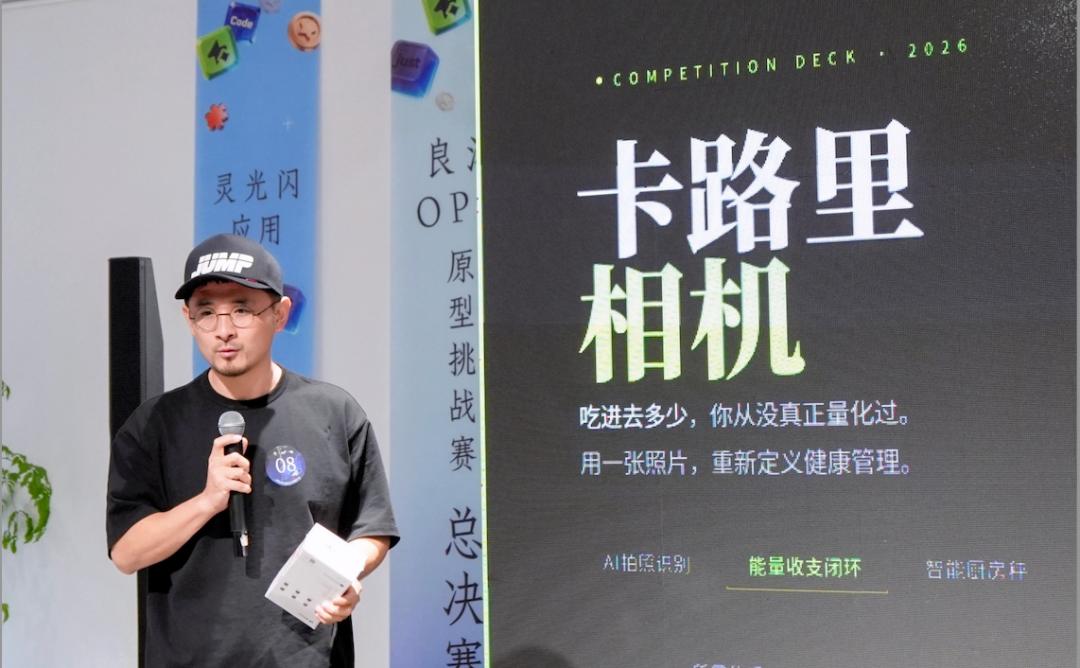
Yang Minteng, the second-prize winner of the competition, was facing a typical entrepreneurial choice: his AI intelligent skipping rope had achieved more than 500 sales, and he was wondering how to iterate next. He wanted to add a "photo calorie recognition" function and even envisioned a grand blueprint that connected to a kitchen scale and covered the entire weight-loss chain. But the more ideas he had, the more uncertain he became: was this function really worth prioritizing for development?
In the past, verifying this assumption might have required weeks of development scheduling; now, he only took 10 minutes to "craft" a basic Demo on Lingguang.
Since then, he has entered a high-frequency iteration closed-loop: if users want to see statistics, he adds an intuitive calorie progress bar; if users want incentives, he introduces a gamified medal system.
By the time of the competition, the application had been iterated to the 12th version and received more than a hundred likes. These real feedbacks gave him confidence: there is a market in this direction.
"In the past, writing code formally was too burdensome for iteration," Yang Minteng sighed. "The flash application has compressed the development cycle to the extreme, allowing me to see the real acceptance of the market." The market won't wait for you to be ready, but it will reward those who take the initiative.
Xia Zhedan, another second-prize winner, discovered the value of flash applications in team collaboration.
His AI fashion application, "The God of Dressing", has been operating overseas. When the team was discussing whether to add a "dressing personality test" module, he didn't write a long PRD document but instead "crafted" an interactive prototype on the spot using Lingguang's flash application.
"In the past, writing a long document had a very high explanation cost, and everyone was still confused," Xia Zhedan said. "Now, when a clickable and playable thing is in front of us, everyone has a common understanding of the function."
From external verification to internal consensus, flash applications are eliminating the "friction coefficient" of explanation in the entrepreneurial process. They turn creativity from paper into a tangible and discussable reality.
Xie Zuoqiang, the vice president of 36Kr, said that in the past, the biggest cost of entrepreneurship was convincing others to believe in your ideas. With the support of entrepreneurial tools like Lingguang, the cost of verifying ideas has been reduced to seconds.
02. Narrow the Cognitive Gap with "Interaction"
The second stage on the OPC entrepreneurial journey - accurately connecting with potential customers to achieve monetization - is often more difficult than creating a viable product. This is not an era where good wine needs no bush. How can you make the other party truly understand the real value of your product? There is not only a technical threshold but also an entire cognitive gap regarding AI technology between you and them.
Cai Kaichao is an OPC entrepreneur who has received financing and is also the champion of this Liangzhu Prototype Challenge. His entrepreneurial project mainly provides AI intelligent agent services to B2B enterprises, undertaking functions such as AI self-media operation, membership management, and branch data management. His target customers are mostly from traditional industries, many of whom are bosses in the fields of chain catering, health and beauty, and education and training - these are business owners who are eager to integrate cutting-edge AI capabilities to improve enterprise efficiency but have limited understanding. Cai Kaichao once met a boss who didn't go anywhere during the May Day holiday but stayed at home trying to figure out AI by himself without success.
This means that Cai Kaichao bears a very high explanation cost every time he meets a customer. It's very difficult to explain to these traditional industry customers how the new technology can reduce costs and increase efficiency for the enterprise just by talking. Moreover, there is an age gap between him and the bosses. When the bosses see a young person coming, they will have some doubts in their minds, and it's difficult for both sides to have a conversation based on common understanding.
In this process, Lingguang is more like a professional translator for ordinary people. It can transform abstract ideas and concepts into specific interactive small applications, thus truly saying goodbye to empty PPT presentations and enabling customers to better understand the actual uses of the product.
He used Lingguang to generate a simple version of the "AI Customer CRM Intelligent Agent" for his product. The core function is very simple: voice input customer information, automatically generate tags, and synchronize them to the database. This flash application is like a miniature function demonstration, allowing the bosses to intuitively feel how to use the product. Moreover, the demonstration effect of Lingguang's flash application is very close to the actual experience on the mobile phone, especially the voice interaction function, which hits the favorite working method of middle-aged bosses. "It has a bit of interactivity, which is more appealing than just talking dryly," he said.
The public's understanding of AI varies. When Lingguang, as a platform with more content attributes, intervenes, it can better bridge this gap. Xu Heng also has a deep understanding of this. Breaking through the cognitive barrier is a hurdle that needs to be overcome: "How can you make enterprises know what AI can really do? You need to explain it to them in plain language to promote it."
The flash application is a portable tool for building trust. If you spend a few minutes on the way to meet a customer to "craft" a specific function module of the product, the customer will understand your idea at a glance, and their trust will be established.
03. Make Creativity More Visible
For many OPC entrepreneurs, meeting investors frequently is an inevitable part of their daily lives. In the extremely limited contact time, to make investors understand them quickly and "sell" themselves, now, flash applications have also become a way for OPCs to showcase themselves.
Xu Heng is a perfect example. His starting point is not impressive on any investor's scorecard. He has a liberal arts background, a second-tier undergraduate degree, and no experience in large companies to back him up. But he has enough imaginative ideas and the ability to turn those big ideas in his mind into products. The flash applications he crafted, although with very different focuses, are all proofs of his imagination and execution ability - in the past, for individual developers, most of these ideas would have died in the womb due to the high cost of development and trial and error, but the flash applications have helped him record those fleeting thoughts.
When meeting investors, during the small talk stage of the greeting, Xu Heng can directly open his phone to show them. The flash application has become his display interface - no need to package himself with lofty words, the works can speak for themselves. What he shows is not just a functional Demo but the ability to continuously output ideas and verify directions. In the AI era, the ability to take action is the most advanced self-introduction.
For early-stage investors, this might be more worthy of attention than the feasibility of a specific project. In the AI era, the criteria for measuring talents are quietly changing. Those with authoritative resumes may give way to those with more creative ideas and the ability to quickly adapt. The problem is that this characteristic is too abstract to be clearly demonstrated in a short meeting. But if an OPC entrepreneur brings such a "flash application archive", everything becomes much more intuitive.
Xia Zhedan has a similar experience. He is the kind of entrepreneur who doesn't like to make preparations. When chatting with investors, he just talks about whatever comes to his mind. But he found that flash applications can make this casual way of communication more effective. He thinks that the relationship between early-stage investors and entrepreneurs is more like a "symbiotic relationship" - what the investors value is whether the entrepreneur has a clear mind and can make connections, and they will ask you about new directions you are exploring. This kind of conversation is also an invisible assessment.
In the past, he could only talk about some ideas vaguely. After listening to the investors' suggestions, he would end the conversation with "I'll go back and try", and then there was really nothing more. But now, for a certain direction discussed, he can immediately turn the idea into an interactive thing, and the investors can also witness this small test and see his speed of implementation. From bringing a PPT to a roadshow to directly opening the phone to show a running application, this leap is not only an improvement in efficiency but also a significant advancement in the way of presentation.
The judges' representatives from Yinrun Capital, Photosynthetic Venture Capital, Orient Fortune Capital, and the investment department of China Mobile at the competition site unanimously pointed out that an interactive Demo can convey the project value better than a paper business plan.
Conclusion
For OPC entrepreneurs, the booming creativity is never the bottleneck. The opportunity to be "seen" is the starting point of all values.
This OPC Prototype Challenge is precisely aimed at this core pain point. "Generating an MVP in as fast as 30 seconds and having a 5-minute roadshow, from a flash of inspiration to business verification. The significance of this competition is that it allows entrepreneurs not to wait until everything is perfect to start but to 'run through first and then evolve'," said the relevant person in charge of Liangzhu New City.
With the strong support at the policy level, "Lingguang" has quietly magnified the leverage effect of these opportunities at the technical end. What it does has gone far beyond simply empowering individuals. Instead, as a key "nutrient", it has given birth to a new OPC entrepreneurial ecosystem: connecting the closed-loop from concept verification to customer and investor connection, enabling creativity to be verified, taken over, and commercialized more quickly.
Under the double resonance of policy dividends and technological explosion, the OPC ecosystem is accelerating into the iterative stage of "taking small steps and running fast". An Ran, the person in charge of Digital Habitat Bay, revealed that this model will continue to be promoted in serving OPC entrepreneurship in Digital Habitat Bay. From a good idea to investment connection, using Lingguang's flash application to efficiently complete the product roadshow and accelerate the growth of OPCs.
It can be predicted that Lingguang is becoming an indispensable assistant for more and more OPC entrepreneurs. It not only continuously injects certainty into the commercial implementation of those with the ability to take action and imaginative ideas but also reduces the trial-and-error cost of innovation at the underlying logic, allowing every moment of inspiration to take root and sprout quickly.
When technology begins to untie the shackles of individuals, the golden age of one-person companies is just beginning.