The results of the human-machine sorting battle are out: Figure 03 almost made a comeback, but humans won the score but lost the future.
This might be humanity's last victory over robots.
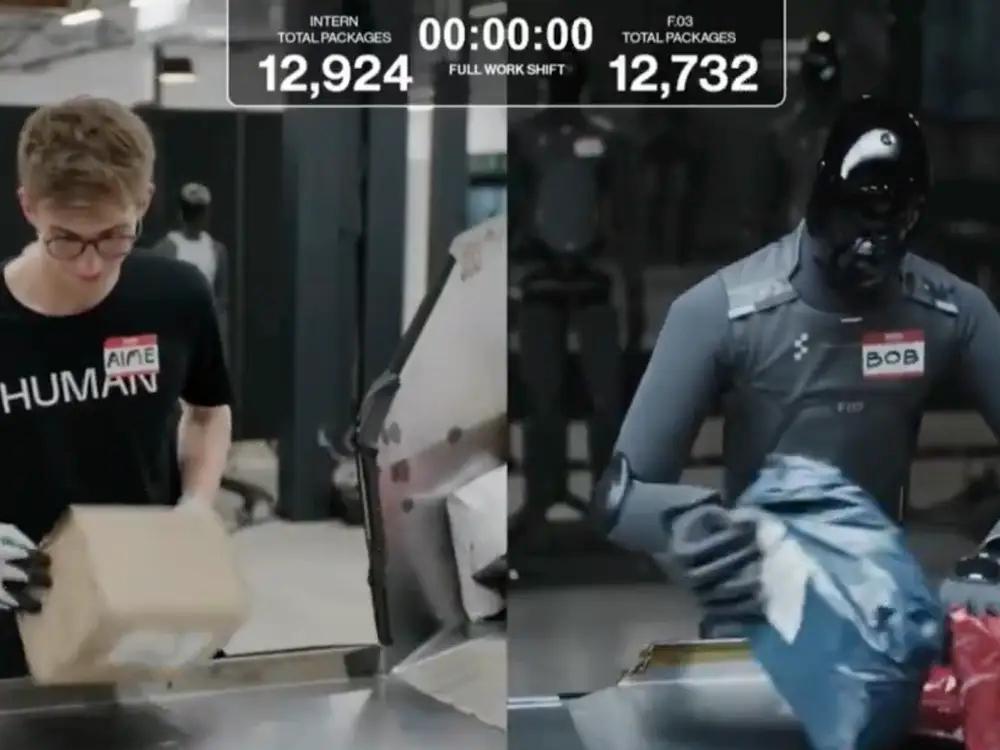
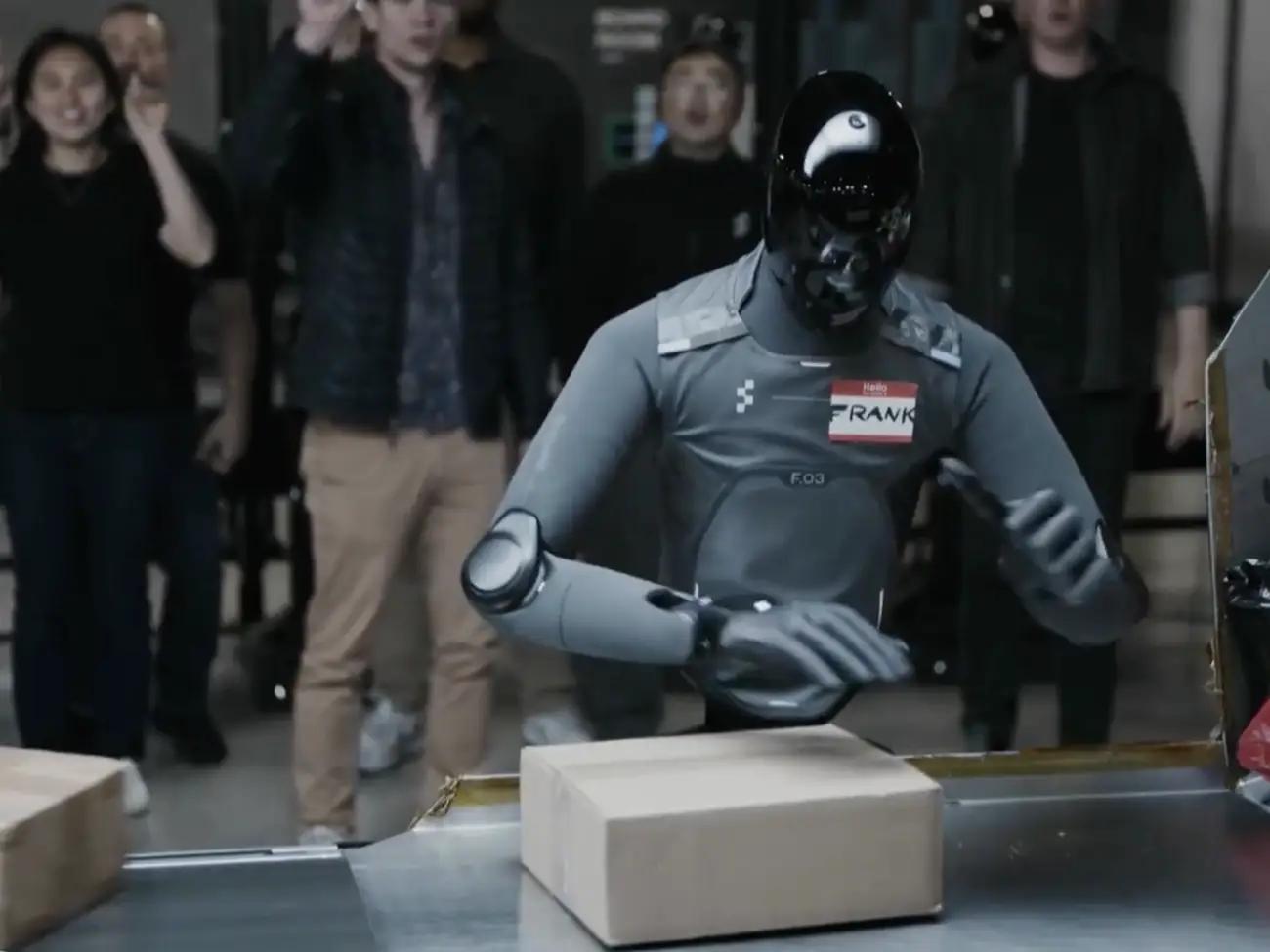
Recently, in a 10 - hour "Human vs. Robot" package sorting challenge held by Figure AI, intern Aime finally sorted 12,924 packages, while Figure 03 completed 12,732. Humans held on to victory with a narrow margin of 192 packages. Although humans won this competition, many media outlets claim that this might be humanity's last victory in a showdown against robots.
(Image source: Youtube)
This statement is not groundless. After the competition, intern Aime's fingers and multiple hand joints were sore and she was unable to continue sorting, while Figure 03 could still stay on the job. That is to say, humans won in terms of speed, but robots fared better in terms of continuous work.
From this interesting competition, we can see that humanoid robots are moving from stages and press conferences to factories, warehouses, and assembly lines. Another question is, how far are they from being fully "on - the - job"?
It doesn't matter who wins when robots compete with humans
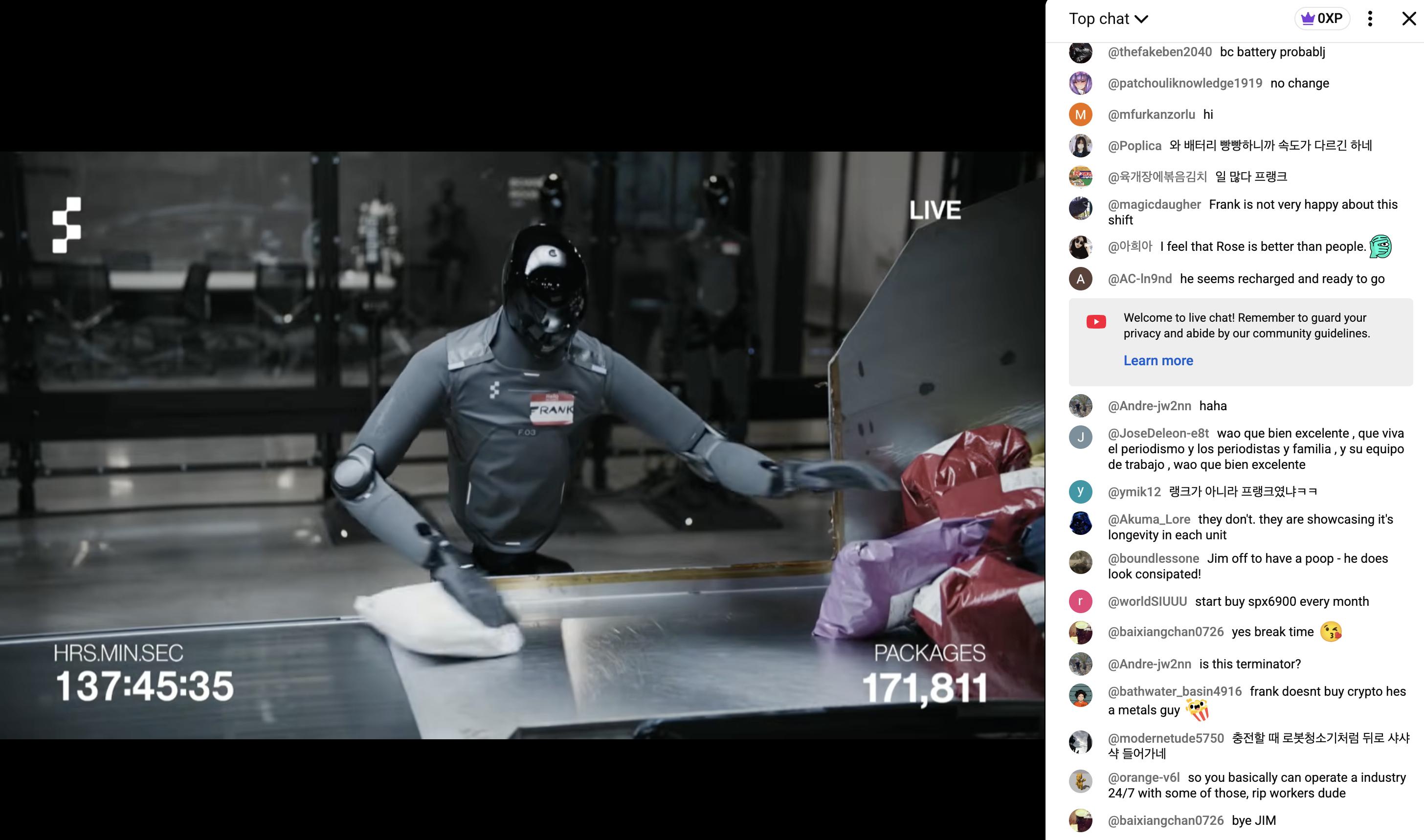
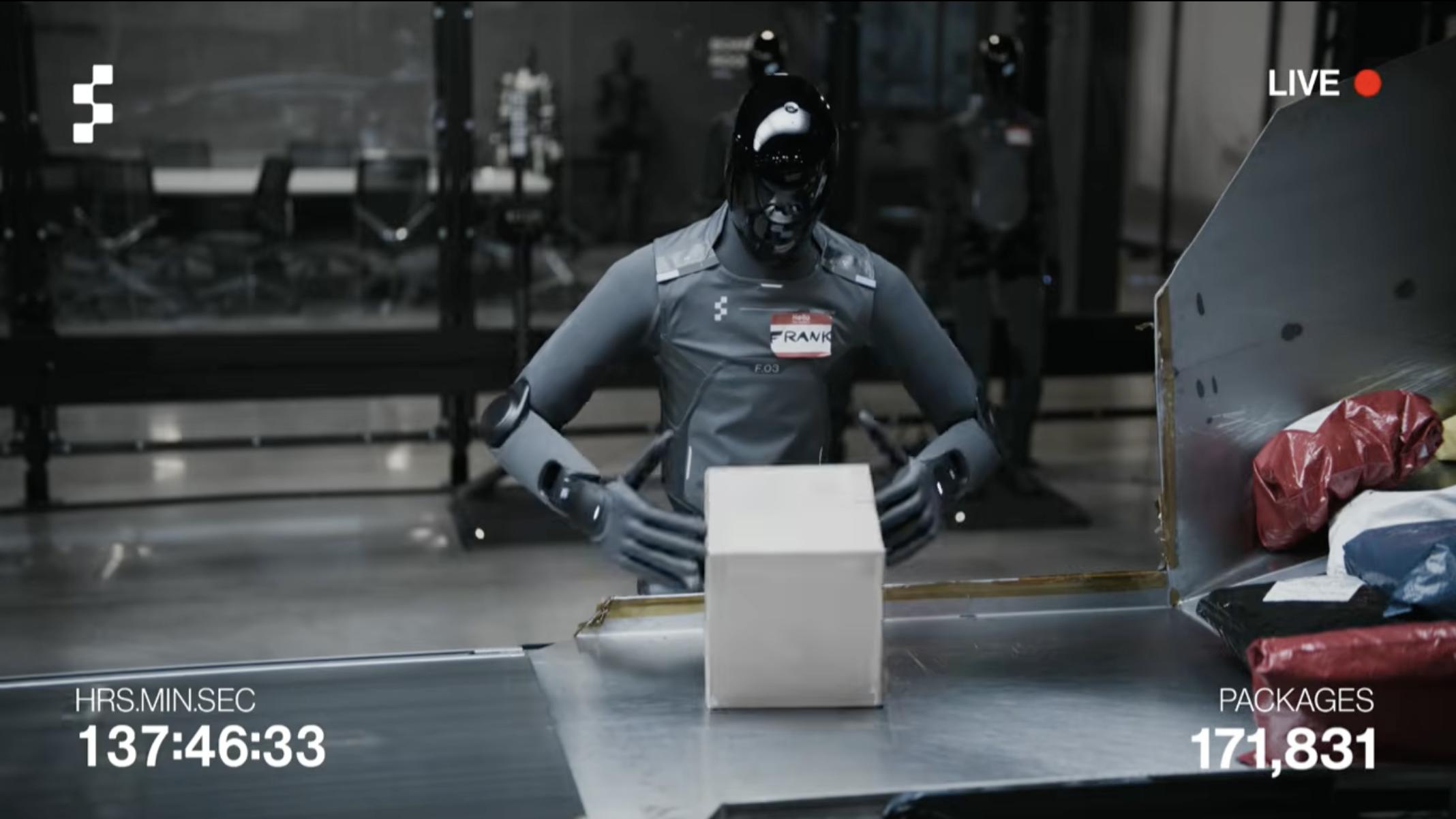
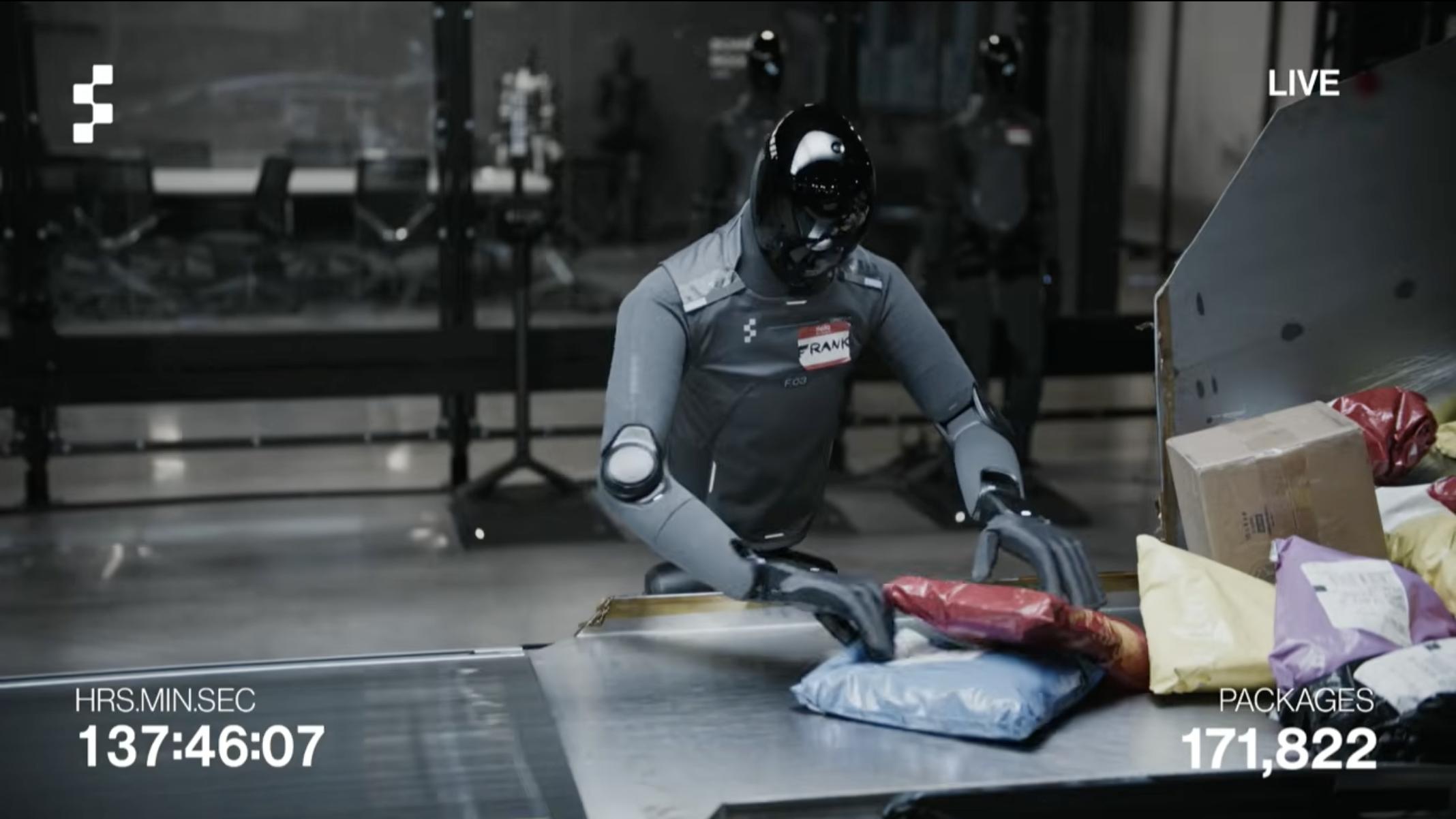
Before the competition, Figure had turned package sorting into a continuous live - stream. Initially, it demonstrated 8 - hour autonomous sorting, and later extended the test to over 24 hours. As of the time of writing, the live - stream room had been broadcasting continuously for 137 hours. The content of the live - stream was actually a bit boring. It was just a few Figure 03 robots standing beside the conveyor belt, repeatedly identifying packages, grabbing them, flipping them, and then putting them back with the shipping label or barcode facing the specified direction.
The viewers in the live - stream room gave names to the robots. Some were named Bob, some Frank, some Gary, and there were also names like Rose and Jim. The viewers named these robots and watched to see if they would make mistakes, turning what seemed like a boring live - stream into a "reality show".
(Image source: Youtube)
In fact, this strong sense of contrast is also the reason why more and more people are watching this live - stream. On one hand, it's an extremely boring logistics operation; on the other hand, millions or even tens of millions of netizens are staring at the robots moving boxes, watching to see if they will get stuck, drop packages, or suddenly stop working. Some netizens joked that these robots are not only taking the jobs of warehouse workers but also those of live - stream hosts. Some also said that this live - stream is so "sleep - inducing" that it has become their sleep aid.
For ordinary viewers, this might be a bit hypnotic, but for Figure, this is exactly the effect it wants. If humanoid robots are really going to enter factories and warehouses, it's important for them to continuously perform those monotonous actions for hours, tens of hours, or even dozens of hours. The more people watch and stare at whether these robots will make mistakes, the more opportunities it gives Figure to make corrections.
(Image source: Youtube)
Figure chose the most boring task of package sorting, which actually tests several of the most difficult tasks in current industrial operations. Imagine, for humans, sorting packages is just a matter of taking a look, picking it up, flipping it, and putting it back; but for robots, it's a comprehensive test of visual, grasping, force control, and path - planning abilities. These packages are not all uniform cartons. There are also soft bags and thin envelopes. Some are light, some are heavy. The robot has to first see the barcode and the position, and then decide where to grab and how much force to use. So, in this live - stream, there were quite a few "failed" robots.
(Image source: Youtube)
According to Figure's introduction, the robot participating in the live - stream package sorting is the Figure 03. It is about 173 cm tall, weighs 61 kg, has a maximum load capacity of 20 kg, a battery life of about 5 hours, is fully electric - driven, and supports wireless charging. It is not a robotic arm customized for a single action, but a general - purpose humanoid platform that can stand in a human working environment.
What really enables it to handle package sorting is Figure's self - developed Helix vision - language - action model. Simply put, Helix has to solve three things: what the robot sees, what it knows it has to do, and how its body, wrists, and fingers should move in the next moment. Figure divides this system into a "slow system" responsible for understanding tasks and the environment, and a "fast system" responsible for high - speed output of motion control. The latter can control the continuous movements of the hands, wrists, torso, and fingers at a frequency of 200Hz.
For example, package sorting may seem like just a hand movement, but in fact, every time the robot reaches out, it has to make a dynamic judgment first. The robot can't just know to "grab the box"; it also has to know where the box is, which way the barcode is facing, which hand is more suitable, and whether the shipping label will be covered after flipping. Figure has also enhanced the hand and visual capabilities of Figure 03, such as a lower - latency visual system, palm cameras, compliant fingers, and fingertip tactile sensors. These are all to make the robot closer to human picking capabilities when grabbing.
(Image source: Youtube)
In fact, since its establishment in 2022, Figure has almost fully committed to the robot industrial field. Its goal is to design and produce general - purpose humanoid labor that can be directly put into manufacturing, logistics, warehousing, retail, and other scenarios. In 2024, Figure 02 entered the BMW factory in Spartanburg, South Carolina, USA, for testing in production processes such as putting sheet metal parts into fixtures. After some time, Figure disclosed that the robot had been deployed on the BMW production line for a longer period and participated in actual production tasks.
This actually shows that the entry of robots into production lines is no longer an unattainable thing; it has already truly happened in some niche industries. As for the competition with humans, regardless of the outcome, when a robot can compete with a real person in a certain job, it is already a step forward for the former.
Humanoid robots, go to work in factories first
Beyond Figure, domestic and foreign robot companies have long set their sights on factories and warehouses.
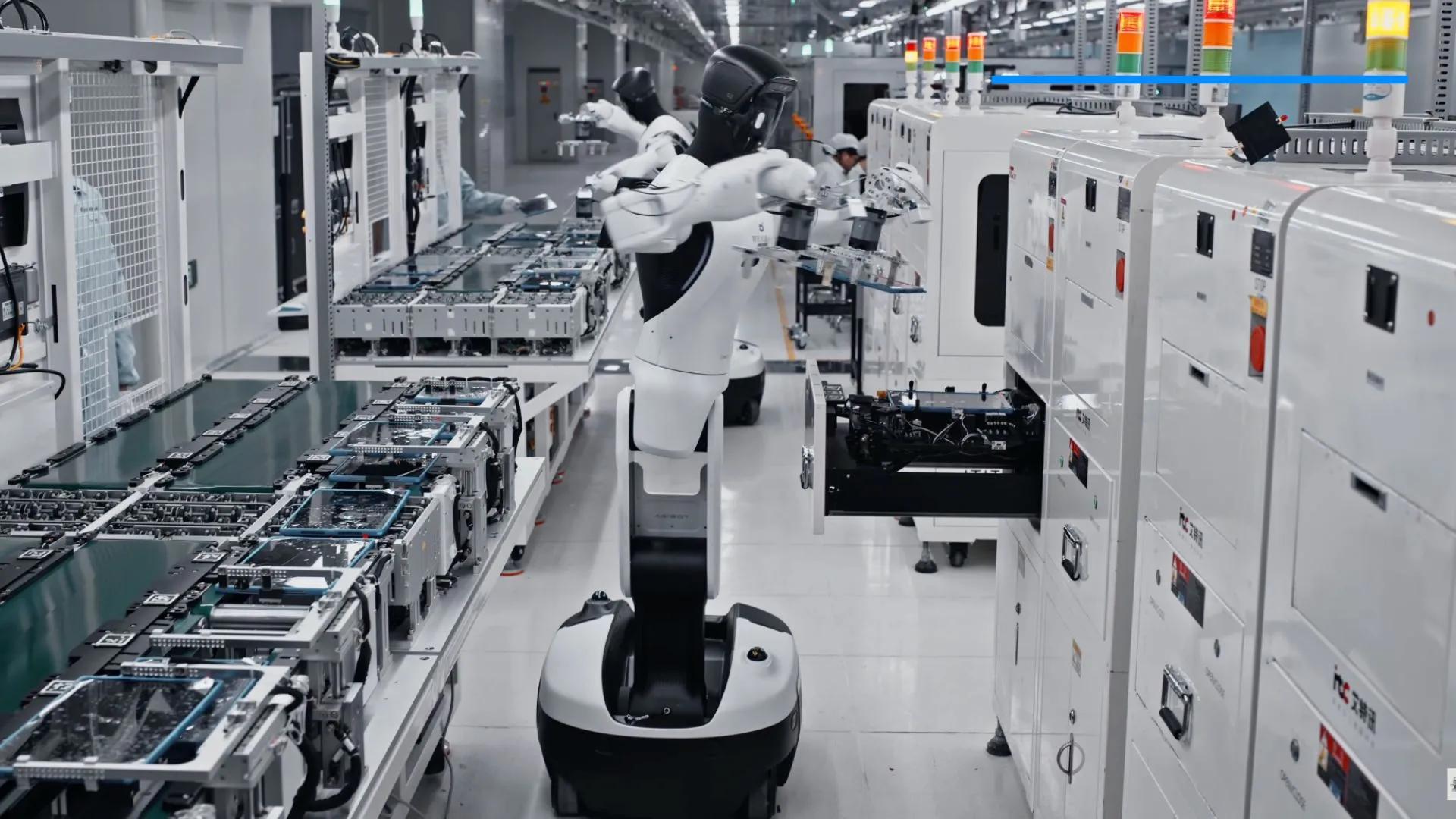
An example of a domestic company that is moving relatively fast is Zhipu Robotics. Its focus is not just on showing humanoid robots walking and interacting at press conferences, but on industrial intelligent manufacturing, logistics sorting, loading and unloading, and handling as key directions. Zhipu's Yuanzheng A2 - W is for flexible manufacturing and has been promoted in scenarios such as turnover box stacking and destacking, workshop handling, and loading and unloading; the Jingling G1 is more suitable for tasks such as warehouse sorting that require higher generalization ability. It is understood that Zhipu has reached a cooperation project worth tens of millions of yuan with Fuling Precision Industry, and nearly a hundred Yuanzheng A2 - W robots will be deployed in factories; in the logistics field, Demag Technology has also ordered dozens of Jingling G1 robots for warehouse sorting.
(Image source: Zhipu Robotics)
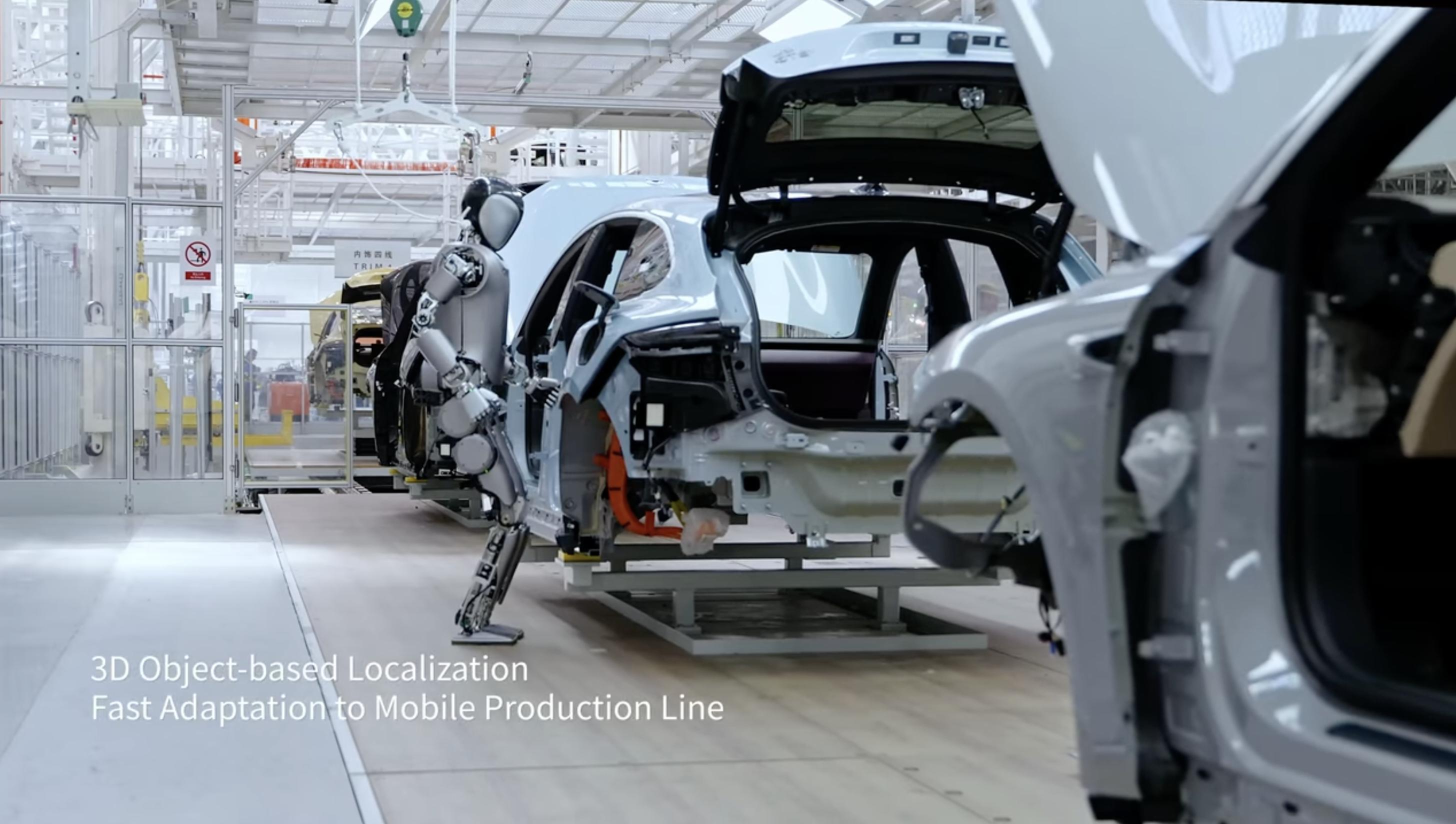
Ubtech first entered automobile factories and then expanded to the 3C and logistics industries. The Walker S series is a humanoid robot developed for industrial scenarios. In the past year or so, it has entered automobile factories for practical training many times, including NIO, Geely Zeekr, FAW - Volkswagen Qingdao, Audi FAW, BYD, BAIC New Energy, etc. What it does is not abstract "intelligent manufacturing", but more specific processes such as assembly, transfer, quality inspection, maintenance, and material handling. For example, the Walker S1 carried out multi - robot collaborative training in the Geely Zeekr factory and also cooperated with unmanned forklifts and logistics equipment to complete tasks such as warehousing of automobile parts. More notably, Ubtech has also expanded its cooperation to Foxconn and SF Express. The former is for 3C manufacturing, and the latter is deeply involved in the logistics system.
(Image source: Ubtech)
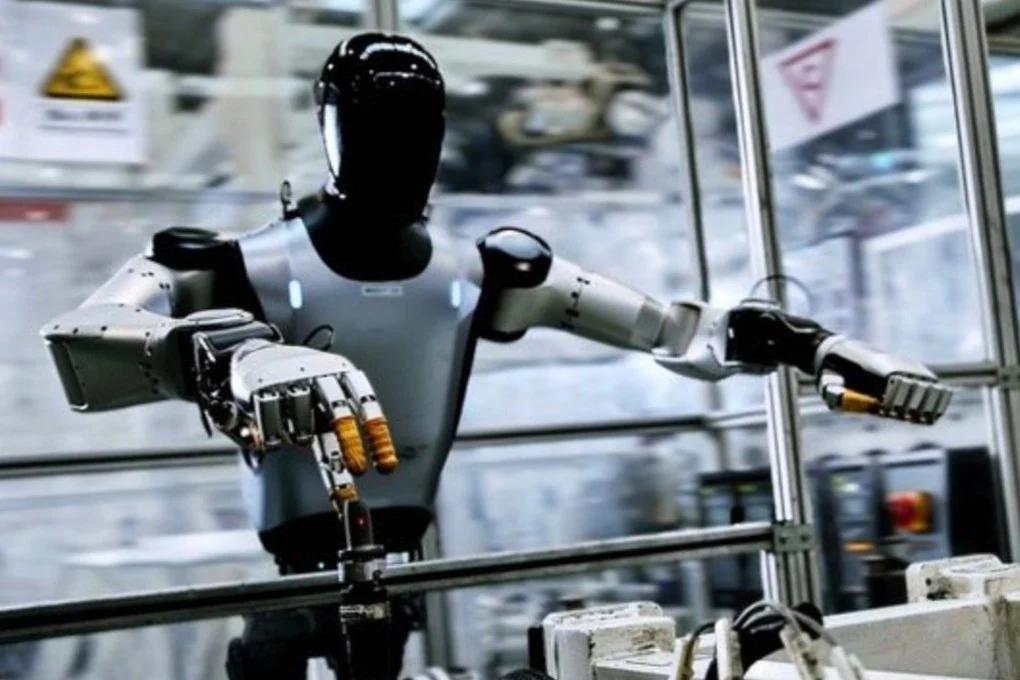
Xiaomi is different from the other two. It first chose to "intern" in its own factory. In March this year, Lei Jun and Xiaomi Technology officially announced that Xiaomi's humanoid robot has entered the Xiaomi automobile factory for "internship". Based on the general VLA base model Xiaomi - Robotics - 0, combined with multi - modal perception and reinforcement learning, it conducts autonomous operations in scenarios such as self - tapping nut loading stations and material box handling. Among them, the data of the self - tapping nut loading station is very impressive. The robot ran autonomously for 3 hours continuously, and the success rate of bilateral simultaneous installation reached 90.2%, while also meeting the production rhythm requirement of a minimum of 76 seconds per unit on the production line.
(Image source: Xiaomi)
Magic Atom, which was first recognized by the public through performances, is also accelerating its progress in the industrial field. For example, MagicBot has entered the factory production line for multiple operation trainings, covering industrial, commercial, and household scenarios. Although the Magic Atom humanoid robots and quadruped robots that people may have seen in the 2026 Spring Festival Gala became popular because of their stage performances, especially multi - robot collaboration, choreography, and high - density scheduling, in fact, its industrial layout is more in - depth than the public imagines.
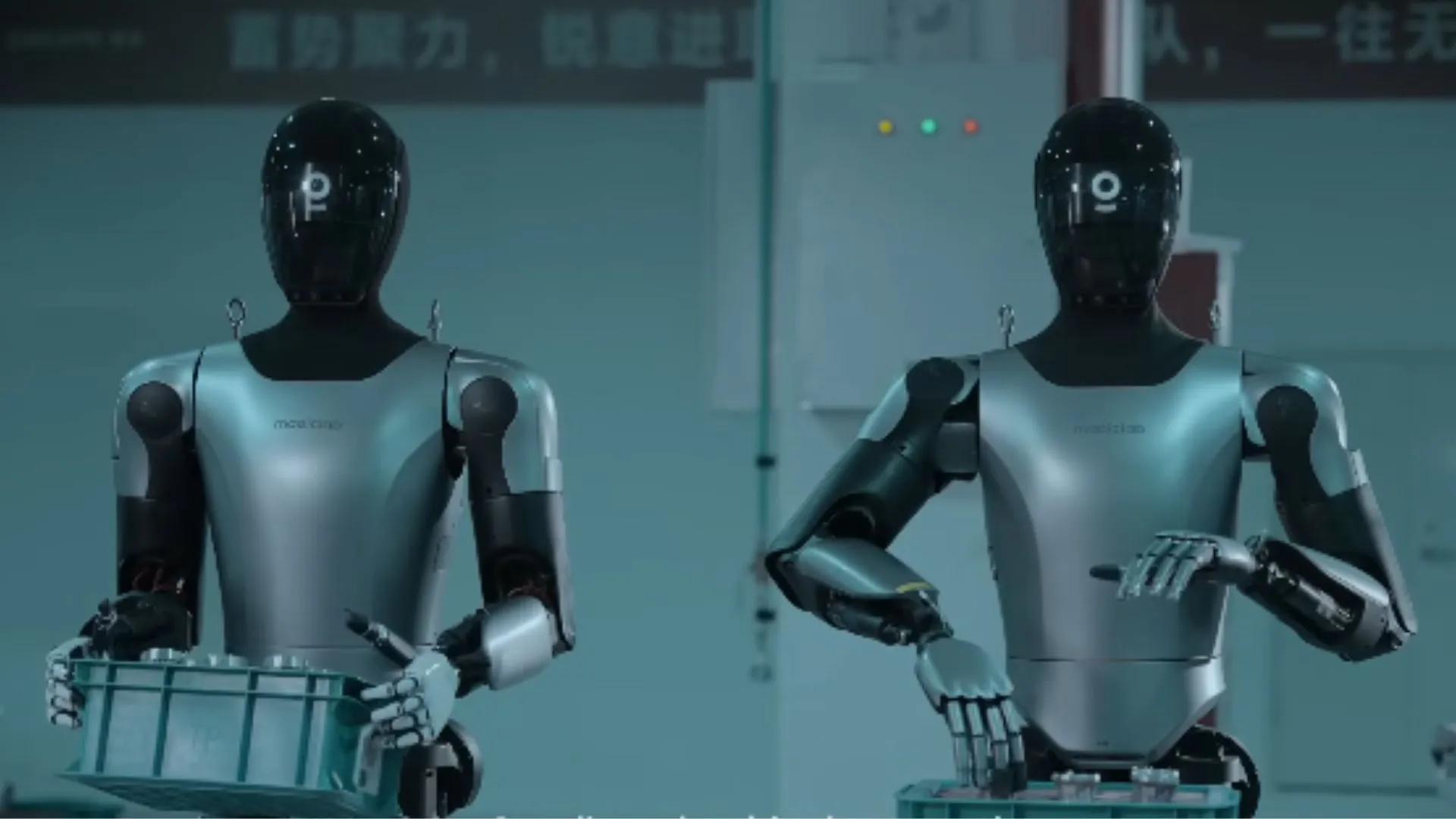
(Image source: Magic Atom)
Overseas, Tesla's Optimus is even more radical. Optimus first tied itself to its own factory and demonstrated tasks such as battery sorting and parts handling in the Tesla factory. In addition, Tesla also promised to sell Optimus to the outside world after it is verified.
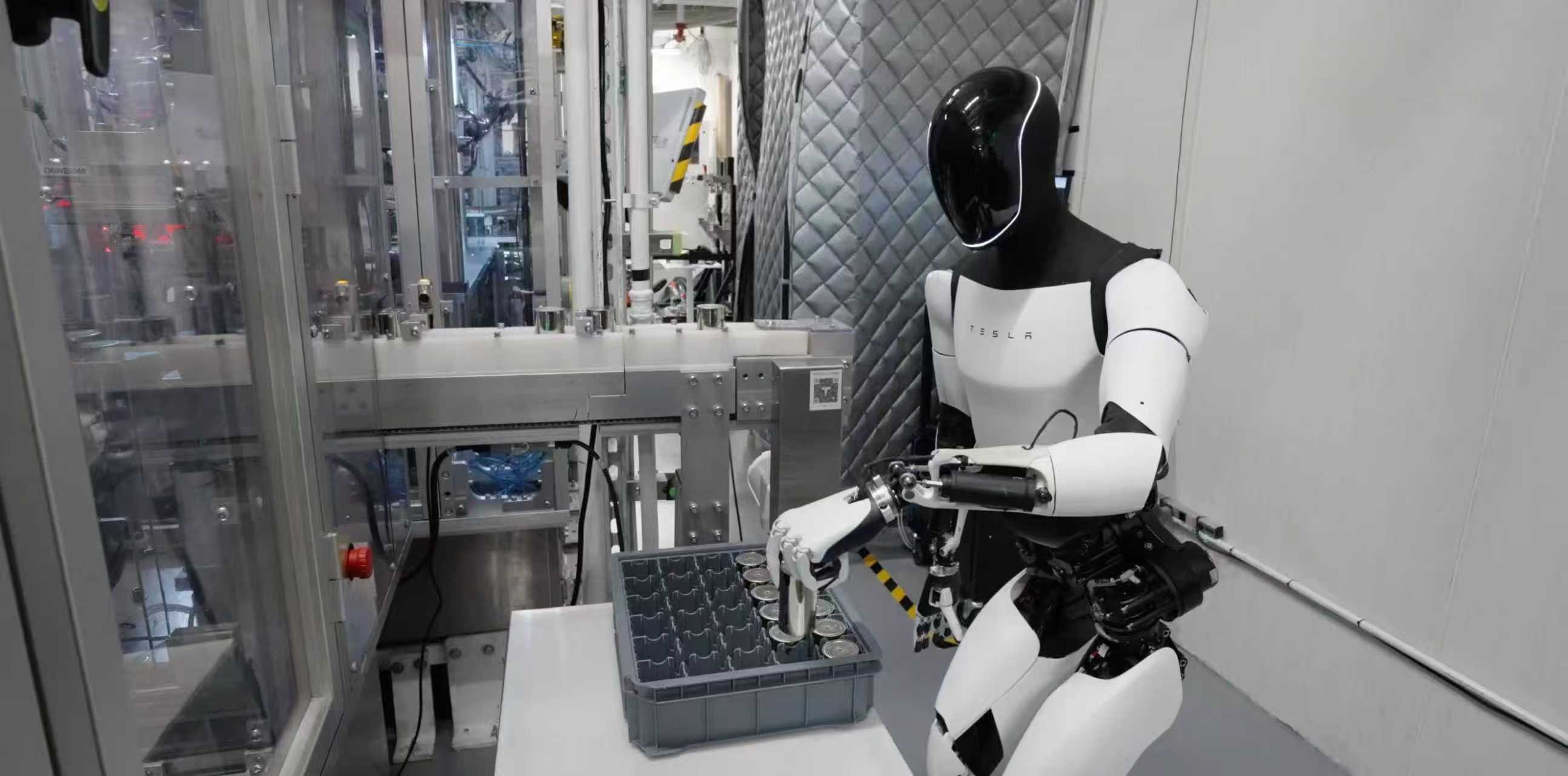
(Image source: Tesla)
It's not hard to see that the overall consensus in the humanoid robot industry is that the first batch of positions for implementation may not be in performances or households, but in warehouses and on assembly lines. Although these scenarios do not require a high degree of emotional interaction, it doesn't mean they have no practical applications. These jobs such as handling, loading and unloading, sorting, and assembly are difficult to be fully replaced by automation, but it's inevitable for humans to find them hard and boring. From this perspective, it's not too hard to understand Figure's seemingly "strange" sorting live - stream and sorting challenge. It's just using a more "performative" form to tell the public that robots may really be going to work.
Working in "shifts" with humans, the next choice for factory robots
After all, humanoid robots are not the optimal solution in factories today.
If we only look at the speed and accuracy of a single action, dedicated robotic arms are still more mature. They don't need to look like humans, nor do they need to understand a very complex environment. As long as they repeat their work at a fixed position, along a fixed trajectory, and with a fixed rhythm, they can run fast and stably. For many highly automated production lines, humanoid robots may not have an advantage and may even seem to be taking a "detour".
If compared with skilled workers, they are not much cheaper either. For example, an experienced worker can handle a stuck package, a tilted material box, or a dropped part with a simple reach of the hand. Robots are different. They have to first see the abnormality, then judge what has happened, and finally plan the next action. This doesn't even include the repeated thinking caused by recognition errors, which greatly reduces efficiency.
So, what humanoid robots can really solve at present may not be the standardized positions that have been mastered by robotic arms, nor can they immediately replace all skilled workers. Perhaps