Behind closed doors, they stopped talking about growth.
At 2 p.m. on May 14th, at the 6th floor of Runjiasu on Shennan Avenue, Nanshan, Shenzhen.
Entrepreneurs entering the door received two pieces of paper. One was for writing the happiest thing recently, and the other was for writing the most headache - inducing problem. They each wrote down their answers on the papers, folded them, and put them into the blind boxes.
Going global has become a "must - choose option" in the hardware circle this year. However, real dilemmas such as the commissioning of overseas factories, local procurement rates, tariff preferences, competition among dealers, and talent organization make the line between being a "pioneer" and a "martyr" for enterprises often just a step away. In the going - global ecosystem in 2026, what are the current states of various links such as brand owners, cross - border e - commerce, OEM factories, smart hardware, communications, and incubators?
On May 14th, "Workplace Bonus" held the first session of the "2026 Dividend Co - creation Conference" in Nanshan, Shenzhen, with the theme of "Hardware Going Global: How to Determine the Fulcrum and Boundary". Practical experts such as Nicole Wu Yanhua, COO of BambooMang Technology, Li Yuanzhi, CEO of Hanwang Youji, and representatives of emerging companies in the 3D printing field were present to share their experiences. This article is compiled from the on - site closed - door discussions, focusing on three core propositions: how to start with the supply chain when there are no resources in the early stage of entrepreneurship, how to build a global moat for a single product category, and the practical methodology for consumer - grade hardware to grow from crowdfunding to large - scale production.
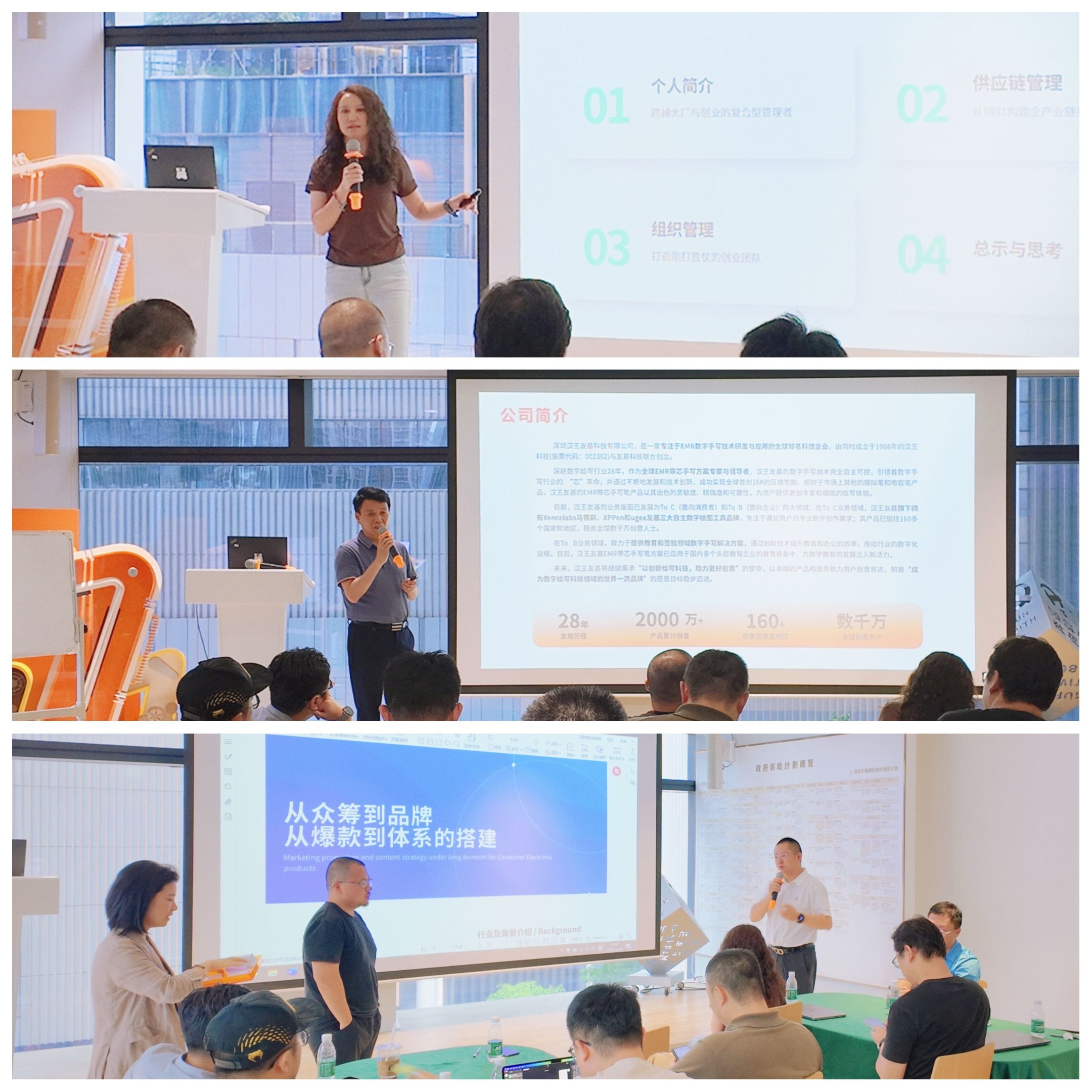
Guest sharing
2 million and a borrowed production line
Nichole, the co - founder and COO of BambooMang Technology, was one of the sharing guests that day. After graduation, she first worked as a headhunter, serving companies such as HTC, Longcheer, and Huaqin. In 2014, she joined DJI and started working on sports camera products. She was sent to an independent office space not far from the headquarters. She recruited from the first person to the 40th person until the product was in small - batch production, then moved back to the headquarters for mass production and returned to the HR position. She said that in the more than two years at DJI, she completed the transformation from a pure service provider to a client and from not understanding products to getting in touch with products.
However, what she talked about the most was the early stage of her entrepreneurship at BambooMang Technology.
When BambooMang entered the shared power bank industry, there was not much money left in the account. Since Nichole couldn't find a suitable factory, she asked the factory to only provide the production line and workers, while she set the SOP herself and sent all the engineers to the site.
"You charge the normal processing fees, and we'll arrange the workers' work for the day." This state of "borrowing the production line" lasted for more than a year, and the company trained two or three people in production management. In the third year, the order volume increased sharply, and they began to build their own factory, with the production line running in shifts 24 hours a day.
Nichole requires the first - pass yield rate of the production line to be close to 99%. "This is the first - pass yield rate, not the yield rate of the daily output," she emphasized. "Reworked products don't count, and problems can occur at each link." At the peak, they produced more than a million power banks a month. Once the yield rate fluctuated, the impact would be huge.
In 2020, there was a shortage of chips. Because of their close relationship with the supplier, they locked in a chip with the lowest cost but the strongest versatility in advance. "That month, competitors couldn't get goods from the supplier, but we could produce continuously and deliver goods normally." Channel agents couldn't wait. "If they want to be an agent today, the goods have to be delivered tomorrow."
Nichole also talked about the organizational contradictions. The revenue consists of two parts: hardware and platform, but the front - end and back - end operate on two different logics. In the factory, if the workers' monthly salary increases by 100 yuan, the yield rate may go up; the R & D engineers and offline sales teams have different management preferences. It took them one or two years to adjust.
Four years into the entrepreneurship, she was too embarrassed to tell her DJI colleagues that she was doing power banks. "Every time they asked me, I said I was working on a very simple product."
In the early days of the company, the basic salary for sales was only a few thousand yuan, and the highest salary for R & D was just over ten thousand yuan. They painted a vision for the employees every day, saying, "We will definitely change this industry and become the leader in the industry." When they had their first round of financing, the investment institutions found that "with such a small number of people and such a low salary level, everyone was working like crazy every day."
It was also difficult to find top - notch talents. The market thought there was not much technical content in this industry, so top talents were reluctant to join. They introduced a group of executives with an annual salary of over one million yuan for three consecutive years, hoping to make up for the shortcomings with external forces, but most of them didn't stay. "The process of finding top - notch talents made us see where the ceiling was, but so far, we don't have much successful experience in retaining people." Those three years gave her a lot of inspiration and lessons.
Later, they began to cultivate cross - border capabilities internally: the procurement staff would do PMC work, and the PMC staff would do warehouse management, with rotations every two years. There is a saying within the company: "A procurement person who doesn't understand the supply chain is not a good PMC."
Nichole divides the strategy into several stages. At the beginning, she and her partners devoted all their time to products and the supply chain, with the unit price of materials accurate to two decimal places. After the supply chain was stable, the company started to expand its channels, and the sales team grew from 10 to 30, 200, and then 2000 people. Later, BambooMang, a company with 800 people, acquired a company with 5000 people and became the industry leader. Now they are expanding horizontally in hardware categories, such as doing charging piles, unmanned retail cabinets, and direct - drinking water machine leasing.
The fulcrum is the supply chain. They have a hard indicator for internal project establishment: whether the cost of new products can be one - third of the existing product categories. "With our own supply chain capabilities, if it can be done, the following things will be easy." The boundary is restricted by core capabilities. "As of today, it is the supply chain and the organizational management ability of offline channels."
"When the executives can't convince each other, they hold a closed - door meeting and stay up until one of them runs out of energy, and then they'll listen to the one with more energy. On the surface, it seems to be a comparison of who is more reasonable, but in fact, it's a comparison of who loses their willpower first." A participant told us that this was the most impressive thing Nichole said to him that day.
160 countries, six in ten thousand
Li Yuanzhi, the CEO of Hanwang Youji, speaks with the calmness that comes from years of deep involvement in the industry.
The company started in Huaqiangbei in 1998, focusing on digital handwriting technology. Before 2015, it only exported products under other brands in the overseas market; after 2015, it officially launched its own brand and successfully built the brand awareness of XPPen through platforms such as Amazon. Now the company's products are sold in more than 160 countries, and it has also obtained the AEO advanced certification from the customs. Li Yuanzhi said that only six in ten thousand enterprises in the country can obtain this certification.
He believes that their main competitors are in Japan. Hanwang Youji's technology, from chip design to the sensors and special materials in the pen, is all independently controllable. Its self - developed 16K pressure - sensitive chip has even been reported by CCTV Finance. "Technologically, we have surpassed Japanese brands, but the gap in brand recognition still exists objectively." Top - level art practitioners such as those from Disney and Pixar have a deep - rooted recognition of Japanese brands. "Fortunately, in recent years, the impression of Chinese technology brands in the overseas market has been steadily improving."
Hanwang Youji's product categories are also changing. From drawing tablets and drawing screens, after 2020, Hanwang Youji embedded electromagnetic induction technology into tablets and cooperated with TCL to create a complete machine solution, launching a new product category of "drawing tablets". The next core focus of the enterprise is the handwritten record track. Ordinary capacitive pens can only meet the needs of light writing, with limited experience. Hanwang Youji plans to rely on its mature electromagnetic induction technology to create professional handwritten notepad products, achieving the dual advantages of stronger performance and lower cost.
There is no shortcut to going global. Hanwang Youji has set up branches in the United States, France, the United Kingdom, Japan, South Korea, etc. The barriers in overseas markets are different: India has strict BIS certification and localization production requirements, and the market openness and policy rules vary greatly from country to country. "It's relatively easier to penetrate from developed countries to underdeveloped countries. However, the compliance, certification, and localization rules of each country need to be overcome one by one, which takes time to accumulate."
In terms of ecological layout, Li Yuanzhi believes that tools are just an entry point, and the all - link creative needs of users are the direction for the enterprise to delve into. At the upstream talent end, they cooperate with universities to establish a game design major. The schools provide the venue and qualifications, and Hanwang Youji provides the technology and equipment to jointly promote the cultivation of digital art talents. At the downstream copyright end, they cooperate with the National Copyright Administration to build a rights - confirmation system. The works created by users through their tools can quickly complete the unique copyright confirmation. "This is more efficient, lower in cost, and more credible than traditional rights - confirmation methods."
When asked whether there is a software subscription business in addition to hardware sales, he frankly said that the potential value of existing customers is huge. It can not only help with customer referrals and lead generation but also participate in new product market research, offline brand activities, and other linkage scenarios. However, this kind of operation model needs to balance the input and output. Many enterprises have limited energy and complex affairs on a daily basis and often have no time to deeply layout.
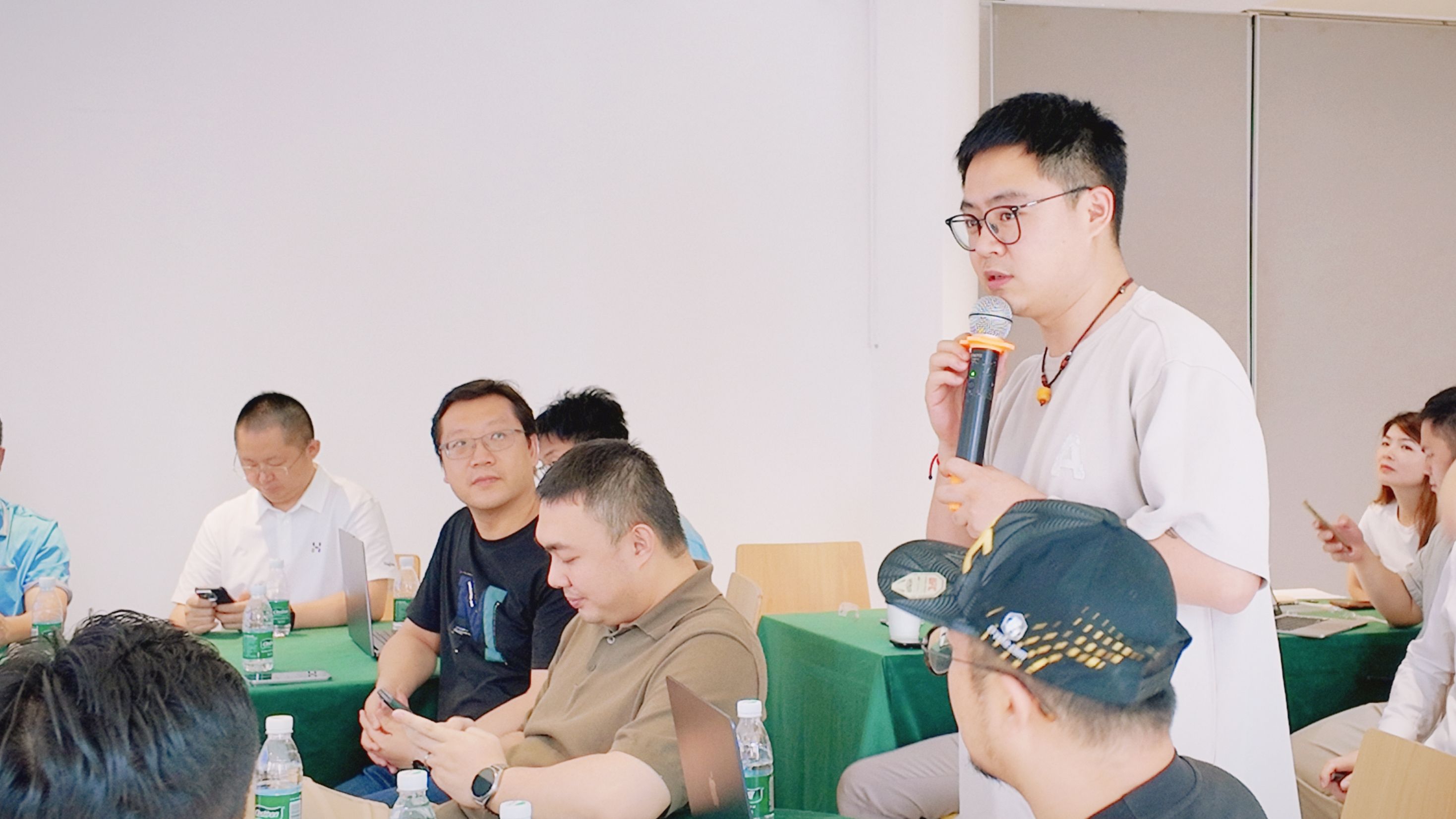
Idea collision
An unfinished draft
In Nicole's mind, her boundary is restricted by core capabilities, but the organization can keep learning. "Throw punches quickly, and if you can't hit, withdraw quickly."
Li Yuanzhi said that when you think the product and users can form a positive cycle, it means the product strength has been tested, and then you just need to think about how to scale it up.
Another guest who didn't disclose their identity said that entrepreneurs have to experience setbacks to have a faith - like understanding of "putting users at the center".
Looking back at the sketches left on the table during the afternoon discussion, we believe that everyone has their own conclusion about "the fulcrum and the boundary" in their hearts.
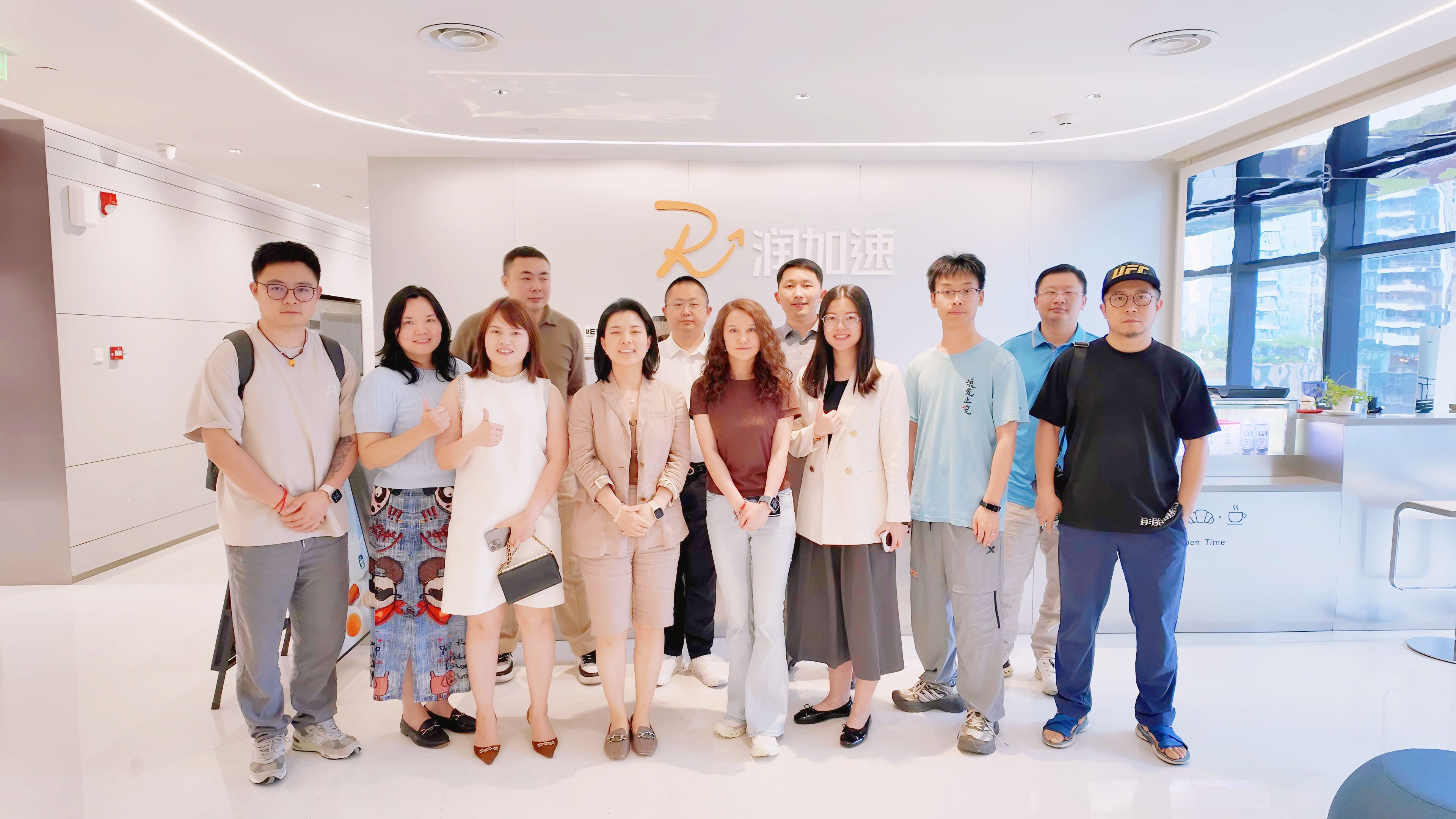
At 2 p.m. on May 14th, 2026, at the 6th floor of Runjiasu on Shennan Avenue, Nanshan, Shenzhen
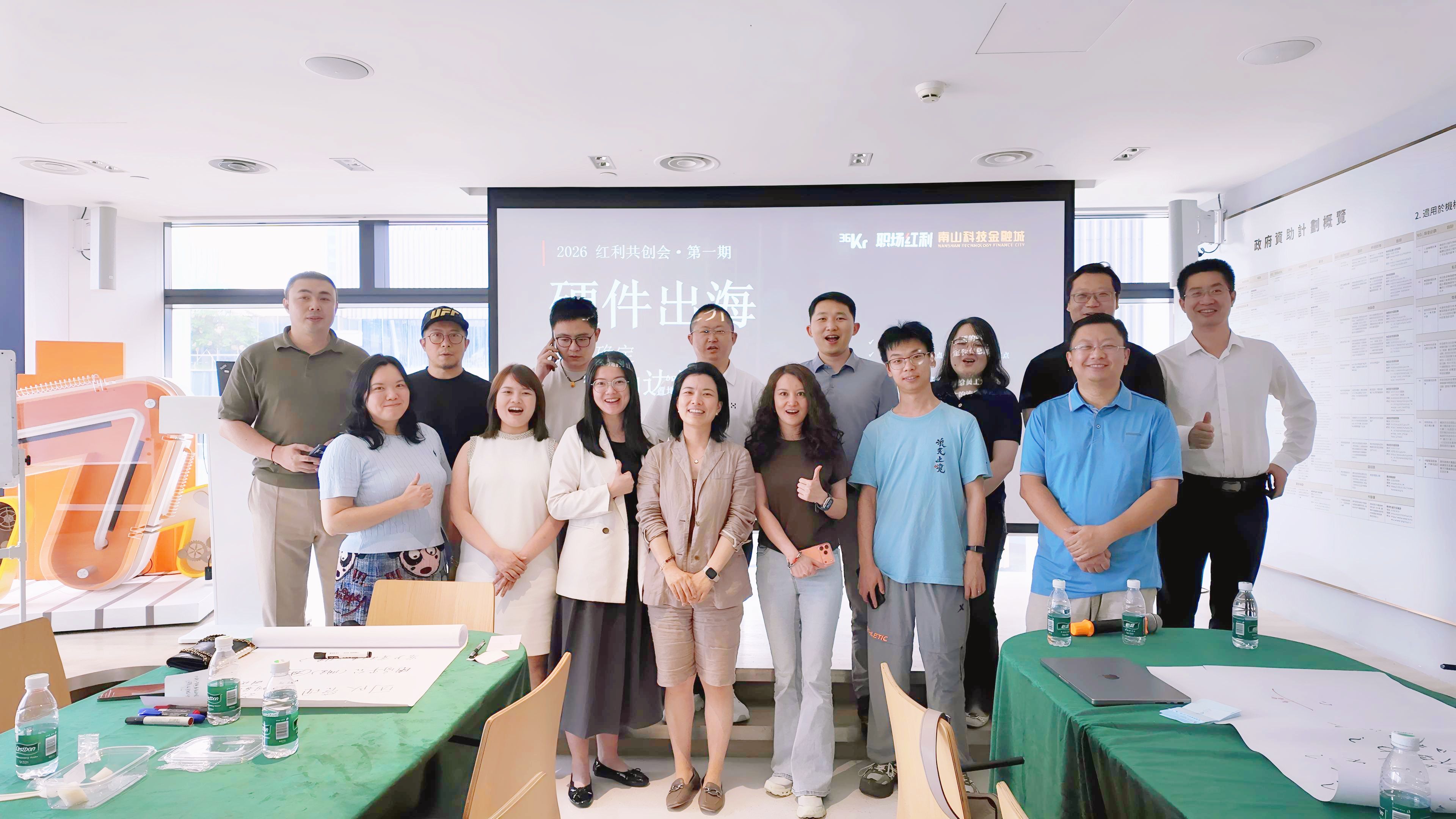
Thanks to Runjiasu for providing the venue support for this event