The veteran entrepreneur who first started his business in 2004 has secured multi-million-yuan investment from Professor Gao Bingqiang and his Gaofeng Patient Fund, and is entering the robot collaboration cluster arena taking intelligent mobility as the entry point.
Hard Krypton learned that Hangzhou Longi Intelligent Technology Co., Ltd. (hereinafter referred to as "Longi Intelligence") has recently completed its angel round of financing, with the financing amount reaching the order of tens of millions. This round of financing is invested by Professor Gao Bingqiang and his affiliated Gaofeng Patient Fund, with Xingchen Capital acting as the financial advisor. The raised funds will be mainly used for R&D of next-generation intelligent mobile devices, iteration of robot collaboration systems, construction of supply chain and mass production capacity, and expansion of the core team.
The Innovation Philosophy of the "Genius Teenager"
The Gaofeng Patient Fund under Professor Gao Bingqiang is well-known for investing in the field of hard technology. Its investment features are early-stage and small-scale investment, deep accompanying support and track focus.
Longi Intelligence, which obtained the financing, is a young enterprise founded in 2024. But its founder has attracted attention from the technology and innovation circles since he was in middle school.
As a member of "Generation Z", Shi Mulan is a person with innate talent for invention and innovation since childhood. From primary school to middle school, he has tinkered with drones, built satellite radio receivers, and even tried miniature chemical rockets, with dozens of projects in total. These experiences are not just interest experiments in his teenage years, but gradually shaped his comprehensive understanding of electronics, machinery, software and control systems in the long-term hands-on practice.
All of this won him the reputation of "genius teenager". With both creative ideas and strong implementation capabilities, this quality eventually pushed him to start his own business and made opportunities favor him.
When he was in the first year of high school, Shi Mulan got the opportunity to intern and communicate at leading enterprises such as iFlytek. During high school, he won the Computer Merit Award in the global finals of the Shing-Tung Yau High School Science Award and the first prize in the China division with his "self-balancing bicycle intelligent driving system and control algorithm". After winning the award, Shi Mulan did not stay on this verification platform, but began to think about how to apply this system to mobile devices that are more realistic, more complex and more engineering challenging. Later, he spent a year continuously building an autonomous driving mobility vehicle system based on a pure vision solution, covering core modules such as perception, positioning, planning and control. It is the continuous exploration in this direction that won him the support of the Zhen Summer Entrepreneurship Scholarship from ZhenFund, which provided early guarantee for him to continue promoting the R&D of intelligent driving and robot directions. When Shi Mulan started his business, ZhenFund also became the shareholder of Longi's angel round immediately.
However, Shi Mulan is not the kind of "genius teenager" who only stays at the inspiration level. His special feature is not only his imaginative ideas, but also that he can always break down these ideas and finally turn them into something "tangible" in the real world.
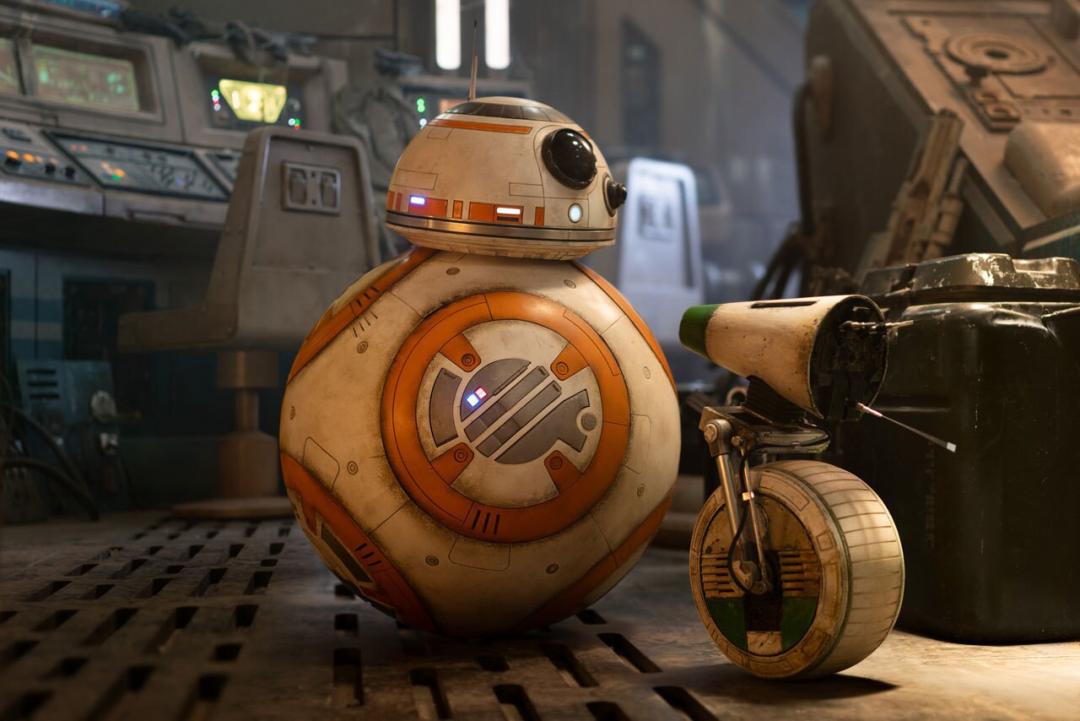
When he was in the sixth grade of primary school, he was fascinated by the robot BB-8 in the movie *Star Wars* and tried to reproduce it by himself. Shi Mulan later explained: "Strictly speaking, this is the first robot I have built." What attracts him to BB-8 is not just its cute appearance or sci-fi sense, but that behind a small robot there is a highly self-consistent system that can run continuously in complex environments. He saw the vitality from this system.
"(System) engineering is not a cold pile of parts. It can not only create order, but also determine destiny." He described his innovation philosophy in a very geek-style language.
The rational tension of a complete system attracted the teenage Shi Mulan, and made him devote himself to creating a robot system that "acts directly on the real world" at the beginning of his growth, which also made his R&D naturally have extremely high focus and consistency.
The self-balancing bicycle and autonomous driving wheelchair mobility vehicle he developed in high school gradually laid the later technical route of Shi Mulan: on the one hand, he began to deeply understand the motion control, stability and safety boundaries of robots of various forms; on the other hand, he continuously chose the vision-led perception solution to explore how to make devices complete closed loops in the real world.
From "Carrying People" to "Carrying Tasks"
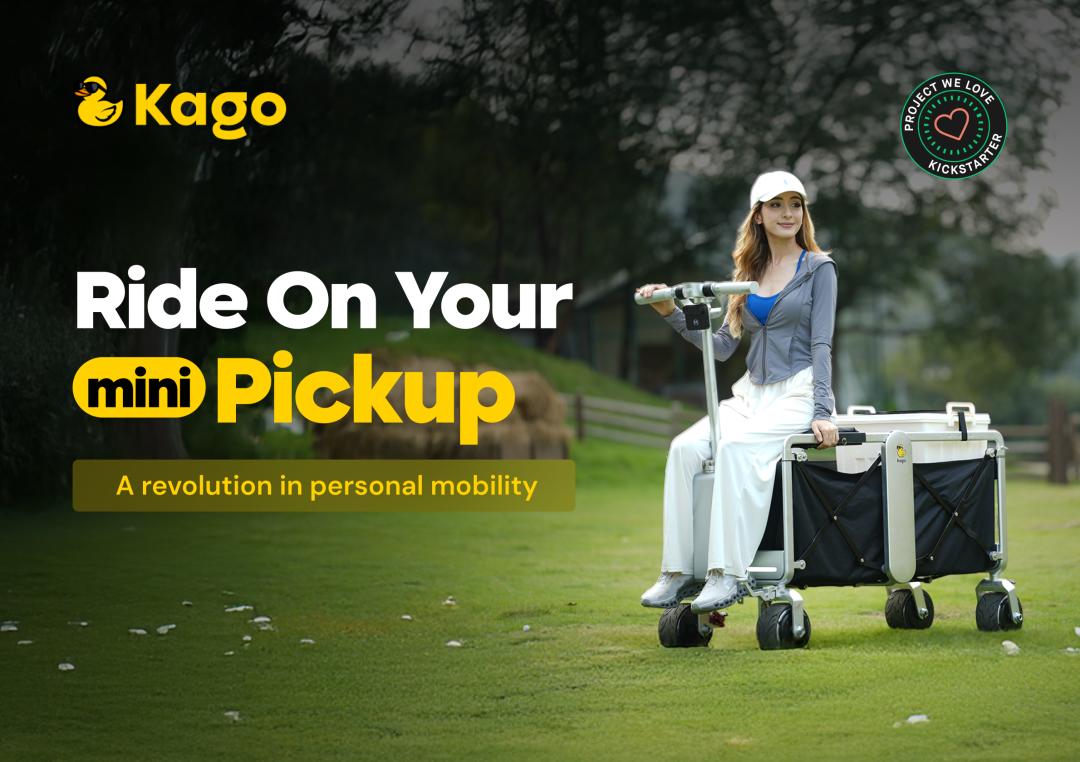
The step-by-step exploration reflects the innovation direction pursued by Shi Mulan, and also laid the foundation for the launch of the mini pickup Kago in 2025. This is the first commercial attempt product of Longi.
It is a battery-driven intelligent mobility tool, inspired by the wagon and scooter commonly seen in the United States. Different from traditional scooters that can only carry people and wagons that can only carry goods, Kago has both carrying and loading capabilities, and its function is between "walking" and "driving". Through visual perception and intelligent control, Kago can also realize capabilities such as following and assisted driving.
At the end of 2025, Longi Intelligence launched a one-month crowdfunding for Kago on the crowdfunding platform, which served as a real market verification before the large-scale commercialization of the product. According to the previous plan, the product started batch delivery in the second quarter of this year, and then took over continuous orders and user feedback through its self-built independent website.
The launch and sales of Kago verified that Longi has the capabilities of product mass production and delivery. Longi has got through this process, which shows that its R&D capabilities are effectively connected with the real market demand. At the same time, Longi's productization and supply chain capabilities have been verified by the market. Its system reuse capability of "one-time development, multiple uses" has also been proved.
However, Kago did not emerge out of nowhere. Before it was born, Shi Mulan experienced a rigorous process of system theory construction and iteration.
In 2022, Shi Mulan went to the Department of Computer Science of the University of North Carolina at Chapel Hill for further study. Since the beginning of enrollment, he has studied under Professor Mohit Bansal to participate in research related to multimodal GenAI, vision-language understanding, and embodied intelligence. Professor Mohit is a professor in the Department of Computer Science at UNC, who has long been deeply engaged in natural language processing, multimodal learning and vision-language directions, and has won the US Presidential Early Career Award for Scientists and Engineers. After that, with the joining of Mingyu Ding, a well-known scholar in the field of robotics, to UNC, Shi Mulan further cooperated to participate in research training in the directions of locomotion and manipulation.
The value of this experience is not only that he was exposed to the most cutting-edge directions such as multimodal AI, robot learning and embodied intelligence, but also the systematic scientific research training given to him by the two tutors. Compared with the early stage when he only needed to "make" a system and get it running, he began to pay more attention to how to make the system understand the world and tasks more efficiently, and execute robustly in the real environment. While creating from 0 to 1, he also thought about how to make trade-offs among algorithms, hardware, cost, stability, security and real-world constraints to find a better system solution.
The new system philosophy applied to Longi's R&D has brought a qualitative change in the comprehensive capabilities of its hardware and software. At the hardware level, Longi matches the chassis with different upper structures and task modules to derive multiple product forms: the chassis plus loading structure can form Kago; the chassis plus seat can become an intelligent mobility vehicle; the chassis plus robotic arm can further evolve into a mobile manipulation robot. The "chassis" is also the first high-frequency carrier for Longi to enter the real physical world.
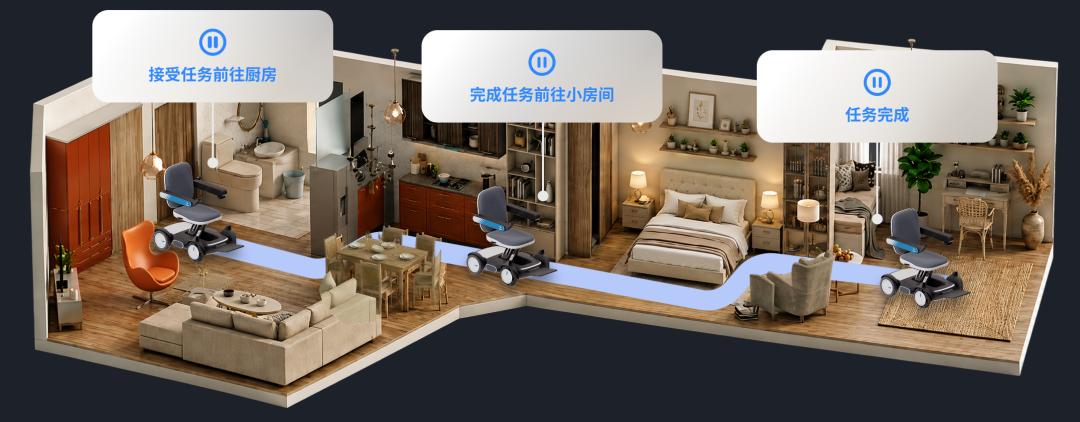
At the software level, Longi is building an upper-level intelligent brain and robot collaborative scheduling system, so that different devices can collaborate around perception, planning, control and task execution. It does not simply let multiple hardware run separately, but hopes to make different robots complete division of labor and linkage in scenarios such as mobility, home and escort through a unified system architecture.
In this system, the underlying perception and positioning capabilities are the foundation. Longi adopts self-developed vSLAM (a technology that uses cameras for environmental perception) and integrates multi-source sensor information such as cameras and IMU (Inertial Measurement Unit) to enable the device to have capabilities of environmental understanding, positioning and path planning. On this basis, the upper-level intelligent brain further accesses multimodal perception, intention understanding, task planning and execution control models, and disassembles the user's natural language requirements into action chains that robots can execute.
For users, it is like having an "electronic housekeeper". There is no need to learn complex operations or issue mechanical instructions step by step. Instead, users only need to give simple and direct orders, and the machine will independently complete the corresponding tasks. For example, when the user says "I'm thirsty", what the system needs to complete is not just speech recognition, but to understand the user's real needs by analyzing the heard content, determine the task goal of "the user needs to drink water", plan the execution path (such as walking through the living room to the kitchen to get water, then returning to the bedroom to hand the water to the user), and schedule the mobile chassis, robotic arm or other collaborative devices to complete the required actions. Longi's goal is to enable robots to have brains that can think independently, understand human language, think about the optimal strategy through logical reasoning, and finally bring the execution results back to humans.
In this way, by integrating thinking capabilities and mechanical capabilities, the device is no longer just a tool for "carrying people", but becomes an extension of the human body, carrying tasks like a human.
Obviously, Longi has designed a robot collaboration cluster for personal scenarios in its longer-term planning.
This means that in the future, there may not be only one "all-powerful robot" around an individual, but a set of robot combinations that work collaboratively around the user: the mobility robot is responsible for movement, the home robot is responsible for cleaning, escort and security, and the delivery or escort robot is responsible for picking up and delivering items — different devices collaborate through a unified brain and scheduling system, and finally form a robot ecosystem for individuals.
This ecosystem is exactly the core technical barrier that Longi is striving to build.
Bring Magic into Reality
After a brand-new product category comes out, what is the next step for Longi? This largely depends on the cognition of Shi Mulan and his geek colleagues on the future path.
In fact, Longi does not lack funds for production launch and market promotion, but it still adopts the crowdfunding model to carry out R&D and production. The geeks believe that crowdfunding is not just a simple sales channel, but a real market test before the large-scale launch of products, giving them the opportunity to face users directly, understand scenarios and collect feedback. Shi Mulan once personally took on the important task of "customer service", always paying attention to the received private messages and comments, reading and responding to the backers' questions and suggestions one by one. He said that those who are willing to support the product in the early stage are not just customers, but more like collaborators who participate in product polishing together.
The teenager who wanted to perceive the world by building systems is now bringing magic into reality.
"Extreme" and "pragmatic" are the genes of Longi's R&D. Shi Mulan speaks very fast, outputs a huge amount of information, but his mind turns faster. During the interview, his mantra "extreme" appeared frequently. Even the company name "Longi" takes one character from his own name and the word "extreme", conveying the grand ambition inside this young entrepreneur.
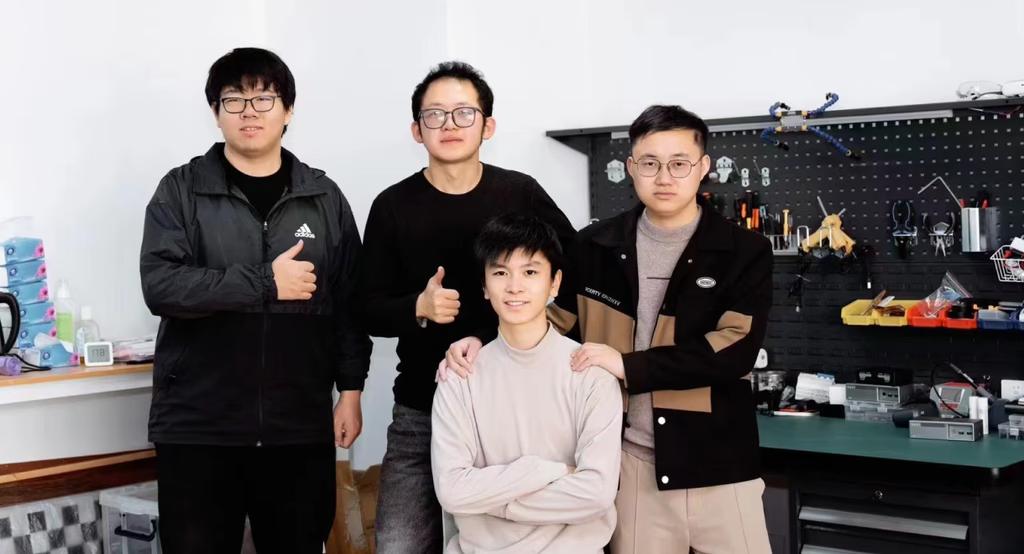
Most of Shi Mulan's colleagues are the same. The nine employees of Longi are mostly young people in their twenties, all of whom are full-stack engineers, and most of them have had R&D cooperation experience with Shi Mulan. In addition to mutual trust, the extreme love for R&D also unites them together.
The whole company culture is very Silicon Valley-style: simple, transparent, clear task orientation and flat management make decision-making fast. Interestingly, when Musk founded PayPal and SpaceX in the early days, the management mode of the companies was generally similar. Unconsciously, Musk in his entrepreneurial period seems to have become the mirror image of Shi Mulan and his team.
Silicon Valley heroes usually have broad thinking and ambitious goals. In contrast, Longi emphasizes more on the pragmatic implementation path. Under the cognition of Shi Mulan and his geek partners, the robot world is highly complex and highly systematic. There will not be an all-powerful robot that takes care of everything, but a set of robot clusters around the user's full-scenario needs, with different devices performing their own duties and cooperating with each other.
Therefore, Longi emphasizes entering the robot cluster from the intelligent mobility track.