Kunlun Capital co-led the investment, and Yushi Space has raised a total of 1 billion yuan in financing: Helping China's commercial rockets accelerate their sprint.
On May 18th, Beijing Yushi Space Aerospace Technology Co., Ltd. (hereinafter referred to as "Yushi Space") announced the completion of a Series A financing round of 500 million yuan. So far, the cumulative total financing has reached 1 billion yuan. This round of financing attracted several first - tier investment institutions. Kunlun Capital and Gao Rong Venture Capital jointly led the investment, while Jianfa Emerging, Blue Lake Capital, Honghui Fund, Dongzheng Capital, Zhentai Capital, and Gengxin Capital followed. Industrial shareholders including Zijin Mining, well - known Internet strategic investors, and intelligent terminal industry players jointly invested. Existing shareholders such as Hillhouse Venture Capital, Cornerstone Capital, Qiancheng Capital, and Zhisheng Ruiying continued to invest in multiple consecutive rounds. The funds will be mainly used for rocket assembly and testing, verification of the "chopsticks" recovery technology, rocket production capacity construction, and team building, providing support for the subsequent large - scale operation of the AS - 1 rocket.
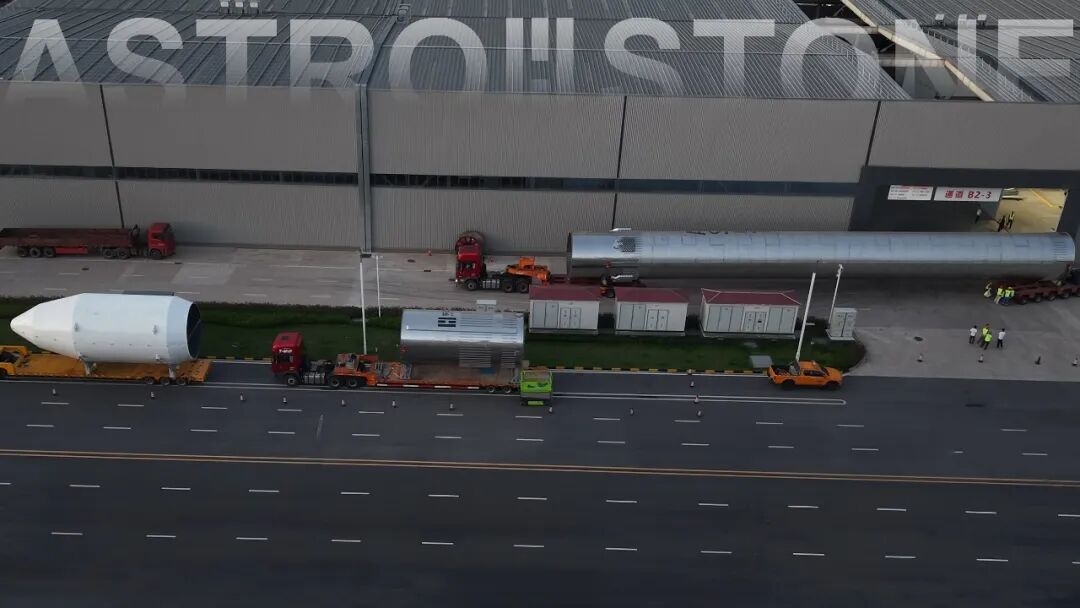
As a commercial rocket company that completed 5 rounds of financing within just 15 months of its establishment, with a cumulative financing amount of 1 billion yuan, Yushi Space has become a benchmark enterprise in the era of Commercial Space 2.0 with its clear technical end - game route, astonishing speed of engineering implementation, and the unique domestic technical path of "stainless - steel rocket body + liquid oxygen methane power + chopsticks capture arm recovery".
01 Yushi Space has raised a cumulative total of 1 billion yuan and plans to produce three rockets in 2026
The funds from this round of financing for Yushi Space will be used for: ground joint tests of the full - scale capture arm prototype, assembly and testing of the first - stage of the maiden flight rocket, static ignition tests, assembly and testing of the entire rocket, and the plan to produce three rockets in 2026. It aims to ensure the maiden flight in the first half of 2027 and achieve commercialization in the second half.
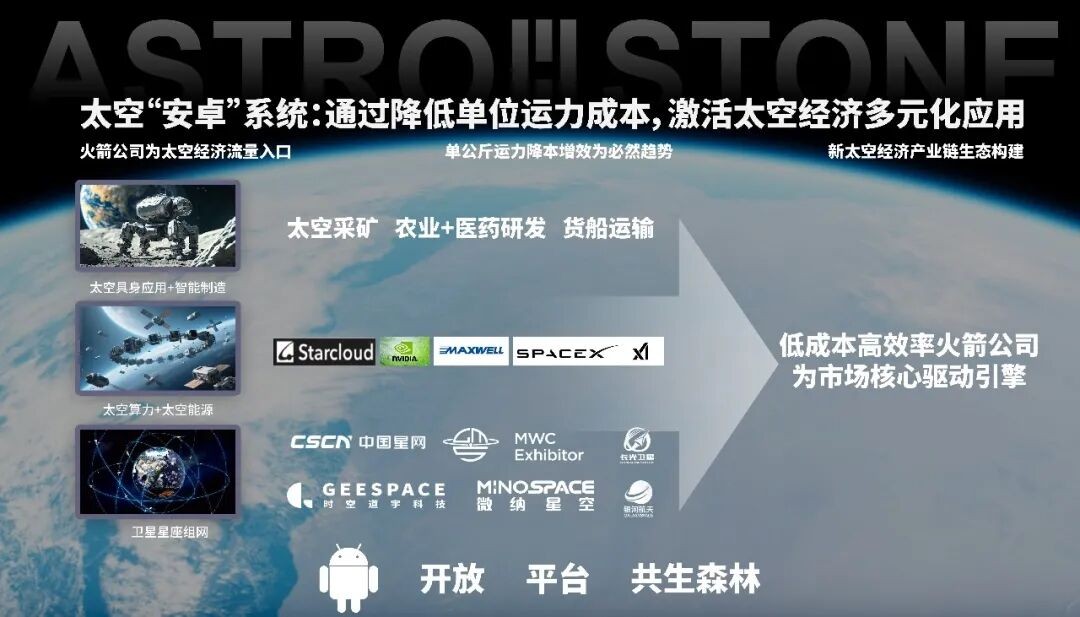
Tang Wen, the founder and CEO of the company, is a doctor from the School of Aerospace Engineering at Tsinghua University. He once served as the deputy chief designer of the pressurization and delivery system in the First Institute of China Aerospace Science and Technology Corporation and has experienced the entire development process of the CZ - 5 and CZ - 7 rockets. On January 26, 2026, when he delivered a speech at the first "AS - VISION" Annual Ecosystem Conference, he stated that Yushi Space chose to become "the Android of space" - committed to building an open and shared low - cost space transportation infrastructure platform rather than a closed system, aiming to empower global space exploration and innovative applications.
In 2026, the Yushi Space team will focus on four core tasks to strive for the maiden flight goal: ground joint tests of the full - scale capture arm prototype; assembly and testing of the first - stage of the maiden flight rocket; static ignition tests of the first - stage of the maiden flight rocket; assembly and testing of the entire maiden flight rocket.
02 Why Yushi Space? The End - Game Choice of the Tsinghua Aerospace Doctor Team and the "Stainless - Steel Rocket"
If commercial space is compared to a marathon, then Yushi Space chose the most challenging but also the most certain end - game track from the very beginning.
The foundation of this team comes from the most elite forces of the "national team" in Chinese aerospace. CEO Tang Wen has 14 years of experience in both liquid rocket power and structure and is the only top - level expert in China who straddles these two fields. He has personally experienced the entire development cycle of the CZ - 5 and CZ - 7 rockets and is well aware of every difficulty from the design to the flight of large rockets. CTO Tian Jichao is a doctor in aircraft design from Harbin Institute of Technology and has worked in the General Design Department of the First Institute of China Aerospace Science and Technology Corporation for 12 years, being in charge of two types of liquid rockets, the CZ - 8 and CZ - 2C. The "Yu Menglun Team" he belongs to is known as the "Dream Team" of Chinese aerospace. As early as 2017, they completed the earliest major project on recovery landing point control in China and successfully carried out a flight test on sub - stage recovery landing area control based on grid fins. CSO Zhu Xinwen has aerospace work experience in both China and the United States and personally established the first domestic stainless - steel rocket structure pilot line. He has a thorough understanding of the structural design and grasping action technology of the "chopsticks" capture arm.
These three core founders, leading a team of over 200 people (which will expand to 350 - 400 by the end of the year), with R & D personnel accounting for over 70%, are reserving core strength for the maiden flight and subsequent large - scale operation, and are turning a seemingly crazy idea into reality - building rockets with stainless steel, retrieving them with "chopsticks", and then launching them again.
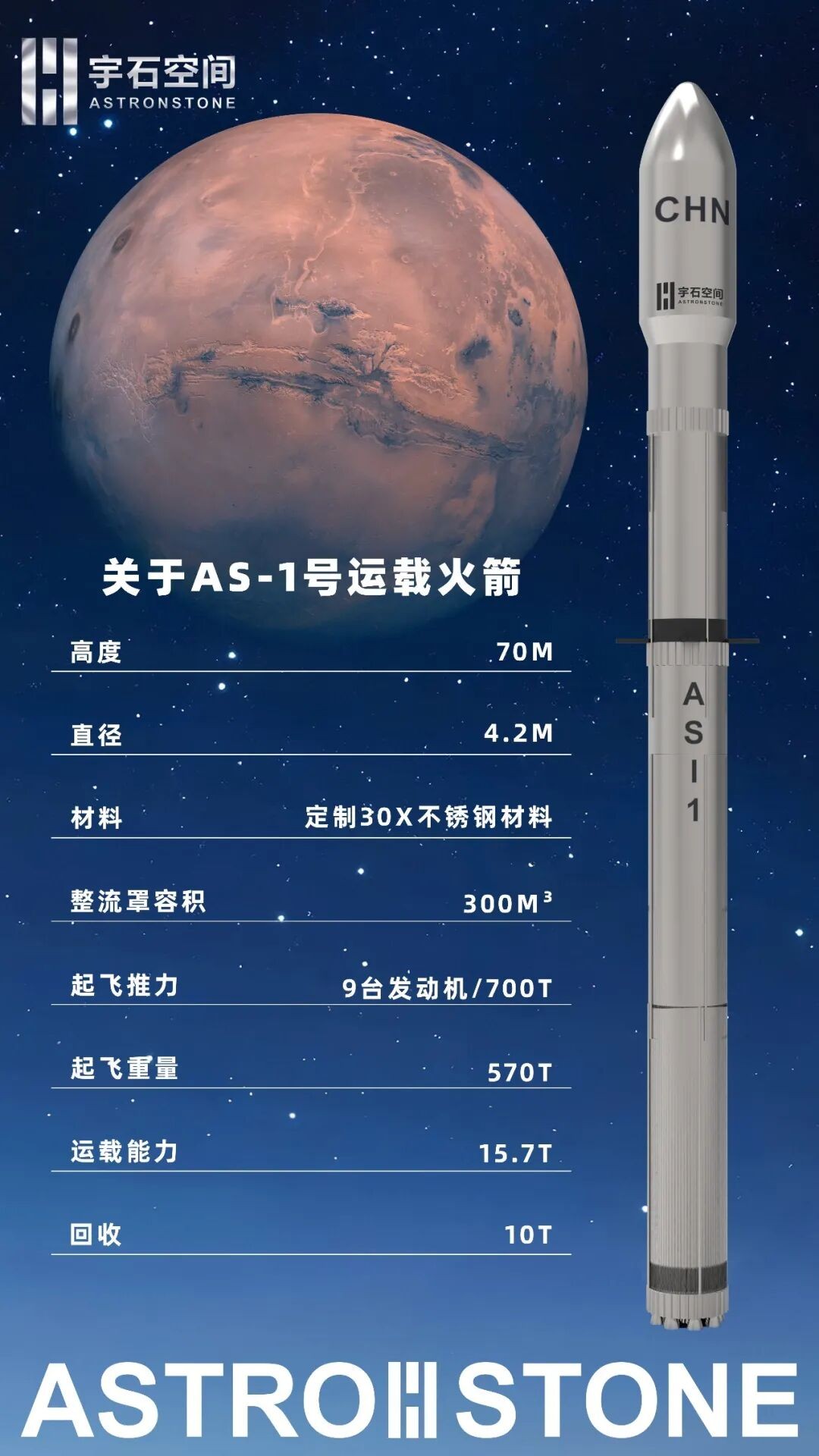
Their product, the AS - 1 launch vehicle, is about 70 meters long, with a take - off weight of 570 tons, a rocket body diameter of 4.2 meters, a one - time LEO payload capacity of 15.7 tons, and still has a capacity of 10 tons under reusable conditions. Even more astonishing is the cost - the self - developed stainless - steel rocket body costs only one - tenth of the traditional aluminum alloy rocket body, while the production efficiency has increased several times, and a rocket body can be delivered in as fast as one month.
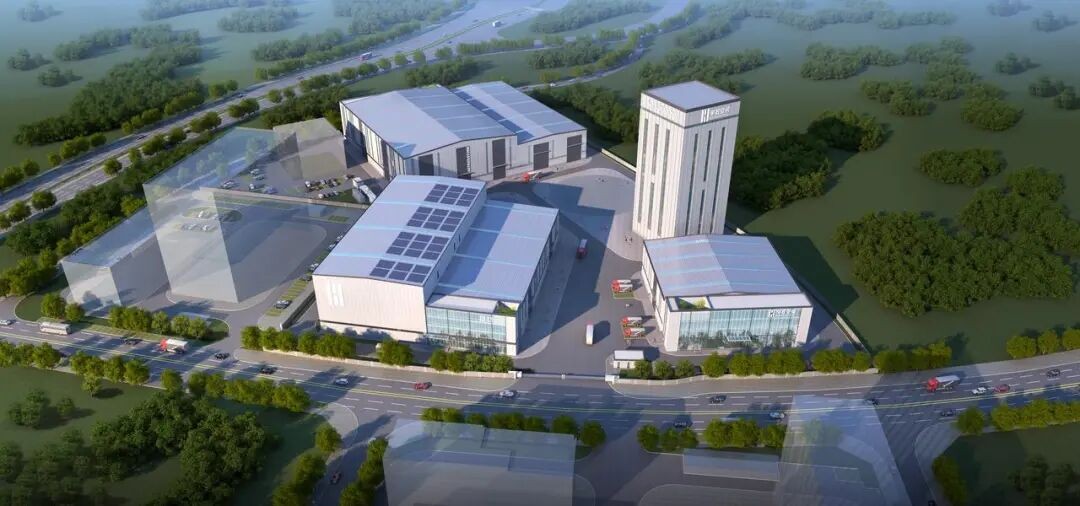
In terms of production capacity construction, Yushi Space continues to expand based on the strategic layout of "one center and two bases". The area of the northern R & D center has expanded to over 4000 square meters, and the newly put - into - operation electrical comprehensive test center provides key support for the verification of the rocket's electrical system. The rocket development and assembly base in Hunan has been partially put into production and is expected to be officially delivered in the third quarter of 2026. After reaching full production, it will have the capacity to produce 8 rockets per year. The avionics center and the ground joint test base for the capture arm have been simultaneously launched for construction, further improving the full - chain layout from design, manufacturing, test verification to in - orbit delivery and recovery and reuse.
For the future, Yushi Space has a clear "three - step" plan: in the near term (3 - 5 years), it will reduce the launch cost per kilogram of the 4.2 - meter - diameter rocket to less than 20,000 yuan, establishing a leading position in the industry; in the medium term (5 - 10 years), it will move towards rockets with a 7 - meter diameter and recoverable first and second stages, further reducing the cost to 10,000 yuan per kilogram; in the long term (5 - 20 years), it will build an open platform called "Space Android", enabling space infrastructure to truly empower all industries and making space accessible to everyone.
03 Kunlun Capital: Promote the Development of Chinese Commercial Space with the Investment Concept of Hard Technology
The global commercial space industry has entered an era of "low cost, high frequency, and reusability". SpaceX's Falcon 9 has significantly reduced the launch cost through first - stage recovery (the LEO payload capacity is converted to about 3000 US dollars per kilogram), and the Starship currently under test aims for full reusability. Elon Musk publicly stated that the long - term goal is to reduce the single - launch cost to the million - dollar level. At the same time, China's low - orbit Internet constellations (such as the "Thousand - Sail Constellation" and the "GW Constellation") also have an extremely urgent demand for large - capacity and low - cost rockets.
According to relevant forecasts by Euroconsult, the global commercial rocket launch market will continue to expand from 2025 to 2035, and reusable medium - and large - sized rockets are expected to become the mainstream. However, currently, only a very small number of enterprises such as SpaceX in the world have truly achieved mature orbital - level recovery. Chinese commercial rocket enterprises are in a critical window period from breakthrough to mass production.
Kunlun Capital stated that the Chinese commercial space industry has entered a new stage, and the market has a clear demand for rockets with "low cost, high frequency, reusability, and large payload capacity". Since its establishment, Yushi Space has firmly chosen the product definition and technical route of "liquid oxygen methane + stainless - steel rocket body + chopsticks capture recovery", and has made firm investments in terms of talent attraction and engineering support, quickly achieving R & D milestones, which reflects the team's clear judgment in strategic choices and a strong sense of purpose.
Kunlun Capital focuses on hard - technology investment and always adheres to the trinity standard of a clear technical route, verifiable engineering capabilities, and the mission and execution ability of the entrepreneurial team. In the view of Kunlun Capital, the commercial space industry is a long - term endurance race. They particularly value whether an enterprise has an unwavering end - game route, a complete engineering closed - loop from design to production, and whether the team can withstand loneliness and pressure. Based on this concept, Kunlun Capital is optimistic about the long - term prospects of the Chinese commercial space industry, believing that China has the world's strongest aerospace talent reserve and industrial system and is fully capable of leading the field of reusable rockets from catching up. Kunlun Capital will continue to deploy in the key nodes of the commercial space industry chain, deeply empower the invested enterprises with capital and industrial resources, and help China's space infrastructure reach the world's forefront.