Huawei, which doesn't manufacture cars, is influencing the entire industry as a Tier 0.5 player.
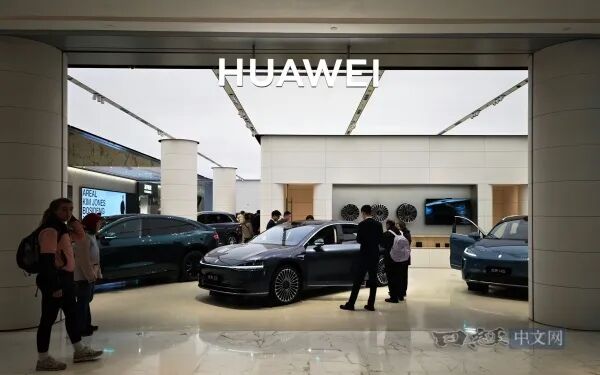
Huawei stores not only sell mobile phones but also cars (Beijing, March)
The unique presence of Huawei at the Beijing Auto Show reflects a reality: US sanctions have given rise to a powerful behind - the - scenes promoter in the automotive industry and stimulated its competitors...
In China, the world's largest automotive market, the Beijing International Auto Show was just held in the capital city, Beijing. The venue was filled with pure electric vehicles (EVs) and autonomous vehicles. Among them, the most prominent enterprise was Huawei Technologies Co., Ltd. After many twists and turns, Huawei has become the most powerful "behind - the - scenes promoter" in the automotive industry, and its influence continues to expand.
"The monthly sales volume of the entire series of models can reach a maximum of 5,000 - 6,000 units. Even in the off - season, the sales volume can be stably maintained at over 3,000 units," said the relevant person in charge at the booth with the sign of "Harmony Intelligent Mobility Alliance (HIMA)."
At Chinese auto shows, Chinese self - owned brands that are not seen in other countries can be found everywhere. Harmony Intelligent Mobility Alliance (HIMA) is one of them. To be precise, it is a general term covering five brands. The narrator pointed to the STELATO S9T station wagon, which has a starting price of 319,800 yuan.
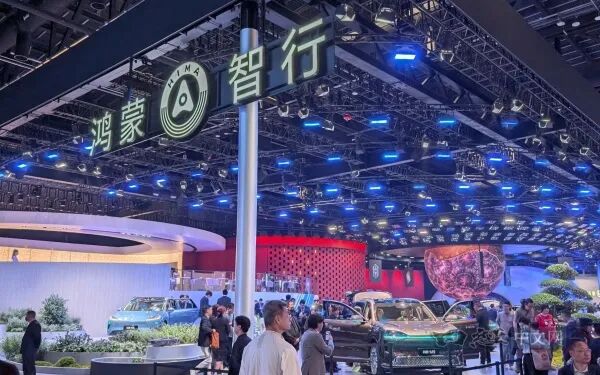
More than 15 cars are on display at the Huawei Harmony Intelligent Mobility booth (April 24, Beijing, China)
There are also models of brands such as AITO and LUXEED on display at the Harmony Intelligent Mobility booth, with a total of more than 15 vehicles. In 2025, the sales volume of Harmony Intelligent Mobility increased by 32% year - on - year, reaching 580,000 units. In the Chinese automotive market with a slowdown in growth, it has become a highly - regarded growth stock.
The characteristic of Harmony Intelligent Mobility lies in its operating model. Huawei is responsible for product planning and overall vehicle design, and also in charge of sales. The person in charge introduced that our cooperation partner, BAIC Group, mainly provides the production factory, and Huawei is responsible for everything from quality management, in - vehicle systems, electronic control, body design to chassis tuning.
About 15 years ago, Huawei, which mainly focuses on mobile phone terminals and communication base stations, began to lay out in the automotive field. As concepts such as connected cars have attracted attention, other peer companies have also tried to apply their "core business" technologies to the automotive industry. Huawei, in the process of facing difficulties later, has been gradually pushed to its current unique position in the industry.
Against the backdrop of intensified Sino - US confrontation, the United States has continuously strengthened its actions to exclude Huawei products since the mid - 2010s and implemented measures in 2019 that effectively prohibited the export of semiconductors and other products to China. A Huawei executive said in an interview in 2022 that the shipment volume of smartphones is in the hundreds of millions, while that of automotive - related businesses is in the millions. Relying on the previously stocked (semiconductor) inventory, it can still cope. This also means admitting that US sanctions have, to a certain extent, promoted the strengthening of Huawei's related businesses.
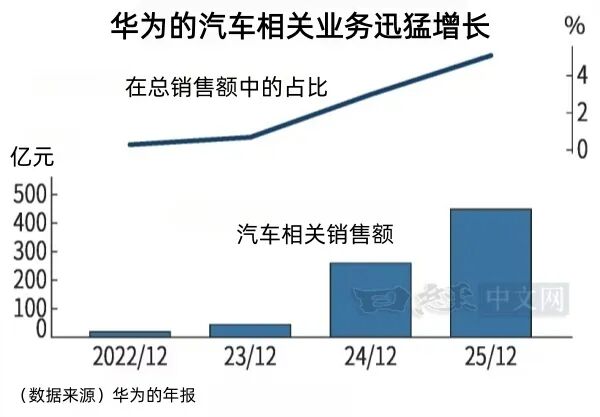
More than four years have passed since then, and Huawei's automotive business has continued to grow on the following three pillars. One is the supply of components like Denso in Japan and Bosch in Germany; the second is the provision of systems such as autonomous driving, in the form of vehicles marked with "Huawei Inside (HI)"; the third is the Harmony Intelligent Mobility model responsible for design, sales, etc. In the fiscal year 2025 (ending in December 2025), the sales of Huawei's automotive components and software increased by 72% year - on - year, reaching 45 billion yuan.
Regarding this enterprise that can almost independently complete all automotive - related links except manufacturing, Andrew Bergbaum, the managing director of the US company AlixPartners, said: "Huawei is now called Tier 0.5." This means that Huawei's position has exceeded that of traditional "Tier 1 (first - tier component suppliers)", and the industrial chain effects it brings can no longer be ignored.
One of the impacts is that Huawei is gradually becoming a "safe haven" for state - owned automobile manufacturers and mid - tier automobile enterprises that are at a disadvantage in the competition with leading automobile enterprises such as BYD. At the Beijing Auto Show, many executives of automobile - related enterprises and consulting professionals talked about this phenomenon.
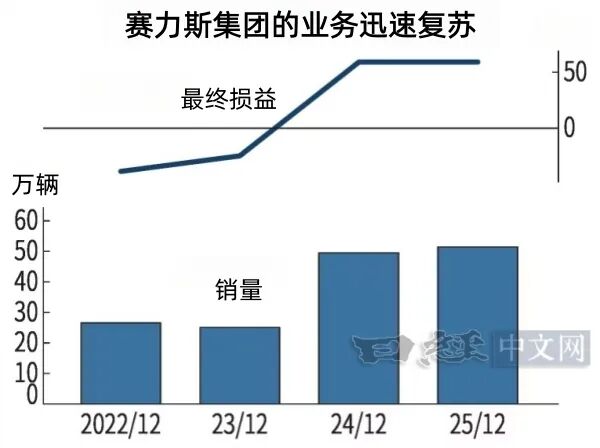
For example, since 2023, Seres Group has been in charge of the popular family - oriented brand "AITO" under Harmony Intelligent Mobility. The annual report shows that in the fiscal year 2022, Seres' sales volume was less than 270,000 units, resulting in a final loss of 3.8 billion yuan. In the fiscal year 2025, the sales volume exceeded 510,000 units, resulting in a final profit of 5.9 billion yuan, achieving a V - shaped recovery. More than 80% of the sales volume comes from AITO.
Although it is beneficial for a single automobile enterprise, the situation is different when considering the entire industry. The Chinese automotive market has long been in excessive competition due to the clustering of brands. According to data from AlixPartners, in 2025, there were as many as 23 new brands in the new energy vehicle field, while only 9 brands exited. The emergence of Huawei, this powerful behind - the - scenes promoter, has, to some extent, become a "life - sustaining device" to maintain the state of brand over - supply.
Against the backdrop of Huawei's comprehensive layout in multiple fields, there are competitors emerging in each field, which is also a notable change. In the field of autonomous driving software, the emerging enterprise Beijing Momenta, which cooperates with automobile enterprises such as Toyota, is developing rapidly. In the semiconductor field, Horizon Robotics, which focuses on system - on - a - chip (SoC) for applications such as autonomous driving, has shown particularly significant growth, and its market share is second only to Mobileye in Israel.
Huawei continuously invests a huge amount of funds equivalent to about 20% of its sales in R & D. In 2025, its R & D investment converted into Japanese yen has reached about 4.4 trillion yen. Although the executives of competing enterprises unanimously praise Huawei's technological strength, they also said that they are closer to customer enterprises and can respond to various needs in detail. Their words reveal concerns of automobile manufacturers about Huawei taking the industry's dominant position.
On the other hand, while Huawei is restricted by factors such as US sanctions, enterprises that form an opposing camp generally have a strong willingness to expand overseas.
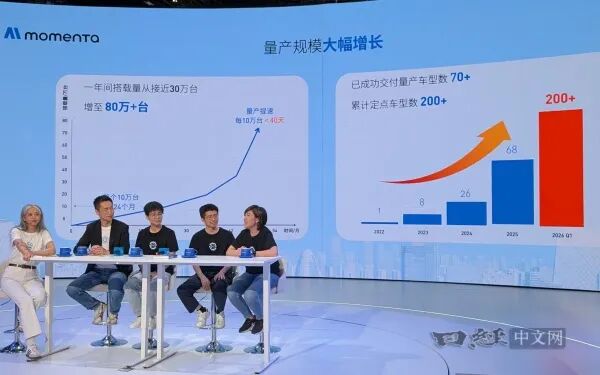
Cao Xudong (second from the left), CEO of Beijing Momenta, interprets the business expansion plan at a press conference (April 25, Beijing, China)
In the general impression of the outside world, the technology of Beijing Momenta is mainly equipped on the models of Chinese and foreign automobile enterprises in China. However, Sun Huan, the senior vice - president of the company, revealed at a press conference on April 25 that their services have been adopted in more than a dozen countries such as the UK. At the booth of Horizon Robotics, the results of cooperation with enterprises such as Bosch and ZF, a German automotive component manufacturer, are also on display.
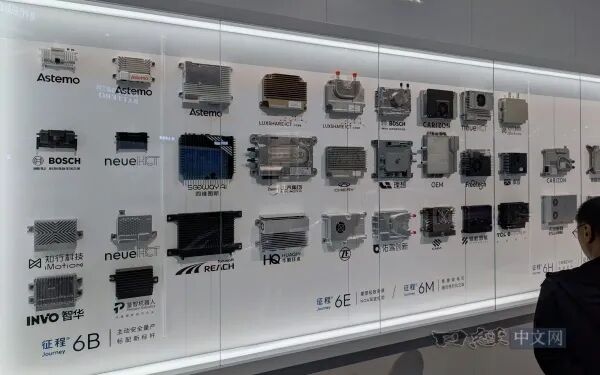
In addition to cooperating with Chinese enterprises, Horizon Robotics has also strengthened its cooperation with European component enterprises (April 27, Beijing, China)
The frequent appearance of Europe in the service - covered areas and the locations of cooperation enterprises is probably not a coincidence. According to survey data from S & P Global Mobility and others, in 2025, the sales volume of Chinese cars in Europe increased by 7% year - on - year, reaching 2.3 million units. In the same period, the sales volume of Japanese cars in Europe decreased by 9% year - on - year, only 2.07 million units, being overtaken by Chinese cars. What lies behind this is the different relationship between Europe and China compared with that between the US and Japan.
Under the extension of this trend, one foreseeable scenario is that while China and Europe are strengthening their connections, they will also expand their influence by formulating automotive industry standards. Large European component manufacturers such as Bosch, Continental, and ZF have always cooperated with automobile enterprises in an integrated manner and dominated the formulation of industry standards.
The unique presence of Huawei at the Beijing Auto Show reflects a reality: US sanctions have given rise to a powerful behind - the - scenes promoter in the automotive industry and stimulated its competitors. Whether we like it or not, we can no longer simply regard the Chinese automotive industry as a "huge Galapagos Island." The issue faced by countries including Japan is how to get along with such a China.
This article is from the WeChat official account "Nikkei Chinese Net" (ID: rijingzhongwenwang), author: Aihara Kazuyuki. It is published by 36Kr with authorization.