Smart home appliances are about to have their true nature exposed.
Frequent complaints about smart home appliances reflect that during the wild growth stage of the entire home appliance industry in the past few years, too many brands regarded "connecting to Wi-Fi" as the whole of intelligence or "touch screen" as a symbol of intelligence. However, in real daily life, these products are not only difficult to use but also prone to malfunctions.
Recently, the news that all Hema X membership stores are about to close down has become a hot topic on the Internet. It is reported that in July alone, Hema X membership stores in Beijing, Suzhou, and Nanjing have successively announced their closures, and the last store in Shanghai Senlan also announced that it will close on August 31.
After a decade of advocating the concept of whole - house smart home, someone has finally come to set the rules.
At the end of last year, the State Administration for Market Regulation approved and issued two national standards for smart home appliances, which systematically defined smart home appliances from two dimensions: intelligent capabilities and application scenarios. These two national standards officially came into effect on May 1, 2026.
Unconsciously, smart home appliances have been in the Chinese market for more than a decade, and the smart home has long entered the "popularization period" from the "trial - period". Home appliance manufacturers are eager to label all products as "smart", but most consumers still have only a vague understanding of what "smart" means.
Therefore, the implementation of the two national standards for smart home appliances has set rules for the smart home market for the first time and exposed the "pseudo - smart" nature of some products, which has naturally won the applause of consumers.
However, for the entire home appliance industry, this is just the first step. What follows are the questions that the whole industry is still exploring: Are smart home appliances just a gimmick or a real necessity? How can smart home integrate into daily life? And what consumers most want to know is how far are we from the future depicted in science - fiction movies?
Are smart home appliances not smart?
The concept of smart home originated in the 1980s. However, Chinese consumers could directly perceive this concept only after the smart speaker war nine years ago.
In 2017, big companies such as Alibaba, Baidu, and Xiaomi targeted the smart home as a traffic entry point and launched their own smart speaker products. Users could control devices with just one sentence, which became the initial impression of smart home appliances for most consumers.
However, according to the requirements of the new national standards, such smart home appliances are obviously not "smart" enough.
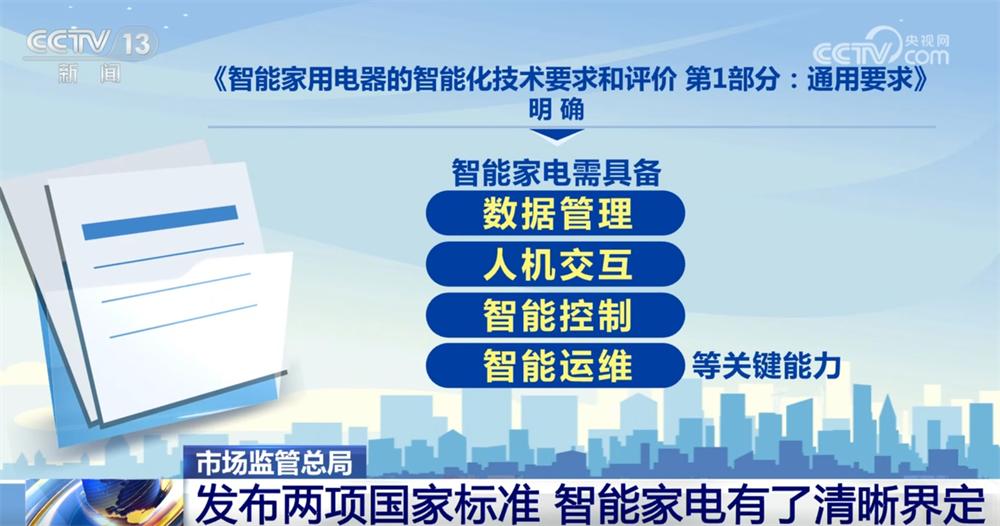
According to the two new national standards, "Technical requirements and evaluation for the intelligence of smart household appliances - Part 1: General requirements" and "Application scenarios of smart household appliances - Part 1: General requirements", smart home appliances must have four core capabilities: data management, human - machine interaction, intelligent control, and intelligent operation and maintenance, and a five - level intelligent rating system from L1 to L5 is established:
L1 requires the device to have basic networking capabilities; L2 requires the device to have basic environmental perception capabilities;
L3 is the minimum threshold for "whole - house smart home". L3 requires the device to be able to recognize different home scenarios and match corresponding usage logic; L4 supports the linkage of multiple devices in the whole house on the basis of L3.
L5 is more like a "science - fiction scenario" in the future coming into reality. It requires the device to have the thinking ability of independent judgment and behavior prediction and be able to achieve active intelligence at the household level without specific instructions.
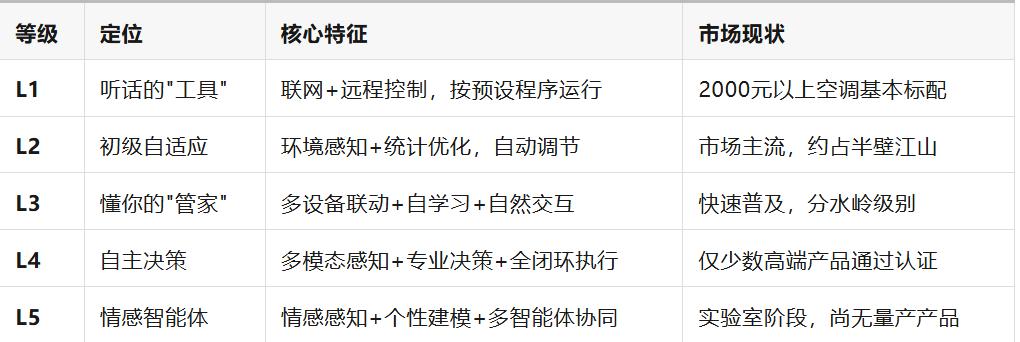
Judging from this standard, not only were the smart speakers nine years ago not "smart" at all, but most of the smart home appliances in consumers' homes today are also "pseudo - smart" products.
According to a survey report released by the Jiangsu Provincial Consumer Protection Committee, it selected multiple popular smart home appliance products for investigation. Among them, the complaints about sweeping robots/floor scrubbers accounted for 47.76%, smart washing machines accounted for 34.60%, and smart door locks accounted for 28.12%.
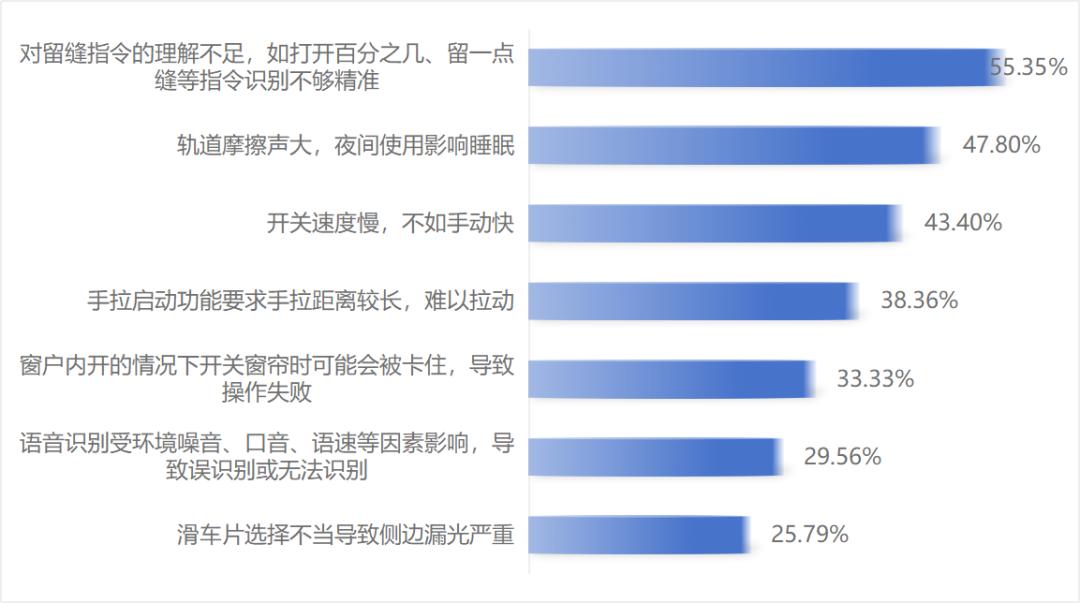
Many consumers mentioned the "pseudo - smart" phenomenon of smart products. More than 50% of the respondents thought that the fully automatic experience of smart cooking machines was not as good as it was claimed; more than 55% of the respondents reported that smart curtains could not understand refined instructions such as "open by a certain percentage"; more than 55% of the respondents pointed out that the washing programs of smart washing machines were chaotic and prone to system crashes.
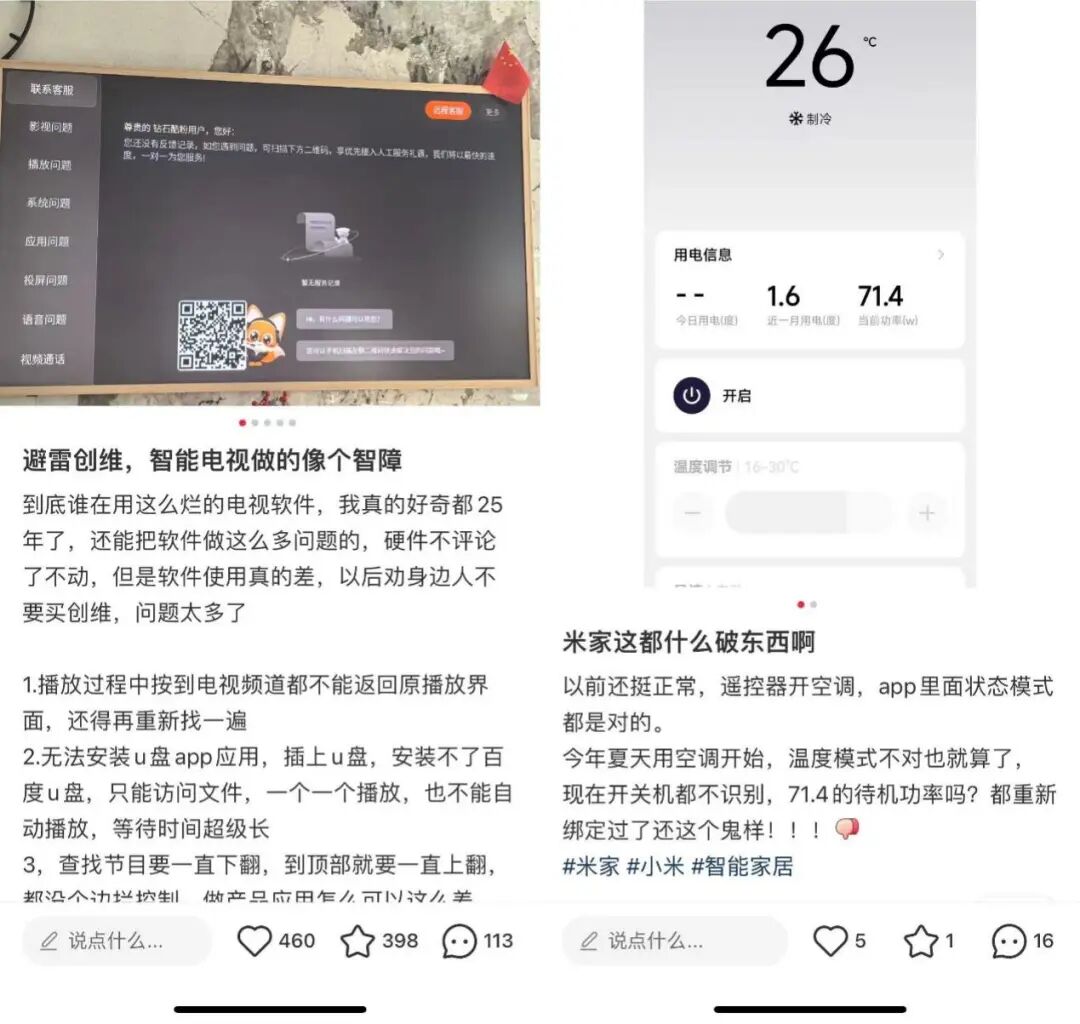
On social platforms, many consumers also deeply agree: Some consumers said that they dared not buy smart touch - screen products, describing such home appliances as essentially traditional home appliances, with the smart touch - screen being just a gimmick and prone to malfunctions;
Some consumers also said that there was a large gap between the "intelligence" of some smart home appliances and the promotional effects, and that manufacturers' forced introduction of smart functions was simply "making trouble".
Frequent complaints about smart home appliances reflect that during the wild growth stage of the entire home appliance industry in the past few years, too many brands regarded "connecting to Wi-Fi" as the whole of intelligence or "touch screen" as a symbol of intelligence. However, in real daily life, these products are not only difficult to use but also prone to malfunctions.
But after advocating the concept of "smart home" for so many years, why is the actual experience still disappointing?
No AI, no home appliances?
This brings us back to a core question: Do consumers need smart home appliances, or do home appliance manufacturers need them?
At present, it seems that home appliance manufacturers are more eager than consumers.
Under the wave of AI, the "intelligence" of the home appliance industry has taken a further step in the past two years. At the AWE 2026 (China Household Appliances and Consumer Electronics Expo), leading manufacturers almost collectively "went all in on AI".
Haier launched the "AI Eye 2.0", and its refrigerators can automatically identify ingredients and thoughtfully recommend recipes; Midea's air conditioners are equipped with an L5 - level intelligent voice interaction system, which can realize context memory and multi - round conversations and provide proactive services.
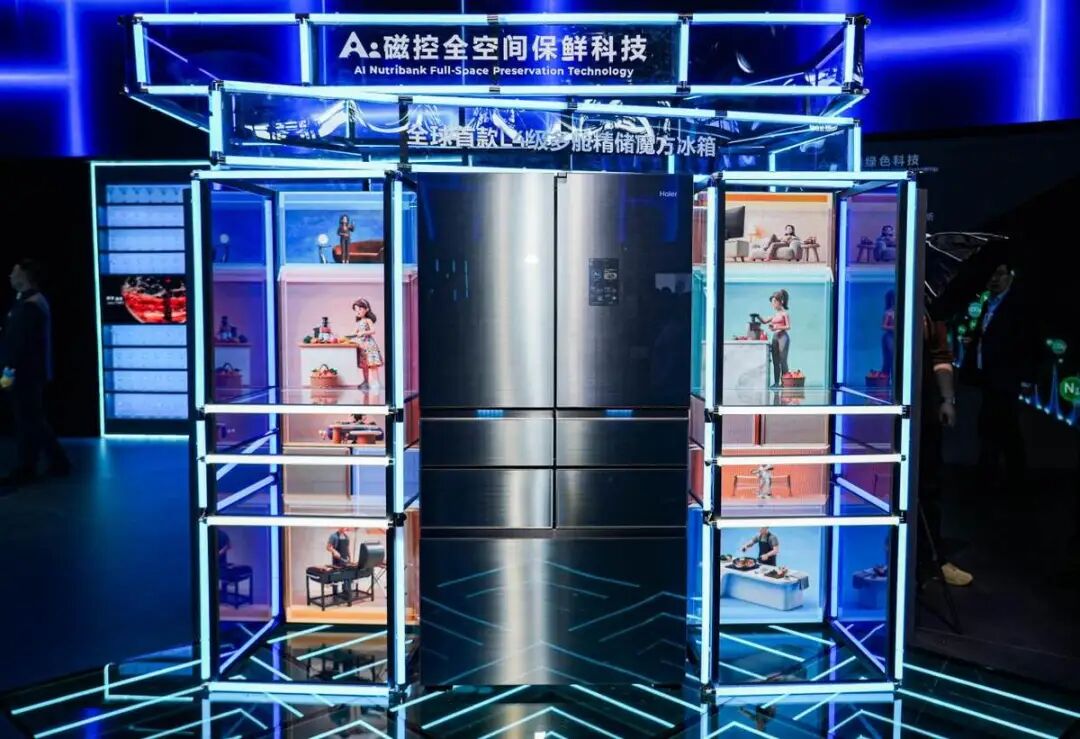
In addition to traditional home appliance giants, Xiaomi launched the Xiaomi Miloc whole - house smart home solution driven by a large - scale model; Huawei launched the "1 + 3+N" full - scenario smart home solution.
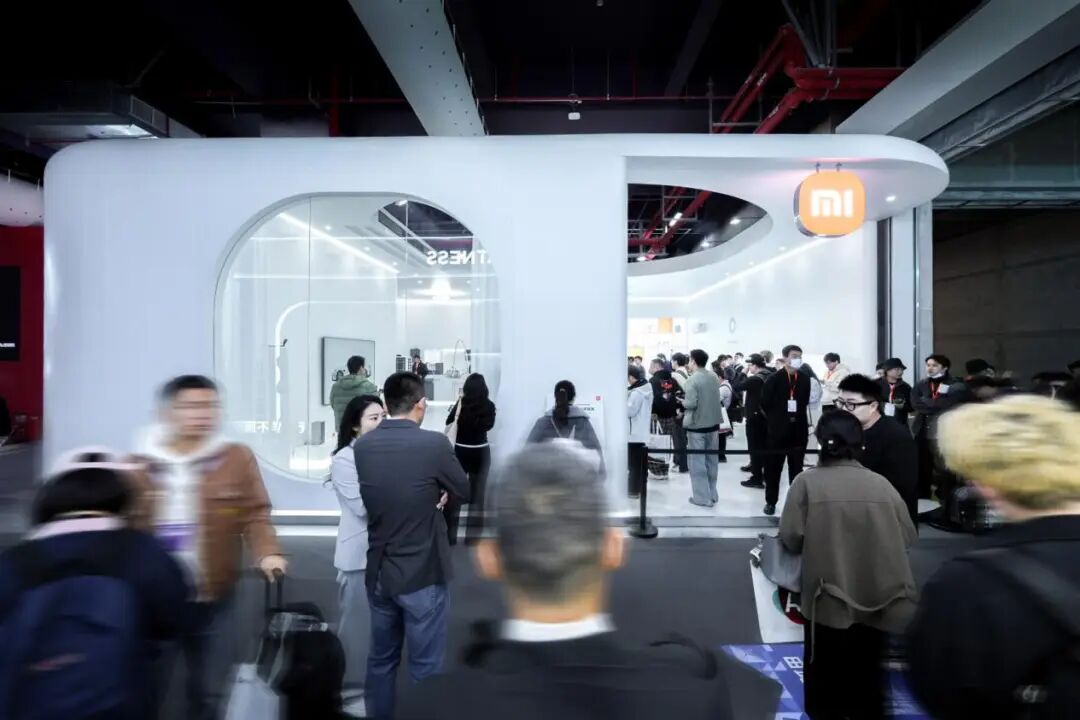
Behind the AI arms race in the home appliance industry is the deep anxiety of the industry.
The home appliance manufacturing industry has entered a bottleneck period, and the industry growth has slowed down. There is less "cake" to divide, so home appliance manufacturers have to find ways to stimulate sales.
The "price war" is indeed a powerful measure, but it is a double - edged sword and not a long - term solution. Smart home appliances have become a new way for home appliance manufacturers to get out of the low - price quagmire.
First of all, the national subsidy policy clearly supports six categories of home appliances and four categories of digital smart products. For home appliance manufacturers, the era of low - price and high - volume sales is over, and seizing the policy dividends to break through is a better solution.
Secondly, the simple hardware competition has reached an extreme. The technical threshold of home appliance products is not very high, and China's home appliance supply chain is particularly developed. It is difficult to make a big difference in performance and experience among home appliance products.
In this deadlock, the ever - changing intelligent functions have naturally become a more attractive marketing selling point.
Moreover, smart home appliances can break the "one - time deal" model of traditional home appliances. Through IoT, users can be retained in their own brand ecosystem. As long as users buy a smart single product, they will purchase more other products because of the ecological linkage.
Finally, the premium space for smart home appliances is also considerable. According to a report in the Beijing Sub - center Times, a reporter searched major e - commerce platforms and found that compared with ordinary home appliances, the selling price of AI home appliances was almost doubled.
The price of a 1.5 - horsepower AI air conditioner is 4,999 yuan, while the price of an ordinary air conditioner of the same brand is about 2,600 yuan; the selling price of an 85 - inch AI TV is as high as 8,999 yuan, while the lowest price of an ordinary TV of the same brand and size is 4,999 yuan.
It is difficult for traditional home appliances to tell "new stories", and the smart home has become a new growth engine.
This new "cake" is very attractive and has attracted more players to enter the market, including three types of players: technology giants, traditional home appliance giants, and small and medium - sized home appliance brands, and their strategies are different.
Technology giants represented by Xiaomi and Huawei mainly reflect their intelligent capabilities in defining smart experiences with software and then driving hardware to access their ecological systems. Different devices can achieve data sharing and function linkage, forming an ecological closed - loop.
Compared with traditional home appliance enterprises, the advantage of technology giants lies not in single products but in the continuously accumulated ecological stickiness - the more ecological products users buy, the higher their migration costs will be.
Moreover, technology giants will also use their more familiar Internet strategies. They can make less money from hardware. As long as users are retained in their own ecosystems, they can continuously accumulate data, which can in turn support other ecological businesses of the giants.
Traditional home appliance giants represented by Midea and Haier have an advantage in their deep hardware manufacturing genes. They can reconstruct the design logic of home appliances from the bottom up, creating different smart home scenarios and changing from "selling products" to "selling scenarios".
However, compared with technology giants, traditional home appliance giants still have deep moats in terms of brand effect, hardware manufacturing, and distribution networks, which technology giants cannot match in the short term.
The most embarrassing type of players are small and medium - sized home appliance brands that survive in the cracks. They neither have the ecological advantages of technology giants nor the manufacturing advantages of home appliance giants. "Intelligence" is more like a gimmick and may not be sustainable in the long run.
How far is it from whole - house smart home?
It is not difficult to see that technology giants and traditional home appliance giants are likely to become the main players in the smart home market. They each have their own advantages and are in a fierce competition.
According to IDC data, in 2024, the shipment volume of smart home devices in China reached 530 million units. Xiaomi ranked first with a 38% market share, followed by Haier Smart Home (31%) and Huawei (19%). The share gap between the top two, Xiaomi and Haier, is not large.
However, the explosion period of smart home appliances has just begun, and this competition is far from over.
According to the prediction of the Yiou Think Tank, the scale of the Chinese smart home market is expected to exceed 800 billion yuan in 2025; the China Research and Consulting Institute predicts that the scale of the Chinese smart home market is expected to exceed 2.3 trillion yuan in 2030, with a compound annual growth rate of more than 20%.
At present, the levels of most smart home players are similar.
According to the new national standards, the intelligent capabilities of various players are generally still at the L2 - L3 level, that is, they can achieve scenario linkage and limited proactive services, and there is not much difference in the overall experience.
It has taken nearly a decade for the smart home to develop from L1 to L3. Will it take another decade to truly reach the L5 - level intelligent level? At present, there may be more than one challenge.
The reason why the first - generation smart home had a low "intelligence quotient" was mainly limited by sensor technology and algorithm logic. Take smart speakers as an example. They only perform simple voice interactions through microphones and have limited perception of the real world.
However, with the support of high - performance chips, advanced sensors, and AI algorithms, today's smart home appliances have begun to have simple judgment capabilities. However, to truly have the thinking ability of behavior prediction, the "brain" of the large - scale model needs to continue to iterate.
However, the biggest challenge to truly realizing the whole - house smart home is the ecological barrier.
At present, in the smart home linkage, each brand basically forms its own camp, and no one is willing to share their users and data, resulting in the inability of cross - brand devices to communicate. If this problem cannot be solved, the real whole - house smart home will be out of the question.
The good news is that the attitudes of various players have begun to loosen.
In April this year, led by the GIIC Global Smart IoT Alliance, home appliance enterprises such as Haier, Midea, Hisense, and TCL, and industrial partners such as Huawei, Shanghai HiSilicon, and China Mobile jointly participated in the formulation of the "Series of Standards for Unified Interconnection of Smart Homes", which has been officially released.
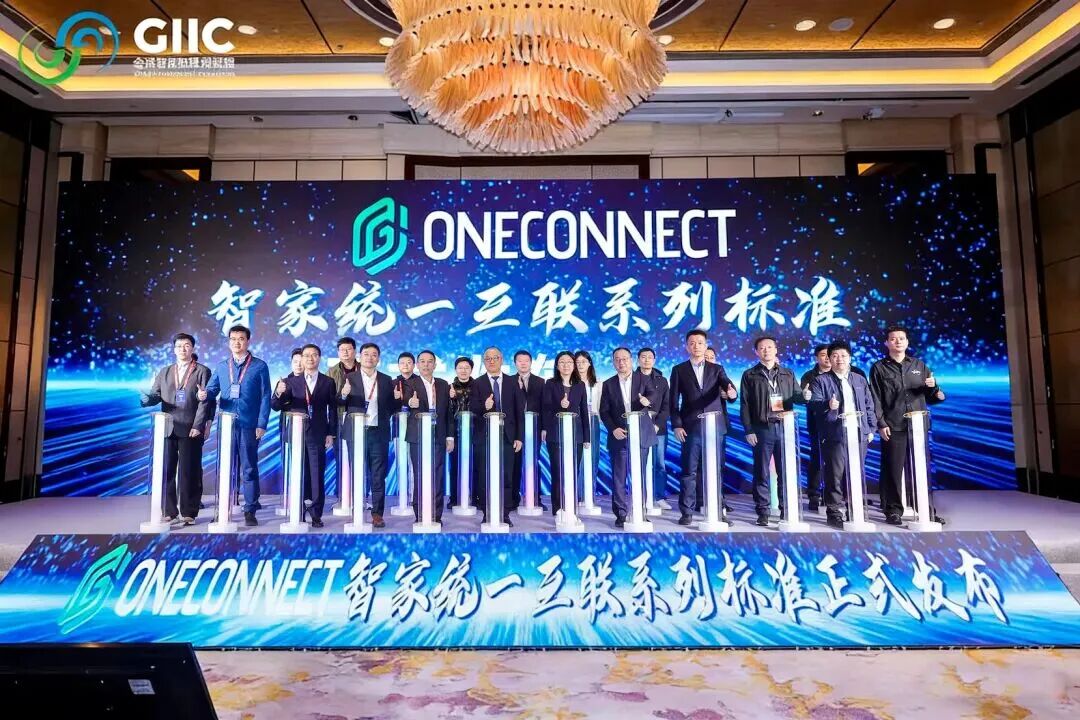
From the upgrade of smart technology, to the implementation of the new national standards for smart home appliances, and then to the release of the interconnection standards, we have taken a big step towards the real whole - house smart home.
However, the more mature the market is, the greater the challenges will be.
When the entire home appliance industry is competing around intelligence, each enterprise must also honestly answer a question