Zhiyu Aerospace has secured an angel round of funding, and an electric pump player has entered the small and medium rocket market.
On May 14, 2026, Zhiyu Aerospace announced the completion of tens of millions of yuan in angel - round financing, led by Minyin International, with Century Huatong, Songhe Innovation, and Beidou Group participating.
In the commercial rocket track, Zhiyu Aerospace is still a new name. Public information shows that the company was established in July 2025 and received seed - round financing from Miracle Plus in December 2025, completing two rounds of financing within half a year.
It labels itself as small and medium - sized launch vehicles, liquid oxygen methane, electric pump cycle, and recyclable and reusable.
Where does this company come from? Is the electric pump cycle route reliable? What position does it hold compared with other rocket manufacturers at home and abroad? After the financing, which key points should we really focus on?
These are the questions to be discussed in this article.
Young Team, First Develop the Engine
The team of Zhiyu Aerospace is very young.
The founder, Zhang Zihan, was born in 2003. He is an undergraduate student majoring in Aerospace Engineering at the Hong Kong Polytechnic University. Currently, he serves as the founder, CEO, and CTO of Zhiyu Aerospace Technology (Hunan) Co., Ltd.
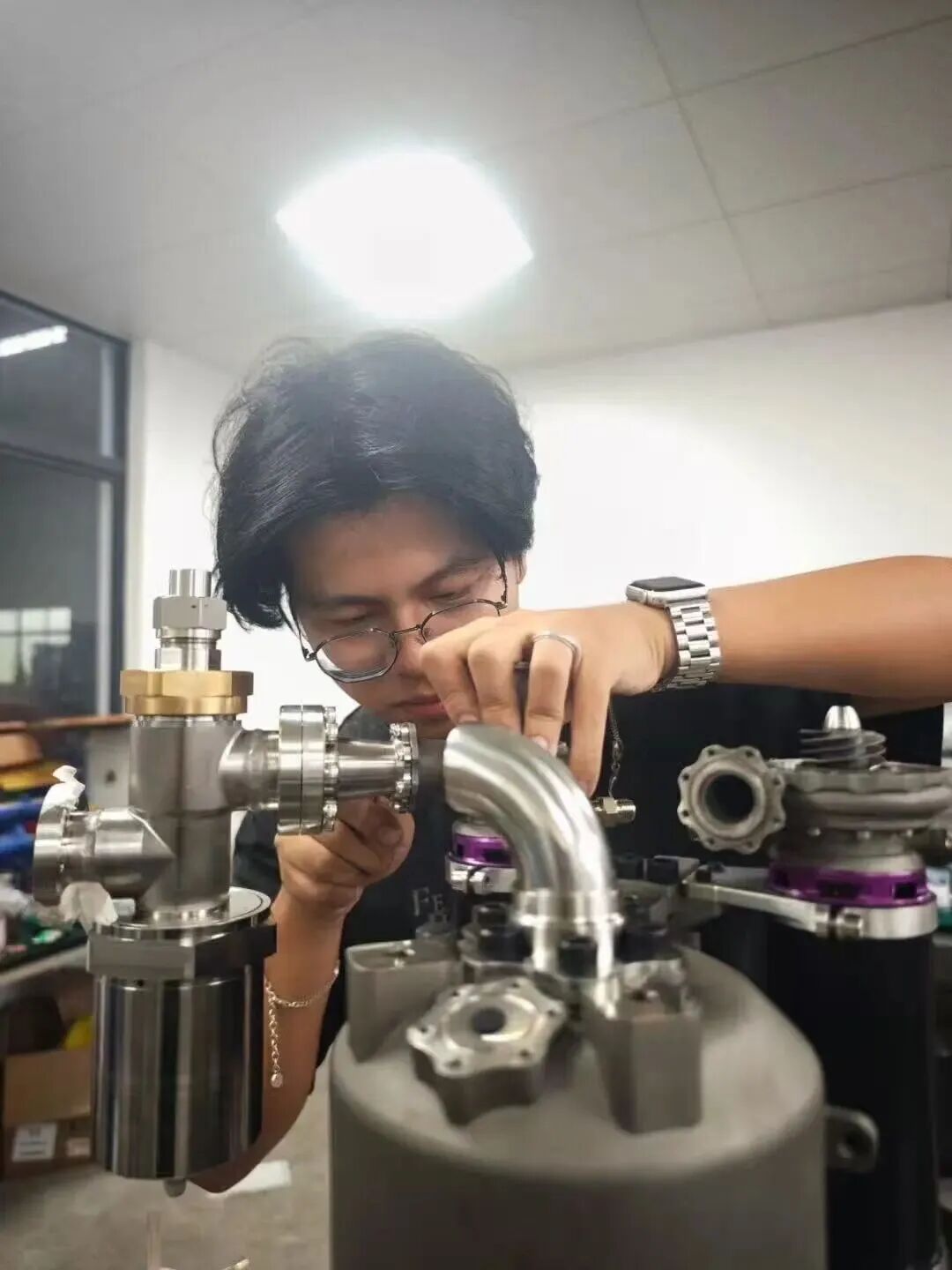
Zhang Zihan, the founder of Zhiyu Aerospace
According to the public introduction, he has won more than ten national and international science and innovation awards and is the first inventor of three national invention patents in the aerospace field. After completing his high - school studies ahead of schedule, he started preparing for entrepreneurship during his university years. The project was initiated in October 2024, and the company was officially established in Zhuzhou, Hunan in July 2025.
From his experience, Zhang Zihan did not enter the aerospace field simply based on concepts. His background mainly focuses on aerospace engineering and liquid rockets.
He has participated in the research and development of turbopumps and thrust chambers in commercial aerospace enterprises such as Galaxy Dynamics and has had early engineering contact with liquid rocket engines. This also explains why Zhiyu Aerospace put the engine at the core from the beginning.
The early - stage team of Zhiyu Aerospace is not large. The core team consists of Zhang Zihan and three classmates from the Hong Kong Polytechnic University, and the total number of people has been controlled within 10 for a long time. Most of the team members are college students or young graduates. The organization mode is relatively lightweight, emphasizing flat collaboration and rapid progress.
This type of team has an obvious characteristic, that is, a short decision - making chain and fast action. The company's public materials state that the team broke through the bottleneck of multi - operating - condition control of the liquid oxygen methane engine within 6 months and completed the process from engine design to cold test within 8 months.
These progress indicate that Zhiyu Aerospace's current R & D focus is very concentrated, which is to advance around the TRON - 001 engine and the Fission - A rocket.
The company finally settled in Zhuzhou, which also provides an industrial environment for early - stage R & D.
Zhiyu Aerospace Technology (Hunan) Co., Ltd. was established on July 1, 2025, mainly engaged in the R & D of liquid oxygen methane electric pump engines and recyclable Fission rockets.
Previously, Zhiyu Aerospace Technology (Shenzhen) Co., Ltd. was registered and established in October 2024, and later the business focus shifted to Zhuzhou. The company's settlement is related to industrial services such as the "Beidou Cup" innovation and entrepreneurship competition in Zhuzhou, local venue support, talent apartments, and financing docking.
Two Product Directions
The market chosen by Zhiyu Aerospace is not the most popular line for large rockets.
From public information, it focuses on the exclusive launch of small and medium - sized satellites in near - polar orbits, low - inclination orbits, and sun - synchronous orbits, trying to solve problems such as long car - pooling cycles, difficult coverage of special orbits, and high launch costs.
For many small - satellite customers, car - pooling launches are low - cost, but the costs are also obvious. They have to wait for the launch time, the orbit arrangement has to follow the main payload, and the orbit height and inclination may not fully match the mission requirements. If the satellite is built but a suitable launch window cannot be found, the project progress will be delayed.
What Zhiyu Aerospace wants to do is the exclusive launch of small payloads. Simply put, it turns the small - satellite launch from waiting for a car to hailing a car.
It has currently disclosed two product directions. The most critical one at present is the Fission - A. The rocket body is 24 meters high and 1.6 meters in diameter, with a LEO carrying capacity of 450 kg and an SSO carrying capacity of 300 kg. It is positioned as a small and medium - sized rocket with a recyclable and reusable first - stage.
The Fission - B is planned to use the TRON - 002 gas - generator cycle engine, targeting payloads below one ton.
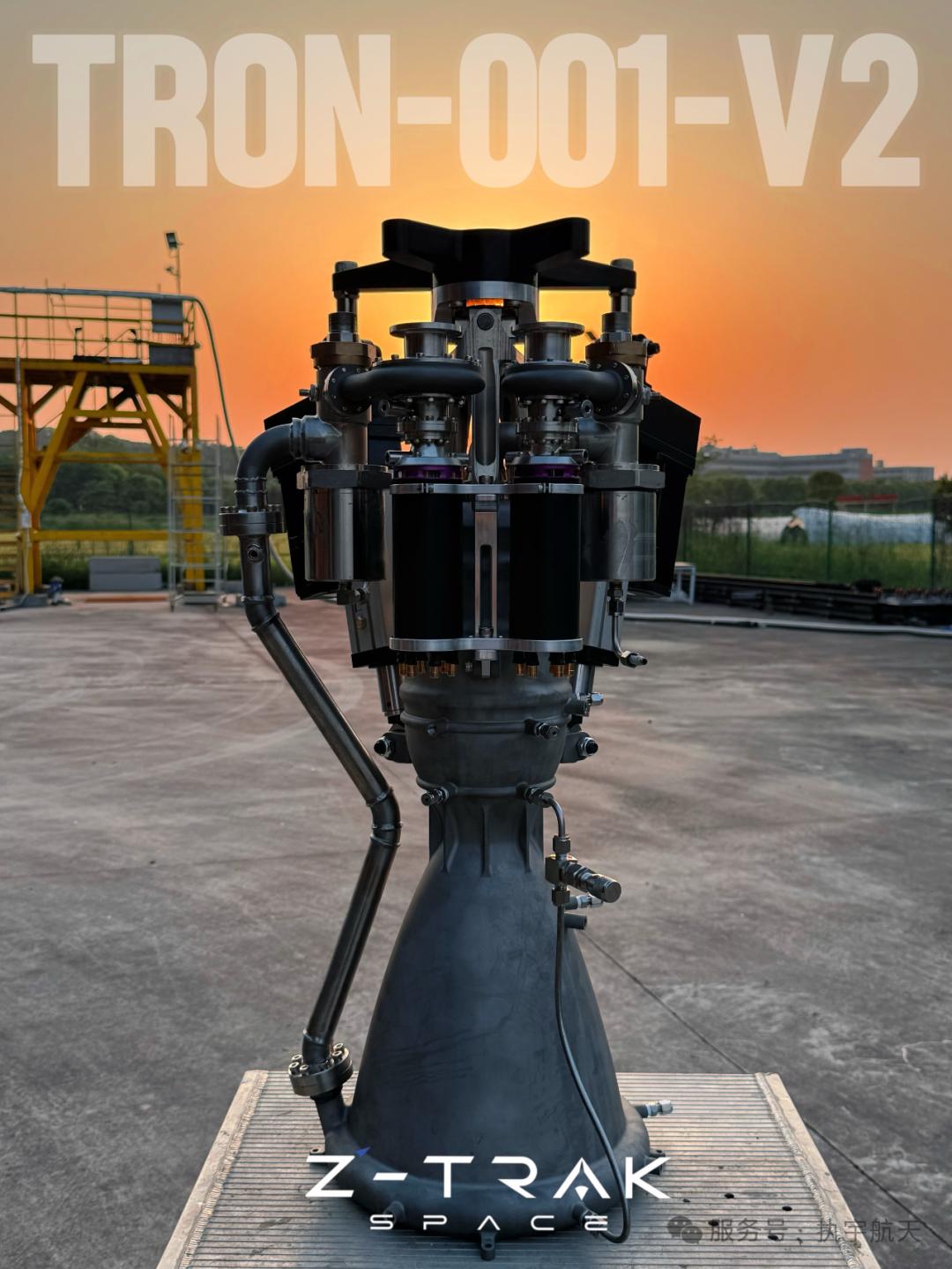
In the long term, there is also the Fusion, which is planned to be an 80 - to 100 - ton super - heavy recyclable rocket, and is planned to be equipped with a 180 - ton full - flow staged - combustion cycle engine.
Here, we need to cool down a bit.
For a rocket company that has been established for less than a year, the long - term super - heavy rocket can be regarded as a technological ambition. What Zhiyu Aerospace needs to achieve now is the Fission - A and the TRON - 001 engine.
The Calculation of the Electric Pump Cycle
The most core technological label of Zhiyu Aerospace is the electric pump cycle liquid oxygen methane engine.
According to the company's public materials, the TRON - 001 Hantian engine adopts the electric pump cycle scheme, with the propellant combination of liquid oxygen methane. It has a sea - level thrust of 3.2 tons, a vacuum thrust of 3.7 tons, a maximum specific impulse of 345 seconds, and a thrust adjustment range covering 18% to 105%.
This engine will serve as the core power of the Fission - A rocket, and the company claims that it can meet the deep - throttling requirements of the ascent and recovery landing phases.
The logic of the electric pump cycle is not complicated.
Traditional liquid rocket engines usually rely on turbopumps to send propellants into the combustion chamber. The turbopump system has strong capabilities, but it is difficult to develop and has high requirements for turbomachinery, sealing, thermal management, and control systems. The electric pump cycle changes the idea and uses motors, batteries, and pumps to transport propellants.
Its advantage is that the system is relatively simple, the R & D chain is shorter, and the test iteration may be faster. For early - stage rocket companies, this is an attractive path.
But there is also a cost. Motors, batteries, and electronic control systems all have weight. The larger the rocket, the more obvious the impact of this part of the weight on the carrying capacity. So the electric pump cycle is naturally more suitable for small and medium - sized rockets. Zhiyu Aerospace's entry into the exclusive launch of small and medium - sized satellites is in line with this technological route.
Liquid oxygen methane is also an important choice.
Methane combustion is relatively clean, and the carbon - deposition problem is relatively mild. In theory, it is more suitable for reuse. Many domestic commercial rocket companies have regarded liquid oxygen methane as an important direction for recyclable rockets.
The characteristic of Zhiyu Aerospace is to put liquid oxygen methane, electric pump cycle, and small and medium - sized recyclable rockets into the same scheme.
This combination has room for imagination.
Small and medium - sized rockets are suitable for electric pumps, liquid oxygen methane is suitable for reuse, and deep throttling is related to recovery and landing. Putting these conditions together, it makes sense logically.
Next, we need to look at the test data.
Can the TRON - 001 complete a stable full - operating - condition hot test?
Can the thrust adjustment range of 18% to 105% be stably achieved in engineering?
Can deep throttling meet the requirements of recovery and landing?
Will the battery weight significantly squeeze the carrying capacity?
Is the maintenance cost controllable after the engine is reused?
These questions need to be answered.
The route is just the starting point. The rocket industry ultimately depends on the engineering closed - loop.
Why Enter the Exclusive Launch of Small and Medium - Sized Satellites?
The exclusive launch of small and medium - sized satellites is not a false demand.
In the past few years, the number of remote - sensing satellites, communication test satellites, and technology verification satellites has been increasing. Many satellites are not large in size, but they have their own requirements for orbits and time windows.
When a remote - sensing constellation needs to fill the network, a test satellite needs to meet the verification cycle, or a special - orbit mission needs to enter a specified inclination, car - pooling may not always meet the requirements.
This is the market basis for small exclusive rockets.
What it sells is not just a low price, but also certainty. Customers pay for a more definite launch time, a more suitable orbit, and a more controllable mission rhythm.
But this market is not that easy.
If the frequency of multi - satellite launches and car - pooling launches of medium - and large - sized rockets continues to increase and the price continues to drop, small rockets will face strong price pressure.
Customers will ultimately calculate the overall account. None of the factors such as time, orbit, price, and reliability can be too bad.
According to public materials, Zhiyu Aerospace has locked in 26 satellite launch intention orders, covering scenarios such as near - polar orbits, low - inclination orbits, and sun - synchronous orbits. The customers include Xinghuo Chuanming, Saide Leite, AmpLord, etc.
Where Does It Stand in the Horizontal Comparison?
The position of Zhiyu Aerospace can be viewed through three groups of comparisons.
The first group is Rocket Lab.
Rocket Lab's Electron rocket has proven that there is a market for small exclusive launches. For some small - satellite customers, entering the specified orbit on time is more important than simply pursuing the lowest launch price.
The similarity between Zhiyu Aerospace and Rocket Lab lies in that they both target small and medium - sized payload missions and value the flexibility of exclusive launches.
The difference is that Rocket Lab first achieved commercial launches of small rockets and then gradually explored recovery; Zhiyu Aerospace wrote recyclability and reusability into the product definition from the beginning and also chose the liquid oxygen methane electric pump cycle route.
This path is more radical. If it succeeds, the differentiation will be stronger; if it fails, the problems will be exposed earlier.
The second group is domestic medium - and large - sized commercial rocket companies.
Companies such as LandSpace, Tianbing Technology, iSpace, and CAS Space are more focused on the development of medium - and large - sized liquid rockets and recyclable capabilities. They are targeting the future demand for low - orbit constellations, remote - sensing constellations, and batch launches. The core competitive points are greater carrying capacity, higher frequency, and lower unit cost of orbit insertion.
The currently disclosed Fission - A of Zhiyu Aerospace has a LEO carrying capacity of 450 kg and an SSO carrying capacity of 300 kg, which is not in the same tonnage range.
This allows it to avoid some direct competition but also limits the short - term market ceiling. Small and medium - sized rockets can perform flexible launches, but it is difficult for them to undertake the main transportation tasks of large - scale constellation networking.
What it needs to prove is not that it can carry more than large rockets, but whether the exclusive launch of small payloads can form a high - frequency, stable, and profitable business.
The third group is companies with differentiated routes.
Qianyi Aerospace bets on the ADHL aerodynamic deceleration - horizontal landing route, trying to challenge the mainstream vertical recovery in terms of recovery methods.
Previously, Xingdong Wuji analyzed that the differentiated routes ultimately need to be tested by indicators such as unit cost of orbit insertion, recovery success rate, number of reuses, overhaul cycle, payload loss, launch rhythm, and customer acceptance.
The route of Zhiyu Aerospace is different from that of Qianyi Aerospace, but the evaluation methods are the same. The labels of electric pump cycle, liquid oxygen methane, and small and medium - sized recyclable rockets can create recognition and help it stand out from the mainstream narrative.
After the Financing, Look at Four Key Points
After Zhiyu Aerospace completed the angel - round financing, we need to see if it can meet the key points.
The first key point is the engine.
Public information shows that the TRON - 001 completed its first full - system hot test at the end of January 2026, and the subsequent 100% full - system hot test is in progress.
The first hot test is just a ticket, not the end. Next, we need to look at the full - operating - condition stability, deep throttling, repeated ignition, long - range test, and consistency of multiple engines. For a recyclable rocket, the engine not only needs to send the rocket into space but also complete stable adjustment during the return phase. This is more difficult than for a single - use rocket.
The second key point is the scaled - down test rocket.
The company plans to complete the low - altitude VTVL test flight of the scaled - down test rocket in 2027. The VTVL test flight needs to verify engine throttling, attitude control, navigation and guidance, landing algorithms, and system coordination. Whether the rocket can take off, hover, descend, and land directly affects the credibility of first - stage recovery.
The third key point is the first orbital flight.
According to the company's plan, the Fission will achieve its official first orbital flight between 2028 and 2029.
We should not be overly optimistic about this schedule. Delays in rocket development are common, especially for new companies that need to build engines, rocket bodies, control systems, test capabilities, supply chains, and launch service capabilities simultaneously. Any problem in any link will affect the progress of the whole rocket.
The fourth key point is the conversion of orders.
The 26 satellite launch intention orders have communication value, but the real commercialization depends on formal contracts, payment schedules, launch schedules, and performance capabilities. A plan scheduled for 2037 has a long time span and many variables.
For an early - stage rocket company, the intention customers can prove market attention, but the realization of revenue has to wait for the maturity of the launch capabilities.
Zhiyu Aerospace is worthy of attention because it does not follow the most popular mainstream path.
The combination of the exclusive launch of small and medium - sized satellites, the electric pump cycle liquid oxygen methane engine, and recyclability and reusability gives it a clear position.
This position is not large, but it is specific enough. For a new company, being specific is more important than being grand.