Tencent, integrating AI into everything
Text by | Wang Yuchan
In Q1 2026, everything at Tencent was related to AI.
In the first quarter, Tencent's revenue reached 196.46 billion yuan, a year - on - year increase of 9%; Non - IFRS operating profit was 75.63 billion yuan, also a year - on - year increase of 9%. Generally speaking, the high investment in AI did cause the Non - IFRS operating profit to drop from what should have been a double - digit growth to a single - digit growth.
The financial report shows that if the impact of revenues, costs, and expenses of new AI products (Hy, Yuanbao, CodeBuddy, WorkBuddy, and QClaw) is excluded, the Non - IFRS operating profit should have had a year - on - year growth of 17%.
To support model iteration and AI infrastructure construction, Tencent's R & D investment this quarter reached 22.54 billion yuan, a year - on - year increase of 19%; capital expenditure was 31.94 billion yuan, a year - on - year increase of 16%. Moreover, the investment in AI will continue to expand steadily in the future.
"Previously, we had indicated that this year's capital expenditure would increase compared to last year; now we are more certain and confident about this indication," said Liu Chiping, President of Tencent, in the earnings conference call. "Therefore, we expect capital expenditure to rise significantly this year, especially in the second half."
The day after the release of the financial report, it happened that US President Trump visited China with Elon Musk, Jensen Huang, and others.
Tencent's high capital expenditure triggered a complex reaction in the secondary market. After the release of the financial report, the stock price fell by 3%. Since the peak in October last year, Tencent's stock price has declined by 32% in the past six months.
From a business perspective, Tencent's various businesses are still growing steadily, without a significant shortfall compared to expectations. The company's operating cash flow also remained stable, with free cash flow reaching 56.7 billion yuan in the first quarter. Therefore, the reaction in the stock market seems to be an early response to the pressure on profit growth this year.
Since the first quarter, Tencent has intensively launched multiple Agent products such as WorkBuddy, QClaw, ClawPro, and Marvis targeting enterprises and different user groups. In April, Hy3 preview was released and open - sourced. The total Token calls of this model have exceeded 10 times that of the previous - generation model, with particularly significant growth in code and agent scenarios. In Tencent applications such as WorkBuddy, CodeBuddy, and QClaw, the relevant Token call volume has increased by more than 16.5 times.
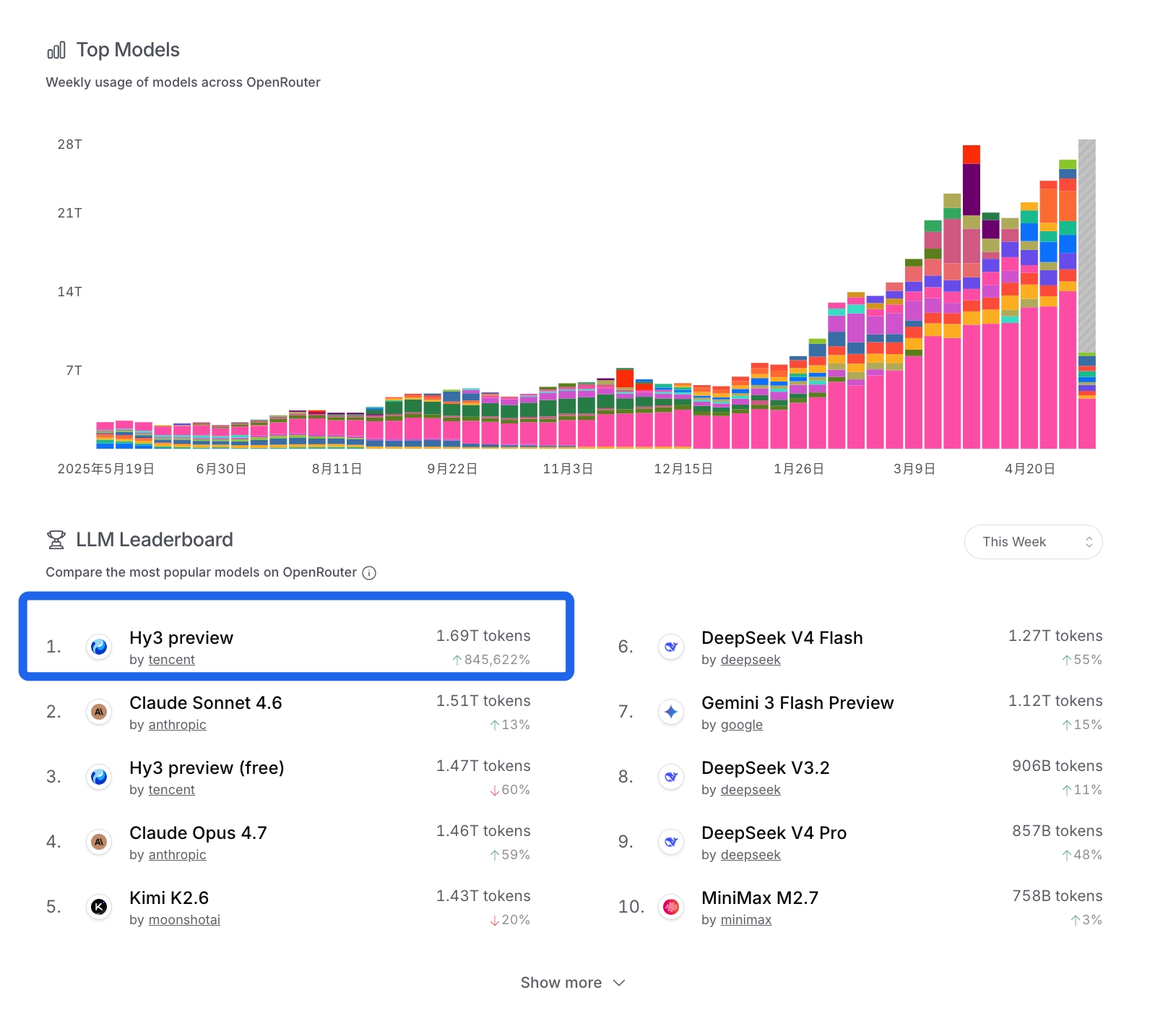
OpenRouter Model Call Weekly Ranking (May 11)
But it's too early to talk about returns.
"The obvious upward trend in productivity AI actually didn't occur in the past few quarters, or even in the past few months, but has only truly emerged in the past few weeks. At the end of or after the first quarter, Agentic AI achieved obvious breakthroughs in code generation and improving people's productivity," said Liu Chiping. So this revenue is not reflected in the Q1 financial report.
At the general meeting of shareholders, Ma Huateng, Chairman and CEO of Tencent, responded to the question of "whether Tencent can get on the boat in the AI era in 2026", saying, "A year ago, we thought we were on the boat, but later we found the boat was leaking. Now we feel we've stepped on it, but can't sit down yet. We still hope the boat can go faster."
Ma Huateng said, "Tencent initially focused on communication and social networking. In 2000, we decided to enter the content field, so we started to build portals and develop games. It took us 20 years to grow from complete outsiders to experts in the content field. At that time, our shareholders questioned how we, a communication company, could develop games. But we gradually filled in the missing parts in our genes, introduced talents, developed our own capabilities, and gradually completed the evolution into the content field. We not only became experts but also found our own unique path."
"AI is a field highly related to algorithms. In terms of the company's genetic makeup, our capabilities in this area were not strong originally. After continuous improvement in recent years, we have continuously introduced talents, improved the management team, and strengthened internal training, gradually filling in the relevant capabilities and getting more and more on track," Ma Huateng said. "Looking back at Tencent's development history, when facing new opportunities, we may not be the fastest company to seize them. But as long as the direction is correct and we take the right path, given enough time, we can still get on the right track and combine with our unique advantages."
In the short term, it is inevitable that Tencent will face increased expenditure and pressure on profits. But when will AI start to bring returns to Tencent?
Priority on In - house Business, Tencent Aims for AI + Everything
Currently, when AI applications/productivity layers are generally offered for free or at a discount and users' subscription habits have not yet been formed, the fastest way to recoup costs is to rent GPUs. However, Tencent has not done so. Instead, it uses GPU resources to improve its in - house business.
"We have actually made a choice and paid the price for it. We have given priority to ensuring multiple internal services rather than Tencent Cloud (referring to renting GPUs)," Liu Chiping said in the conference call. Most large technology companies with cloud businesses usually have only one flagship internal scenario consuming GPU resources, but Tencent has multiple flagship scenarios. To support these scenarios, Tencent Cloud currently does not have enough GPUs to meet external demands.
The scenarios Liu Chiping mentioned refer not only to the Hunyuan basic model, the Agent within WeChat, Yuanbao, and WorkBuddy, but also to the AI deployment in businesses such as advertising, gaming, and fintech . In short, Tencent aims for AI + everything.
- AI + Advertising - The Most Immediate Efficiency Improvement
Advertising has always been the business where Tencent has combined with AI most smoothly and achieved the most obvious efficiency improvement.
In the first quarter of this year, Tencent's advertising revenue exceeded market expectations with a nearly 20% growth rate. The financial report mentioned that this was mainly because the AI - driven advertising recommendation model was upgraded, and the closed - loop marketing capabilities within the WeChat ecosystem were expanded, thus improving advertising effectiveness and increasing advertising unit prices. The advertising investment from advertisers in the Internet services, e - commerce, and gaming industries increased particularly significantly.
The financial report shows that Tencent Marketing AIM +, a smart advertising placement product matrix launched in November last year, has covered about 30% of the advertising investment of advertisers and has been widely used among advertisers of mini - games, short dramas, and WeChat mini - stores.
However, AI brings more than just efficiency improvement to the advertising industry. As Doubao and Qianwen are exploring the combination of Agent and users' consumption behavior more deeply, the advertising industry may face a subversive crisis of "entrance transfer" in the future.
During the conference call, an analyst also raised this question.
Liu Chiping's answer was: "Regarding the advertising issue, there is a fundamental difference between the time users spend consuming content or chatting with friends and the time they spend on e - commerce. Because users actively choose and are willing to spend time watching short videos, listening to music, consuming content, or chatting with friends. Generally speaking, users spend time on e - commerce mainly because they are looking for the lowest price, not because they enjoy the process. So, if AI Agents play a greater role in the price - comparison process in the future, users may spend less time on e - commerce websites. It's too early to draw a conclusion on 'how AI will affect our friends in the e - commerce industry', but currently, we don't think this will be a major risk for Tencent."
- AI + Gaming - Combining with Gameplay, but 'Not Pursuing Margin Expansion'
The gaming business is also integrating with AI. Tencent's financial report shows that AI has now entered the R & D and experience links, covering aspects such as 3D assets, image quality, and NPC interaction.
The newly launched game "Roco Kingdom: World" in the first quarter is a typical example. The NPC battles in this game are mainly driven by reinforcement learning AI. On the 9th day after its launch, the number of new users exceeded 30 million, and the average daily active users (DAU) in the first month reached 13 million.
The long - running game "Peacekeeper Elite" has also introduced AI teammates and AI war dogs to provide players with real - time tactical cooperation and emotional companionship. According to Tencent's data, the cumulative number of users who have experienced all AI NPC gameplay in the game has reached 110 million, the highest daily active users reached 17.7 million, the number of message interactions per game reached 70 rounds, and the microphone activation rate was nearly 75%.
In addition, AI is also lowering the threshold for game UGC creation. The "AI Creation Assistant" built into the Oasis Qiyuan platform of "Peacekeeper Elite" has lowered the threshold for map and gameplay creation to a level that ordinary players can participate in. During the Spring Festival in 2026, the DAU of Oasis Qiyuan exceeded 58 million, and the total number of gameplay and maps on the platform exceeded 150,000.
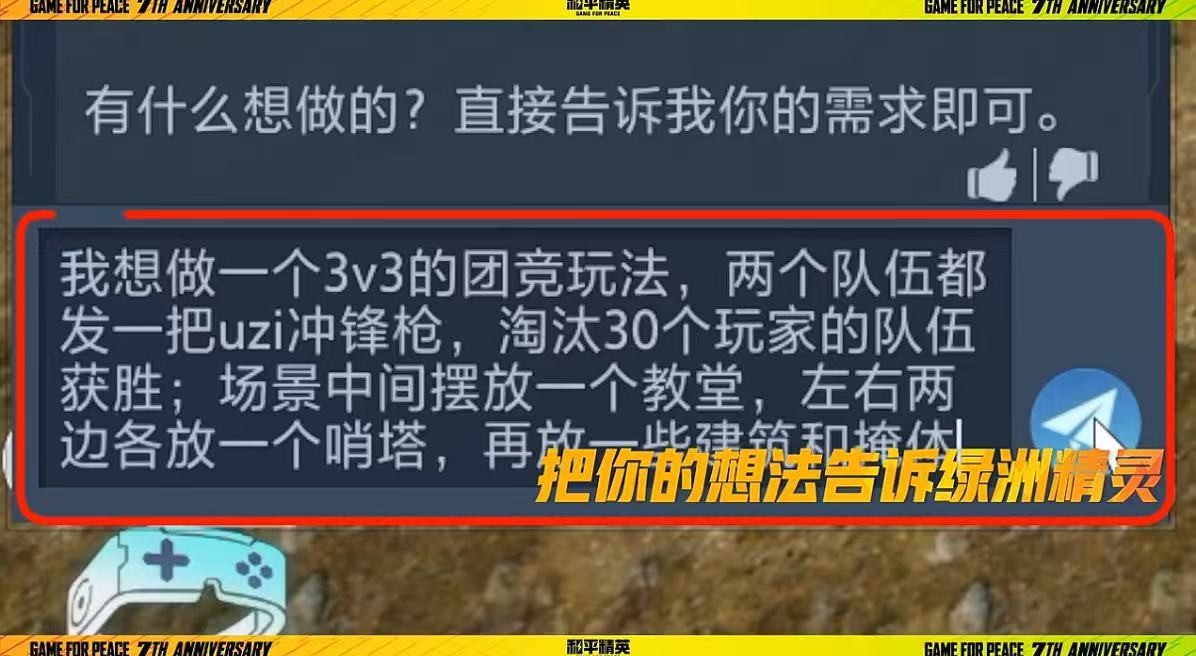
Oasis Qiyuan Platform of "Peacekeeper Elite"
Of course, what the capital market is most concerned about is not only how AI can retain players at the consumer end but also whether it can change the profit model of the capital - intensive gaming industry. Morgan Stanley previously mentioned in a report that AI can cut nearly half of the development costs and is expected to release $22 billion in potential profits for global game manufacturers annually.
"For the gaming business, the main goal of generative AI at this stage is still to create content more quickly and bring incremental revenue growth," said James Mitchell, Chief Strategy Officer and Senior Executive Vice - President of Tencent. Tencent does not prioritize margin expansion itself. "If we do achieve the revenue growth we are seeing now and can keep the relevant costs relatively stable, this combination will naturally lead to higher margins over time. But this is not the starting point of this process."
- AI + WeChat - The 'Big Task' of Mini - Programs
In March this year, 36Kr exclusively learned that WeChat, a product of Tencent, is trying to develop an independent in - house AI model. Currently, the basic capabilities of this AI model have been built, and it has been given an internal code name. It is expected to be launched externally in 2026.
As a true super - app, the combination of WeChat and AI has always been one of the most concerned topics in the outside world.
According to 36Kr, on the one hand, WeChat plans to integrate its in - house model into the mini - program ecosystem to support the development of various AI agents; on the other hand, it also hopes to explore application scenarios deeply embedded in the social ecosystem based on the capabilities of the in - house model. For example, based on users' long - term behavior in WeChat, it explores how AI can improve efficiency and user experience within WeChat.
Currently, it seems that WeChat is still "riding a donkey while looking for a horse." While incubating its own model, WeChat has been using the Hunyuan model in some products, and it has now been upgraded to Hunyuan 3. According to Tencent's consistent principle of "better late than wrong" with WeChat, this "donkey" will probably be ridden for a long time.
During the conference call, Liu Chiping once again described the blueprint of WeChat AI. "In the future, when we start to integrate mini - programs into'skills' and allow agents to use mini - programs as tools, it will bring more traffic to these mini - program enterprises. That is, on the one hand, there is internal revenue - when they use our own agent products, they can improve their own productivity; on the other hand, there is external revenue - in the future, their mini - programs can be used by more users and more agents."
In this plan, mini - programs seem to become something like skills in the future. This imagination of "skillfully inheriting the legacy of the Internet era" is also the most attractive part of Tencent + AI.
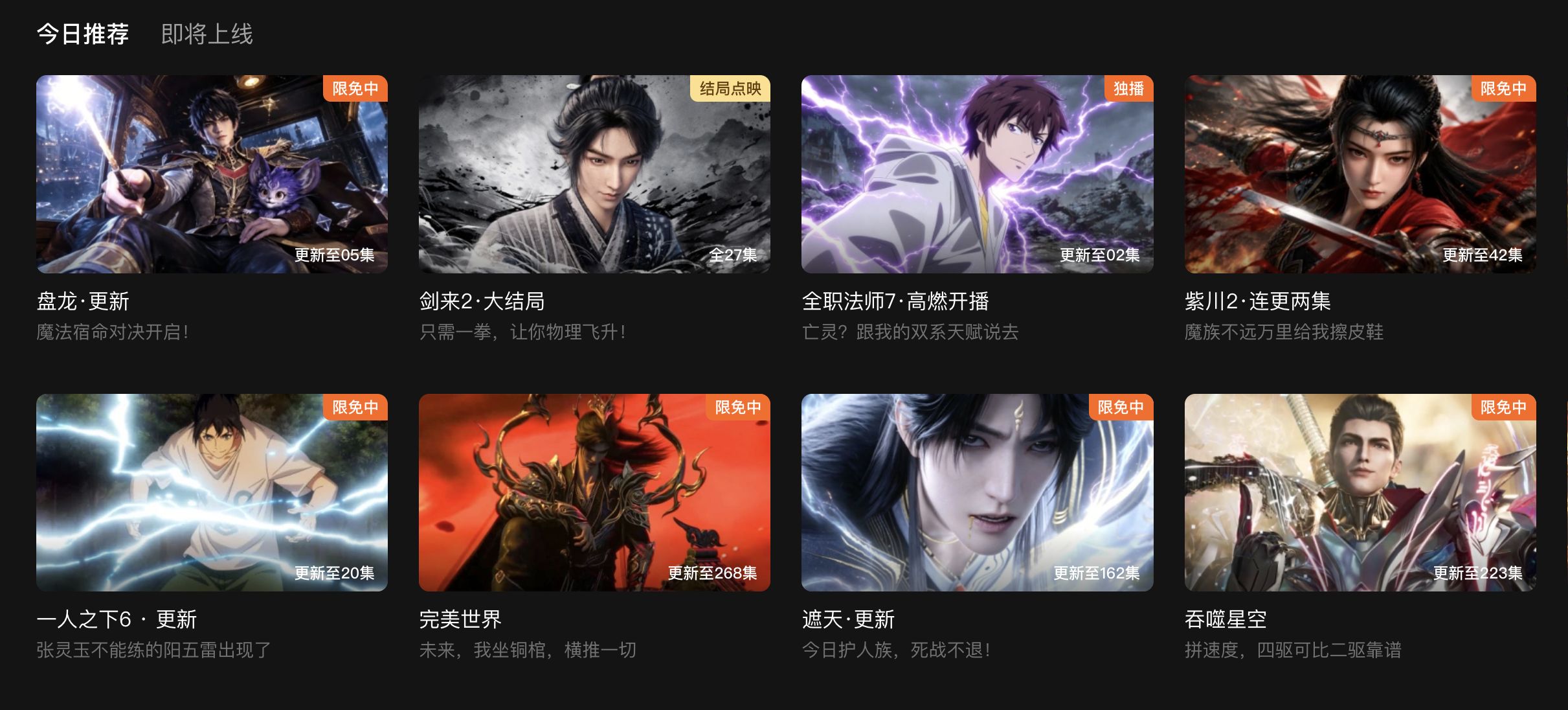
Tencent Video Animation Channel
- AI + Long - form Video - Only Animation is Mentioned
From a macro perspective, the combination of AI and video content presents a situation of "polar opposites between short - form and long - form videos."
In the short - form video field, AI - powered comic dramas have already made a lot of money, and the entire track has even entered the middle and late stages where profits are getting thinner and thinner. However, the combination of long - form video and AI is still in an embarrassing situation of "failing as soon as it starts." In April, iQiyi's AI artist library received a harsh lesson in the public opinion field.
During Tencent's conference call, an analyst asked, "Will AI - powered dramas on Tencent Video become popular content in the next few years?" Liu Chiping answered cautiously, "You may be referring to short - form videos or mini - dramas, not the long - form video dramas that Tencent Video has always been good at. If we look at the long - form video side, a double - digit proportion of users in the market really like animation content."
Tencent's executives did not mention live - action dramas, only animation. Liu Chiping said, "This is an area where Tencent naturally has a leading advantage because we have large - scale content IP operations, a gaming business, and AI technology reserves, and we have core advantages in specific multi - modal directions of AI. AI enables us to do this in a more efficient, lower - cost, and higher - quality way."
- AI + Fintech - Efficiency Improvement
The financial industry itself is a highly data - intensive industry, and its combination with AI is a natural development. Liu Chiping said that Tencent's fintech business will naturally be empowered by AI in the near future.
He gave an example, saying that in the credit business, "Traditional credit scoring is more like an 'art' than a'science'." Because although there is a large amount of data, only a small part of it is actually effectively input into the model. Now, with the help of the Transformer model, all available data can be processed more comprehensively, and the factors that are truly predictive can be identified. The improvement in prediction accuracy can be used to optimize loan issuance.
"This is an area where many companies will invest a lot of time and effort, and we will also participate," Liu Chiping said.
- AI + Enterprise Services - Will Rent, but Not Now
As mentioned before, Tencent currently does not have much spare GPU capacity for rent. However, Liu Chiping said that in the remaining time of this year, as the supply of GPUs designed in China gradually increases, this situation will improve.
"We will provide more computing power capacity in Tencent Cloud, thereby accelerating the expansion of Tencent Cloud," Liu Chiping said. "So, this trade - off is actually a conscious choice we made. We will delay monetizing some AI opportunities on Tencent Cloud."