Dialogue with the core team of OpenClaw: It's not common for large Chinese companies to run their businesses directly on OpenClaw.
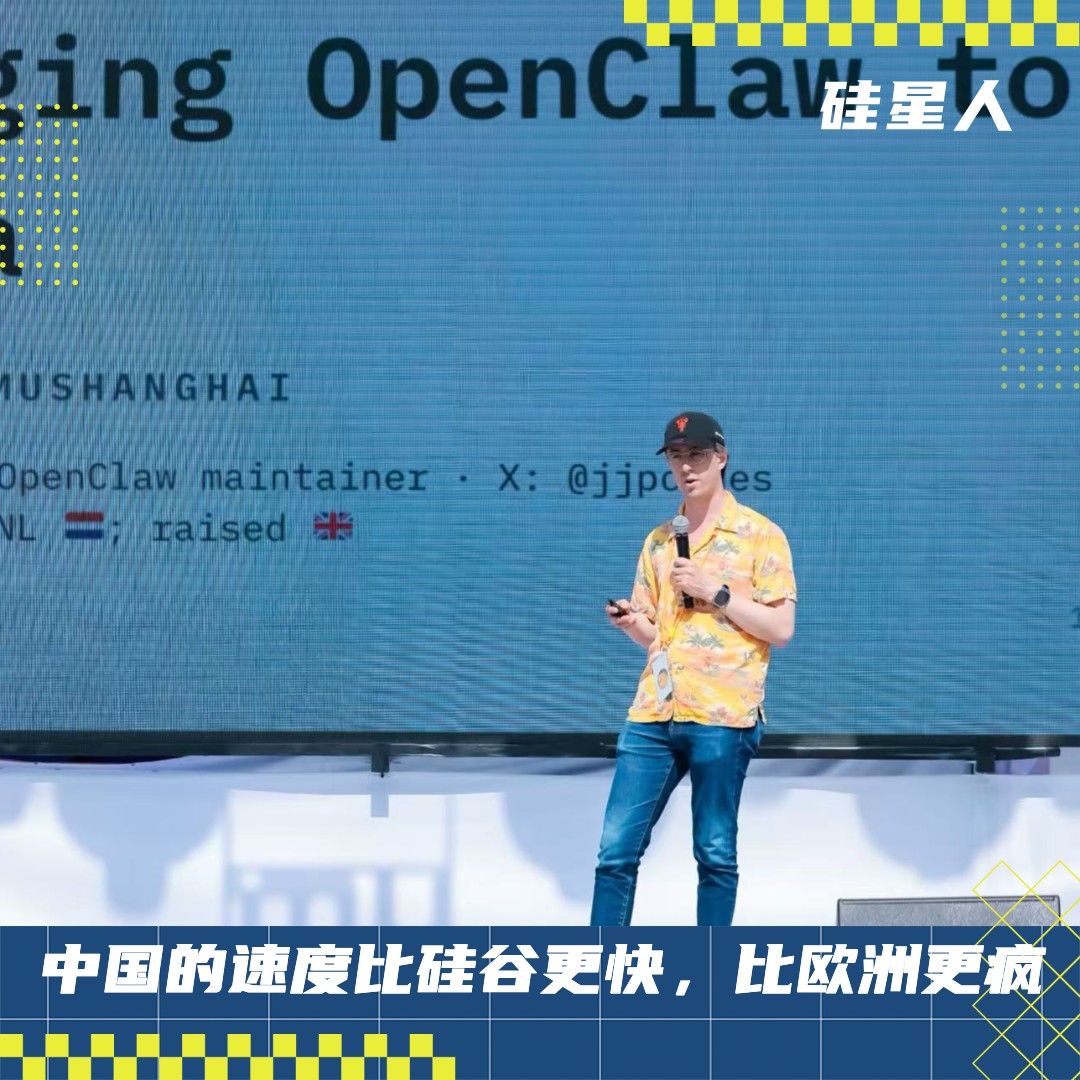
On May 11th, at the ClawCon event organized by muShanghai, core members of the OpenClaw community flew here themselves. In the meeting room of Alibaba Center, they had face-to-face communication with developers, entrepreneurs, and users who came from all over the country.
We got two exclusive interview opportunities. The interviewees are Josh, the core maintainer of OpenClaw, and Vincent Koc, the core code contributor.
Josh is one of the earliest contributors to OpenClaw. In November 2025, when few people knew about this project, he submitted Pull Requests No. 39 and No. 40 - now this number has exceeded 80,000. He is not an employee of OpenClaw and doesn't get paid. His full-time job is in a large company.
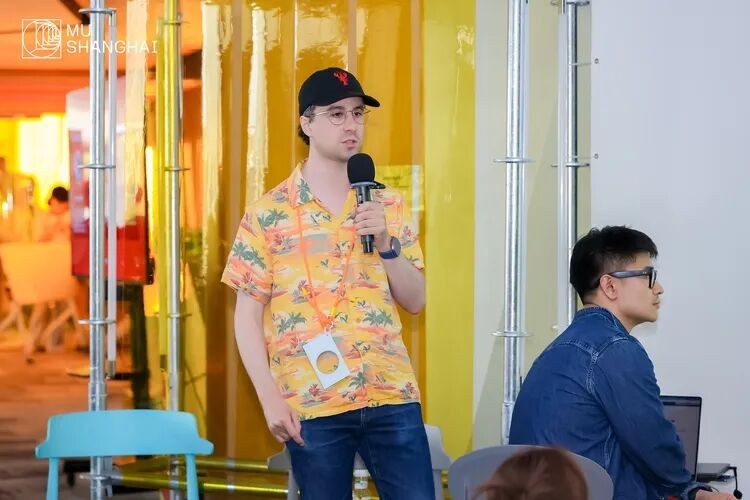
He was a member of the early team of the Discord community, participated in the construction and expansion of the community, and was also the first to pay attention to Chinese users: translating documents into Chinese, integrating with Feishu, and creating a real-time Chinese-English translation bot on Discord. His own explanation is very simple: "I met the right idea at the right time."
Vincent is the core developer with the second-highest global code contribution in OpenClaw and leads the technical direction of the platform. He is the main person in charge of the developers.
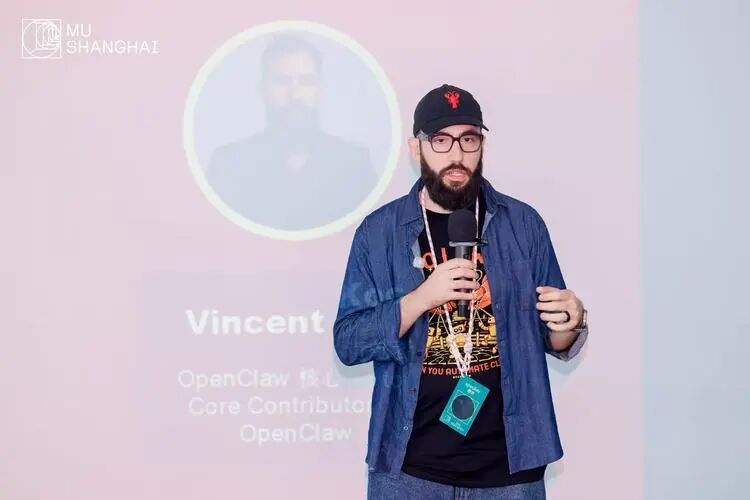
We discussed with them the problems that really trouble users in the past six months: Will the interaction mode of CLI change? Who is responsible for security? How can we prevent the Token bill from getting out of control? And what exactly does OpenClaw plan to do in China?
The following is the complete interview transcript.
1. Who was OpenClaw originally designed for? What will you do in the face of the influx of non-technical users? Will there be other interaction modes besides CLI?
Josh: In the early stage, this project was just to allow people to run programming agents (Claude) on their mobile phones and control some operations on the computer (such as playing music, smart home automation, etc.) through the large language model on the mobile phone.
I really think it's amazing to see so many non-technical users pouring in. It's already quite remarkable to let so many people come into contact with artificial intelligence for the first time.
I personally think that AI should work in any way you want - on the terminal, in mobile phone messages, at home, wherever it's convenient. That's the best way to interact with AI.
But precisely because of this, this is very challenging. We are supporting an ecosystem that covers almost everyone, and we can't optimize for a specific type of user. I can't give you a definite answer right now about where it will go beyond CLI.
2. For ordinary users without a coding background, there are blind spots in security. What does OpenClaw plan to do next in terms of safety?
Vincent: This is indeed a problem that deserves serious attention. We have done a lot of work on security in the past few months - ensuring that OpenClaw is safe when starting and running, including specific means such as sandboxing.
At the same time, we are also cooperating with some technology companies and model companies. The solutions they provide already have the correct security configuration built-in, so ordinary users don't need to worry about these things themselves.
Since the code is open source, anyone can see how it works. We have received a lot of contributions from the global community, and everyone helps us make security better together. Open source itself is actually a kind of security guarantee.
This is one of the real advantages of the open-source model - it's hard to hide vulnerabilities because everyone is watching.
Follow-up question: Which team is mainly responsible for the security work?
Vincent: Security is jointly borne by the entire community and the maintainers.
3. The bill of OpenClaw is basically uncontrollable for users. Will there be engineering-level optimizations in the future to allow users to accomplish more with fewer Tokens?
Josh: I see this as a temporary problem. To be honest, my own strategy is a bit "privileged" - I just spend as much money as possible to buy Tokens to get the results I want, and then bet that the Token cost will decrease.
The number of Tokens I consume myself is quite exaggerated: in the billions, and most of them are not for OpenClaw but for writing code. I click a button, and the Tokens disappear, the quota drops, and then I have to switch to another account, constantly logging in, logging out, and logging in again. The experience is really bad.
If someone from OpenAI is reading this, please make a native account switcher so that I can pay you more money.
Regarding the long-term trend, I have a background in physics, so my judgment is that as countries like China make large investments in renewable energy, the computing power cost will continue to decrease, and the Token price will also come down. In the 18th century, the more steel there was, the more things could be made. It's the same principle today.
I just spend as much money as possible to buy Tokens to get the results I want, and then bet that the Token cost will decrease. This is my personal view, which is obviously not a good answer for those who are currently spending money.
However, he also has a practical suggestion for all users: the way you write prompts directly determines how many Tokens you spend.
When I'm tired, I often write like this: 'Can you fix this? I just want it to work, and I don't care about anything else.' In my experience, this usually leads to very poor results - it's both expensive and useless. But if I carefully organize the prompts and feed in the context, the results are much better, and the consumption is more controllable. It's not as fun, and the workload is much greater, but it's worth it.
Vincent: From an engineering perspective, a lot of our work in the past few months has been focused on accuracy and precision, which is to some extent at the expense of Token consumption - in some scenarios, it's inevitable to use a large number of Tokens. But we are also continuously promoting to prevent the Agent from spending time repeatedly on the same problem.
We also see that model companies (including those in China) are making a lot of improvements in model efficiency, and subscription plans and other methods are emerging to help users control the total cost. We are confident that this field will continue to improve.
4. Application companies have done a lot of engineering work, but it is overwritten every time the model is updated. What do you think of the boundary between applications and models? How does OpenClaw deal with it?
Vincent: From the very beginning, we designed OpenClaw as a core underlying system that supports almost all mainstream models. We don't optimize for a specific model - we cooperate with the entire ecosystem and let the model companies decide how their models can present the best results here. They can directly contribute code to us. This is the best way we think.
We won't be tied to a single model. Cooperating with the ecosystem is the best approach.
But I also admit that there is a specific challenge we are still researching: if you have a Skill that works well on one model but not on another - how can this information still be useful when you switch models? There is no simple answer to this question.
However, this project has only been around for a few months and is still in its very early stage. But we are confident that we will continue to see improvements in this field.
5. The technological trend is moving from general agents to proactive agents, but the economic accounts still don't add up. What do you think the next-generation agents will evolve into? If you had to define it with one word?
Vincent: This is a challenging question. To be honest, I can't control what the model companies are doing. All I can say is that we will try our best to ensure that OpenClaw runs in the best way. But this itself is a challenge - we have too many different model options, and it's impossible to make it perfect for everyone. I can make a change to OpenClaw, which may work well for someone but have a poor experience for another person. This is a challenge by definition.
What is the next-generation agent? If I had to use one word to define the next-generation agent - my answer is: Self-evolving.
I think we are already using it. If you think of OpenClaw as a scaffolding application: you are looking at a problem, find the problem, and it can create code and modify itself. For me, this is the definition of self-evolution. It's not the future tense; it's the present tense.
6. If the energy cost in China continues to decline and the Tokens are almost free, will China's Agent ecosystem take a completely different path?
Josh: In the United States, OpenClaw feels very consumer-oriented to me. Most people use it to create personal bots to manage their own lives and affairs; companies that build products around OpenClaw also sell them to individual users. In China, many large companies run their businesses directly on OpenClaw. This is not very common in other places.
China is extremely fast, extremely fast, extremely fast. If a function is missing, Chinese users will hack it in and make it happen on the same day. This development speed really opened my eyes. In Europe, this would never happen.
Another thing that impressed me very deeply is that the Shenzhen government is helping citizens deploy OpenClaw. Old people and young people are queuing up outside the block, asking people with laptops to help them install it.
The group of people interested in it in China is very diverse, more like ordinary people, representing a wide cross-section of society. Silicon Valley is a certain type of San Francisco-style group: working in startups or the technology industry, which is just a small part of society.
My brother lives in Toledo, Ohio, and I don't think you can find many OpenClaw users there. But in China, I think you may go to many different places and meet people you didn't expect to use OpenClaw.
7. What are your next steps in China? Do you plan to cooperate with the open-source community, cloud companies, or enterprises? Do you have any specific plans?
Josh: I can't tell you anything specific - I can't say which company we are going to talk to next. Why? Because this is not something I can decide, and it's not up to me right now. I'm not an official representative, I don't come from the foundation, and I'm not speaking on their behalf.
But there are a few things I can say. First, we noticed a very practical problem in China: many large companies take the latest version of a certain day and keep running that version. Once they do a hard fork, it's very difficult to update later. One of the very important purposes for us to come here is to communicate with them, understand these problems, and improve our processes.
We hope to provide a long-term LTS version, that is, a long-term support version, so that it is stable enough for everyone to build on it for a long time, rather than having the interface protocol change all the time.
Second, we noticed that Chinese users are very scattered - there are many WeChat groups, but there is no unified place. We hope to find a centralized location where we can communicate with the entire community in one place, which will make it much easier to improve the product.
Third, regarding the larger organizational level: the OpenClaw Foundation was just established about two weeks ago. It is recruiting people, establishing connections with companies and laboratories, and trying to formalize these processes.
I'm not very clear about what's going on there. Vincent knows more. But the dialogue is continuing, which is beneficial to everyone. I hope everyone can have an equally high-quality experience and build interesting products on it.
8. When Discord first opened, 100,000 people poured in all at once, and it was completely chaotic. What did you learn from that experience? If someone wants to start an open-source community now, what advice would you give them?
Josh: When I joined OpenClaw, the PR numbers were 39 and 40 - that was really very early. Now the project has about 80,000 PRs. I'm not an employee of OpenClaw and don't get paid. I'm here just because I think it's cool.
Around January 1st, Peter invited me to join, and I became a maintainer and Discord administrator. It was complete chaos - about 100,000 people poured in within a month.
It wasn't intentional at all. We didn't say 'Come on, let's do something big' - it just happened, and we were completely stunned ourselves. When the first thousand people came in, I already thought it was crazy; then ten thousand, then twenty thousand... You stare at that number and still can't believe it.
Regarding advice, the core judgment is that 95% of people online are well-intentioned, but there are always some troublemakers. So you have to take action - clearly state the original intention of the community, be transparent and open, connect the right people at the right time, and figure out what the real needs of the community and the project are.
The entire project is nothing without the community. You may have amazing technology, but it ultimately depends on people.
Now, we are already using OpenClaw to maintain OpenClaw itself.