Why should car owners bear the blame for being unable to park in a parking space?
Recently, the discussion about "shrinking parking spaces" has been heating up on major social platforms.

What exactly is going on? Brother Neck will take you to recall:
After finally finding a parking space in the underground garage and reversing the car in with one smooth move, just when you feel really cool, you suddenly find that your car is almost in abnormal contact with the cars on both sides.
When you want to get out of the car, you can barely open the car door a crack. You have to suck in your stomach and squeeze out like someone who has mastered the art of bone shrinking.
As a result, if you're not careful, Brother Neck's plump buttocks will still get stuck badly. After struggling for a long time, you may even have to climb out awkwardly through the trunk or the sunroof.

Not to mention that you've had to ask the passengers in the front and back seats to get out of the car first countless times when parking.
It's not just the underground parking spaces in residential communities. When you go to the shopping mall basement on weekends or park at the marked parking spots on the roadside, you often encounter situations where your car simply can't fit in, or you can barely park but end up crossing the lines severely.
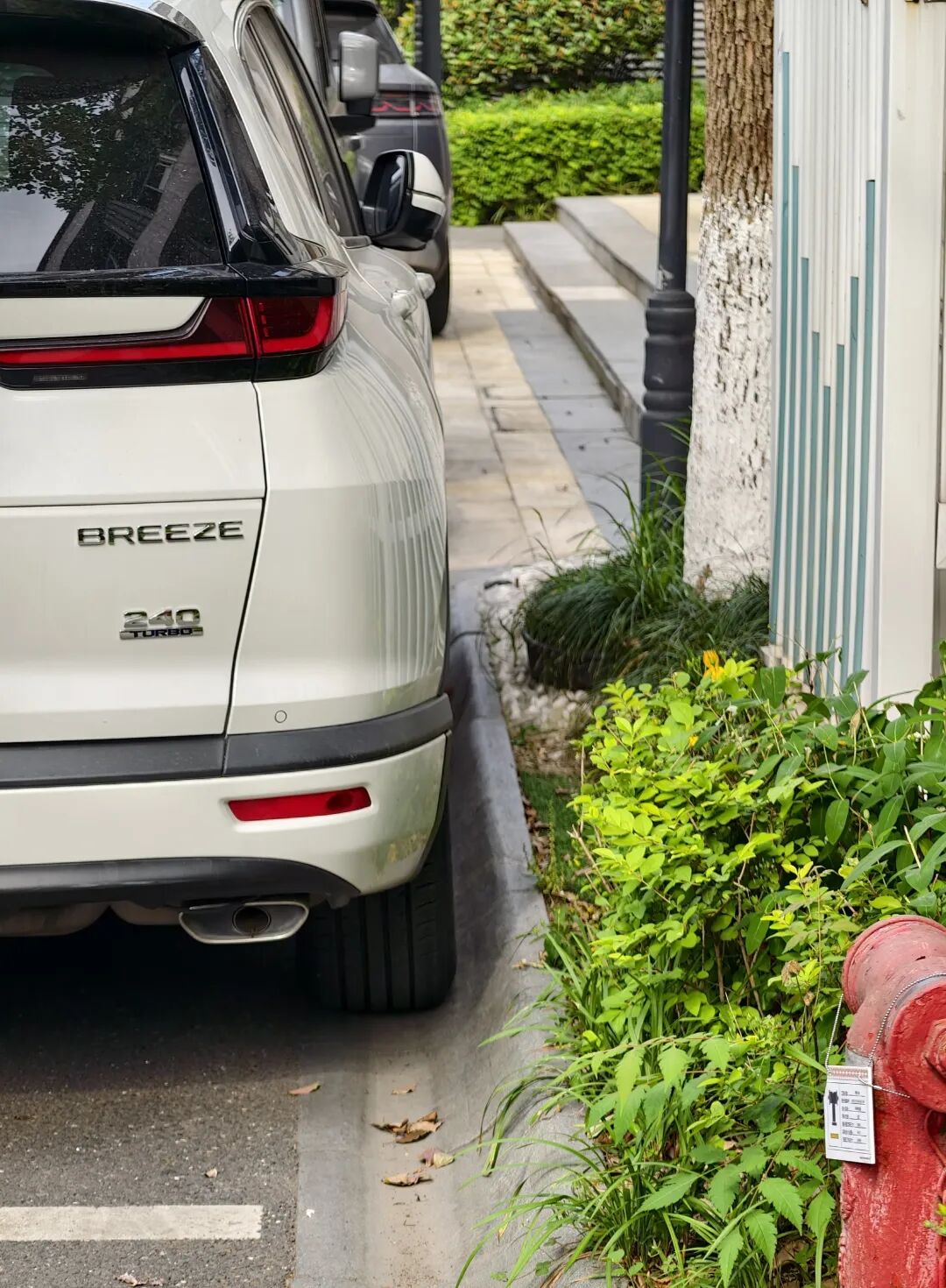
Moreover, this kind of parking embarrassment is becoming more and more common.
At this time, some so - called "car experts" will surely jump out and sneer: "If you're bad, practice more." "A good driver can park in any parking space." "Why buy such a big car? You made the choice, so don't blame the parking space."

To be honest, this might have made some sense a few years ago. But after our research, we found that it's not just about driving skills. There's more to it.
First of all, the unavoidable problem is that cars are getting too big now!

Most of the time, it's not so much that the parking spaces are shrinking as that the cars are getting bigger, making the parking spaces seem too small.
Since new energy vehicles became popular in China, the size of cars has been growing like a balloon.
A little - known fact: the Lynk & Co 08, which looks like an old - people's electric car in the middle, is 4.8 meters long and over 1.9 meters wide, making it a proper mid - size SUV.
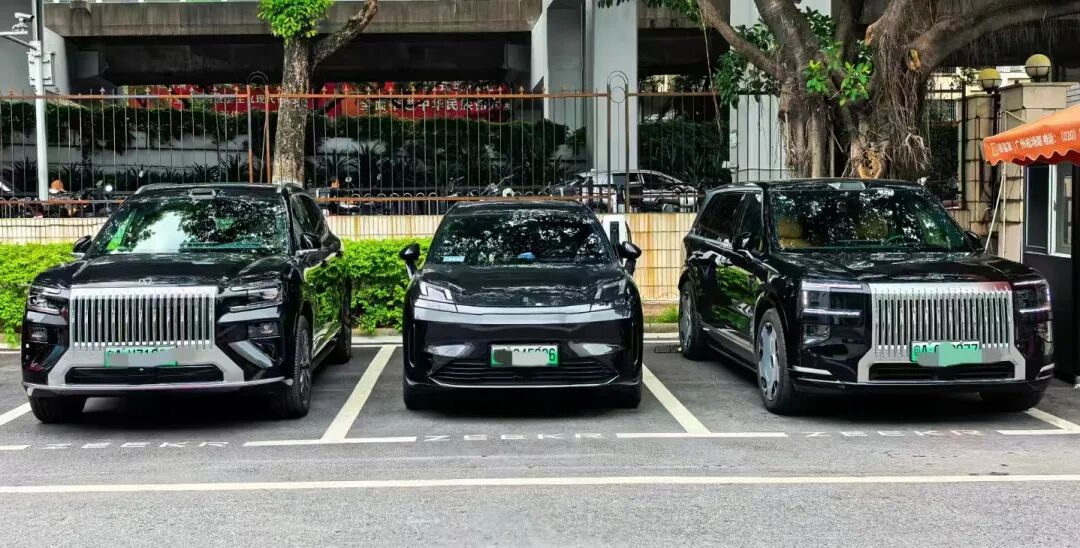
So why do new energy vehicle manufacturers make cars so big?
There are several reasons. The first is that new energy vehicles need to use larger battery packs to relieve people's range anxiety. To accommodate these larger battery packs, the vehicles have to be designed longer and wider. After all, it's not practical to make the cars infinitely tall.
So, if you look around the new energy vehicle circle, you'll often see cars with a 532 (5 - meter long, 3 - meter wheelbase, 2 - meter wide) body.
In addition, to better protect the battery pack and passengers, car manufacturers are making the door anti - collision beams, side skirts and other lateral energy - absorbing areas thicker, which inevitably makes the car body wider.

Of course, consumers themselves are not entirely blameless.
Although you can often see posts on the Internet about people wanting to buy compact cars, when it comes to actually spending money, people still prefer "large space, big sofas, and big TVs"... Just like with smartphones back then, small - screen flagships were a hard sell, and the best - selling iPhones were always the Pro Max models.
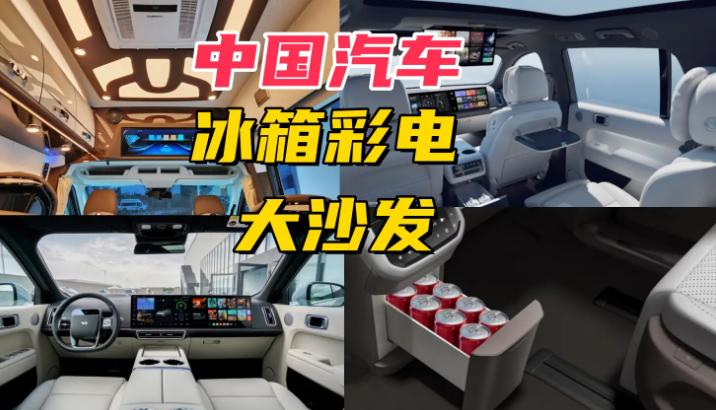
In this way, car manufacturers have to cater to consumers' preferences. And these cars don't just appear out of thin air. So, do they have to keep increasing the size of the models?
Moreover, with the maturity of the new energy vehicle industry chain, the prices of large - sized vehicles have indeed come down.
In the past, cars that were 5 meters long and 2 meters wide were like the BMW X5, Audi Q7, and Mercedes - Benz GLE, which cost over 500,000 yuan. How often could you see them in your basement garage?
But now, the times have changed. Many new energy vehicles in the 200,000 - 300,000 - yuan range are this size, and ordinary families can easily afford them. As a result, the phenomenon of cars squeezing each other is more likely to occur.
Not only that, although the size of cars is increasing rapidly, the standards for parking spaces have remained the same for many years.

Currently, in China, the size of parking spaces mainly follows the Code for Design of Garage Buildings and the Code for Setting On - Street Parking Spaces in Urban Roads.
Among them, the size of indoor parking spaces is set according to the mainstream sedans on the market at that time. The benchmark width is only 1.8 meters. To ensure the basic space for getting in and out of the car, the code requires a lateral clear distance of 0.6 meters between vehicles.
In this way, the minimum width of the most common perpendicular parking spaces is 2.4 meters.
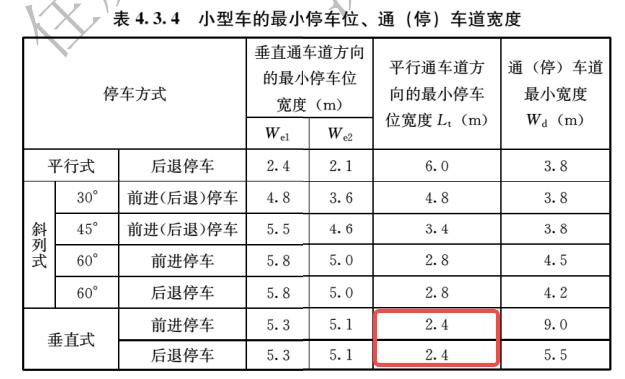

Secretly, this 2.4 - meter figure was the same in the old code back in 1998. Later, the code was revised, but this core figure remained unchanged. So, the size of parking spaces hasn't changed for nearly 30 years.
Perhaps in 2015, this size was still sufficient. But with the advent of the new energy era, if a car about 2 meters wide is parked in these spaces, the space left on both sides for getting in and out of the car may be only 20 centimeters, which is not even enough for my feet.
The same goes for roadside parking spaces. According to the Code for Setting On - Street Parking Spaces in Urban Roads, the standard for parking spaces for small cars is 6 meters long and 2.5 meters wide. However, there is a very subtle addition: if conditions are limited, the width can be appropriately reduced, as long as it is not less than 2 meters.
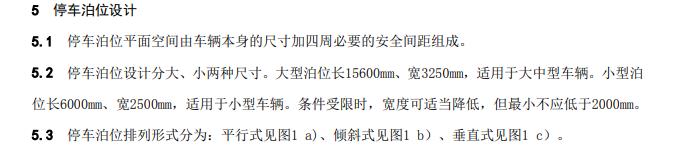
Those who understand know that in actual operation, once a lower limit is set, it often becomes the standard for implementation. Don't ask. If you do, the answer is "conditions are limited".
So, when parking in parallel parking spaces, people often scratch their wheels or cross the white lines because the spaces are simply not big enough.
Outdated regulations are one thing, but what really makes people angry is the developers' tricks.
To alleviate the parking problem, there are strict regulations on the parking space ratio (for example, 1:1 or 1:1.2, which means that for every 100 households, there should be at least 100 to 120 parking spaces).
However, underground garages are expensive. Excavating earth, supporting the foundation pit, building civil air - defense projects, and installing ventilation and lighting... All these cost a lot of money.

So, developers started playing number games. They targeted the 2.4 - meter bottom line in the code and turned it into the upper limit.

Moreover, don't be surprised. It's already quite decent if each parking space is marked at 2.4 meters. Some more unscrupulous developers don't even give you 2.4 meters.
Since the code doesn't clearly state whether the width includes the white lines themselves, there's a catch:
For those with a bit more conscience, the distance between the inner sides of the white lines on both sides reaches 2.4 meters.
For those with average conscience, the distance between the mid - points of the white lines on both sides is 2.4 meters.
For those with little conscience, they measure from the outer sides of the white lines.
We simply visited a few residential communities and shopping malls in Hangzhou, and we've really seen the diversity of parking space lines.
Most parking spaces are marked according to the bottom - line standard of 2.4 - 2.5 meters between the inner sides of the white lines on both sides. But we did find a shopping mall in a landmark building in the northern part of the city where the distance between the inner sides of the white lines on both sides is only 2.35 meters.
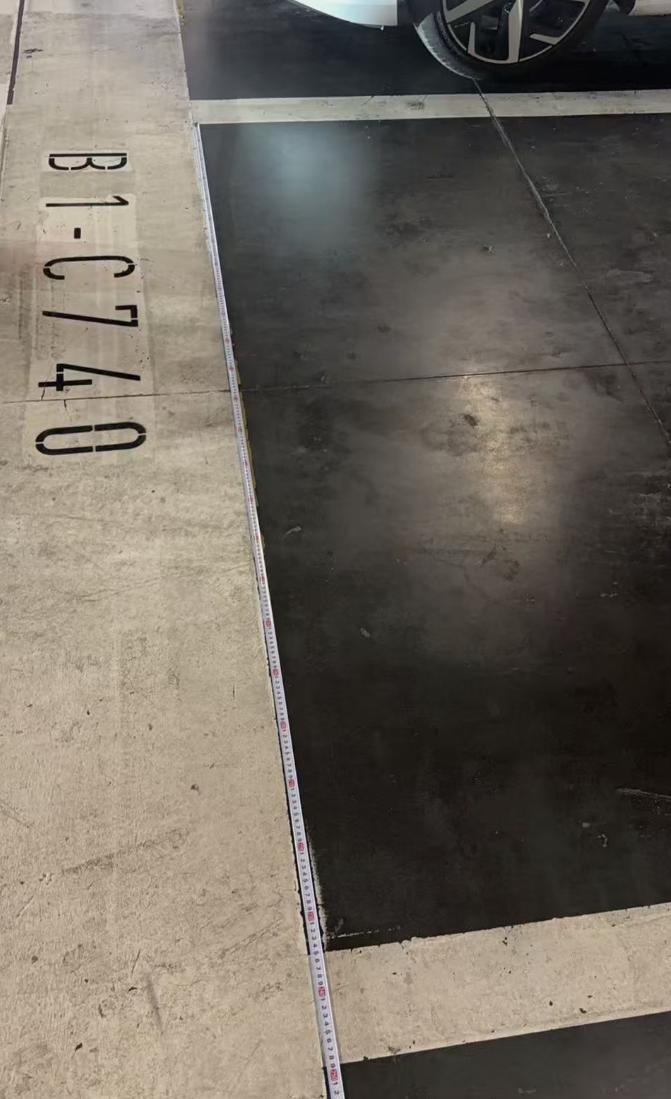
In the supporting residential community that is highly sought - after, the width between the inner sides of the white lines on both sides is even measured to be only 2