Exclusive Interview | The Fireworks and Edge of Advertising Professional Xiaomasong: An Elite Survival Guide for Non-Elites

Image source: WeChat official account "Workplace Bonus" (ID: ZhiChangHongLi)
"As long as you can stay at the table, even 'mistakes' will be valuable."
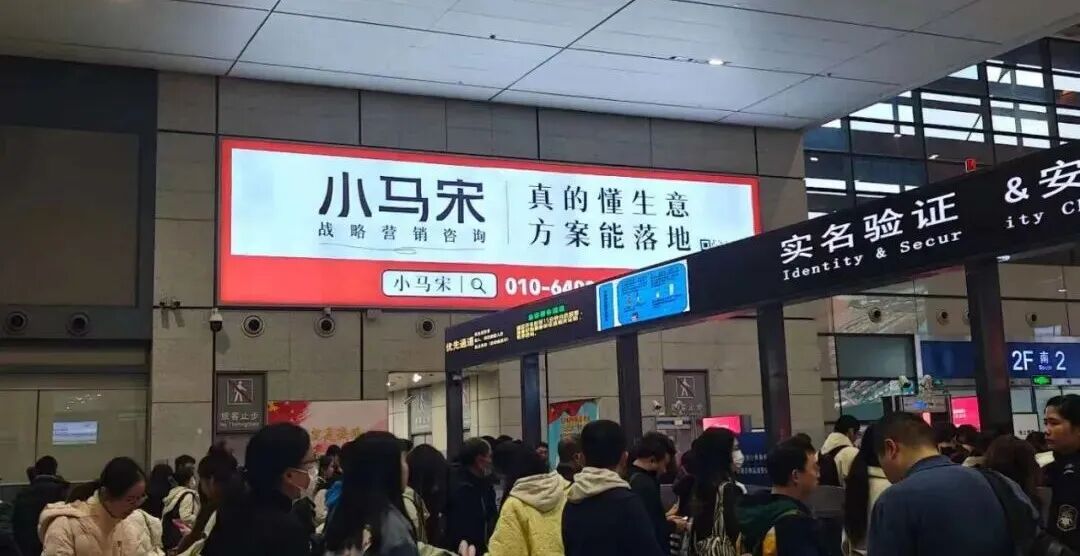
Image source: WeChat official account "Workplace Bonus" (ID: ZhiChangHongLi)
At Hangzhou East Station, there is a huge red billboard above the ticket gate - "Xiaomasong Strategic Marketing Consulting", hanging in the most crowded place. If you haven't met Xiaomasong, like me, you may guess from his background in a 4A advertising company that he is an "elite" advertising professional. He was born in a rural area in Shandong. After graduating from Xi'an Jiaotong University with a major in Thermal Energy Engineering, he worked at Sinopec for three years. Out of his innate love for advertising, he taught himself sketching, video editing, took an MBA course, and after several turns, he entered a 4A advertising company.
He has the practical and straightforward nature of a science and engineering major, as well as the romantic ideals of a literary youth. Years later, he started a business with the brand named after the "Xiaomasong" village where he grew up in his childhood, becoming a special presence in the marketing industry. In the past two decades, the media has changed from newspapers to videos, and the channels have changed from shopping malls to live - streaming rooms. Countless marketers have been reshuffled and left the game, but he is still at the table. With questions and curiosity about the industry, we interviewed Xiaomasong.
Maji has three considerations, dedicated to helping you find your personal career coordinates in the emerging trends👇🏻
The following is the transcript of the interview. Some wordings have been adjusted by the editors of "Workplace Bonus".
It's better to embrace change than to stay in a certain state of poverty / Part One
I believe I'm definitely a top - tier talent / Part Two
How to stay at the "table" continuously? / Part Three
It's better to embrace change than to stay in a certain state of poverty
Maji: After graduating from Xi'an Jiaotong University with a major in Thermal Energy Engineering and working at Sinopec with a secure job for three years, what was the core reason for you to leave?
Xiaomasong : Actually, not long after I started working there, I knew I didn't want to do it anymore.
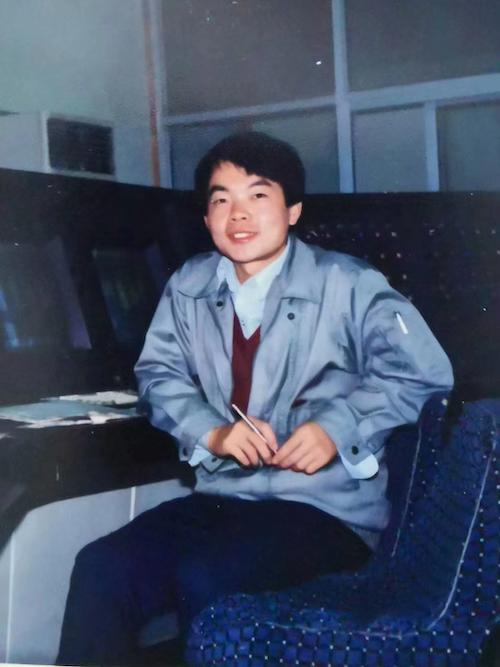
The place where I worked was in the suburbs about 50 kilometers away from Tianjin. When I first set foot on this land, I was disappointed. There were large tracts of saline - alkali land where neither grains nor trees could grow. Only reeds could be planted, and it was very desolate.
My salary during the probation period was about 500 yuan. After the three - month probation, it increased to 1000 yuan. However, my classmates who worked in Beijing could earn about 3000 - 5000 yuan per month.
●
Just two months into my job, my father had a car accident. He was in the ICU for more than 70 days and then lost his memory.
Our family business collapsed, and we owed a lot of debts. The family could only rely on my monthly salary of 1000 yuan. At that time, job opportunities were scarce, so I didn't dare to quit and waited for three years before leaving.
Maji: What was the direct motivation for you to take the MBA entrance exam?
Xiaomasong : I think it's better to embrace change than to stay in a certain state of poverty.
At that time, a colleague in the same factory as me got admitted to Tsinghua University's MBA program. Just by helping his tutor with consulting projects during his study, he could earn about 5000 yuan per month. After talking with him, I thought two things were quite certain: First, the income would be high after getting an MBA; second, I believed I could definitely get into Tsinghua University.
That year, Tsinghua University was recruiting 600 students, and I ranked among the top 100 in the written exam. Unfortunately, I was eliminated in the interview. But I don't think it was a loss because I really knew nothing about business knowledge before.
Actually, when applying, I really wanted to go to Peking University because I thought it suited my personality better. However, the exam syllabus of Peking University could only be obtained by signing up for a 3000 - yuan tutorial class. I didn't want to spend that much money, so I chose Tsinghua University, whose paper - based exam syllabus only cost 60 yuan.
After being rejected by Tsinghua University, I called the admissions offices of other schools and learned that Beihang University's MBA program hadn't recruited enough students, so I went to Beihang University to pursue my MBA.
I believe I'm definitely a top - tier talent
Maji: Why did you choose to enter the advertising industry? What preparations did you make for the career transition from a pure science and engineering background, and what were the key opportunities during this period?
Xiaomasong : I first learned about the advertising industry when I heard an advertising company's recruitment information on the radio in Tianjin. Before that, I thought advertisements were made by TV stations.
But I've always had a special talent, which is that I can memorize all the advertisements I see. I also liked watching advertisements very much at that time, so I really wanted to work in the advertising industry. However, I had no experience or skills, so I couldn't achieve my goal for a long time.
I taught myself sketching and watercolor earlier, and later I also learned Dreamweaver, Flash, Photoshop, 3DMax, and video - editing software. During my MBA study, I also sent many resumes to advertising companies. When I didn't get any responses, I settled for a job at a newspaper. I wrote many advertisements for clients at the Economic Observer. People thought I wrote well, which made me more confident that I could do advertising copywriting.
Later, FCB in Qingdao invited me to join. Although in 2005, Qingdao was not as developed as Beijing, and FCB was not the top - tier 4A company, I thought it was important to enter the industry first, so I went there.
Maji: After entering the advertising industry, why were you promoted three levels in a year and a half at FCB, and your monthly salary increased from 5000 yuan to 22000 yuan?
Xiaomasong : I'm good enough. I'm good at writing copy and coming up with creative ideas. There's no other reason.
When I was at the Economic Observer, I wrote many advertisements for clients, and people gave good feedback. When I joined FCB in Qingdao, I was a junior copywriter with a monthly salary of 5000 yuan. Half a year later, I asked the boss for a raise, and he increased my salary to 8000 yuan and promoted me to a senior copywriter. Another half - year later, I wanted to leave. To keep me, the boss promoted me to the copywriting team leader, in charge of all copywriters in Qingdao, and my salary increased to 12,000 yuan. Later, in less than a year and a half, I was promoted to assistant creative director and transferred back to Shanghai.
Maji: Why did you use the martial - arts metaphor of "The Beggar Clan is powerful because of Qiao Feng" to describe Ogilvy & Mather?
Xiaomasong : Advertising is an intellectually - intensive industry. The strength of an advertising company doesn't depend on the brand itself but on the aggregation effect of top - tier talents within the company.
Just as the Beggar Clan became powerful because of Qiao Feng, and the Ming Cult became prominent because of many powerful figures, Ogilvy & Mather is a top - tier company because the people inside are truly outstanding. Our boss at that time, Zhuang Shufen, Li Dan and Dongdongqiang, and the copywriting queen Lin Guizhi, these people constituted the core competitiveness of the company, promoting the company's reputation to grow. And the more famous the company became, the more top - tier talents it attracted, forming a positive cycle.
Maji: After leaving Ogilvy & Mather, you chose to start a business instead of staying in a top - tier advertising company. What was the main reason?
Xiaomasong : The core reason is that I didn't like my new leader very much. When I joined Ogilvy & Mather, the creative director who recruited me left, and then a new director came. I felt uncomfortable in that group.
At that time, my work style and concepts were quite different from those of my new leader. It seemed that most creative people couldn't communicate on such conceptual differences. Additionally, I thought I was definitely a top - tier talent in the advertising industry at that time and could find a job anywhere, so why should I compromise?
Maji: What was the biggest change in your mindset when you switched from a service provider (Party B) to a client (Party A)?
Xiaomasong : When I switched from a service provider to a client, I didn't feel a strong sense of discomfort because I had experience in starting a business before.
Previously at Ogilvy & Mather, shooting a single video would cost millions of yuan, and advertising placements would cost tens of millions of yuan. When I started a business with only 20,000 yuan for promotion, I realized that 99% of companies in the world don't have the money to do advertising. Moreover, later at Baofeng Yingyin, I could give full play to my creative talents without directly bearing the sales pressure.
Only when you really work for a client or start your own company do you find that advertising is just a very small part of business operations. It's like when you decorate a house, at most you can write a calligraphy work, and it doesn't have a huge impact on the whole house.
How to stay at the "table" continuously?
Maji: I'm quite curious. In the early days of your startup, as a small - scale company, how did you dare to "challenge" your clients?
Xiaomasong : Essentially, it's a matter of the right to speak. Many people ask us why we don't participate in pitch competitions. It's because I can make clients come to me. When clients don't come to me, then I'll participate in pitch competitions.
Once, we had a client who didn't want to pay but still wanted us to keep working. During the proposal, we said, "You haven't paid yet. How about paying first, and then we'll continue working?" Later, our colleague asked the boss how he could be so bold. I said it was because there were still clients waiting in line to work with us. Suppose there were no new business for half a year, then we would participate in bids.
Maji: You later reflected that "leaving Ogilvy & Mather was actually a wrong decision", but it was this "mistake" that led to your startup. How do you view your choice at that time?
Xiaomasong : Indeed, from a purely career - development perspective, leaving Ogilvy & Mather was a mistake. I joined Ogilvy & Mather in 2008 and left in 2009. If I had stayed for two more years and become a creative director, earning four or five hundred thousand yuan a year, maybe I wouldn't have started a business.
But there are no assumptions in life. Many times, "a blessing in disguise". Later, the companies I worked with didn't last long, and I went back to Ogilvy & Mather as a freelancer for a year.
Looking back, if I had been comfortable at Ogilvy & Mather, there might not have been what happened later. So whether many things are right or wrong really depends on the results. Success isn't just about hard work; luck also plays a big part.
●
After experiencing these things, I'm more tolerant now. I understand why many things happen instead of simply judging right or wrong.
Maji: Apart from talent, what are the key abilities that allow you to stay at the "table" in the marketing industry continuously?
Xiaomasong : First, be willing to accept change and take the initiative to learn. For example, I learned web design in five days for work and taught myself various skills such as sketching and video editing.
Second, focus on deep - drilling a single skill. In 99% of jobs in the world, you can reach 80 - 90 points through experience and practice, which is enough to outperform most people.
Third, be action - oriented and don't make excuses for not having time. I've always never believed in the excuse of "no time". When you complain about not having time, take a look at the time you spend on your apps.

● Xiaomasong sharing at the 2025 case - release conference
Maji: Currently, the marketing industry shows an obvious trend of disintermediation. What suggestions do you have for new - comers in the marketing industry?
Xiaomasong : First, don't limit yourself to service - provider advertising companies. The client side has a market 100 times larger than that of service providers and is more suitable for long - term development.
Second, take the initiative to master niche skills, such as ranking on Meituan, local - life promotion on Douyin, and note - writing on Xiaohongshu. After the industry is segmented, professional talents are more scarce.
Third, learn to market yourself. Prove your ability with actual cases instead of relying on the endorsement of the company platform.
Maji: What is the impact of AI on the marketing industry? How should marketers respond