Founders who stumbled in the AI startup wave
AIGC, Chatbot, AI Agent, AI Infra... In the era of the full - blown AI technology wave, a new wave of entrepreneurship in the tech circle is surging.
However, although the explosion of AI technology has provided entrepreneurs with a new opportunity, AI entrepreneurship is not like the "mass entrepreneurship and innovation" campaign a decade ago. Back then, one only needed an "Internet +" idea to enter a new market and plan for a grand future with the support of abundant "hot money".
The reality is that before becoming the wealth - creating myth of the AI entrepreneurship era, what entrepreneurs are experiencing now is more real than AI itself, and the path of AI entrepreneurship is far more complex than imagined.
I Closed My Company in Just Three Days
At 3 p.m. on December 5, 2025. A few minutes ago, Jing En had just sent a message to the investor, asking when the investment funds for this quarter would arrive. It would be payday for the employees in five days. Since the project was officially launched in March, Jing En had been used to confirming the funds in advance to ensure the normal operation of the company. However, this routine inquiry received a different answer.
A few minutes later, the investor sent a message like a thunderbolt, saying, "I won't invest any more money in the future. You can handle the company as you see fit." There was no warning, no buffer, and no more explanations. Three days later, the AI startup founded by Jing En, with a cumulative investment of over 3.2 million yuan, along with its AI editing product that had been online for just over four months, officially announced its closure.
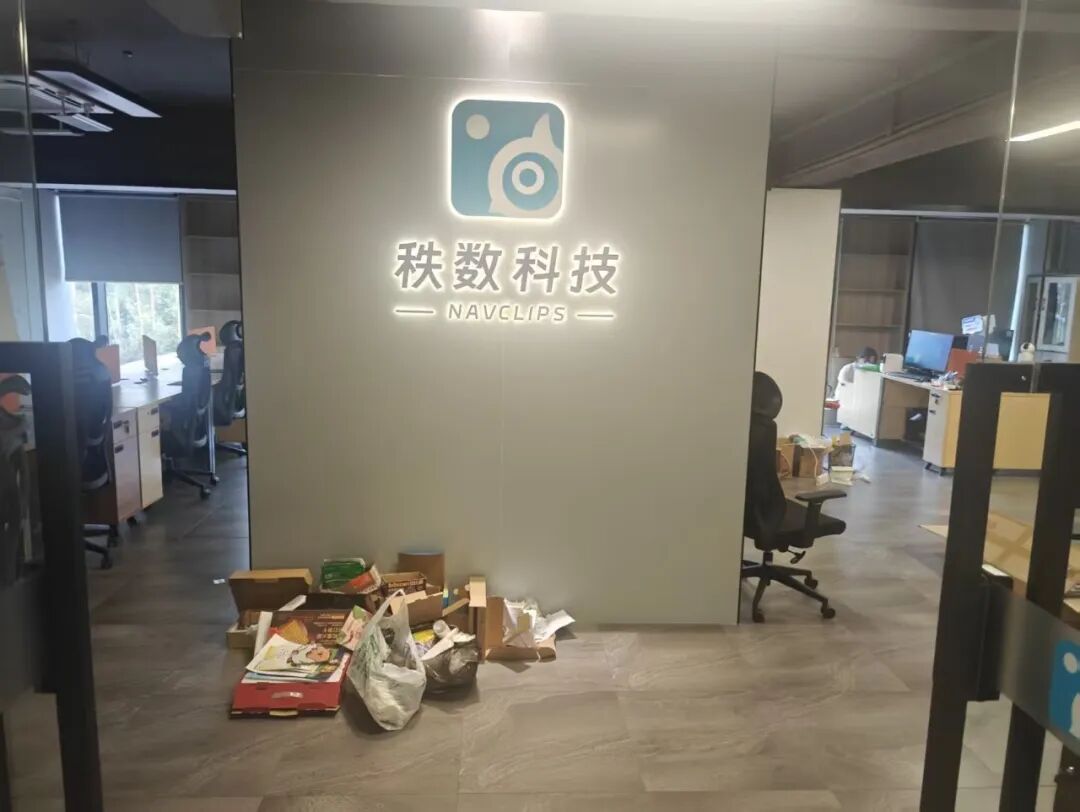
The company's logo wall (Provided by Jing En)
Although the company has been closed for more than 100 days, Jing En still hasn't gotten over this entrepreneurial journey. "It's like killing my own child with my own hands. And this child actually had a chance to grow up."
Jing En, 33 years old this year, is not a typical AI entrepreneur. He doesn't have a computer - science background from a prestigious university, nor is he a tech genius spotted by big companies early on. After graduating from a statistics undergraduate program, Jing En first entered the cross - border e - commerce field as a data analyst and worked at Shoppe for three years. In 2022, he joined a cross - border service SaaS company and helped this small company increase its monthly turnover from hundreds of thousands to a peak of $2.5 million within two years.
However, what really changed Jing En's fate was in 2023. At that time, GPT - 4 had just become a huge hit. Seeing the application scenarios of AI, Jing En tried to create an AI customer - service product by combining large models, and the business growth far exceeded expectations. Jing En described it as "bringing a second growth curve to the entire SaaS business." It was also at that time that Jing En's boss began to be optimistic about AI, or more precisely, believed that AI could make money.
In November 2024, the boss approached Jing En and said that he was willing to support his AI entrepreneurship in the form of internal incubation as an investor. Jing En, who also had high expectations for AI, didn't hesitate and immediately agreed. This is completely different from the conventional path of an entrepreneurial team, which usually has a project, produces a mature product, and then raises funds. It also truly reflects the keen sense of opportunity of capital in the AI entrepreneurship wave.
"When we received the first round of funds in December 2024, we hadn't even decided what direction to take. Later, we spent three months conducting research and had several discussions with the investor. Finally, we decided to develop a B2B AI editing tool."
Looking back on the process of determining the direction of the AI project, Jing En had differences with the investor. "At that time, the investor preferred projects like AI live - streaming tools, AI MCNs, and token transfer stations, which were easier to raise funds for and more in line with the market's imagination of AI entrepreneurship at that time. But I considered that we might only have 3 million yuan of funds in a year, so I definitely had to ensure that the team could survive first."

The reasons why Jing En finally chose to develop an AI editing tool were as follows. First, this project was technically feasible. Second, at that time, domestic Internet giants hadn't fully covered this niche market. Third, compared with a large number of AI products targeting C - end users, an AI editing tool that could serve as a productivity tool could find a differentiated entry point in the existing industry.
Before the project was shut down due to the sudden withdrawal of investment from the investor, Jing En's AI project was progressing smoothly. It only took less than three months from the start of development in April 2025 to the official launch of the first - version product on July 30. "But I can only give it a score of 60. Because looking back now, it doesn't have functions like batch video editing, adding subtitles, and sound effects. So in my opinion, it can't be considered an MVP (Minimum Viable Product). However, the investor might not care about these. They just wanted to see a product out earlier."
However, even this product that didn't satisfy Jing En very much started to accumulate real users. According to Jing En, as the product was continuously iterated, the weekly retention rate increased from 13% to 17.5%, and paid orders began to appear one after another. By the time the project was shut down, the project had gained about 5,000 seed users and generated 20 paid orders. Although the total revenue was only 40,000 yuan at a price of 2,000 yuan per order, it at least showed that there was indeed a market demand. "This also strengthened my belief that this thing should be able to be persevered with."

The investor also kept showing a positive attitude to Jing En. "He always encouraged us to expand the team, supported us in buying services and purchasing computing power, and we even tried to train our own small model. So I always assumed in my mind that the company wasn't short of money."
Until the afternoon of that Friday, December 5, the investor suddenly sent the news of "cutting off the supply". Jing En later learned that the reason wasn't that the investor regretted AI entrepreneurship, but that there was a problem with the investor's main business, which led to the abandonment of the AI company. This is also the most common and fatal problem in the story of entrepreneurial failure: the source of financing is too single.
Many startups seem to die because of product defects, but actually die because of cash - flow problems. What's even more cruel is that as an entrepreneur, Jing En only realized for the first time when the company was truly "dead" that product failure wasn't the most difficult part of entrepreneurship.
I Quit My Job to Start an AI Business and Became an "AI Individual Entrepreneur"
In 2022, Yutian, who graduated from the School of Materials Science at Tianjin University of Technology, returned to his hometown Nanning and joined a large local traditional enterprise. This job was well - matched with his major, the position was stable, and the treatment was also good. However, the "disadvantages" such as working six - day weeks, having to live in the company dormitory, and sometimes having to go on business trips for one or two months made Yutian feel a bit tortured.
Actually, although he was still very young, Yutian had started trying "entrepreneurship" early. "I've always had strong hands - on ability. When I was in high school, I even made my own headphones and sold them. It wasn't for making money, just for fun. Because I love music, I've been in a band since junior high and high school. I even opened a rehearsal room in college and later co - founded a livehouse with others." At that time, Yutian had noticed the popularity of AI. Without much consideration, he chose to quit his job and embark on AI entrepreneurship.
"In 2023, GPT 3.5 was already very popular. I wondered if I could do something with AI." Yutian told the Jingzhe Research Institute that he developed a "WeChat AI robot" by himself in less than a month. "This robot is equivalent to integrating AI into WeChat and controlling it through scripts. It also has a knowledge base and can automatically reply to customers' questions on WeChat."
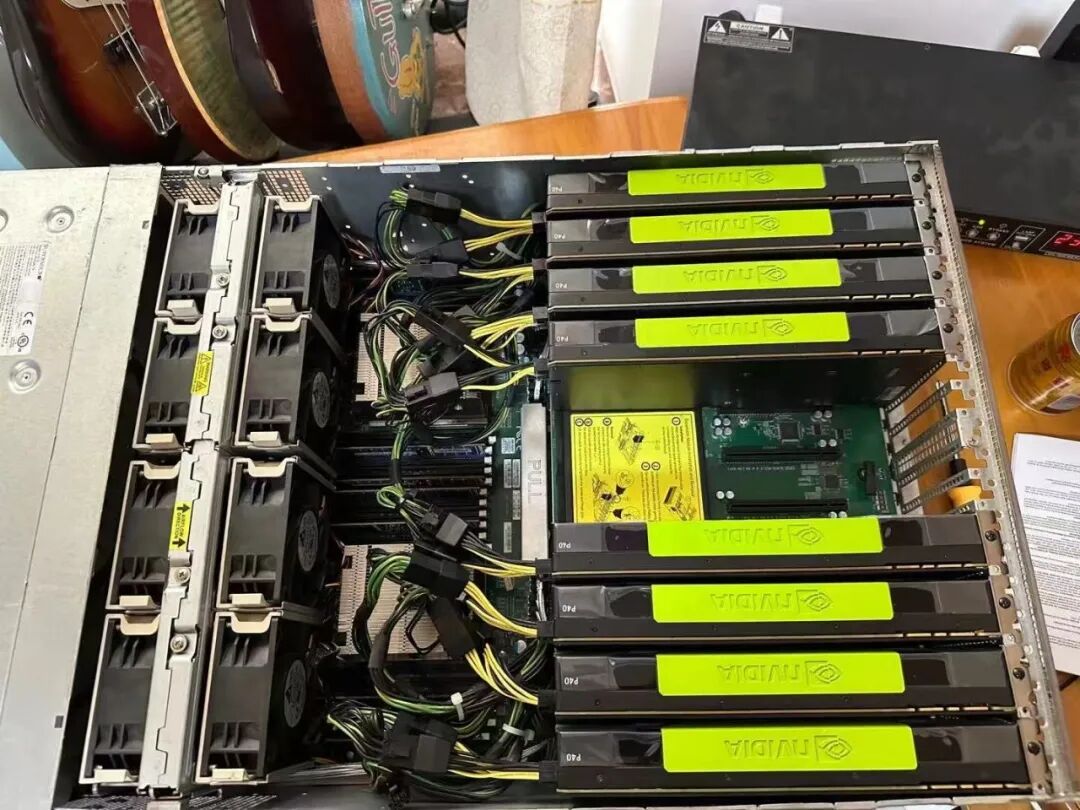
Self - assembled server (Provided by Yutian)
Although the scale of the WeChat AI robot project wasn't large, it achieved results as soon as it was launched because of its excellent product functions. "I remember very clearly that the price for the first order was only 50 yuan per month, and for the second order, it rose to 200 yuan per month. Later, we established a company and signed up distributors to help expand the sales market. I remember that the highest - priced order was an annual contract worth 80,000 yuan."
The WeChat AI robot project allowed Yutian to experience the fun of AI entrepreneurship, but this process also taught him some lessons. "I realized that I might be very good at technology, but there were still many things in business that were beyond my knowledge. For example, in the cooperation with distributors, although I only got 10,000 yuan in the end, they could sell the product for 80,000 yuan. If it were me, I might only sell it for a few thousand yuan a year. I lacked an understanding of how much value technology could achieve in the market."
The biggest lesson from this entrepreneurship wasn't hitting the ceiling of commercialization. In mid - 2024, Yutian's WeChat AI robot began to be restricted by the WeChat platform, and a large number of accounts were banned. This project that had brought him a sense of achievement was instantly destroyed under the rules of the giant. This became the first lesson in his AI entrepreneurship career: running "naked" in the ecosystem of giants, the risks are uncontrollable.
After shutting down the WeChat AI robot project, Yutian didn't idle around. In the second half of 2024, he started trying to do hardware in order to find more AI application scenarios.
Yutian's new idea was to combine AI image generation and 3D printing to create an all - in - one "AI printer". It could not only support users to upload customized patterns to print phone cases or phone films to be pasted on the back of phones but also use AI to generate images and then 3D - print customized dolls. "We bought circuit boards from Shenzhen to assemble by ourselves, and also bought a lot of graphics cards and memory to build our own servers and deploy large models." However, the result of this entrepreneurship was not ideal.
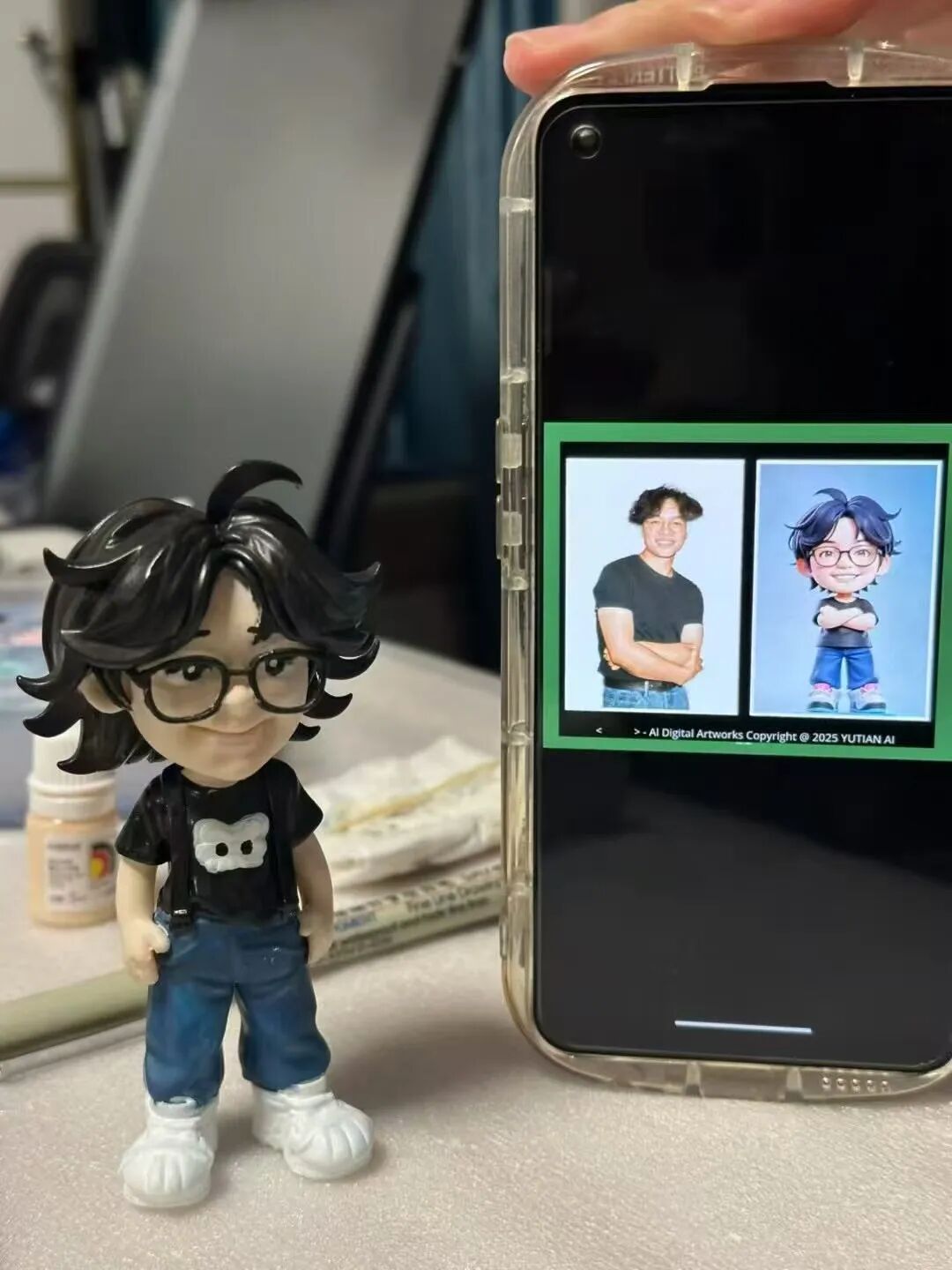
3D - printed AI dolls (Provided by Yutian)
To verify the market value of the product, Yutian took the "AI printer" to a night market to set up a stall. "At first, I also thought about selling this device to stall owners so that they could do business. But after I actually tried setting up a stall myself, I found that my turnover was far lower than that of those selling barbecues or other snacks. So later, the project gradually stopped." Yutian said that he once again felt the gap between the implementation of AI technology and commercial value.
But another thing that surprised him was that in 2025, after DeepSeek triggered the public's attention to AI, people's enthusiasm for AI made it a new hot spot. "Later, I found that many large companies that wanted to follow the trend and gain face with AI would rent equipment similar to the AI printer we made at that time for public display at events like exhibitions."
Regarding these two AI entrepreneurship attempts, Yutian said, "These two projects have one thing in common: I was too far - ahead. At the time when the products were born, many people might not understand what they were, let alone what value they could bring. So most customers were not willing to pay for them."
Some Things Are Harder Than AI Entrepreneurship
When looking back and summarizing his AI entrepreneurship experience, Jing En felt mixed emotions. "At that time, there was only 600,000 yuan left in the company's account. If no funds came in, we couldn't even pay the employees' salaries that month."
During the weekend after receiving the news of the investor's withdrawal, Jing En also tried to save the company. He talked to the investor to understand the reason for the withdrawal and urgently looked for new investors to take over. However, due to the failure to reach an agreement on the cooperation method and details, he finally faced the outcome of failed self - rescue. "This incident also taught me that I should never think about raising funds only when I'm out of money."
Jing En said that he realized for the first time that entrepreneurship not only means being able to develop products, drive growth, and raise funds but also means being responsible for everyone's lives. And closing the company he founded with his own hands was just the beginning of the problem. To pay the employees' salaries, Jing En sold the equipment he bought for deploying large models. Then he talked to the employees he had fought side by side with one by one about compensation. Some employees calmly accepted the fact, but some couldn't accept the sudden loss of their jobs, and all these pressures were piled on Jing En.
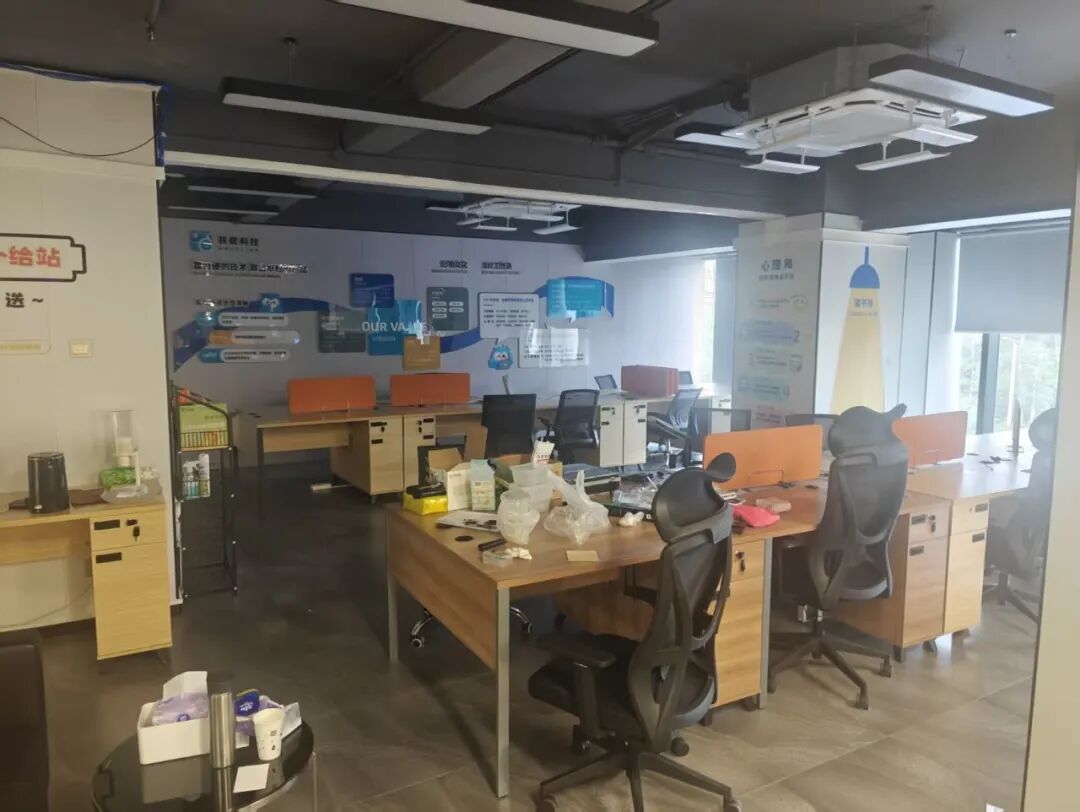
The empty office (Provided by Jing En)
After the Spring Festival in 2026, Jing En was still facing labor - arbitration disputes because of the employees' compensation issues. "During that time, I was very self - blaming and felt very useless. It seemed that I couldn't handle many things well, and I started to doubt myself. Especially when the employees who had disputes over compensation were those I was particularly willing to promote and gave high - level treatment to. It made me feel betrayed." Until now, Jing En is still dealing with the compensation disputes with his former employees and is preparing to go to court.
To dispel the negative emotions from his previous entrepreneurial experience and because he still has enthusiasm for AI entrepreneurship, Jing En has now devoted himself to a new AI entrepreneurship project. "The current AI Agent still uses the browser protocol for programmers to write test and debugging code, and we are rebuilding one for the Agent." According to Jing En, this product called "BrowserX" is an AI infrastructure - related project. Compared with traditional CDP and Playwright browser - control solutions, BrowserX can save more tokens, detect DOM more accurately with lower latency, and endow the Agent with