Who is still buying fuel-powered cars?
In April 2026, the monthly penetration rate of new energy passenger vehicles in the domestic market exceeded the 60% mark for the first time, indicating that the automotive market has further entered an era dominated by electric vehicles. This milestone leap is mainly due to the significant decline in the sales of fuel vehicles. With the in - depth advancement of intelligent and electrified technologies, the penetration rate of new energy vehicles is expected to remain at a high level.
01
Significant Decline in Fuel Vehicle Sales
Zhang Yongwei, the vice - chairman and secretary - general of the China EV 100, made a prediction in 2024 that by 2030, China and the EU would become the global leaders in the new energy vehicle market, and the penetration rate of new energy vehicles might exceed 60%.
This "aggressive" prediction has been partially verified four years ahead of schedule. According to the latest data released by the Passenger Car Association on May 11th, the retail penetration rate of domestic new energy passenger vehicles reached 61.4% in April this year, exceeding 60% for the first time in history. This means that more than 6 out of every 10 new cars sold are new energy vehicles (including pure - electric, plug - in hybrid, and extended - range vehicles).
However, the penetration rate of new energy vehicles breaking through 60% is not because of a significant increase in the sales of new energy vehicles, but rather due to the rapid collapse of fuel vehicle sales. In April, the retail volume of the national passenger car market was 1.384 million units, a year - on - year decrease of 21.5% and a month - on - month decrease of 16.0%. The cumulative retail sales in the first four months were 5.604 million units, a year - on - year decline of 18.5%.
According to the analysis of the Passenger Car Association, from January to February this year, the retail volume of fuel vehicles decreased by 740,000 units year - on - year, accounting for 40% of the reduction in passenger car retail volume; in March, the retail volume of fuel vehicles decreased by 345,000 units year - on - year, accounting for 52% of the reduction in passenger car retail volume; in April, the retail volume of fuel vehicles decreased by 365,000 units year - on - year, and the proportion of the reduction in retail volume further expanded to 84%.
In other words, when the overall market shrinks, consumers are more inclined to choose new energy vehicles.
Looking at different camps, the penetration rate of new energy vehicles among independent brands remains the highest, exceeding 80%, while the penetration rate of new energy vehicles among mainstream joint - venture brands is only 14.1%. From this data, it is not difficult to see that although all automakers are facing challenges, joint - venture brands are under the greatest pressure. The official production and sales data shows that among mainstream joint - venture automakers, the sales of SAIC Volkswagen and GAC Honda in April decreased by more than 50% year - on - year. In particular, the sales of GAC Honda were only 5,100 units, a significant decline of 72.42%.
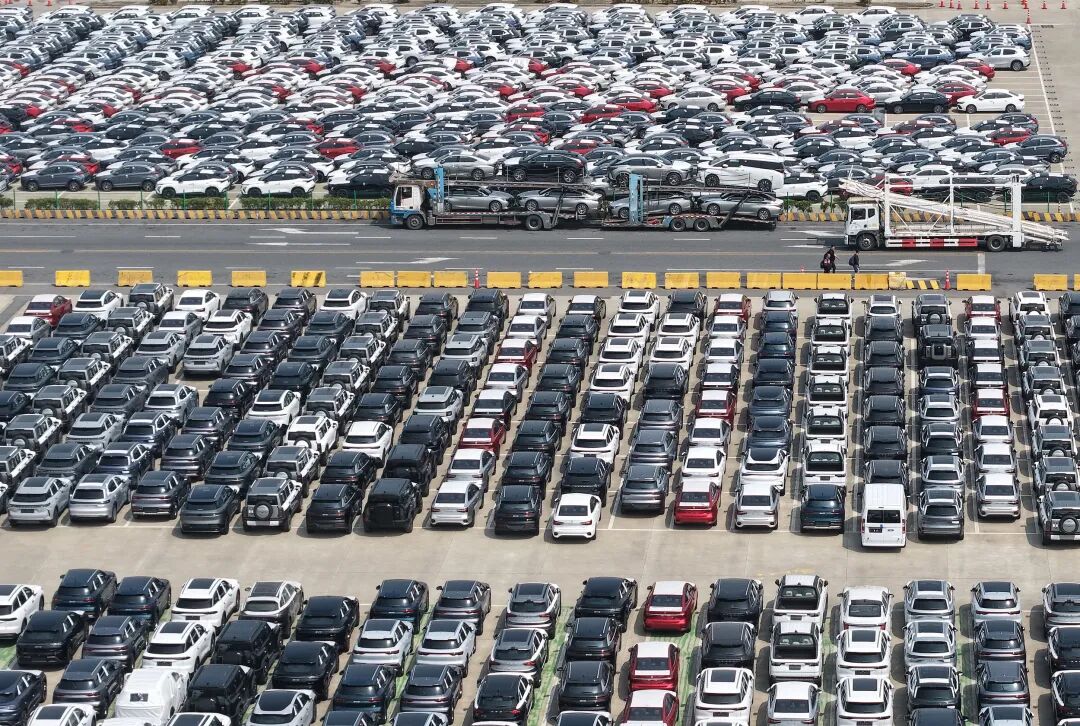
Independent brands have shown stronger resilience by relying on exports and new energy vehicles. According to the data of the Passenger Car Association, the export volume of passenger cars (including complete vehicles and CKD) in April increased by 80.7% year - on - year, reaching 769,000 units, accounting for 36% of the overall sales of OEMs, an increase of 17 percentage points compared with the same period last year. During the same period, new energy vehicles accounted for 52.7% of the total export volume, an increase of 8 percentage points compared with the same period last year. In the export pattern, independent brands lead in terms of growth rate and market share, reaching 91% and 85% respectively.
Chery is a typical example. In April this year, Chery's sales volume was 236,400 units, a year - on - year increase of 27%. Among them, the export volume was 172,000 units, far higher than 87,700 units in the same period last year. The proportion of export sales in the same period last year was less than 50%, while this year it has reached 73%.
In the domestic market, many new energy brands have achieved sales growth. The delivery volumes of Leapmotor, NIO, Xiaomi, and Hongmeng Smart Mobility all increased significantly in April. Among them, Leapmotor's monthly delivery volume reached a new high, exceeding 70,000 units. The "new - force" brands incubated within traditional manufacturers also performed well. The sales of brands such as Zeekr, Voyah, Deepal, and ARCFOX all showed a year - on - year growth trend in April.
The collapse of fuel vehicles began to show as once - popular models were gradually marginalized. In the Chinese market, Nissan has no more classic models that can compete, except for the relatively stable Sylphy. In the Honda camp, only the CR - V is barely holding on. The once - popular Accord, Civic, and the "people's god - car" Fit have all been left behind by their competitors in the same class.
In December 2025, the Nissan Sylphy, Toyota Corolla Cross, Volkswagen Lavida, and Sagitar could still achieve monthly sales of over 20,000 units. By March this year, only the Sylphy could still sell more than 20,000 units per month. Now, it is difficult to see the once - prosperous scene in the fuel vehicle sales list.
02
Soaring Oil Prices Add Fuel to the Fire
Many industry experts told "Caixin" that the rapid growth of the penetration rate of new energy vehicles is largely due to the soaring oil prices, which have spurred a large number of "from - fuel - to - electric" users in the short term.
Previously, fuel vehicle manufacturers had been working hard to maintain their market share. In the price war that swept the automotive industry, fuel vehicle manufacturers participated more aggressively. However, in the face of the oil prices that consumers are concerned about, automakers are almost helpless.
Since 2026, the price - cut wave of joint - venture automakers has not stopped. For example, FAW - Volkswagen's new Sagitar S is sold at a fixed price of 79,800 yuan, bringing the price of German A+ - class entry - level family sedans below 80,000 yuan. FAW - Toyota also offers fixed - price promotions. The Corolla Hybrid starts at 89,800 yuan, and the compact SUV Frontlander starts at a guide price of 132,800 yuan, with some additional dealer discounts. Overall, the prices of many models have "fallen", and the classic models of joint - venture brands in the 150,000 - yuan range have started to enter the "bargain - basement" market of 100,000 yuan and below.
Luxury fuel vehicles are also under continuous pressure, with both sales and prices declining. There are many Audi A3 models priced at 100,000 yuan, Mercedes - Benz C - class models priced in the early 200,000 yuan range, and BMW 5 - series models priced below 300,000 yuan. At the beginning of this year, BMW officially reduced the prices of all 31 models, with the maximum price cut exceeding 300,000 yuan.
Data released by Cui Dongshu, the secretary - general of the Passenger Car Market Information Joint Conference of the China Automobile Dealers Association, shows that in the first four months of 2026, there were a total of 56 models with price cuts in the entire industry, 12 fewer than the same period. Although the data seems to indicate that the price war is gradually subsiding, the competition in the fuel vehicle market is still fierce. The number of price - cut models for fuel vehicles is 25, 8 more than the same period.
Especially in April, the average terminal discount for fuel vehicles was 22.1%, while that for new energy vehicles was 10.9%. The price - cut intensity of fuel vehicles was almost twice that of new energy vehicles. However, the market trend also shows that despite the active self - rescue efforts of fuel vehicle manufacturers, they have failed to regain their market share.
In January this year, Pan Jian, the co - chairman of CATL, pointed out at the Davos Forum that Chinese intelligent electric vehicles are a perfect combination of intelligent and electrified technologies, providing consumers with a set of brand - new functions different from traditional fuel vehicles, which has contributed to the continuous and rapid growth of electric vehicle sales in China. "Without intelligence, the penetration rate of Chinese electric vehicles might not exceed 30%."
In the face of this major trend, fuel vehicle manufacturers are also stepping up their efforts in intelligentization to capture consumers' minds. The most representative "big move" is to introduce Huawei. For example, many Audi models have started to be equipped with Huawei's Qiankun Intelligent Driving system, and Nissan has equipped the Teana with the Hongmeng cockpit.
In August 2025, SAIC Audi's A5L Sportback was officially launched, with a total of six models in the series, three of which are Huawei Intelligent Driving versions. Two months later, FAW Audi also launched the Intelligent Driving version of the A5L. The new - generation Audi Q5L and Audi A6L also launched models with Huawei's Qiankun Intelligent Driving system.
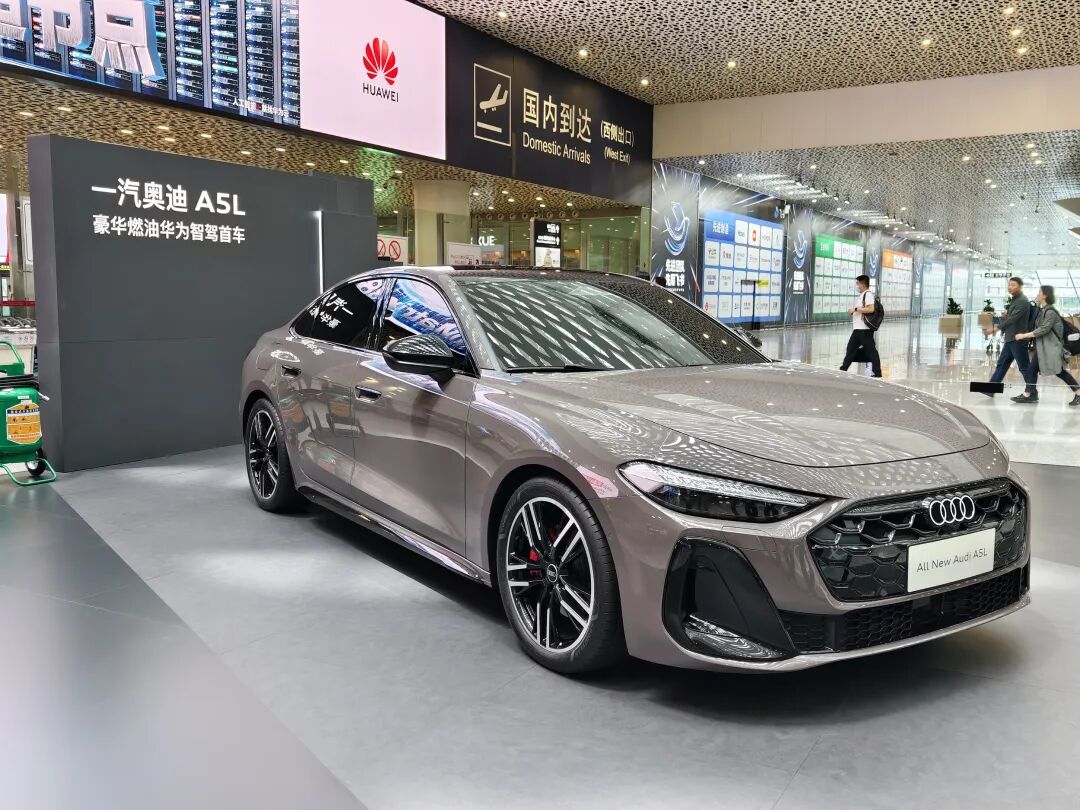
However, this "bonus item" has not yet significantly boosted the sales of relevant models. According to data from Yiche based on the Passenger Car Association, since its launch in August 2025, the overall sales of FAW Audi's A5L have shown a trend of rising first and then falling, with an average monthly sales volume of only about 4,600 units. The average monthly sales volume of SAIC Audi's A5L Sportback after its launch has also been only a little over 2,000 units.
In November 2025, Dongfeng Nissan launched the 2026 - model "Teana · Hongmeng Cockpit" version, with a guide price ranging from 139,900 yuan to 167,900 yuan, in order to attract price - sensitive family users who do not want to give up the intelligent experience. However, the market response has not been as enthusiastic as expected. Yiche's data shows that although the launch of the Hongmeng Cockpit version has indeed driven a recovery in sales, the overall performance is not outstanding. Since December 2025, the cumulative sales of the Teana in five months have been about 28,000 units, with an average monthly sales volume of about 5,700 units.
Some industry insiders point out that fuel vehicle users pay more attention to price and durability when buying a car and are often "not interested" in intelligent configurations. This has led to a mismatch between the automakers' "feature - stacking" strategy and consumers' actual needs.
This view is confirmed in the "2026 Passenger Car Market User Trend Insight Report" released by the AutoHome Research Institute. The report shows that when "loyal fuel - vehicle users" buy a car, they regard quality, safety, and brand as the primary criteria, and power, handling, and comfort are their most core basic needs. In contrast, intelligent and entertainment configurations are only "icing on the cake" for them. In addition, these users mainly use cars for short - distance trips, have low demand for long - distance driving, and are not sensitive to the difference in the cost of using fuel and electricity. These characteristics have prompted them to firmly choose fuel vehicles.
03
How Long Can the 60% Penetration Rate Last?
Now that the penetration rate of new energy vehicles has exceeded 60%, will it continue to rise in the future?
Cui Dongshu told "Caixin" that objectively speaking, the current penetration rate of new energy vehicles reaching 60% represents a significant "leap - forward" development. Looking back, the market was not in such a strong state before. The penetration rate climbed from 52% in March to 61% in April. This explosive growth is largely due to the sharp decline in the sales of fuel vehicles. The contraction of the fuel vehicle market share has directly pushed up the proportion of new energy vehicles.
In the next few months, the demand for domestic fuel vehicles will still face certain pressure. If the oil prices do not show a significant decline, it is expected that the penetration rate of new energy vehicles will remain at a high level of around 60%. Looking back at last year's trend, the penetration rate increased steadily from 51% in April to 59% in November. Therefore, the increase in the proportion of new energy vehicles is irreversible.
"Given that this leap is relatively rapid, I think the penetration rate will remain above 60% for a relatively long time, and it will be difficult to fall below 55% in the short term. It is expected that in the next few months, the market will fluctuate in the range of 58% to 65%, and 62% to 63% may become the norm. Especially from May to June and July to August, the possibility of the penetration rate falling below 60% is relatively small, which indicates that the market has established a new upward trend." he added.
Pan Jian holds a more "aggressive" view. He once predicted that the average annual penetration rate may exceed 60%, and by the end of this year, the penetration rate of Chinese electric vehicles is expected to reach 70%.
However, many industry insiders have expressed relatively conservative views to "Caixin". They believe that the stimulating effect of the short - term increase in oil prices is temporary. Once the oil prices fall, the penetration rate of new energy vehicles will probably return to the normal level. Zhu Kai, the general manager of Jielanlu Consulting, further pointed out to "Caixin" that the mainstream market in the future will surely belong to new energy vehicles, and fuel vehicles will gradually retreat and focus on niche markets. He believes that fuel vehicles will still have a place in niche markets such as the Tank brand, as well as in markets that are not sensitive to fuel consumption, such as B - class and C - class sedans and MPVs.
After the penetration rate breaks through the 60% mark, the decline of fuel vehicles is a foregone conclusion. However, it must be admitted that the decline of fuel vehicles is just a long - term and irreversible "territorial contraction", and they still have a market in many scenarios. The future automotive market will feature a "scenario - based coexistence" dominated by new energy vehicles.
This article is from the WeChat official account "Caixin Weekly". Author: Dong Xue, Yang Shier. Editor: Shi Ye. Republished by 36Kr with permission.