Who can defeat DJI?
In the business world, every prosperous area has always attracted a large number of predators.
In 2015, Wang Tao, who had offended the US government, rarely accepted an interview with foreign media. At that time, a Forbes reporter asked Wang Tao who DJI's competitors were, and he replied that they were XAG and Zero Zero Robotics. These players in the drone field had already been easily defeated by DJI.
Ten years later, when he was interviewed by the media again, the list of competitors he mentioned had grown longer. From agricultural drones to panoramic cameras, from microphones to gimbals, DJI's business tentacles have extended to more fields, and each business line corresponds to a mature enterprise.
Especially in the pocket camera segment pioneered by DJI, the popular and best - selling Pocket series has caught the eye of more and more manufacturers. Without surprise, mobile phone manufacturers such as OV and Xiaomi, as well as leading enterprises in niche segments like Insta360 and Hohem, will all launch products similar to the Pocket this year.
In the past few years, apart from many employees leaving to start their own businesses, DJI has generally had an easy and comfortable time. Its consumer drones still lead the market by a large margin, and its imaging business has also blossomed in multiple areas, achieving both revenue and profit. However, in the cruel business world, no one can stay on top alone. Behind the tranquility, DJI needs to face wave after wave of challengers at its door.
01
DJI started with flight control systems. Its earliest business model was very simple and straightforward. Wang Tao put his products on the forum for model aircraft enthusiasts and sold a set of systems for 200,000 yuan. The target customers were large state - owned enterprises. They needed to demonstrate the model aircraft in front of their leaders to show the state - owned enterprises' positive attitude towards embracing cutting - edge technology. After the demonstration, the model aircraft was basically locked in a glass cabinet.
Although this business was profitable, Wang Tao realized that this approach was not sustainable. It couldn't be scaled up, and it was not a product - oriented mindset. He hoped to create a flying vehicle that consumers could fly directly after opening the box.
With the rise of the multi - rotor drone segment, DJI quickly opened up the situation with its steady strategy and product - first mindset. In 2013, DJI launched its first blockbuster product, the Phantom 1, the first quad - rotor drone. Previously, drones had a high operation threshold and were expensive. The Phantom 1 could be flown right out of the box without complex assembly, and with a price of only $679, it quickly opened up the market for non - professionals.
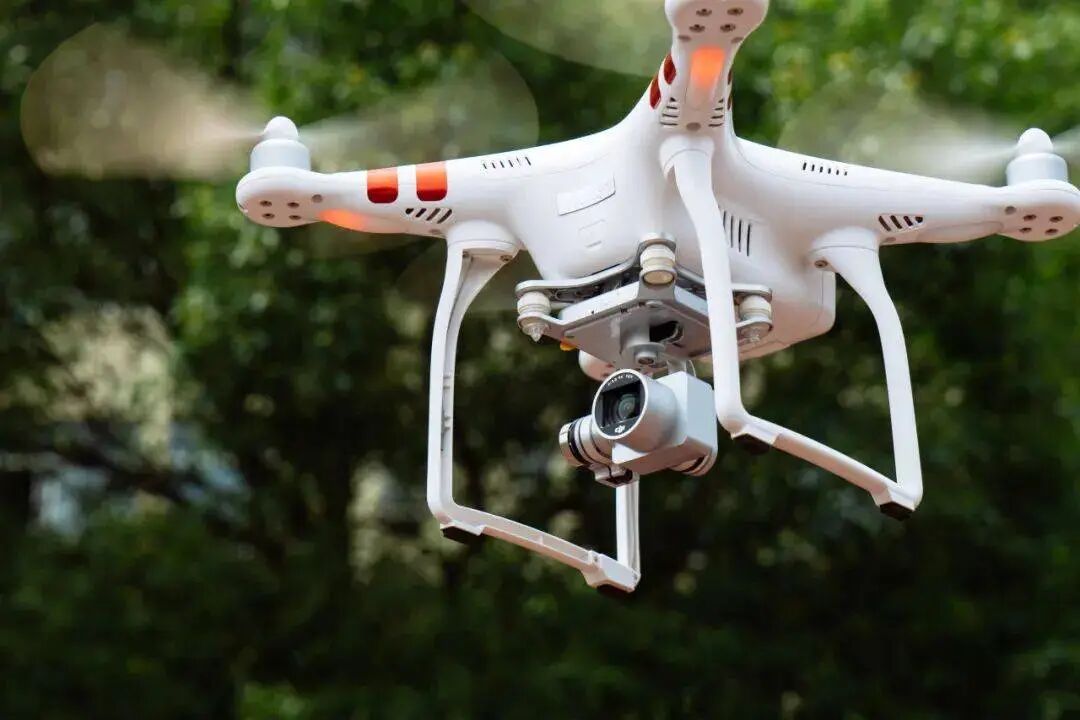
A year later, without any significant market promotion, DJI's drone sales exceeded 400,000 units, and its revenue increased by four times. In 2013, DJI's year - end bonus was a Volkswagen Golf, and the next year it became a Mercedes - Benz.
At that time, many Hollywood stars and Silicon Valley tycoons were using DJI drones, and DJI also sponsored several American TV shows. Wang Tao once attended an industry summit and showed a PPT listing the tycoon fans of DJI drones, including Bill Gates, Mark Zuckerberg, and Steve Wozniak.
DJI has been unrivaled in the consumer drone segment, with its market share remaining above 70% for years. Apart from the technical advantages accumulated through steady development, a major reason is that its competitors are really weak.
At that time, there was a wave of drone startups at home and abroad. Many domestic manufacturers, including XAG, Zero Zero Robotics, EHang, Yuneec, and Autel Robotics, received a lot of capital support. Overseas, there were drone enterprises such as Parrot and 3D Robotics, and GoPro also entered the drone segment from the sports camera field.
However, these manufacturers were short - lived. XAG shifted to focus on the agricultural segment, Zero Zero Robotics has gone bankrupt and liquidated, and Yuneec, invested by Intel, has exited the market. Lily, which couldn't raise funds and produce drones, also declared bankruptcy in 2017. 3D Robotics got into trouble and transformed into the enterprise market. Parrot, the pioneer of quad - rotor drones, later exited the consumer drone market.
GoPro and DJI once had a honeymoon period. In the early days, DJI drones did not integrate cameras, and users needed to DIY. DJI's gimbals were defaulted to recommend GoPro, and GoPro also used DJI drones for aerial filming at its press conferences.
Originally, this was supposed to be a business story of a strong alliance and ecological complementarity. DJI's Phantom 2 was initially planned to be an OEM product for GoPro. However, the more famous GoPro demanded two - thirds of the profit, which Wang Tao couldn't accept, and the two parties parted ways unhappily.
GoPro decided to develop its own drones, but its first - generation drone, Karma, was delivered late and soon had to be recalled due to product quality issues. Eventually, GoPro had to abandon the drone segment. To this day, Liu Jingkang of Insta360 still keeps a Karma in his office as a reminder of the respect for the hardware industry.
Back then, the ambitious Xiaomi also didn't miss out. In 2016, Xiaomi launched a drone priced at 2,499 yuan, and Lei Jun held a live - stream for this product. However, live - streams are often prone to product failures. During the live - stream, the gimbal camera of the drone dropped onto the table with a crisp sound, and in the subsequent test - flight session, the drone crashed on the spot because the staff didn't charge it in time, making the scene extremely awkward.
However, the more troublesome problem was that Feimi, Xiaomi's drone brand, later encountered a series of product quality issues, and the negative feedback was overwhelming. The next year, Xiaomi Mall removed all drone products from its shelves, and Feimi gradually faded out of the spotlight.
Actually, Wang Tao once approached Lei Jun and wanted to sell DJI's flight control systems to Xiaomi. But Lei Jun's plan was to have DJI cooperate with Xiaomi and integrate into the Xiaomi ecosystem to pursue extreme cost - performance and sell products on Xiaomi Mall. Finally, the two parted ways unhappily. Lei Jun then invested in another more cooperative team and launched Feimi.
Internet giants without hardware genes also set their sights on drones. In 2016, Tencent cooperated with Zero Zero Robotics to launch a follow - me drone, a project led by Tencent Interactive Entertainment. However, this product didn't make much of a splash. The delivery was postponed multiple times, and only a small number of users received the beta samples. This once again proved that Internet companies are not good at making hardware.
Liu Jingkang later analyzed DJI's past competitors and came to the conclusion that many of DJI's opponents lacked patience.
DJI quickly dominated the consumer drone market. In 2015, the cover title of a Forbes report on DJI was "Bow Down to Your Drone Overlord". Even the Premier said to Wang Tao, "You are a star."
Also in the same year, Wang Tao rarely appeared at the opening ceremony of Shenzhen University. The usually humble and low - key Wang Tao was full of enthusiasm at that time. "In the consumer drone market pioneered by DJI, everyone is chasing DJI's footsteps. Now it seems that this might be the first product in modern Chinese history that can lead the global technology trend."
In 2016, with the launch of DJI's Mavic Pro, this foldable drone, with its remarkable high performance and cost - effectiveness, almost swept the consumer drone market. From the Phantom to the Mavic and Inspire, DJI's drone series have all achieved good results in the market. An institution once conducted a statistics. In 2017, there were still 19 large - scale enterprises competing with DJI. A year later, this number dropped to 7.
Some netizens even joked that DJI's only competitor in the consumer drone field is the CAAC (Civil Aviation Administration of China).
02
In the perception of the outside world, the drone market requires high R & D investment but has a relatively small scale. As a result, large companies don't care about it, and small companies can't do it.
Drones may seem unremarkable, but they involve a long - chain of technologies and industries, including flight control, image transmission, gimbals, and structural miniaturization, which greatly tests the accumulation of technology. Many people can buy some parts in Huaqiangbei and assemble a drone, but the experience is completely different.
This gave DJI, which focuses on R & D and product development, an opportunity to build a deep moat in the drone field through continuous technology investment and product refinement.
Before the launch of DJI's first - generation drones, it had already solved a series of problems such as shock absorption and stabilization, high - speed turning, and point - around flight, achieving full - chain self - control from brackets, remote controls, to propellers and balance rings.
The accumulation of technology and focus on products have always played a key role in DJI's development history. With the concept of vertical integration, DJI develops its own chips, flight control systems, gimbals, image transmission systems, and cameras, and also assembles the whole machines by itself. Coupled with large - scale procurement, it has the bargaining power in the upstream.
Moreover, even in the absence of strong competitors, DJI still maintains a high - density investment in technology, which gives it an absolute advantage over its competitors in the drone and imaging fields.
It is precisely this focus on technology and products that enables this company, which is called the most Apple - like company by American media, to gain a large number of users with little marketing investment in the early stage.
However, there is a natural drawback to this business: the market is not large enough. As early as 2016, Wang Tao predicted, "The drone market is about to reach saturation, and DJI's revenue may peak at 20 billion yuan."
DJI, which has dominated the consumer drone market for many years, realized that the industry ceiling has become the biggest bottleneck for the company's growth. At that time, DJI opened up two growth curves. One is to develop industrial - grade drones, including agricultural plant protection, power line inspection, surveying and mapping, and emergency rescue. The other is to enter the imaging field and develop sports cameras. Flight control and gimbals are DJI's strengths in the drone field, and these capabilities are naturally suitable for the sports camera scenario.
DJI first disassembled the three - axis gimbal from the drone and installed a camera to make a handheld gimbal camera, which is the predecessor of the later - popular Osmo Pocket. In 2019, DJI launched its first sports camera, the Osmo Action. In 2025, DJI successively released its first panoramic camera and thumb camera. So far, DJI has completed a full - category layout in the imaging field.
When DJI was dominating the drone field, Insta360, founded by Liu Jingkang, had just been established. This "Red Boy" in Wang Tao's mouth is actually a well - known serial entrepreneur. He stood out in various startup competitions and was favored by many venture capitalists such as Zhou Hongyi and Li Kaifu.
However, for a long time, Insta360 didn't catch DJI's attention.
Insta360's first product was an enterprise - grade VR panoramic camera. Like all VR products, it was not very popular. The next year, Insta360 launched the world's first iPhone - connected panoramic camera, the Nano. The biggest highlight of this product was the "real - time stitching" function, which greatly reduced the video processing time.
What really made Insta360 stand out was the first panoramic sports camera, the Insta360 ONE, launched in 2017. Its innovative gameplay of shooting first and then selecting the scene won the favor of many users.
Insta360 also faces the same problem as DJI. In the panoramic camera segment it pioneered, although Insta360 has always maintained a very high market share, the overall market size of the industry is only a few billion yuan. Whether it is for capital needs or development needs, the listed Insta360 needs to open up new segments.
In 2016, Insta360 launched the panoramic camera Insta360 Nano. In 2018, the Insta360 ONE X sports camera was released. The next year, the Insta360 GO thumb camera was launched. Insta360's product line has fully covered the niche segments of handheld cameras. Last year, Insta360 entered the fields of drones, handheld gimbals, and wireless microphones, achieving an ecological closed - loop from image capture to sound recording.
The consumer product lines of the two companies overlap significantly.
GoPro is no longer the invincible one, and its market share in the sports camera market has been declining year by year. These two Shenzhen - based companies, whose headquarters are only 10 kilometers apart, have finally collided.
However, this is an asymmetric competition. Compared with the arrogant GoPro, DJI has almost no weaknesses. In July 2025, DJI launched its first Osmo 360 panoramic camera, with a starting price of 2,999 yuan. In just three months, DJI captured about 43% of the panoramic camera market, reaching a 50 - 50 split with Insta360.
In contrast, Insta360's offensive against DJI is somewhat weak. The sales volume of its first - generation drone is still a mystery. Some media reported that only one or two thousand units were sold in the first three days of the launch, but Insta360 announced that 30,000 units were shipped in the first month. Even so, it still cannot shake DJI's position in the drone field.
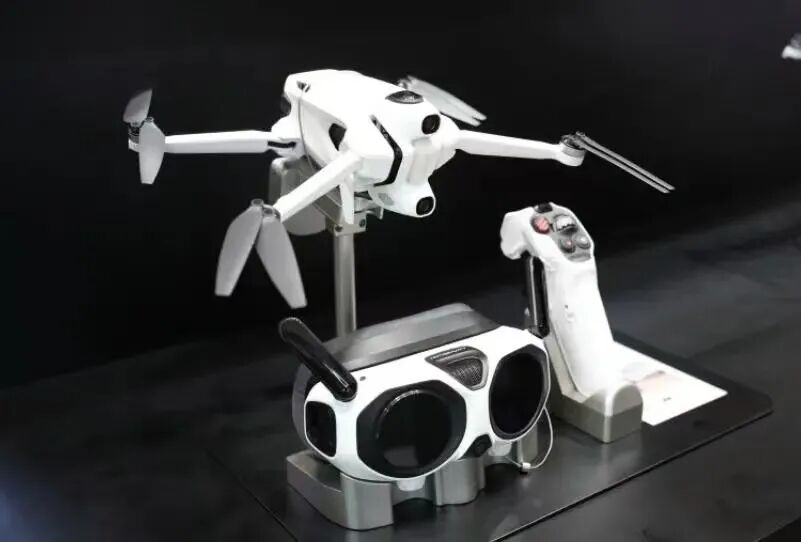
Even the disassembly report of an institution shows that the after - tax comprehensive hardware cost of the Insta360 A1 standard set is about 5,512 yuan. And the price of the Insta360 A1 after the price cut is almost the same. In other words, Insta360 is basically selling at cost.
In contrast, in the segment of sweeping robots, where DJI's capabilities have less synergy, DJI's dominance is significantly weaker. DJI's sweeping robot, the Roma, which was launched after five years of preparation, didn't make much of a splash in the sweeping robot market.
No wonder Liu Jingkang sighed, "Our greatest misfortune is that there is a DJI in our segment, and our greatest fortune is also having DJI."
DJI's existence has set a benchmark for technology and products in the industry and opened up the imagination space for the entire market. However, the problem is that it is more difficult to take a share from DJI than to persuade Yu Hao not to post short - videos.
03
Shortly after the start of work in 2026, DJI sued Insta360 in the Shenzhen Intermediate People's Court, accusing it of patent infringement. For Shenzhen, where both companies are based, this is destined to be a difficult lawsuit. Before this, DJI also increased the pressure on Insta360 through strong control of the supply chain and distribution channels, forcing Liu Jingkang to complain about DJI in the media.
Actually, besides the patent weapon and supply - chain squeeze, DJI has an even more effective killer move - price cuts. Thanks to DJI's complete layout in the entire technology chain, it can maintain a high profit margin. When new competitors enter the market, it can quickly gain an overwhelming advantage through price.
DJI also used this strategy to crush 3D Robotics, the largest consumer - drone manufacturer in North America.
This company, founded by Chris Anderson, the former editor - in - chief of Wired magazine, once had a valuation of up to $360 million and was full of ambition. However, its first - generation drone, the Solo, faced many difficulties and was repeatedly postponed for release. More fatally, when a Silicon - Valley - based, software - centric company competed with a