A single financing of 300 million yuan: Cooking robots are highly favored by capital. Can they create a "new flavor" in the silver economy?
It only takes three minutes from placing an order to serving a bowl of noodles. It may seem simple, but behind the scenes, the noodles are not cooked by a chef but by a robotic arm, and the toppings are not stir - fried by a human but by a cooking robot.
There are no pre - made dishes, and the whole process is intelligently operated. This is not an experience area at a technology exhibition but a series of senior citizen canteens in communities.
Here, technology is no longer just cold code. The cooking robot is transforming into an "invisible chef", quietly changing the daily lives of the elderly who face difficulties in having meals.
PART 01
Robots at the Wok: A "New Partner" in Senior Citizen Canteens
On Jingzhou North Road in Xihu District, Hangzhou, a store named "24 Solar Terms Robot Restaurant" has quietly emerged. It is the first full - process AI robot - powered intelligent restaurant in Hangzhou, covering an area of about 260 square meters with a total of 50 seats on two floors.
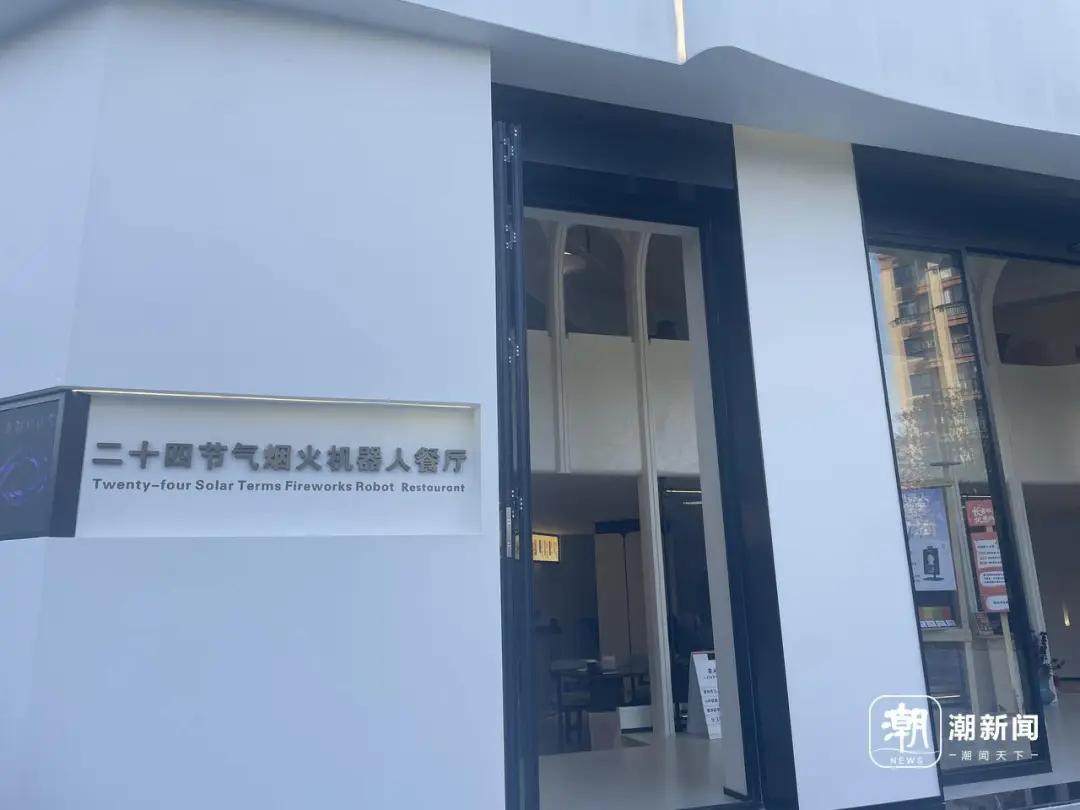
Image source: Chao News
Entering the restaurant, one feels as if they are in a future mechanical workshop. In the cooking area, robots are the absolute "head chefs". The robotic arms precisely add seasonings such as oil, salt, soy sauce, and vinegar in pre - set quantities.
Zhu Qi, a post - 95s algorithm engineer, said, "The movements and gestures of the robotic arms are precisely imitated from Hangzhou - style cuisine chefs, so the taste of the dishes is also standardized." For example, when cooking twice - cooked pork or crab roe tofu, the robot can even clean the wok by itself. The staff of the canteen added that he was at most a "foil".
In fact, this restaurant is not just a technology - showy eatery. From the very beginning, it targeted the elderly as its core group. Its featured AI face - diagnosis robot can identify the physical constitution of the elderly and recommend exclusive seasonal health - preserving meals, achieving "one meal for one person, dietary therapy based on syndrome differentiation".
Jiang Xiao, a staff member of the Social Affairs Office in Sandun Town, Xihu District, said, "This robot restaurant effectively supplements the meal - providing capacity of existing senior citizen canteens. Through technology - enabled elderly care services, the elderly can enjoy a more intelligent and considerate dining experience."
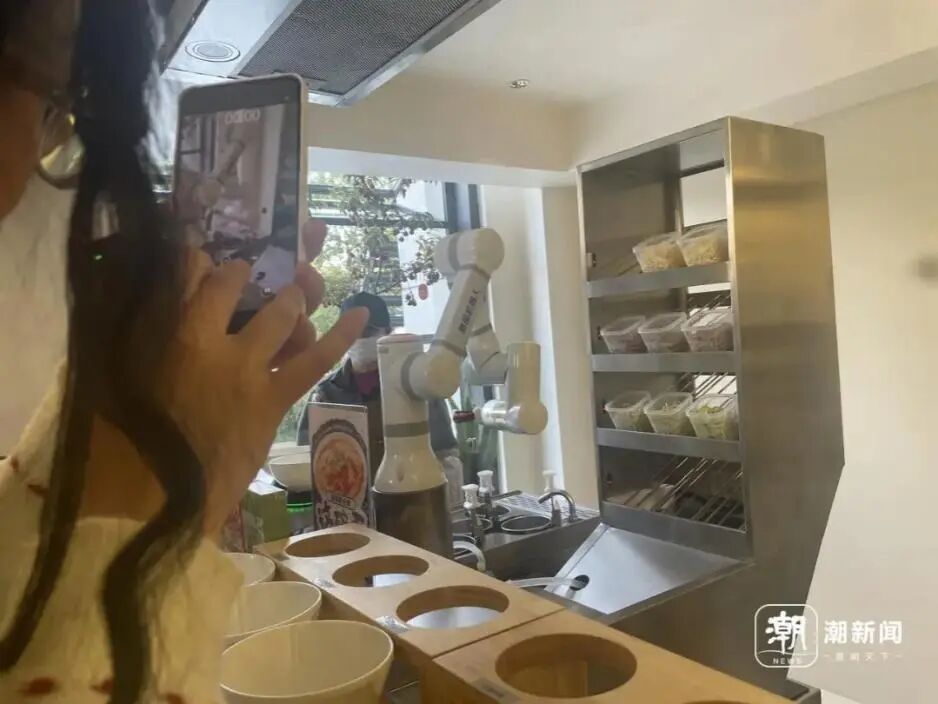
Image source: Chao News
AgeClub's research found that the trend of "robots at the wok" is no longer limited to the West Lake area and is rapidly sweeping across the country.
In Beijing, the Smart Canteen in Dongcheng Lumi Cang New Audio - Visual Industrial Park has also introduced cooking robots. Three cooking machines and one steam - baking machine are the "main forces" in their kitchen. With them, this canteen, which covers an area of nearly 200 square meters and serves about 400 to 500 people daily, with a full range of meat, vegetarian dishes, soups, and staple foods, can be managed by only 6 employees.
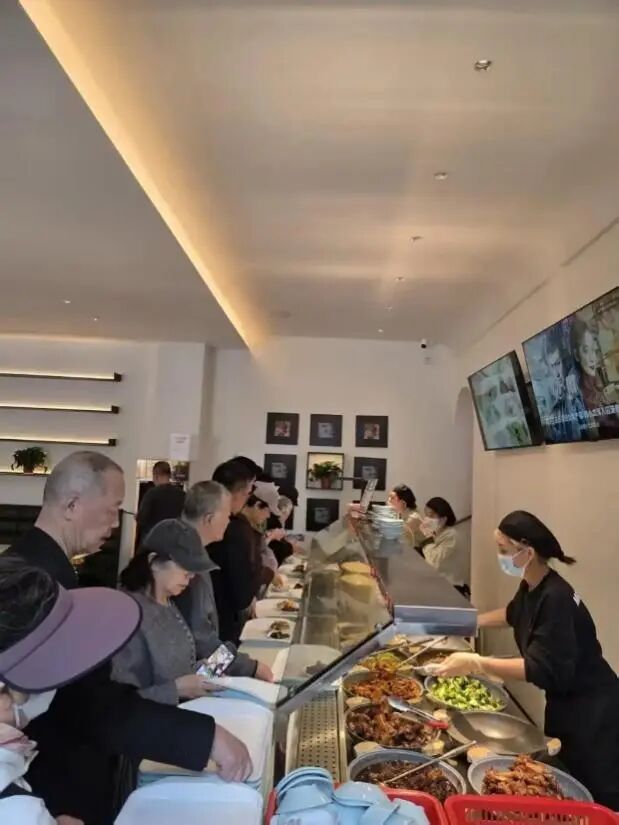
Image source: Beijing Evening News Online
In Shenzhen, the first community canteen with cooking robots was established in Longhua District. In Shanghai, at the Hongqiao Community AI Canteen in Changning District, the robotic arm automatically grabs ingredients according to the program and is proficient in frying, grilling, steaming, and boiling. It can match exclusive cooking plans according to the type of pre - prepared vegetables, and the temperature, time, and heat are precisely controlled by AI, and the amount of oil and salt is also well - regulated.
Not only community canteens but also high - end elderly care communities are starting to embrace this change.
This year, Taikang Home Huiyuan put cooking robots into use in the community. Facing the dining needs of hundreds of elderly people in a large - scale elderly care community, the robots take over the cumbersome cooking process. The staff only need to put the pre - processed ingredients into the machine to achieve high - standard food production.
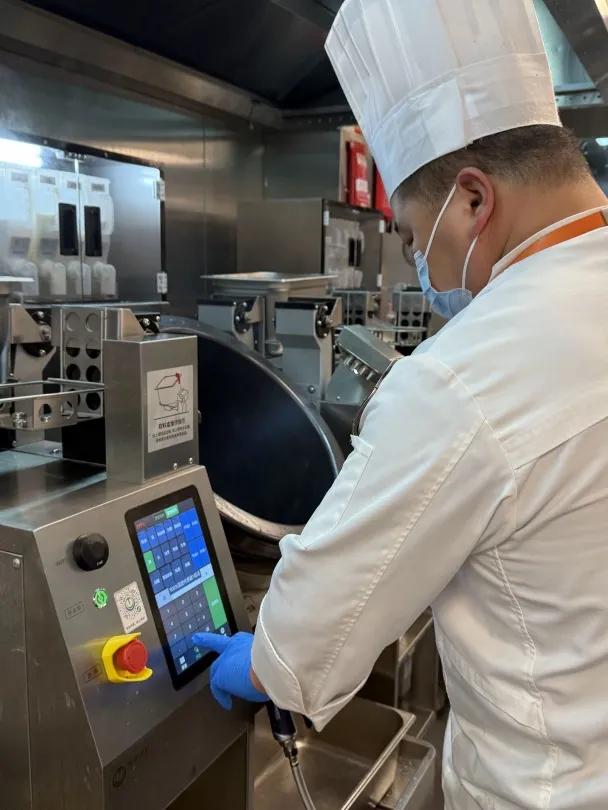
Image source: Taikang Home Huiyuan
These cases jointly verify a fact: In solving the problems of "labor shortage" and "stable taste" in elderly care catering, the intelligent solution has quietly completed the business cycle.
PART 02
Capital Leads the Way: A "Hotcake" in the Silver - Haired Economy
The year 2025 is known as the "commercialization year" of cooking robots. There has been intensive financing in the track, and many giants have entered the market. The single - round financing scale has jumped from tens of millions of yuan to hundreds of millions of yuan. Since this year, cooking robots have still been a hot topic of investment.
Leading enterprise Xianglu Robot announced on April 1 that it had completed a 300 - million - yuan financing round, led by the industrial upgrading fund managed by Yizhuang State - owned Investment, with Amber, Jiuan, and Haitang following. After investments from Source Code, IDG, Tencent, and JD, Xianglu's AI cooking robot has once again received support from major institutions, leading the industry in cumulative financing scale.
Also in April, Xiangke Intelligence completed a 150 - million - yuan Series A financing round, led by Ninebot in a strategic investment, with multiple industrial institutions such as Changsha Oriental Private Equity Fund and Jiangsu Guosheng Capital following. Xiangke Intelligence's LAVA kitchen robotic arm can accurately identify ingredients and even complete meal packaging and is the first embodied intelligent robot in the country to obtain a food business license.
Why is capital so fond of this track? The answer lies in every community canteen and elderly care institution that is troubled by the "difficulty of having meals".
For community senior citizen canteens and elderly care institutions, ensuring that the elderly have a good meal is the top priority. In the past, the back - kitchen relied on the skills of chefs. However, it was difficult to recruit and retain chefs, and the cost was high. Community canteens have limited funds, and most chefs are reluctant to stay for a long time, making it difficult to maintain a stable level of dishes in the canteen.
At the same time, the dietary needs of the elderly vary greatly. Those with good teeth may prefer chewy food, while those with poor teeth need soft and easily - digestible food. Elderly people with high blood pressure need to reduce salt intake, and those with diabetes need to control sugar. It is impossible for a single chef in the back - kitchen to meet the personalized needs of dozens or even hundreds of elderly people at the same time.
Of course, cooking robots are not omnipotent, but they can solve a large part of the problems.
The primary advantage is, of course, stability.
The Haishu Community Canteen in Wuchang Street, Yuhang District, Hangzhou introduced two intelligent cooking robots priced at 60,000 yuan each this year. They are like "standardized cooking masters", precisely controlling the ratio of oil and salt to the gram. The dishes they cook are fresh in color, suitable in saltiness, and in line with the modern concept of healthy eating.
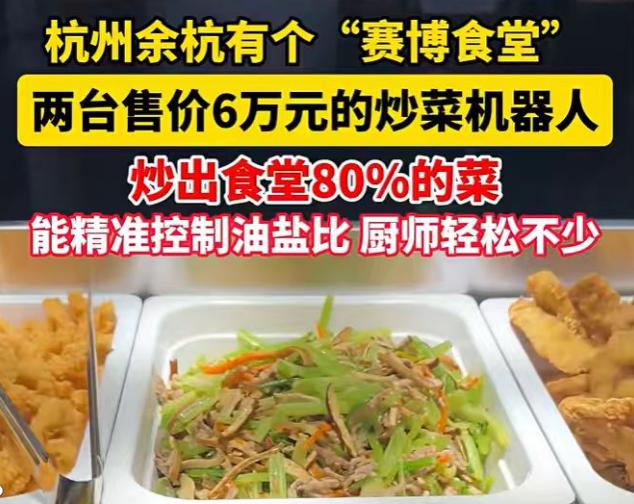
"Previously, there was only one chef in our canteen, and he was extremely busy during peak hours. Now, with the 'employment' of two robots, not only has the meal - serving speed increased significantly, but the taste of the dishes has also become more stable," said a staff member of the Haishu Community Canteen.
Secondly, it promotes healthier eating.
For example, the Hongqiao Community Canteen in Shanghai can connect the "AI chef" in the system background to the elderly's mobile phones. Based on the pre - entered health indicators or eating habits, it can provide personalized meal recommendations and nutritional meal plans. At the Smart Canteen in Jinhua Road Street, Chengdu, the system can rely on the elderly's personal health records. For different health conditions such as diabetes and high blood pressure, it can intelligently prompt dietary risks and recommend suitable meals, reducing the risk of getting sick from the source.
This undoubtedly lays a foundation for healthy eating for the elderly who need long - term chronic disease management. Moreover, most elderly people are not even aware that the dishes they eat are cooked by robots.
As the person - in - charge of Hongbo Zhicheng Intelligent Cooking Robot Company said, cooking robots can operate stably for 24 hours, reducing operating costs by more than 20% while improving meal - serving efficiency and food safety levels.
Under such a strong and urgent demand, domestic cooking robot enterprises are beginning to stand out and have many opportunities to be recognized by the market.
PART 03
Deep Integration: Stir - frying a "New Flavor" in the Silver - Haired Economy
A bowl of noodles or a plate of vegetables may seem ordinary, but they reflect the major trend of the deep integration of the silver - haired economy and smart elderly care.
The latest data from the National Bureau of Statistics shows that the population aged 60 and above in China has reached 323 million, accounting for 23% of the total population. This huge group faces the questions of "what to eat" and "how to eat" every day. Not every elderly person needs to see a doctor every day, but every elderly person needs to eat every day.
However, the dietary needs of the elderly are naturally more demanding than those of ordinary consumers. The food needs to be soft, low in oil and salt, and tailored to each individual. However, chefs who can provide such refined services are expensive and difficult to recruit. Many canteen owners frankly say, "It's not that we don't want to hire chefs; it's just that we can't find them."
There is a shortage of 3 million chef talents in China. The high - temperature and high - pressure environment in the back - kitchen discourages young people. As a result, the group that needs refined diet often receives the most rough service, and some elderly people just have a casual meal every day.
Cooking robots can effectively solve the problems of "labor shortage" and "high labor cost" commonly faced by the catering industry, especially grass - roots canteens. At the same time, the investment cost of a robot is approximately equivalent to the annual salary of an ordinary chef, but the robot is more stable and does not generate additional labor costs. It can also further improve the utilization rate of ingredients and is the key support for the sustainable and refined operation of community canteens.
Report data shows that the market scale of China's commercial AI cooking robots reached 7.72 billion yuan in 2025, a year - on - year increase of 68%. It is expected to reach 13.12 billion yuan in 2026, and the compound annual growth rate (CAGR) from 2026 to 2030 is about 70%. By 2030, the market scale is expected to exceed 109.6 billion yuan. This growth rate far exceeds the overall growth rate of the catering industry and is higher than that of most intelligent device categories.
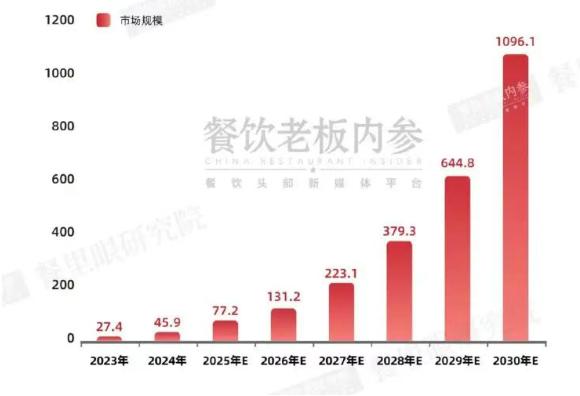
Image source: Catering Boss Insider
Behind these data, it is not just a technical narrative of "robots replacing chefs". There is also an easily overlooked influencing factor: the rigid demand for stable, standardized, and scalable catering services in a highly aging society.
Chain fast - food restaurants pursue cost - reduction and efficiency - improvement, and group - meal providers pursue large - scale meal production. The problems that senior citizen canteens need to solve are more complex than these two. They need to control costs in a standardized way, take care of the health of the elderly in a personalized way, and make the elderly feel that the food "tastes good and is like home - cooked". This multi - objective constraint was almost unsolvable in the past, and the first - batch of community canteens and happy canteens closed down in such a situation.
Currently, from Beijing to Shenzhen, from Shanghai to Chengdu, senior citizen canteens across the country have all chosen similar methods to solve their practical problems in operation, which is sufficient to prove that the implementation of cooking robots in community senior citizen canteens is feasible.
In addition, in October 2025, China's first national standard for "Commercial Intelligent Cooking Machines" was officially released and will come into effect on November 1, 2026. Enterprises such as Xianglu Robot, Youte Zhichu, and Shenzhen Tuopang participated deeply as drafting units. The introduction of the standard means that the industry has bid farewell to "wild growth" and has an access threshold and quality guarantee.
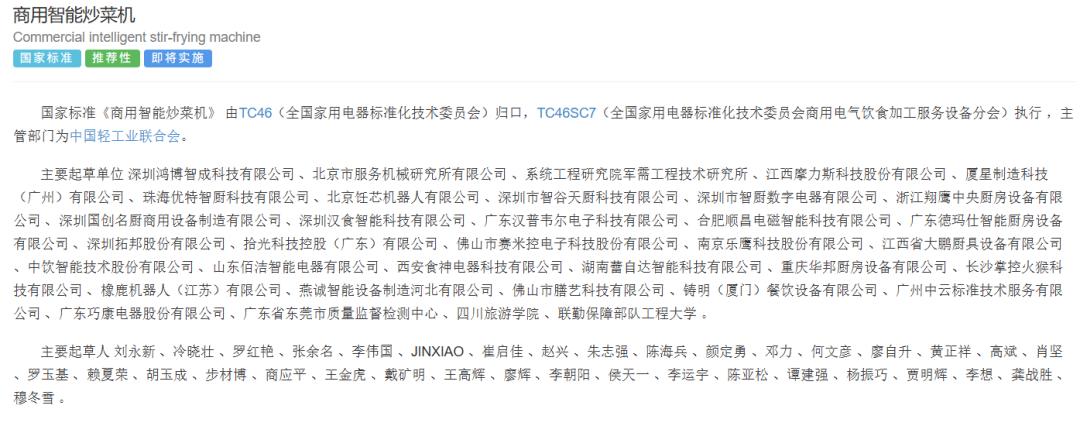
Image source: National Standard Information Public Service Platform
From community affordable canteens to high - end elderly care communities, from first - tier big cities to streets and towns, cooking robots are penetrating into the elderly care service scenarios at a speed faster than expected. What they stir - fry is not just plates of hot dishes but the trillion - yuan blue ocean of the silver - haired economy hidden behind.
When the dining tables of 323 million elderly people are illuminated by technology, the new flavor of the silver - haired economy is just beginning to emerge.
Reference articles:
"A 'Robot Chef' Appears in a Senior Citizen Canteen in Hangzhou: Cooking Noodles, Stir - frying Dishes, and Making Coffee, Full of Technological Sense" - Qianjiang Evening News
"Robots 'Cooking' Bring a 'Happy Flavor'! Taikang Home Huiyuan Unlocks a New 'Food' Fashion in the Silver - Haired Economy" - Taikang Home