An accountant brings N "lobsters", and Huishuizhang reinvents fiscal and tax delivery.
The bookkeeping agency industry used to be a business highly dependent on manual labor: picking up invoices, recording vouchers, and filing tax returns. Almost every step had to be completed manually.
The founding team of Huishuizhang saw the potential for standardization early on. After its establishment in 2015, the team developed a financial and tax SaaS platform for small and medium - sized enterprises while continuously integrating capabilities such as OCR (Optical Character Recognition) and RPA (Robotic Process Automation) into the bookkeeping and tax filing processes, gradually taking over most of the standardized operations.
Later, this system could automatically identify over 95% of standard document types, and an accountant could serve two to three hundred companies a year. For the accounting industry, this was an amazing improvement. Huishuizhang quickly became one of the leading enterprises in this field.
01 The Stuck 30% Non - standard Scenarios
However, automation did not cover the entire process.
After the standardized processes such as invoice recognition, classification, accounting, and declaration were taken over by the system, about 70% of an accountant's work could be completed by the system. What really hindered efficiency were the remaining 30% of non - standard scenarios.
How to calculate the salary of a departing employee, whether incomplete information about a determined bonus would affect individual income tax filing... There are no unified answers to such questions, which require manual judgment, follow - up, and confirmation. As a result, accountants spend a large amount of time not on professional judgment but on searching for information, supplementing information, and repeated communication. These non - standard scenarios, accounting for about 30%, take up over 90% of the service staff's workload.
This forms the ceiling of Huishuizhang's labor efficiency. It is difficult to further increase the number of clients each accountant can serve, but the gross - margin structure of the BPO industry cannot support the approach of simply increasing the number of employees. The Huishuizhang team later realized that what really consumes human resources in non - standard scenarios is not the complexity of the actions but the need for "understanding". If accountants understand the clients' intentions, break down the problems, and then let AI perform retrieval, accounting, and preliminary processing, humans can be freed from repetitive labor to make the final judgment and confirmation. This division of labor can be summarized as: "A carbon - based service staff, accompanied by a silicon - based lobster assistant."
With the direction set, the remaining problem was the tool. Huishuizhang tried to train its own vertical model. After a few months, they found that not only was the Token consumption high, but the accuracy was also unstable. For a BPO company that charges based on results, the significance of AI is straightforward: to reduce the delivery cost while maintaining the service experience. With the rapid iteration of large - model manufacturers, there is a lower - cost solution for this part. They chose to integrate the mature Agent capabilities into the existing workflow.
02 Inserting Agent Directly into the WeCom Workflow
Huishuizhang connected to Tencent Cloud's ClawPro, a one - stop AI Agent platform. Enterprise administrators can uniformly deploy templates, allocate model resource quotas, and monitor usage.
For Huishuizhang, it doesn't need to open another tool and can directly integrate it into the sidebar of WeCom for Enterprises. Accountants conduct daily client communication and internal collaboration in WeCom for Enterprises. Since one accountant often serves hundreds of clients simultaneously, jumping back and forth between multiple tools would be a disaster for efficiency. There is also a practical reason for choosing Tencent Cloud: WeChat and WeCom for Enterprises are naturally connected. Integrating the Agent is more like adding an extra layer of capability to the existing process rather than starting a new system.
It's not just accountants who use the lobster assistant. When front - end consultants renew contracts, make referrals, and identify customer needs, they used to search for customer information in different modules and then make their own judgments. Now, with a single sentence, they can ask the Agent to generate a customer profile and then decide how to follow up. Similar usage scenarios are also spreading to positions such as operations and human resources: Any work that involves high - frequency queries, cross - system information search, and execution according to SOP is being taken over by the Agent.
Li Xiang, the director of the enterprise service industry architecture at Tencent Cloud, summarized the logic behind this scenario into four conditions: Standardized processes, structured and accessible data, manageable technical complexity, and clear labor - cost savings. The financial and tax business basically meets all these four conditions. He also mentioned that the most common mistake for enterprises is to think that the model can replace everything and thus build a new process for AI. A more practical approach is the opposite, which is to gradually integrate AI into the existing business process. "For an enterprise - level AI to be truly useful, it must be embedded in the business process, achieve good human - machine collaboration, and bring obvious efficiency improvements to the enterprise," Li Xiang said.
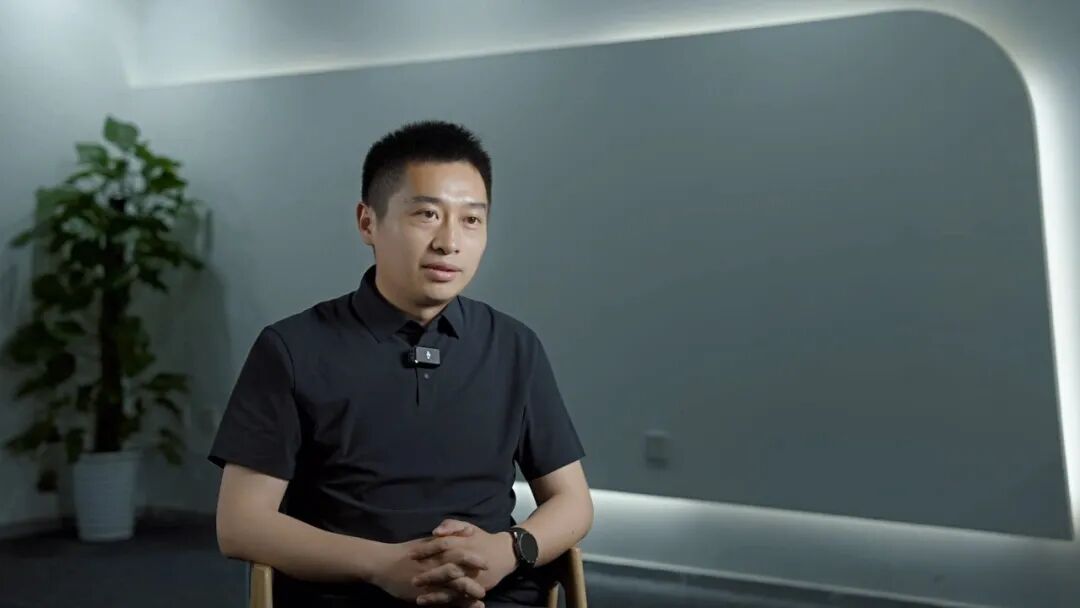
Li Xiang, the director of the enterprise service industry architecture at Tencent Cloud
This set of tools has brought tangible results. The service capacity of a single accountant has increased from 200 - 300 clients to 400 - 500 clients, with an efficiency improvement of over 50%. There is also a more efficient way to handle the most difficult 30% of non - standard scenarios.
However, in addition to the efficiency improvement, the Huishuizhang team soon noticed another thing: cost.
03 After Equal Access, It's the Competition of Tokens
After ClawPro was integrated into WeCom for Enterprises, the change was not just that accountants had to switch between fewer pages. For Huishuizhang, more importantly, AI was truly incorporated into the daily production environment for the first time: How many resources were used in which scenarios, how many Tokens were consumed in which processes, and how different the complexity of different clients was - these previously "hidden" parts began to be continuously monitored.
This made the Huishuizhang team quickly realize that the new key point was no longer how to handle the 30% of non - standard scenarios, but how much computing - power cost the company had to bear to handle the same business scenario. For the same business consultation, the Token consumption can vary by up to ten times between different process designs and different calling methods. In their view, the future competition is the competition of Tokens, and the winner will be the one with lower costs.
For a company that charges based on results, this is not only a technical detail but also an operational issue that directly affects pricing, gross margin, and scalability.
More importantly, Tencent Cloud's ClawPro has made the Token consumption clearer. Enterprise administrators can set quotas according to the organizational structure and can also see in real - time how many Tokens are used at each level and how fast they are being consumed. The visibility of Tokens has made management more objective.
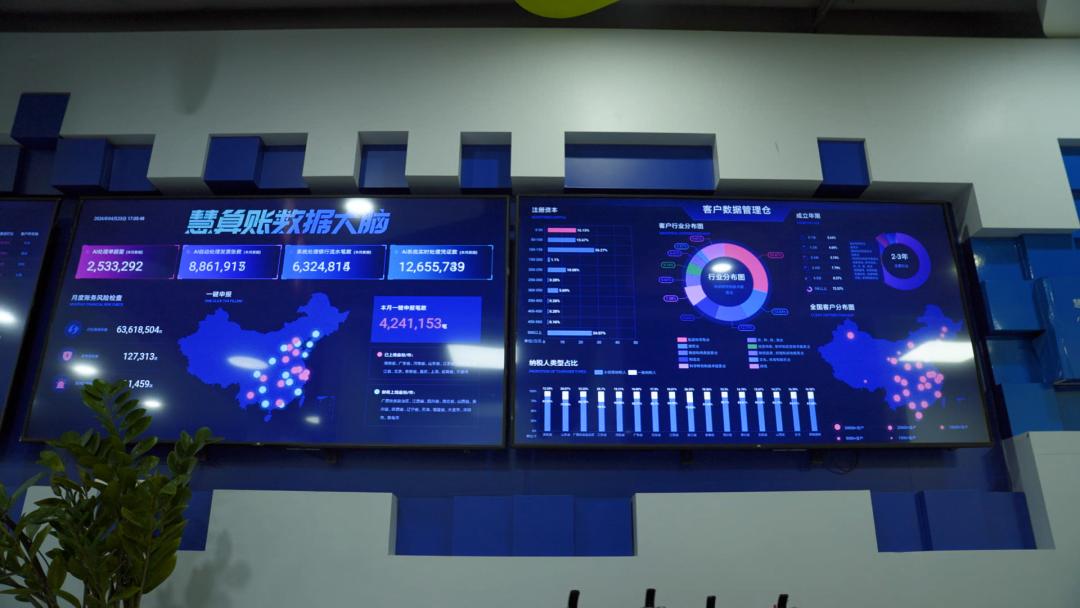
In the past, it was difficult for management to determine whether an accountant took a long time to serve a client because the client's business was more complex or because of the accountant's lack of ability. Now, with the recording of the Agent's calling process, response efficiency, and resource consumption, there is a more unified standard for complexity. The organization can then more clearly determine which tasks should be assigned to AI, which confirmations must be left to humans, who is suitable to serve more clients, and who needs to adjust their positions and division of labor.
This is also the judgment gradually clarified by the Huishuizhang team: Models and tools will change. What really makes a difference is not betting on a particular tool but being able to break down the business clearly, arrange the processes well, and let the entire organization restructure the delivery method around AI.
At Huishuizhang, this restructuring has become a very specific goal: Achieve a 100% "lobster - inclusion rate" for accounting positions within the organization, so that each accountant is equipped with a lobster assistant, or even an accountant is accompanied by N lobster assistants. In addition, the sales and operations positions should also move towards this goal as quickly as possible.
This may be the real dividing line after the implementation of AI.
As the capabilities of models become more and more similar, the competition between enterprises is no longer just about "whether to integrate AI" but about who can turn AI into a replicable, manageable, and profitable production system.