Trying to bypass CATL and go it alone? Xiaomi may enter the battery manufacturing business and become the next BYD?
Xiaomi is making bigger and bigger strides in the automotive industry and has now set its sights on the most core area of new energy vehicles - the battery field.
According to a query on the Qichacha app by Dianchetong (ID: dianchetong233), Xiaomi Jingxu Technology Co., Ltd. has been officially established. Its business scope clearly includes core businesses such as battery manufacturing and battery sales.
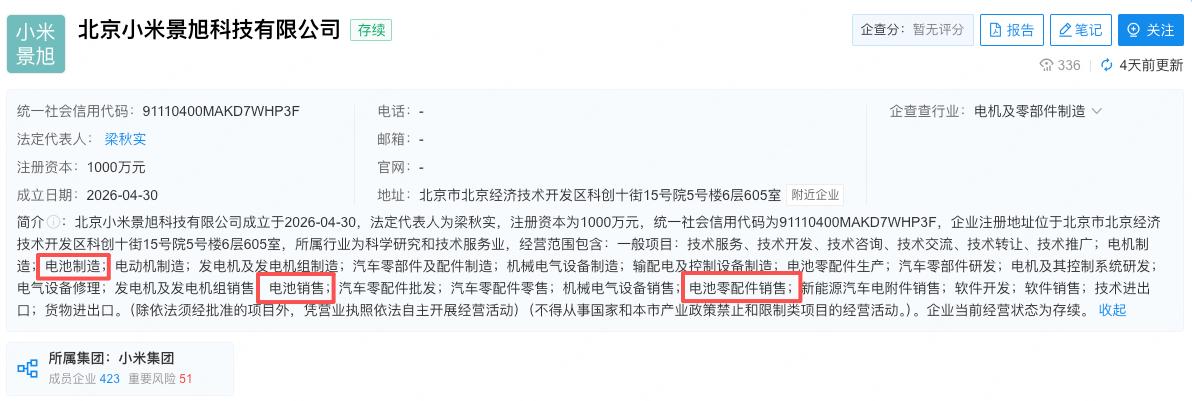
Screenshot: Qichacha
Although the company is still in its infancy, considering the highly competitive new energy vehicle market, if Xiaomi really decides to develop and produce its own batteries, it won't be a mere follow - the - trend move. In fact, it might be a crucial step that it has to take.
The industry structure is solidified, and car manufacturers' reliance on externally sourced batteries poses numerous risks
Currently, the domestic power battery market is basically firmly controlled by two giants, CATL and BYD.
According to the latest data released by the South Korean research institution SNE Research, in the first quarter of 2026, the combined global market share of CATL and BYD in the power battery market reached 54.4%. Among them, CATL ranked first with a 40.7% share, and BYD ranked second with a 13.7% share. The market share of other battery companies is less than 10% each.
Relying on years of technological accumulation, a well - established industrial chain layout, and a large - scale production capacity, these two giants firmly occupy the top of the industry. Subsequently, second - tier battery manufacturers can only compete for shares in the remaining niche markets and find it difficult to truly shake the existing structure.
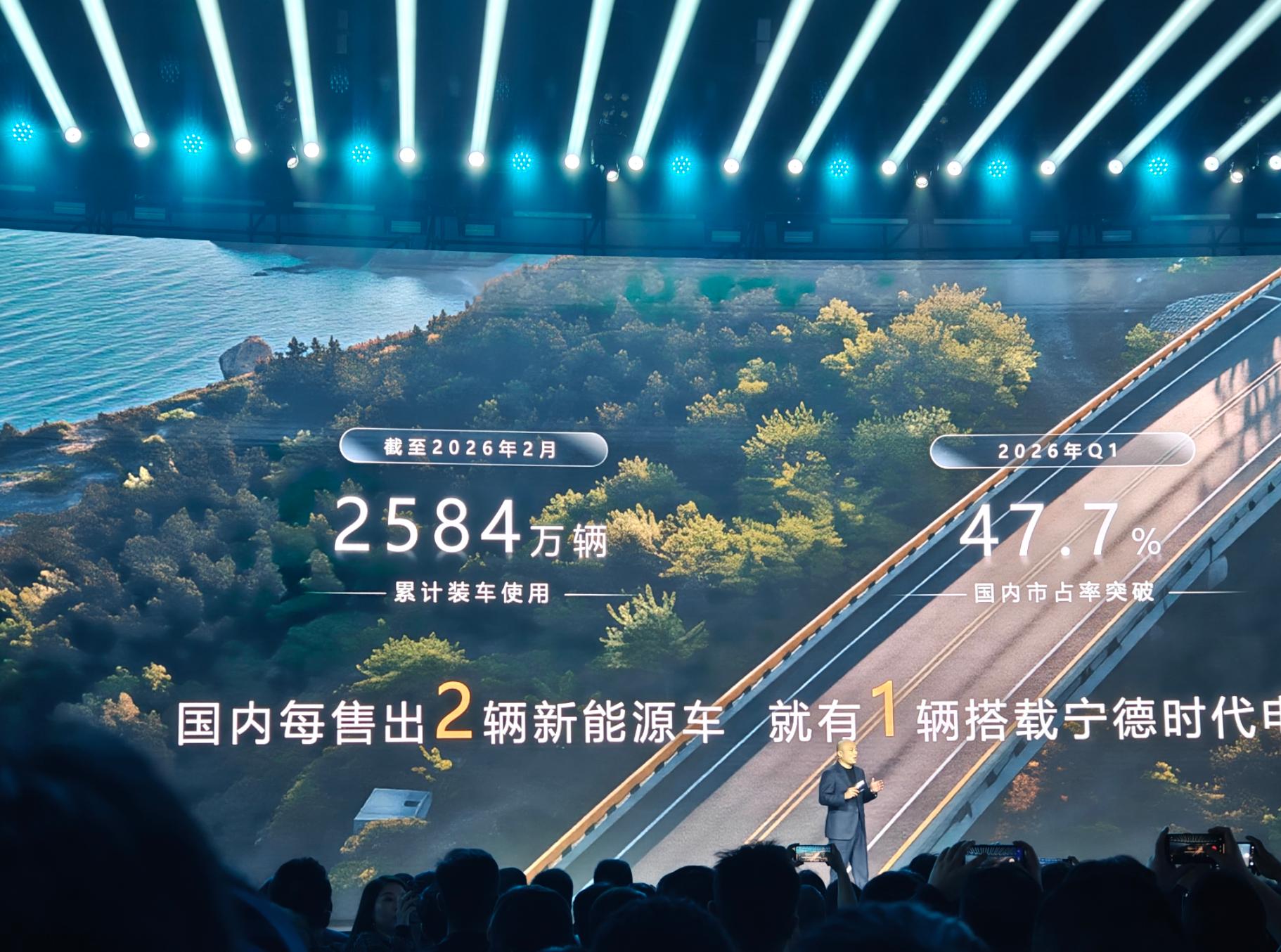
Image source: Shot by Dianchetong
To put it simply, the power of discourse in the power battery industry is basically in the hands of CATL and BYD. If other car manufacturers want to gain market favor, the first choice is the batteries of these two companies.
Except for BYD, most traditional car manufacturers and new new - energy vehicle startups in the market do not have the complete ability to research, develop, and mass - produce batteries. Relying on externally purchased batteries to maintain production is the only option. Xiaomi Auto is no exception. It has successively purchased Fudi batteries from BYD and Shenxing batteries from CATL.
This approach has its advantages. Car manufacturers can quickly launch new models and seize the market window period without spending years refining battery technology or investing funds in building factories and assembling teams.
However, this model is only suitable for short - term development. As time goes by, the hidden shortcomings and potential risks become more prominent.
The most pressing issue is the cost problem.
The power battery is the core component with the highest cost proportion in new energy vehicles, accounting for about 35% to 45% of the total vehicle cost. Taking mainstream pure - electric models priced between 200,000 and 300,000 yuan as an example, the battery cost per vehicle is about 60,000 to 90,000 yuan. Li Bin, the chairman of NIO, also pointed out at an industry forum in April this year that the cost of batteries and chips has accounted for 50% of the total vehicle cost.
Image source: Shot by Dianchetong
When negotiating battery prices and supply agreement terms, car manufacturers have very little say because CATL and BYD are not worried about the lack of customers.
As a result, when raw material prices rise, the cost pressure is mainly transferred to car manufacturers. If the battery cost cannot be reduced, car manufacturers can only compete with thin profit margins in the vehicle sales process. They work hard to sell cars but cannot earn reasonable profits. In the end, they are working for battery companies.
In addition, battery companies are easily affected by the prices and production capacity of upstream raw materials.
Data from the South Korean research institution SNE Research shows that the global power battery usage in the first quarter of this year was 244.6 GWh, a year - on - year increase of 9.1%. Large - scale power battery manufacturers receive a large number of orders from car manufacturers every year, and their production capacity resources are limited.
Once there are significant fluctuations in the prices of upstream raw materials such as lithium and cobalt, or when the overall industry sales explode and production capacity is tight, battery manufacturers will definitely give priority to ensuring the supply of their affiliated car manufacturers and long - term, deeply - cooperative major customers. For example, CATL signed a 10 - year in - depth cooperation agreement with VOYAH, which mentioned that CATL will continue to be its core battery supplier to ensure the production increase of VOYAH models.
As for brands with ordinary relationships, there is a high probability of insufficient battery quotas and long waiting lists, which directly drags down the vehicle production rhythm.
Of course, this situation is not very common. A more common problem is that long - term reliance on externally sourced batteries will limit the technological iteration rhythm of car manufacturers.
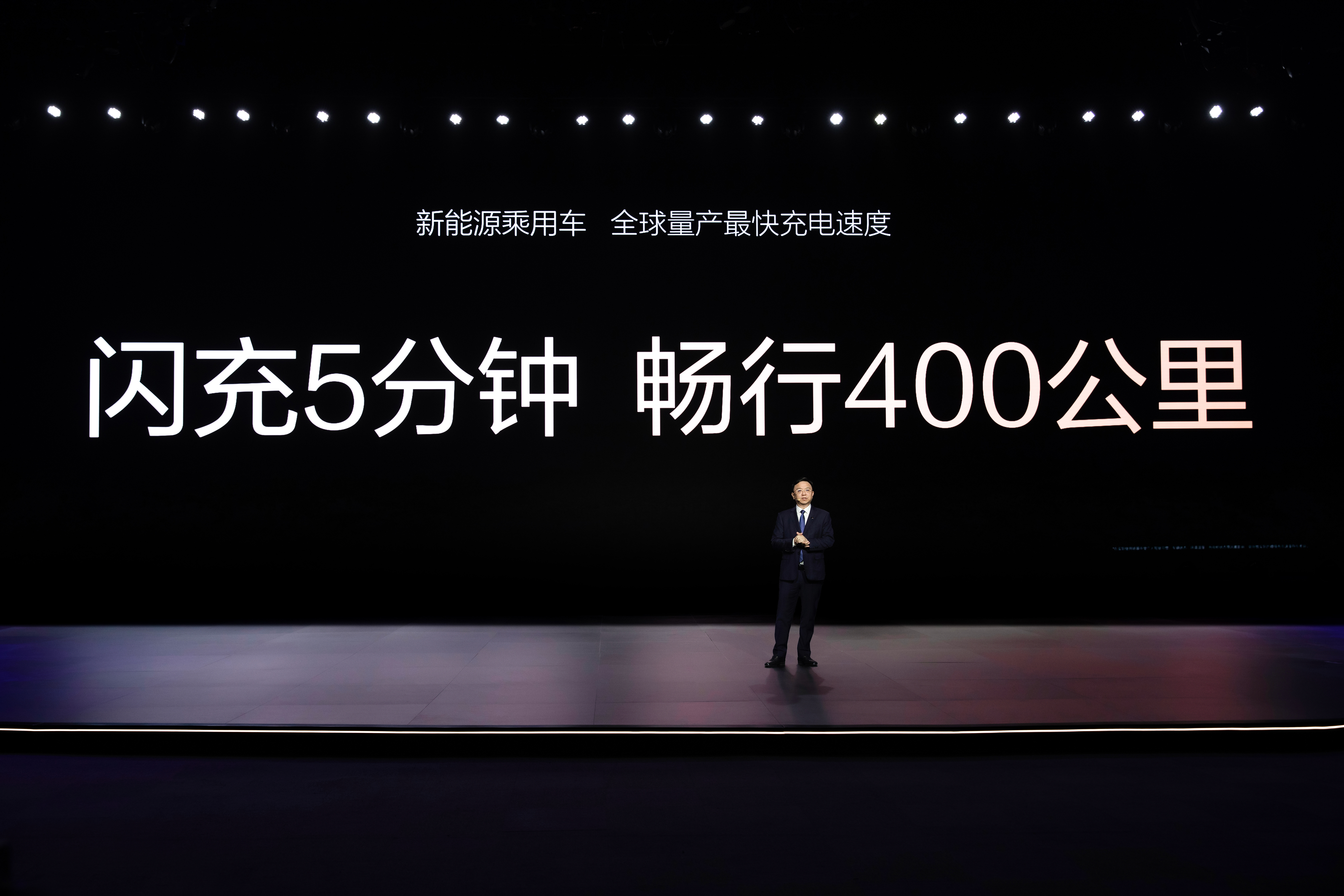
Image source: BYD
In reality, if car manufacturers want to save costs, they can only buy standardized and general - purpose batteries. The performance parameters and technological iteration rhythm are all determined by suppliers. Car manufacturers can only passively adapt and find it difficult to form their own technological barriers. If they want customized batteries, the cost will increase significantly. This puts car manufacturers in a dilemma.
Perhaps having seen through this industry predicament and the drawbacks of the supply chain, for Xiaomi Auto, which aims to become one of the world's top five car manufacturers, developing and producing its own batteries will be a crucial step to get rid of the constraints of the external supply chain.
Judging from Xiaomi Auto's own market performance, since its official launch and delivery, it has continuously increased its sales volume and market popularity thanks to its good product strength, mature intelligent configuration, and affordable positioning. Data shows that within 48 days of the launch of the new - generation SU7, the number of locked orders exceeded 80,000. In April 2026, the delivery volume exceeded 30,000, a month - on - month increase of about 50%. The cumulative delivery volume in the first four months was 109,000. There is no problem with user recognition and brand appeal.
As for self - developed batteries, as long as Xiaomi can achieve a level above the industry average in terms of battery life, fast charging, low - temperature performance, and safety, which are the aspects that consumers value most, it will be sufficient. With Xiaomi's current sales volume, hundreds of thousands of vehicles need to be equipped with batteries every year. As long as its own factory can stably achieve mass production, it can digest most of the production capacity and achieve economies of scale.
Self - developed batteries are a necessity for vehicle adaptation, but the challenges are huge
Looking at Xiaomi Auto's own product development and long - term planning, rather than the overall industry structure, developing and producing its own batteries is actually a step that it has to take sooner or later.
Different from new - energy vehicle startups like NIO and Li Auto, since Xiaomi entered the automotive industry, it has not only aimed for the goal of "being among the world's top five". Instead, it has established a clear and independent product positioning, which focuses on sports handling while also considering household comfort. The recently exposed SUV also proves this point. The exclusive vehicle architecture, chassis tuning style, intelligent cockpit, and high - level intelligent driving system are all carefully polished according to Xiaomi's own ideas.
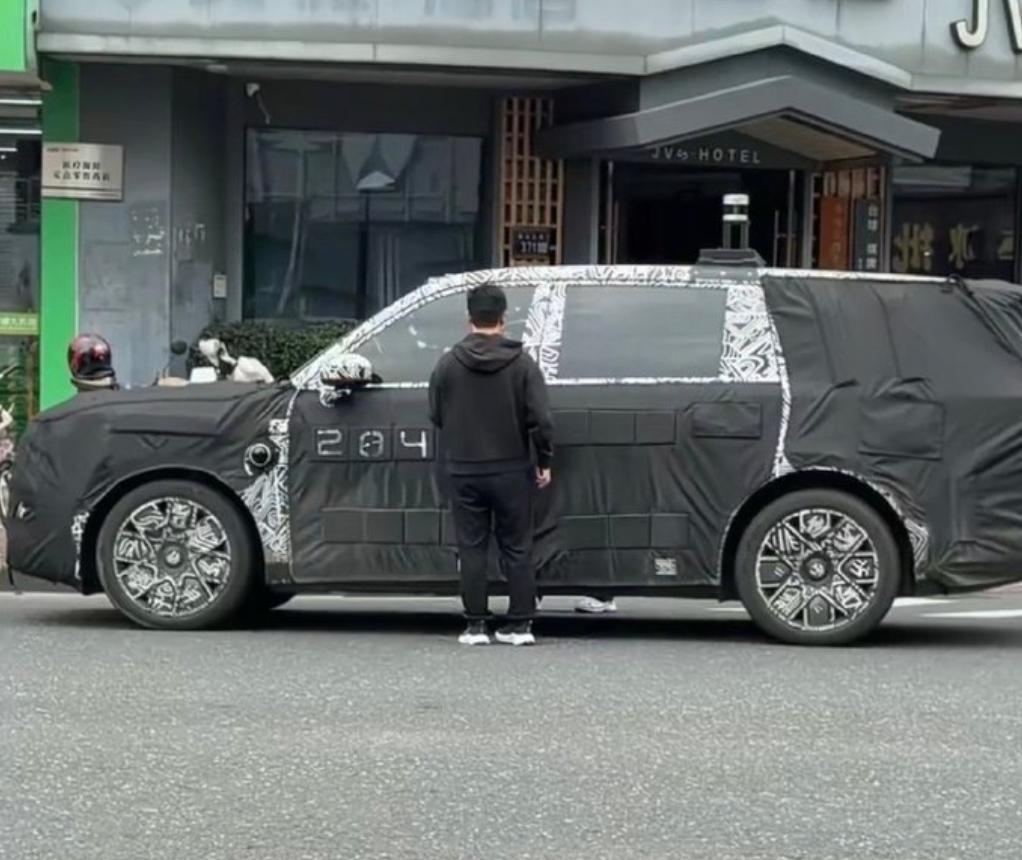
Image source: Screenshot from Weibo
If Xiaomi always buys general - purpose batteries on the market, it can only meet the most basic vehicle - loading requirements and cannot be deeply matched with Xiaomi's vehicle platform, electronic control system, and intelligent ecosystem. To fully utilize the advantages of the vehicle architecture, it is necessary to develop batteries that are more in line with the characteristics of Xiaomi's different models. The structure layout, discharge logic, and energy consumption strategy all need to be redesigned.
By choosing to develop and produce its own batteries, these problems can be easily solved.
Xiaomi can customize everything from the selection of the most basic battery cell materials, the design of the battery pack structure, and the packaging process to the algorithm of the BMS battery management system and the thermal management logic around its own vehicle architecture.
If the vehicle is more sporty, Xiaomi can optimize the instantaneous discharge capacity of the battery and the stability of continuous high - load output. If the vehicle is more for household use, it can emphasize the energy consumption control logic, the accuracy of battery life, and the problem of battery life attenuation at low temperatures.
With this self - developed model that integrates the vehicle and the battery, Xiaomi can create its own battery performance label, make differences in fast charging, battery life, and safety protection, and clearly distinguish itself from competitors at the same level that use general - purpose batteries. This is a real differential advantage.
Take Tesla as an example. In March this year, Tesla's Texas factory officially completed the large - scale mass production of the 4680 battery in the whole process. The mass - production yield of battery cells exceeded 92%, and the actual cost of the battery has dropped more than the initial target. Among them, the manufacturing cost has decreased by about 30%, and the cost of battery pack structural components has further decreased by 14%. When installed in the new - generation Model Y rear - wheel - drive long - range version, it can travel 8.2 km per kilowatt - hour, 0.7 km more than the old - model vehicle.
Tesla has successfully taken this path. Whether Xiaomi can follow depends on its subsequent implementation.
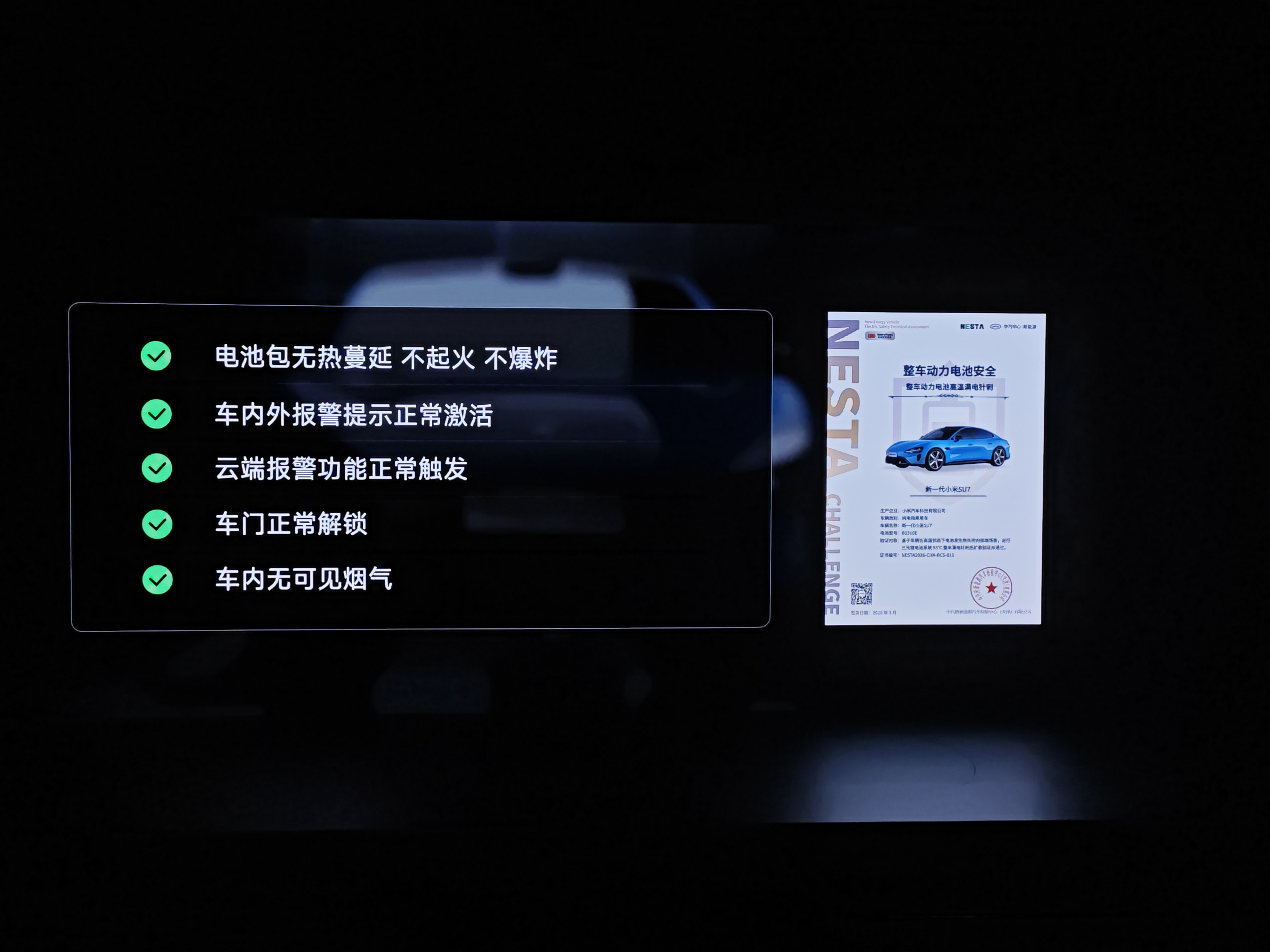
Image source: Shot by Dianchetong
Dianchetong (ID: dianchetong233) believes that the power battery manufacturing industry is capital - intensive, has a long cycle, and has high entry barriers. Once Xiaomi enters this field, it will inevitably face a series of real - world problems.
Firstly, there are high technological barriers and a long R & D cycle. Power batteries involve multiple professional fields such as electrochemical materials, battery cell formulas, structural safety, thermal management, and system algorithms. Technological accumulation cannot be quickly achieved by simply investing money in the short term.
Secondly, there is a large capital investment, and it is difficult to increase production capacity. At present, to build a new battery base with an annual production capacity of 10 GWh, the initial fixed - asset investment is generally between 3 billion and 5 billion yuan. In actual cases, the minimum is about 2 billion yuan, and the maximum can reach 7 billion yuan. High - precision equipment needs to be purchased, dust - free workshops need to be built, and technical and production teams need to be assembled. Moreover, mass - producing batteries requires extremely high precision in the process, production environment, and quality control standards. In the initial stage of production, it is easy to have insufficient production capacity and a low pass rate.
Finally, there is the problem of fierce industry competition. As mentioned before, CATL and BYD together account for more than half of the global market share. If Xiaomi only wants to produce and sell its own batteries to meet the needs of its own models, the difficulty of this path is relatively controllable. However, if it wants to establish itself in the battery industry and gain the recognition of other car manufacturers, it is another story.
These external variables will all affect the rhythm and cost of Xiaomi's self - developed battery mass production and are problems that must be overcome one by one in the subsequent development process.
Is battery manufacturing the only way for Xiaomi to become one of the "world's top five car manufacturers"?
For Xiaomi, developing and producing its own batteries means making up for the shortest board among the three - electric systems. Instead of relying on others for supply, it now takes the initiative into its own hands.
The advantages are very obvious. Firstly, the supply chain is not afraid of being restricted, and it has more initiative in supply and pricing, which is also beneficial for the automotive business to make money. Secondly, the batteries can be customized according to its own vehicles, so that it can develop product characteristics and avoid being overwhelmed in the homogenization competition in the new - energy vehicle market.
Although it is not easy to deal with heavy - asset investment, technological breakthroughs, and production - capacity adjustment, this step has to be taken sooner or later. Whether Xiaomi can succeed depends on its subsequent execution ability.
This article is from "Dianchetong" and is published by 36Kr with authorization.