36Kr Exclusive | The first commercial space company in China to implement the "chopstick clamp" tower recovery technology has completed a financing of 500 million yuan.
Author | Qiao Yujie
Editor | Yuan Silai
Hard Kr has learned that recently, Shanghai Dahang Yueqian Space Technology Co., Ltd. (hereinafter referred to as "Dahang Yueqian") has completed a financing of 500 million yuan. This round of financing was led by Qianhai Ark, Houji Capital, and Puhua Capital. Institutions such as Junling Capital, Haiyuan Capital, Huifengda, Junchuan Capital, Chongqing Shachuang Technology, Zhongzhong Technology, Yuancuang Capital, Hanli Capital, Shanghai Angel Club, and the industrial partner Shenhou Cable jointly participated in the investment, and some old shareholders continued to increase their positions. China Renaissance served as the long - term financial advisor.
The funds from this round will be mainly used to accelerate the research, development, and first flight of Dahang Yueqian's core product, the "Yueqian 1", the first domestic tower - recovery launch vehicle, as well as the research and development and testing of the 100 - ton liquid oxygen methane engine.
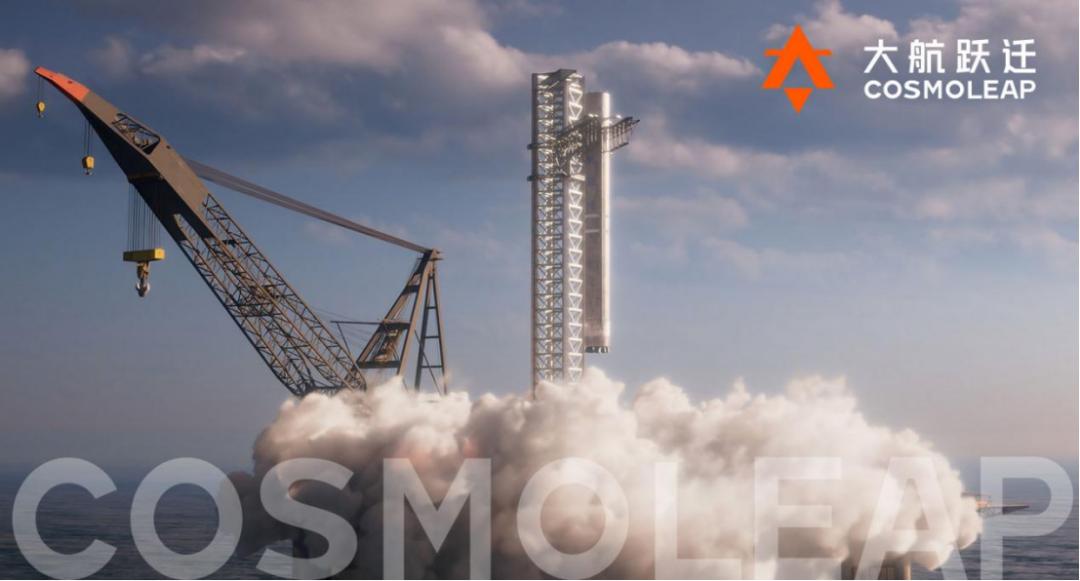
Dahang Yueqian was established in February 2024 and is the first second - generation private rocket company in China to implement the "chopsticks clamping" tower - type recovery technology.
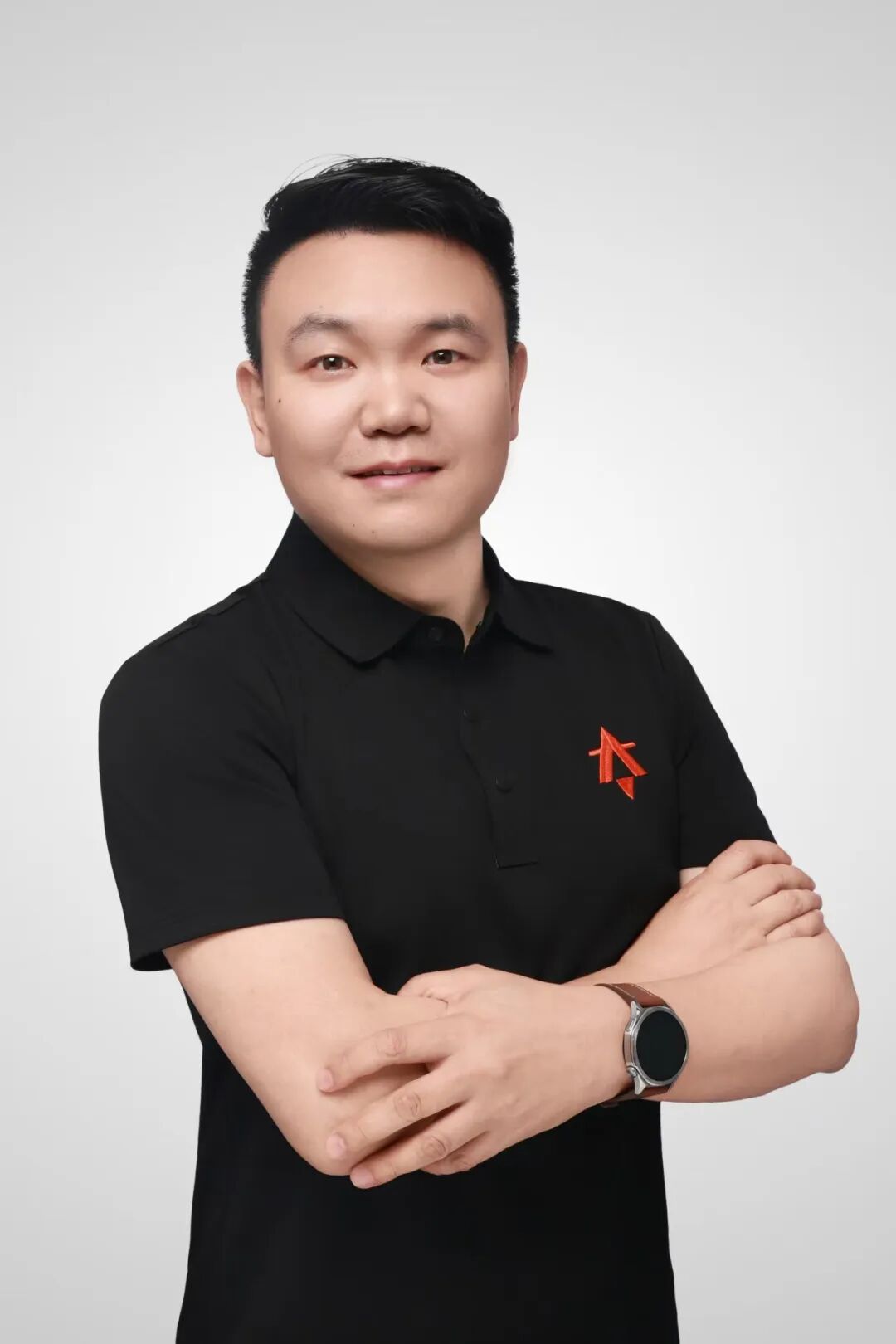
The founder, Chen Shuguang, has long been deeply involved in the aerospace field. He once worked at the China Academy of Launch Vehicle Technology in the early days and joined the commercial space industry in 2016. He served as the deputy general manager and technical director of a leading rocket company.
(Image source/Enterprise)
Currently, the Chinese commercial space industry is entering a critical stage of large - scale verification. Centered around the demand for satellite networking, reducing launch costs and improving launch capabilities have become the two core propositions in the industry.
In terms of the recovery plan, Dahang Yueqian chose the same tower - capture mode as SpaceX. Chen Shuguang told Hard Kr that compared with the traditional landing leg scheme, tower recovery can reduce the structural weight by about 6 tons, and the single - use cost is only about 1/10 of the landing leg scheme.
It is understood that the company's tower system has completed the static test and dynamic capture experiment, and the structural reliability has been verified. The simulation results of relevant capture conditions meet the expectations.
In terms of launch capabilities, Dahang Yueqian has optimized its performance through lightweight design and thrust improvement: the rocket body uses aluminum alloy materials to reduce the structural weight, and the overall thrust is increased through multi - engine parallel connection. At the same time, the landing leg design is cancelled, reducing 4 to 6 tons of redundant weight and converting it into effective payload. According to the plan, its rocket has a payload capacity of about 18 tons in a 200 - kilometer low - Earth orbit and still reaches about 10 tons in an 800 - kilometer low - Earth orbit, which can meet the needs of mainstream satellite networking.
In terms of the power system, the company's first - type rocket will use a mature 80 - ton liquid oxygen methane engine to ensure the reliability of the first flight and speed up the orbital entry process. At the same time, the company is independently developing a 150 - ton liquid oxygen methane engine for the next - generation rocket with greater thrust, and the R & D progress is now more than half completed.
In terms of the control system, Dahang Yueqian chose to self - develop the flight control system, becoming one of the few private rocket companies in China that benchmark the control architecture of SpaceX. As one of the four core systems of the rocket (structure, power, flight control, and ground system), the flight control system is responsible for navigation and guidance, attitude control, engine control, and system timing scheduling, and is regarded as the "nerve center" of the rocket. Currently, most domestic commercial space companies use mature external solutions, while Dahang Yueqian hopes to improve the system coordination efficiency and iteration speed through self - development.
It is reported that the company's first - flight model, the "Yueqian 1", is planned to make its first flight in 2027.
The following is an excerpt from an interview between Hard Kr and Chen Shuguang (slightly edited):
Hard Kr: You also worked in other commercial space companies before. Why did you decide to start a business in 2024?
Chen Shuguang: First, the demand side became clearer around 2023. With the launch of test satellites for projects such as Xingwang and Yuanxin, it can be seen that the demand for high - capacity, reusable rockets for large - scale satellite networking is rapidly forming. Traditional small rockets are no longer able to meet future trends, and the industry is evolving towards large - scale and high - frequency launches.
Second, the supply - side conditions are gradually maturing. After systematic research, we found that the domestic commercial space supply chain has begun to take shape - engines can be purchased, and there are professional suppliers for core structural components such as storage tanks and valves. The ground test capabilities are gradually being socialized, and coastal launch sites are also opening up. The improvement of these infrastructure facilities has made the R & D of "faster, lighter, and lower - cost" rockets a reality.
Third, we hope to independently practice a proven and feasible technical route, that is, the current technical route of Space X.
(Image source/Enterprise)
Hard Kr: Why did you choose to self - develop the engine and flight control system?
Chen Shuguang: From a commercial perspective, cost control is one of the core propositions. In the long run, the cost of the entire rocket must be gradually reduced through self - development. However, at the current stage, the primary goal is to achieve orbital entry capabilities as soon as possible. The rocket system is extremely complex, and about 60% of the risks are concentrated in the engine. Therefore, the first - type rocket uses a mature 80 - ton engine from the national team, which can be understood as "using a mature battery to build a car" to reduce the risk of the first flight. After the successful first flight, cooperation with the national team for mass production will continue. The independently developed 150 - ton engine is designed for the next - generation rocket with greater payload.
In terms of the flight control system, the core challenges of reusable rockets lie in deep thrust adjustment of the engine, multiple ignitions, and high - precision return control. These capabilities are highly dependent on the flight control system. At the same time, a large number of ground tests, process verifications, abnormal simulations, and the future intelligent evolution of rockets also require the flight control system as the core scheduling unit. If relying on external systems, the debugging and testing cycle will be significantly extended. Therefore, we chose to self - develop to improve the overall efficiency and system control ability.
Hard Kr: As a second - generation commercial space company, where are your advantages?
Chen Shuguang: First, there is a "late - comer advantage" in path selection. We are not restricted by existing technical routes and can directly adopt an integrated solution of lightweight, reusability, and high capacity from the top - level design.
Second, the resource allocation is more focused. Compared with the scattered layout of early - stage enterprises, we prefer to concentrate our deployment along the rivers and coasts, close to the launch sites and test resources to improve efficiency.
In addition, the current industrial and policy environments are more mature - the relevant national management departments are more efficient and orderly, the supply chain is complete, the infrastructure is gradually opening up, the capital market's understanding of the commercial space industry has improved, and the IPO channel is becoming clearer, all of which provide better development conditions for new - generation companies.