Zebra's AutoClaw provides the answer to the GUI vision of Doubao Mobile.
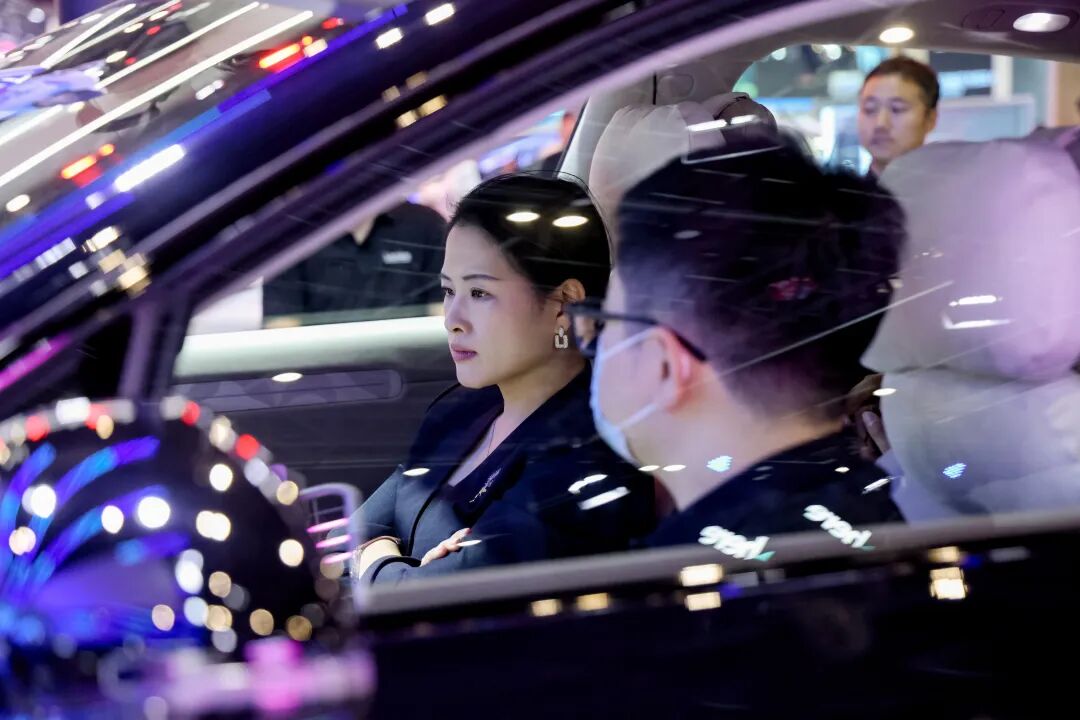
On the BMW Brand Night on April 22nd, along with the release of three new pure - electric vehicles, a meaningful scene emerged at the event: Wang Xingxing, the founder of Unitree Technology, was invited as a special guest to take the stage and test - drive the brand - new intelligent cockpit powered by the technical solution provided by Zebra Intelligence.
This seemingly cross - border collaboration actually hints at a crucial change to the outside world: Cars are becoming more and more like robots.
This change is not an isolated event but the result of the resonance between technological evolution and industrial trends. The theme of the Beijing Auto Show in 2026 is "Lead the Era, Intelligent Future". Although the expression has not changed much compared to the "Intelligent Leadership of the Future" in 2020, the underlying industry foundation has completely changed: On the one hand, the electrification architecture has been basically rolled out; on the other hand, large models have truly entered the in - vehicle system.
If we break down the technological changes in the past two years, it will be clearer.
High - cost - performance models such as DeepSeek and Qianwen have promoted the low - cost implementation of AI in cars, endowing automotive intelligence with the ability to think, and dialogue and communication are the first to be affected. The popularity of OpenClaw in 2026 has shifted the focus to "getting things done", that is, whether it can complete tasks on behalf of people. The former emphasizes the model's reasoning ability, while the latter emphasizes the execution ability based on thinking.
When large models deeply intervene in the cockpit and start to interact with the intelligent driving domain, cars are actually running through the operation closed - loop of robot perception - decision - execution. The core driving force behind this is extending from simple automakers to automotive intelligent AI companies represented by Zebra Intelligence.
1. AutoClaw: What Doubao Imagined on Mobile Phones, Zebra Intelligence Achieved in Cars
In the past three years, the change in AI is not just about model upgrades but a shift from content generation to task execution along the path of "large model - Agent - Claw".
The popular Doubao mobile phone last year allowed AI to perform in - app operations such as placing orders and sending messages by opening system - level permissions. OpenClaw, which was popular on the PC side in 2026, extended this ability to the office and development process. However, these attempts are still limited to the digital interface of a single terminal and have not truly realized the interaction with the physical world.
The vehicle may be the carrier to break the situation and let AI truly enter the real world.
A car is naturally a "Claw - friendly" system. It has completed the in - depth electrification of the power, chassis, and body, and has connected the cockpit ecosystem such as navigation, entertainment, and temperature control. Coupled with a rich variety of multi - modal sensors, it has constructed a complete physical closed - loop of "perception - decision - execution".
Zebra Intelligence keenly recognized this trend. It started researching Claw - like technologies in September last year. On April 23rd this year, at the AI - TECHDAY, it released the industry's first intelligent cockpit AI collaboration service solution, AutoClaw (which is what the industry talks about as "lobster getting into the car"), officially extending the ability of AI to execute tasks to the intelligent cockpit. What Doubao imagined on mobile phones, Zebra Intelligence achieved in cars in advance.
In the past, in - vehicle AI often required humans to carry out complex task planning, and AI was only responsible for simple single - point execution (such as "turn on the air - conditioner"). However, AutoClaw is different. Through its unique architecture of "intelligent collaboration center + exclusive autonomous shrimp pond", when facing the user's ultimate goal, it will automatically break down the specific tasks to be executed, showing a "human - like task - handling thinking".
For example, in the face of an unstructured demand like "invite friends to dinner tonight", AutoClaw can automatically break it down and process time coordination, restaurant screening, and route planning simultaneously. If there are changes in the middle, it can dynamically reorganize the plan without the user repeatedly issuing new instructions.
What excites the market even more is its cross - hardware collaboration ability. As the "third living space", the cockpit naturally has the basic conditions for multi - device collaboration, including navigation, entertainment, environmental control, and the state management of the vehicle itself. In the above scenario, while completing the online service scheduling, AutoClaw can also synchronously adjust the in - car seats, control the temperature, and even collaborate with the autonomous driving domain, allowing passengers to have a truly "seamless" intelligent experience.
The release of Zebra Intelligence's AutoClaw actually pulls automotive AI from the digital interface of a single terminal to the real world, completing the dimensional upgrade of the ability from the intelligent cockpit to the executive intelligent agent.
2. Edge - side AI: The New Infrastructure for Automotive Intelligence
In the past, when automotive intelligence was limited to question - and - answer voice assistants, large models deployed on the cloud side were sufficient to meet the needs. However, when automotive intelligence enters a new stage of "active recognition + automatic execution of complex tasks", it puts forward higher - dimensional requirements for the low latency, privacy security, and network environment of the system.
At this time, the emergence of edge - side models has become inevitable. As the in - vehicle multi - Agent execution layer, AutoClaw must rely on edge - side AI to provide real - time decision - making support. The hybrid edge - cloud architecture has become the unified consensus in the current industry.
As an important layout of Alibaba in the field of automotive intelligence, Zebra Intelligence has unique advantages in the deployment of edge - side AI. As early as at the Yunqi Conference in September 2025, Zebra Intelligence released the world's first full - modal edge - side large model, AutoOmni.
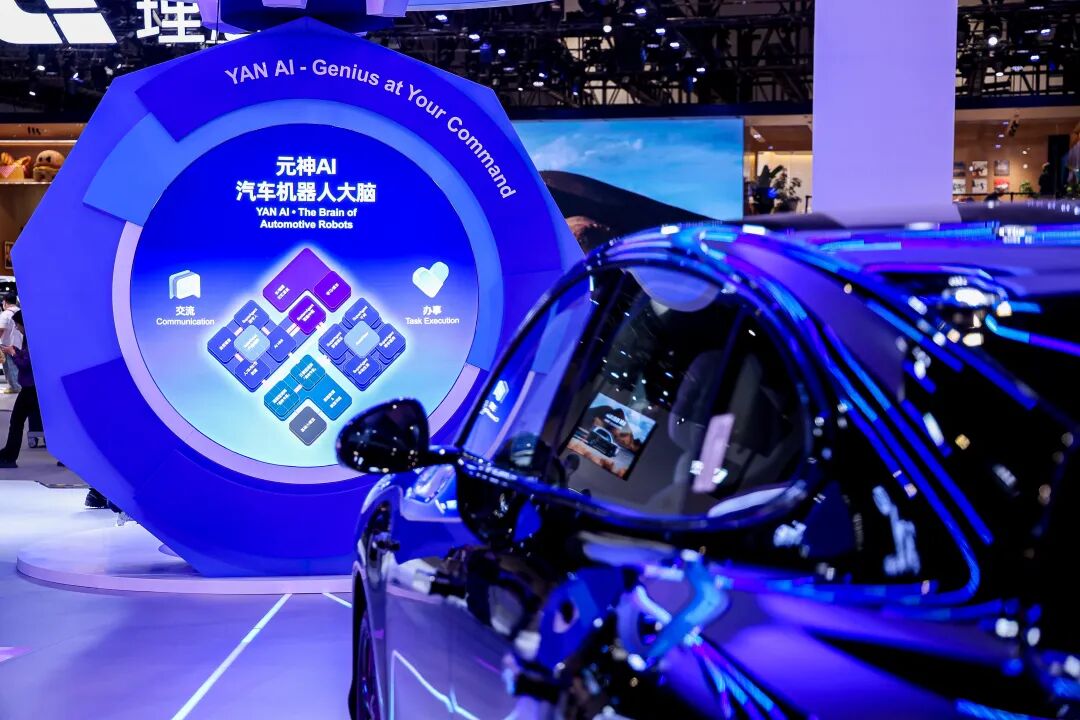
By the eve of the Beijing Auto Show in April 2026, AutoOmni had evolved into a huge product matrix that can carry large models with various parameters and is compatible with various types of chips, and together with AutoClaw, it formed the "one brain, two engines" architecture of Yuanshen AI.
Of course, the particularity of the automotive industry determines that intelligence cannot be directly OTA - installed in cars just by "having models and architectures". The underlying software - hardware adaptation is a big mountain in front of all software solution providers and a difficult and arduous task that must be completed.
Different automakers have very different product definitions for vehicles. From economy cars worth hundreds of thousands of yuan to luxury cars worth millions of yuan, the price positioning, target population, and functional requirements are all different. This leads to a wide variety of hardware platforms and SoC chips used in automotive cockpits. How to "fit" the huge edge - side AI into chips with different computing powers and ensure its stable operation and controllable heat generation is the most stringent test for cockpit software solution providers.
In this regard, Zebra Intelligence has adopted a "leading" strategy to break the situation - instead of directly dealing with scattered automakers, it starts from the source and conducts in - depth cooperation with underlying chip giants such as Qualcomm, NVIDIA, Black Sesame Intelligence, and UNISOC. First, it achieves a perfect connection and adaptation between AI and chips at the underlying architecture level, and then relies on the huge existing customer ecosystem of chip manufacturers to smoothly enter the supply chain of each automaker.
Currently, Zebra Intelligence has completed two main directions of adaptation with chip manufacturers:
One is the in - depth integration route, which integrates AutoOmni and AutoClaw directly into the underlying systems of high - performance cockpit - specific SoCs such as Qualcomm or the new - generation cockpit - driving integrated SoCs. As of the 2026 Auto Show, more than 10 domestic automakers that have or plan to use Qualcomm 8397 and 8797 chips have mostly determined to adopt Zebra's AutoOmni edge - model solution.
The other is the flexible plug - in route, which is to adopt a solution of integrating into an "AI Box" (plug - in computing power box) for old models with insufficient computing power or low - end models sensitive to cost. Currently, in the form of the AI Box, Zebra has formed a mature solution combination compatible with three computing power chips: Qualcomm 9075, NVIDIA Orin, and UNISOC A8880.
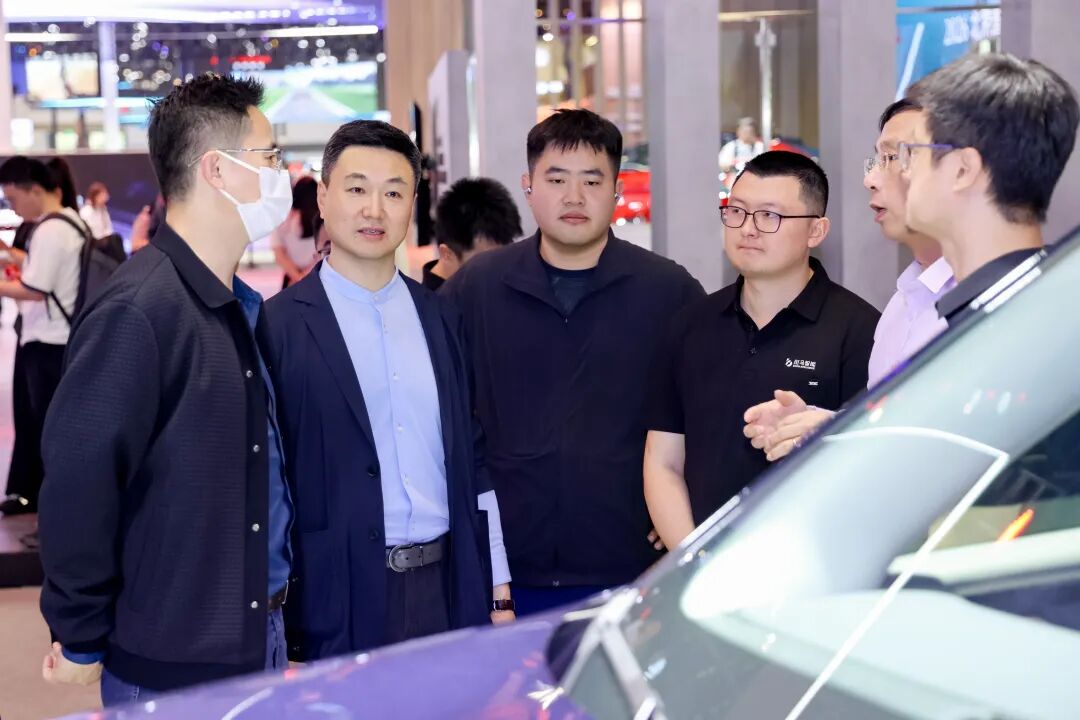
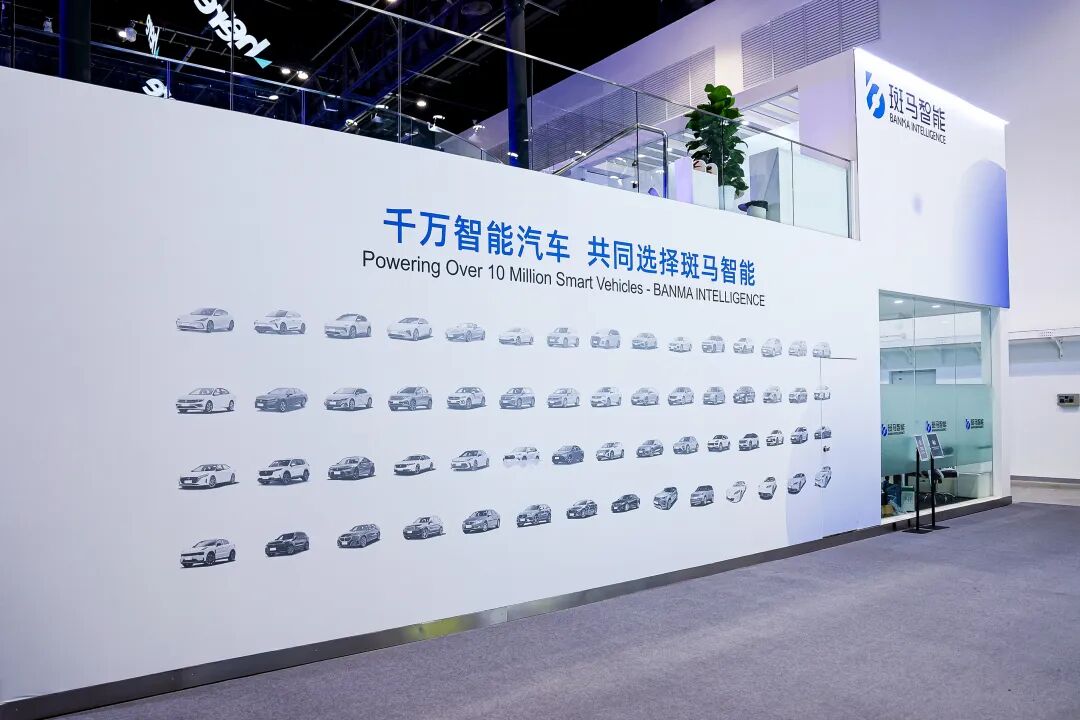
According to official information, Zebra Intelligence has nearly 20 cooperation customers in the AI field, including IM Motors, BMW, Hongqi, Dongfeng, and BYD.
3. Will the Ultimate Form Be a Robot?
Elon Musk has repeatedly stated in public that "a car is a robot on wheels". Judging from the current evolution path of automotive intelligence, this judgment is gradually being verified. Taking Zebra Intelligence as an example, the system composed of its edge - side model AutoOmni and the execution layer AutoClaw is essentially constructing a unified intelligent agent with perception, decision - making, and execution capabilities.
If we compare cars with robots, the two have shown obvious convergence in core capabilities: a unified computing center (central computing platform + edge - cloud large model), a multi - modal perception system (lidar, cameras, microphones), and the execution ability in the physical world (software - hardware collaborative scheduling and autonomous driving).
A significant difference that still exists at present is that, for safety reasons, the cockpit domain and the intelligent driving domain of cars usually use independent SoC chips, resulting in data delay and collaboration barriers between perception and execution.
However, the walls are being broken. On the hardware side, Qualcomm has been promoting the cockpit - driving integrated SoC in recent years; at the 2026 Auto Show, Horizon also released the first domestic cockpit - driving integrated SoC.
On the software side, Zebra Mobility showed a future scenario of cockpit - driving collaboration at the AI - TECHDAY: when the edge - side visual large model keenly detects that the driver is in a fatigued state, not only will the cockpit react, but the intelligent driving system will also take over actively and adjust to a safer and gentler driving state.
This means that once the link between perception and execution is completely connected, the car will no longer be a patchwork of multiple subsystems but a living being with a unified will.
In the past few years, the intelligent cockpit and high - level intelligent driving have respectively contributed to the rapid popularization of new energy vehicles. Now, at the critical node of the full penetration of large models in 2026, cockpit - driving integration + robotization will become the next mainstream track that determines the outcome.
Cars are evolving from a single means of transportation to an intelligent carrier with continuous interaction and task - execution capabilities. From this perspective, Zebra Intelligence's approach of improving "brainpower" through the edge - side large model, enhancing "hands - on ability" with AutoClaw, and achieving engineering implementation by deeply binding with chip manufacturers undoubtedly provides the most practical path for "cars to evolve into robots".