Frontier News | Future Aerospace Releases FX Fengxing Series of Space Vehicles, Entering the Satellite Constellation Deployment and In-orbit Service Market
Author | Qiao Yujie
Editor | Yuan Silai
On April 28th, Future Astronautics held a press conference for the FX Fengxing series of space vehicles in the Xiongan New Area, and simultaneously held a signing ceremony for partners in the commercial space ecosystem supply chain.
The FX "Fengxing" series released this time is the first domestic commercial vehicle serving satellite networking and in-orbit operations. Aiming at the mission requirements of 300kg to 4000kg, it focuses on breaking through key technologies such as high-precision attitude and orbit control, flexible load-bearing, and rapid orbital response, emphasizing low cost, high reliability, and fast response capabilities. Its positioning is not only a single vehicle product but also a basic platform to support the engineering implementation of in-orbit services, which can serve scenarios such as constellation networking, in-orbit refueling, and deep-space exploration.
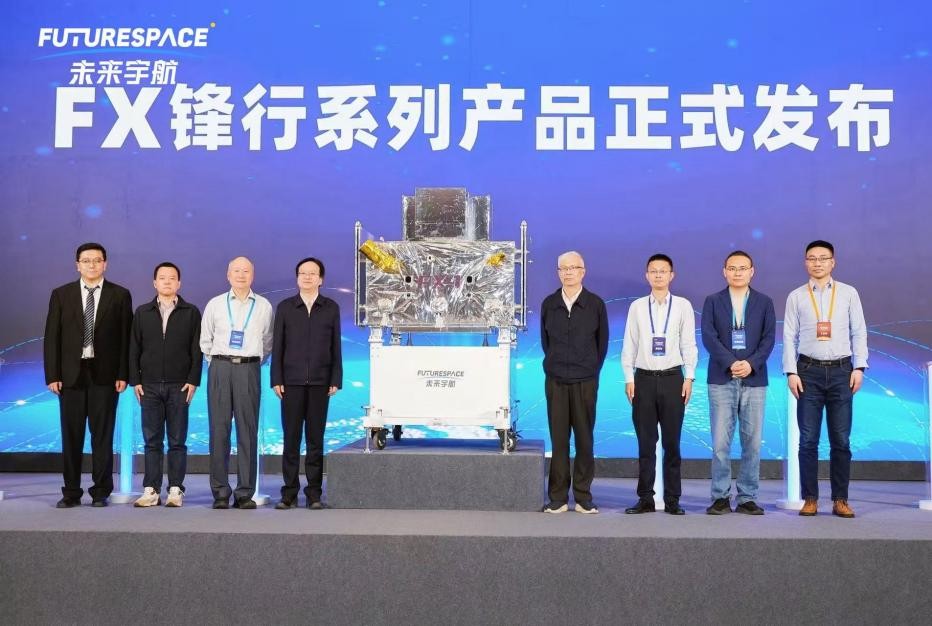
Scene of the event. Photo provided by the enterprise.
Liu Chunbao, the CTO of Future Astronautics, introduced in an interview with 36Kr that the core value of space vehicles lies in improving deployment efficiency and reducing costs. On the one hand, through more efficient orbit transfer capabilities, space vehicles can significantly speed up the constellation deployment rhythm and shorten the networking cycle. On the other hand, through the in-orbit deployment capabilities of space vehicles, more satellites can be carried under the same rocket carrying capacity, thereby reducing the launch cost per satellite.
In terms of engineering adaptation, the "Fengxing" series has strong versatility, can be adapted to multiple types of rockets, and has cross-platform service capabilities.
Centering around the "Fengxing" series, Future Astronautics further proposes the "one-stop in-orbit delivery engineering capability", covering the entire chain process from platform development, payload integration, orbit deployment to in-orbit control and data application, providing integrated solutions for satellite companies, research institutions, and commercial users.
From an industry perspective, China's commercial space industry is entering a critical window period of large-scale, engineering, and application from the technology verification stage, and the industry competition has shifted from "can it be done" to "can it be more efficient, lower cost, and more stable". In this process, platform-based and universal space transportation equipment is considered one of the core directions for future development.
Among them, space vehicles are gradually becoming a key complementary role in the industrial chain. This type of product combines the orbit-changing ability of rockets and the in-orbit staying ability of satellites, and can undertake tasks in multiple links such as satellite in-orbit deployment, in-orbit service, and out-of-orbit disposal, and is often compared to a "space 4S store".
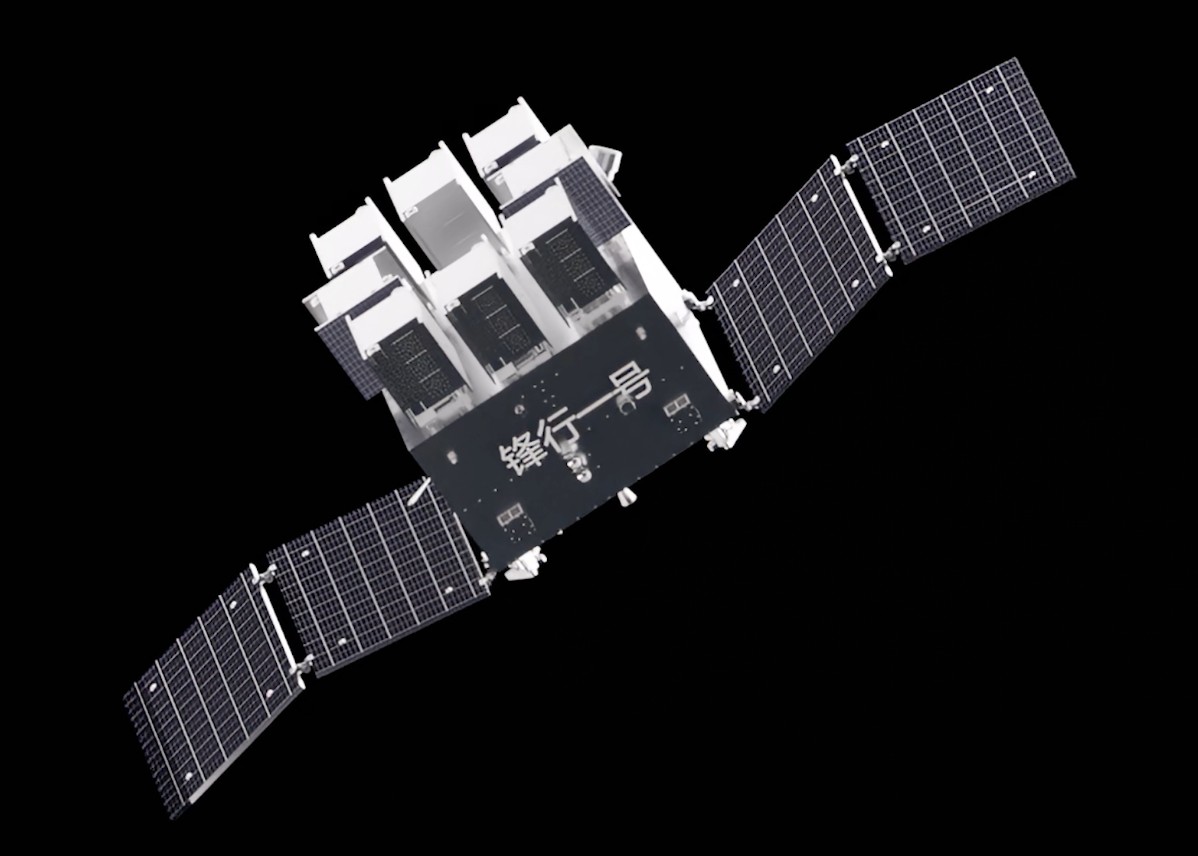
Product concept map. Photo provided by the enterprise.
Niu Min, the founder of Future Astronautics, said in an interview that the emergence of the demand for space vehicles essentially stems from the dual drive of technology and demand. On the one hand, satellites are distributed in different orbits, while rocket launches are more like "fixed-point transportation", making it difficult to achieve precise in-orbit insertion. On the other hand, with the advancement of large-scale satellite networking, the problem of insufficient rocket carrying capacity has gradually emerged, making it difficult to directly send satellites to the target orbit. Based on this, the company uses different types of vehicles to meet the needs of scenarios such as in-orbit deployment and in-orbit services respectively. With the development of commercial space, the application of space vehicles will be carried out in stages: initially centered around satellite deployment, and then gradually expanding to more complex scenarios such as in-orbit maintenance, debris cleaning, and deep-space transfer.
In terms of infrastructure construction, Future Astronautics simultaneously announced that the Xiongan final assembly and testing center has been officially established in Xiongan. This center has the full-process capabilities of research and development, final assembly, integration, testing, and experimentation of space vehicles, with a planned annual production of about 60 units, marking that the company has entered the stage of engineering delivery and mass production.
Currently, the first flight product of Future Astronautics, "Fengxing No. 1", has completed final assembly and is expected to carry out its first flight mission in the second half of this year.
In addition, Future Astronautics also signed strategic cooperation agreements with ecological partners at the conference and will carry out further cooperation around satellite data services and space information applications in the future.