Dilemma of power battery recycling: unaffordable batteries, unstoppable vehicles
In April this year, the power battery recycling industries at home and abroad were both shaken. In China, the Interim Measures for the Management of the Recycling and Comprehensive Utilization of Waste Power Batteries from New Energy Vehicles was officially implemented, covering the entire life cycle of batteries with the strictest regulatory efforts in history. Overseas, Ascend Elements, a leading recycling enterprise in the United States, officially initiated the bankruptcy process due to market weakness, lack of funding, and intense competition.
These two events point to the same cruel reality: the battery recycling system left over from the "first half of the new energy vehicle competition focused on electrification" has not truly been put into smooth operation.
As the first batch of large - scale power batteries put into use have entered the retirement stage in batches, the chaos has become more and more intense. Formal enterprises on the white - list have invested huge amounts of money and have standardized processes, but they are in the embarrassing situation of "having no batteries to recycle". In contrast, underground workshops are growing wildly, taking advantage of their low - cost advantage to offer high prices to collect batteries.
Commercial vehicle owners are also deeply trapped in difficulties. Frequent use accelerates battery decay. The cost of replacing the original battery even exceeds the residual value of the vehicle, leading to the absurd situation where it is more cost - effective to replace the vehicle than the battery. As a result, some online car - hailing drivers take risks by installing external batteries or replacing non - standard battery cells to forcibly "extend the life" of their vehicles.
01
Endless Grey "Life - Extension" Methods
QuestMobile data shows that as of July 2025, the monthly active user scale of online car - hailing drivers reached 29.243 million, a year - on - year increase of 23.3%. Currently, the number of new energy vehicles in China has exceeded 43 million. The first batch of large - scale commercial vehicles such as online car - hailing cars and taxis are entering the high - incidence period of battery decay.
Facing battery decay, commercial vehicle owners are at a crossroads: replacing the original battery through formal channels at a high price, which may even exceed the residual value of the vehicle; continuing to make do, which will seriously damage the order volume and income; or venturing into the grey area.
Just a simple search on ordinary short - video platforms can find a variety of "life - extension methods".
For owners who don't want to modify the original vehicle circuit, they can directly add a physical "external device" - install an additional battery. For online car - hailing vehicles, it can be installed in the trunk, and for commercial buses, it can be installed under the vehicle. According to the quotes from merchants, taking a common online car - hailing model as an example: "For less than 10 degrees, it's 800 yuan per degree; for 10 to 20 degrees, it's 700 yuan per degree; for more than 20 degrees, it's 650 yuan per degree." Installing a 20 - degree battery only costs 13,000 yuan, and the vehicle can run 150 more kilometers, which is far lower than the cost of replacing the original battery, which can easily reach 50,000 to 60,000 yuan.
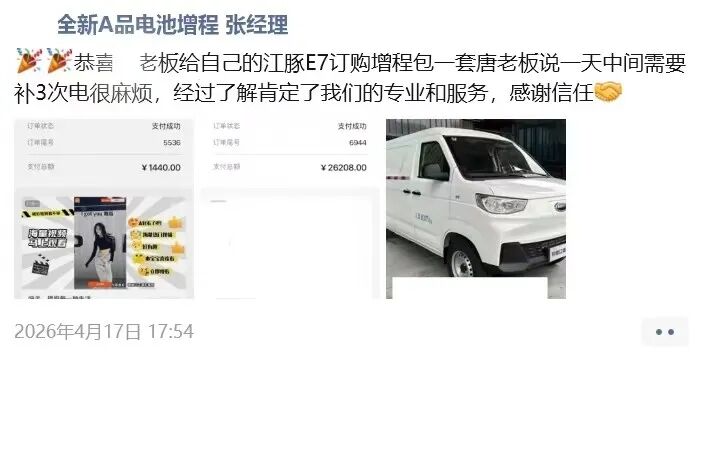
Some merchants package the privately - added battery as a "portable power bank", claiming that it can be used immediately after plugging in, without breaking the wires or modifying the original vehicle's three - electric system. It can be removed at any time during vehicle inspections or when warranty is needed, without affecting the original factory warranty.
But when asked about the guarantee after an accident, the merchant said that they can provide a 3 - year or 10 - year warranty for 300,000 kilometers, which only covers the battery itself. This means that even if a rear - end collision causes the battery to catch fire or explode, it is not within the scope of insurance claims. Moreover, the original vehicle insurance will also refuse to pay due to the private modification of the battery, and all losses will be borne by the owner.
Even so, under the double temptation of luck and cost - saving, a large number of owners still take risks. "Many people here come to replace the battery. There's no need to hesitate," the merchant urged.
In addition to installing additional batteries, some merchants can also replace battery cells. "One battery cell costs 300 yuan, charged by the piece. There is a discount for replacing the whole set." When asked whether the warranty can be continued after replacing the battery cells, the merchant retorted: "If you want a warranty, why don't you go to the 4S store?" Then, the merchant changed the tone and said, "Most 4S stores will ask you to replace the whole battery pack. We replace the battery cells here, but the warranty will definitely be void after replacement."
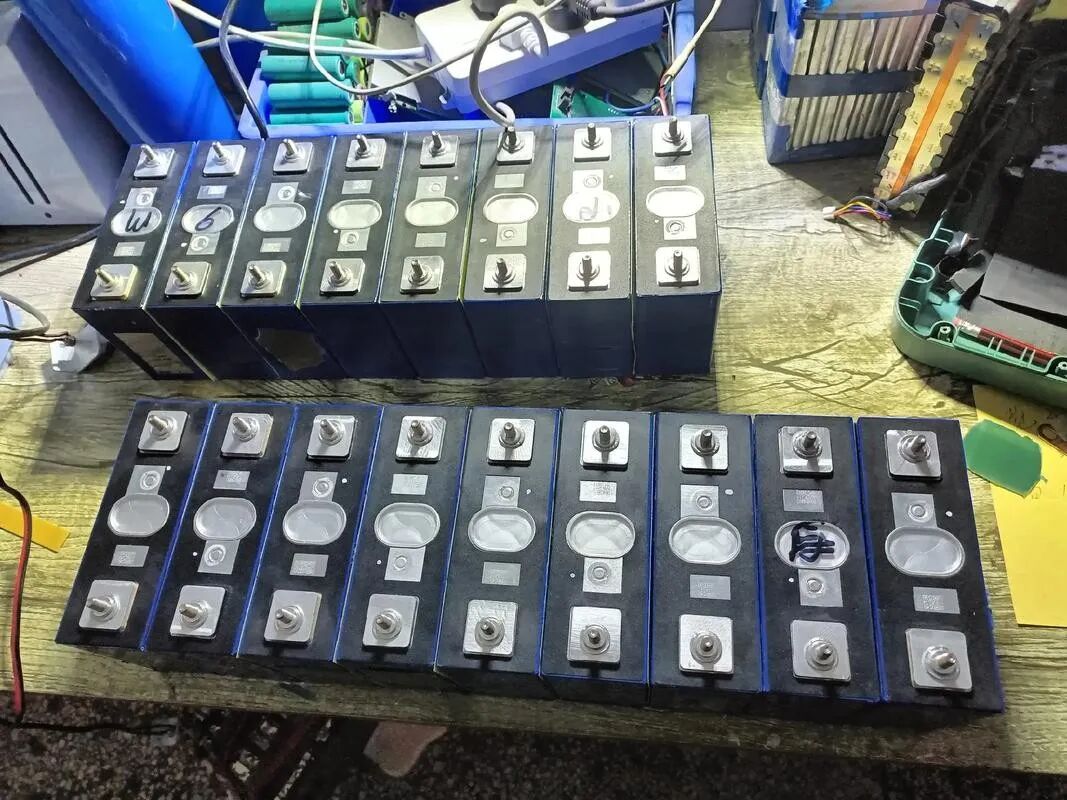
Some merchants also offer battery replacement services, claiming that they can replace a 68 - degree battery with an 80 - degree one, and the replaced battery is a "brand - new CATL battery". The project takes five days and provides a separate 3 - year warranty for 300,000 kilometers. However, when further inquired, the merchant was vague and in a hurry.
However, most of CATL's brand - new batteries are directly supplied to automobile manufacturers. The financial report shows that in 2025, CATL's net profit was 72.201 billion yuan, a year - on - year increase of 42.28%. In the context of high profits and short supply, CATL has no need to cooperate with individual businesses in the grey area.
"There are simply no brand - new CATL batteries on the market. They just refurbish and process used batteries from disassembled cars and claim they are from CATL," said Manager Zhang, an industry insider engaged in battery installation services, revealing the inside story.
02
The Recycling System Is Not in Smooth Operation, and Owners Are Trapped in the Cost Dilemma
The core reason why commercial vehicle owners are willing to take safety and compliance risks to get involved in the grey area of battery modification is cost. Behind the seemingly decent income is the unbearable operating pressure, and the high cost of battery replacement has become another straw on their backs.
A survey of the online car - hailing group in Shanghai in 2025 by an institution showed that full - time drivers had an average monthly income of nearly 15,000 yuan, and part - time drivers had an average monthly income of 3,720 yuan. On the surface, the income is okay, but behind it is an extremely high - intensity work: 40.4% of drivers work 6 - 10 hours a day, 38.38% work 10 - 14 hours, and 4.04% work more than 14 hours.
Income does not equal cost. In the above - mentioned survey, nearly 70% of the drivers are from other places, and more than 70% of them run their cars on a lease basis, with an average monthly lease fee of about 6,634 yuan. A Shanghai driver showed his March bill: an income of 12,800 yuan, after deducting 5,030 yuan for car rental, 633 yuan for charging, 288 yuan for meals, commission - free cards, parking fees, etc., the total expenditure was 6,400 yuan, not including rent. Another owner from Guangdong starts work at 7:40 every morning and goes home at 8 p.m., taking 3 days off a month. After deducting car rental and electricity costs, he gets about 7,000 yuan per month.
To maintain their income, more than 35% of drivers basically don't take a rest every month, 30.69% take 1 - 2 days off, and 22.44% take 3 - 4 days off.
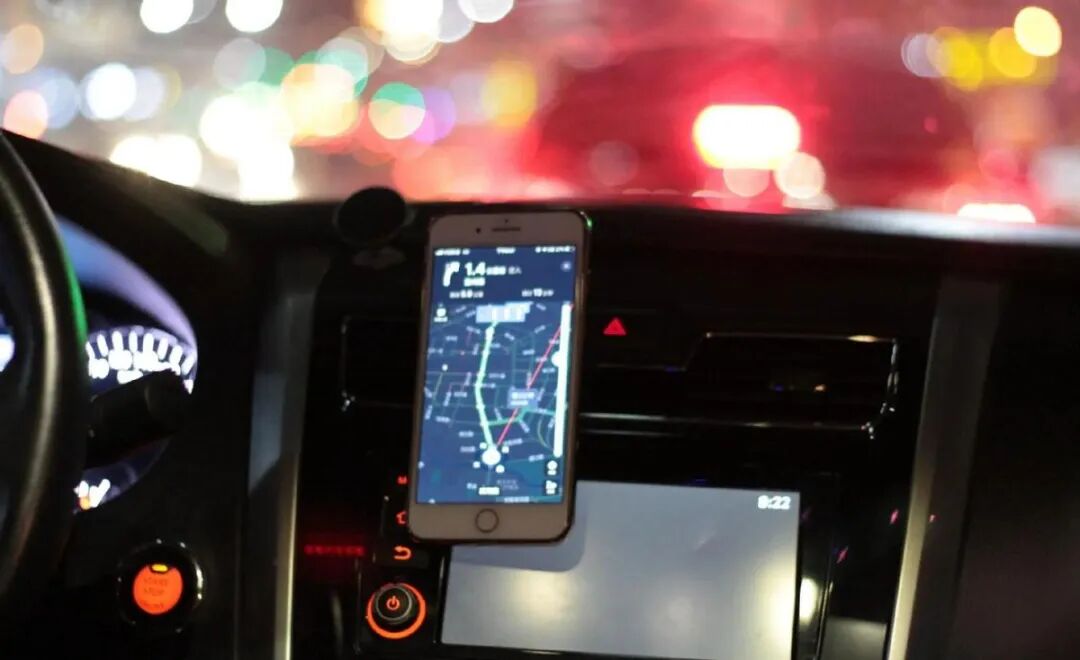
High - intensity driving not only consumes energy but also accelerates battery wear. Online car - hailing vehicles drive 200 - 300 kilometers per day. Pure electric vehicles need to be charged once a day, and extended - range vehicles need to be charged twice a day. After the battery decays, the charging frequency increases, directly reducing the order - taking time. In winter, the battery range is severely reduced. Some drivers admitted, "With the air - conditioner on, I have to go to charge after running a few orders."
Drivers have squeezed costs to the limit in aspects such as diet and charging. After running a car for five or six years, most people cannot bear the cost of replacing the battery, which can reach tens of thousands of yuan.
Battery decay is a pain in the early stage of the development of the new energy industry and is difficult to avoid in the short term. The deeper problem is that China's battery recycling system is far from mature.
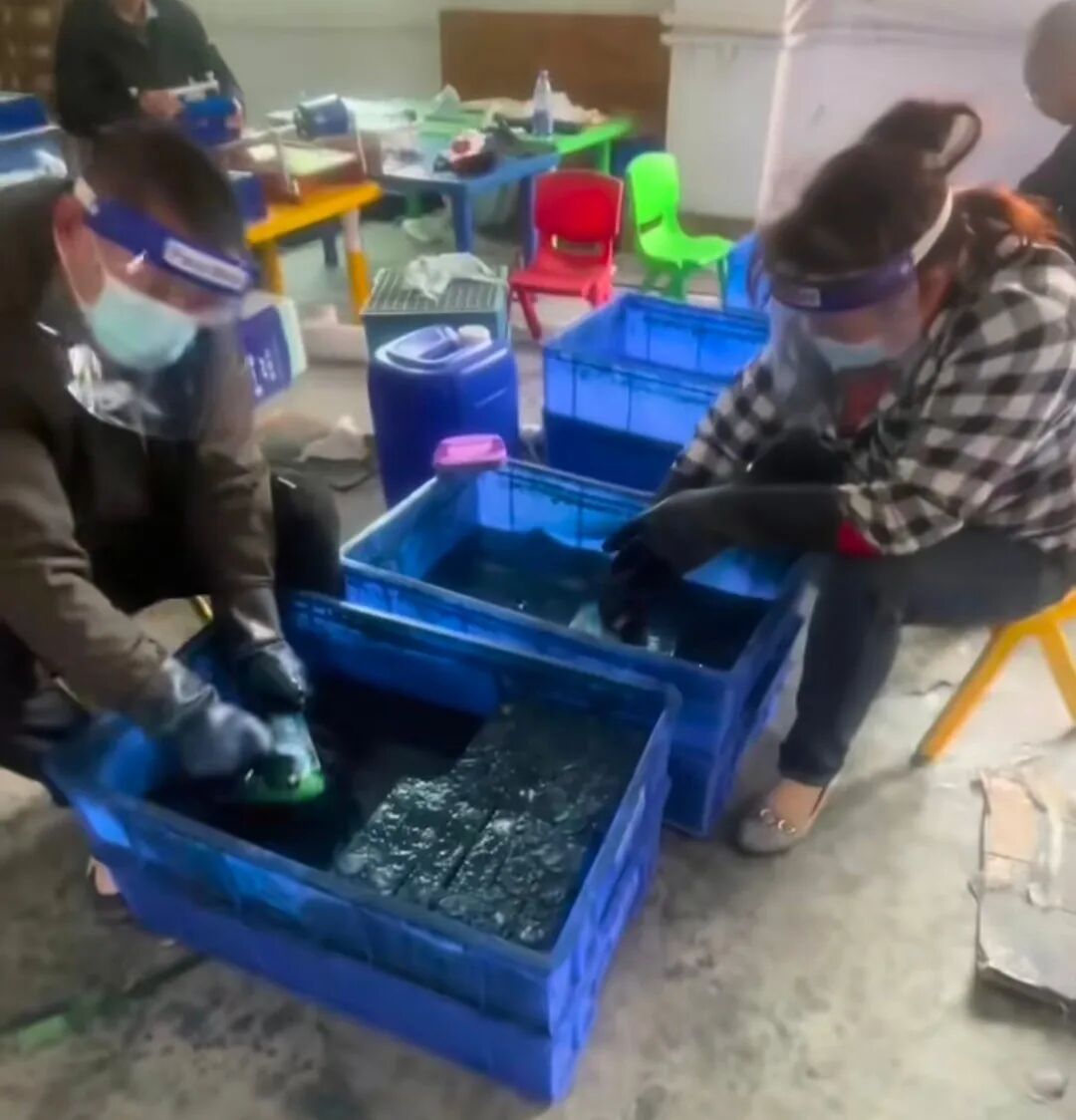
Formal enterprises on the white - list have invested hundreds of millions of yuan, with standardized processing procedures and strict environmental protection standards. However, they cannot collect batteries because of their low recycling prices. A media once called 156 white - list enterprises. Among them, 131 could not be reached, were out of service, had wrong numbers, or there was no response after the call was connected. A few enterprises that were successfully contacted "complained" that they had no batteries to collect, and some were forced to stop production.
An intermediary revealed that nearly 90% of C - end power batteries ultimately flow into underground workshops. Two years ago, a media undercover investigation found that most of the recycled lithium - ion batteries were disassembled and re - assembled for use in two - wheeled or three - wheeled electric vehicles, and then flowed to couriers and food delivery workers.
However, this "cascaded utilization" has now been clearly prohibited. The newly issued Interim Measures no longer use this concept and stipulates that no organization or individual shall directly or after processing use waste power batteries in electric bicycles and other prohibited fields.
Some more unscrupulous merchants replace the explosion - proof film of waste batteries and sell them at a low price as brand - new batteries from large manufacturers. Even if an accident occurs, the so - called "warranty" only covers the battery itself. However, the potential cost is consciously ignored by many owners in the face of "saving money" and "luck".
Automobile manufacturers also have an unclear attitude towards out - of - warranty vehicles and online car - hailing owners. The profit from officially installing additional batteries is thin, it is difficult to determine liability, and it impacts new car sales. Therefore, automobile manufacturers have difficulty coming up with effective countermeasures.
On one hand, there is the absurd reality that formal recycling enterprises "have technology and qualifications but no batteries"; on the other hand, there is the grey prosperity of underground workshops "with low cost, high price, and wild growth". On one hand, commercial vehicle owners have to compromise helplessly in the face of sky - high battery replacement costs; on the other hand, there are huge safety hazards hidden in grey modifications. So far, no balance has been found in this game around the retirement wave of power batteries.
The policy is being strengthened. The Interim Measures for Management stipulates that when non - battery - swapping new energy vehicles are scrapped and deregistered, the whole vehicle and the original power battery must be sold together to qualified enterprises. It is strictly prohibited to disassemble the battery in advance and sell it separately; without the battery, the deregistration cannot be processed. The hierarchical management of automobile modification mentioned in the Work Plan for Accelerating the Cultivation of New Growth Points in Service Consumption issued by the State Council is also forcing black workshops to withdraw and broadening the development path for qualified enterprises.
However, the essence of the power battery recycling dilemma is not a technical problem but that the interest mechanism has not been straightened out. Automobile manufacturers have thin profits and are difficult to be the initiators of battery replacement. Formal enterprises cannot collect batteries due to high costs, and vehicle owners have a great profit - making space by selling their old batteries separately. An intermediary revealed that nearly 90% of C - end power batteries ultimately flow into underground workshops at high prices.
To break the deadlock, multiple parties need to work together: automobile manufacturers should seek solutions, recycling enterprises should complete the closed - loop, and regulatory authorities should crack down on black workshops and support formal enterprises. Otherwise, owners who cannot afford to replace the battery will continue to "take a chance", and this grey industrial chain will continue to erode the health of the industry and public safety.
Batteries have a lifespan, but the industry cannot have a short life. If the recycling channel is not smooth, the "first half" of the new energy vehicle industry will never truly end.
This article is from the WeChat official account "Automobile Commune" (ID: iAUTO2010), written by Sai Jiatong and edited by He Zengrong. It is published by 36Kr with authorization.