Even Trump didn't expect that a war would propel Chinese electric vehicles to a new height.
Trump probably didn't expect that every missile he fired at Iran would ultimately become a stepping stone for Chinese new energy vehicles on their way to the global market.
The century - long tariff plan has been ruined in an instant...
Since Trump chose to engage in a conflict with Iran, the Strait of Hormuz has been in a "quantum state" of being "blocked one moment and unblocked the next", and global oil prices have continued to rise under this uncertainty.
Brent crude oil soared from $65 per barrel at the beginning of this year to a peak of $110 per barrel in April, an increase of nearly 70% in just four months, almost comparable to an "oil crisis".
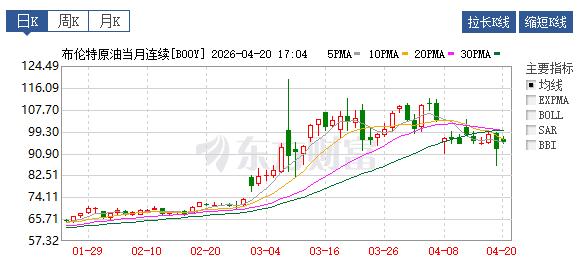
Friends who drive gasoline - powered cars here must have felt it. When we fill up our cars, the price of 92 - octane gasoline is close to 9 yuan per liter. Even though it has dropped by more than 40 cents now, it's still far from the previous level. We can only quietly listen to the sound of our wallets breaking.
The same is true on the other side of the sea.
In Europe, the average price of gasoline in the EU rose from 1.55 euros per liter at the beginning of February to 1.98 euros per liter in mid - April. Among them, the price of high - quality gasoline (E5/E10) in Germany, France, and Italy has exceeded 2.1 euros per liter. The Netherlands, which is a barometer of European oil prices, has even set a new historical high of 2.35 euros per liter.
So, many people began to rediscover the advantages of electric vehicles.
For example, the proportion of electric vehicle searches on the German mobile.de website increased from 12% at the beginning of March to 36%, and the consultation volume of electric vehicles from second - hand dealers also increased by 66%. The same is true for the French second - hand retailer Aramisauto. The proportion of electric vehicle sales almost doubled, rising from 6.5% on February 16th to 12.7%.
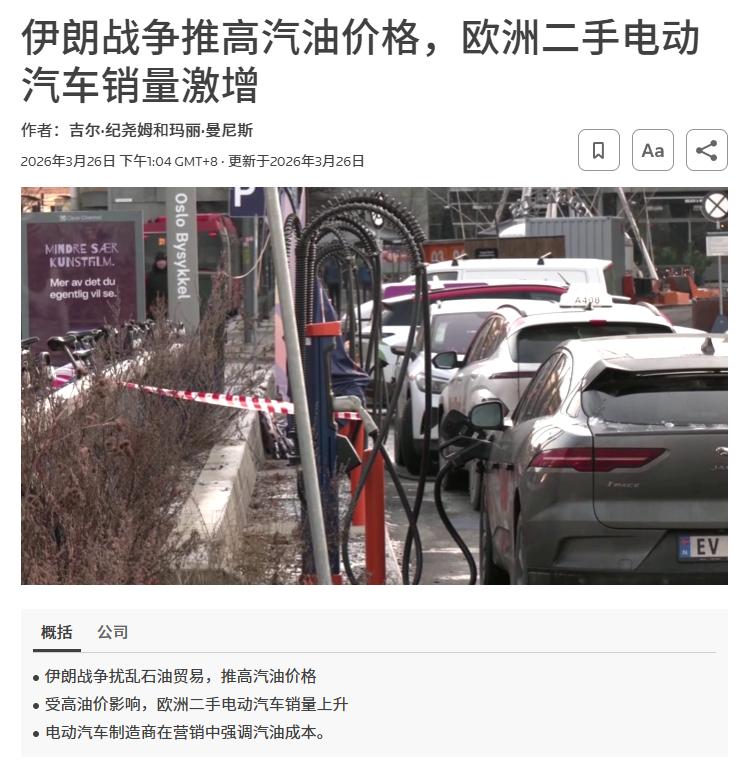
European electric vehicle owners who have already picked up their cars must be overjoyed.
In Southeast Asia on the other side of the sea, the situation may be even worse. Due to the single source of oil, countries such as Thailand, the Philippines, and Indonesia are facing the most severe "oil shortage" in nearly 20 years. For example, the Philippines declared an "energy emergency" on March 24th and directly implemented a "four - day work week" to reduce oil consumption.
It seems that without oil, there's less of that "work - stressed" look on people's faces. It's actually a good thing.

But it's tough for gasoline - powered car owners. In the Philippines, not only have more than 400 gas stations announced closures, but the operating gas stations may also implement a limited supply measure of 20 liters per car per day. Many people have been queuing for several days just to fill up their cars.

So, in the end, it's still electric vehicles that benefit. For example, at this year's Bangkok Motor Show, BYD was extremely popular and received 17,000 orders, leaving the former champions Toyota and Honda behind.
Moreover, this is not the end. There are good news of strong sales of domestic electric vehicles all over the world.
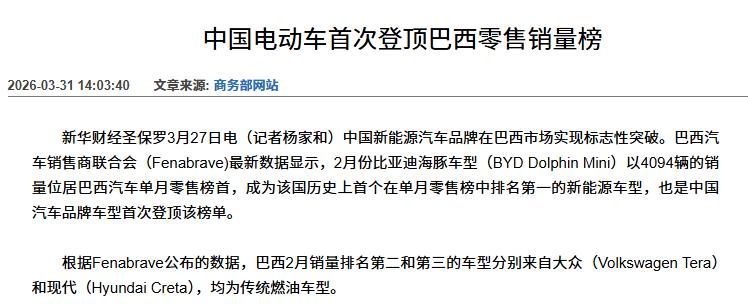
In Brazil, Chinese electric vehicles took the top spot in the sales list for the first time in February. The BYD Dolphin Mini (Seagull) sold 4,094 units in a single month, accounting for 77.6% of the pure - electric vehicle market. In Australia, China ended Japan's 28 - year monopoly and became the largest source of new cars.
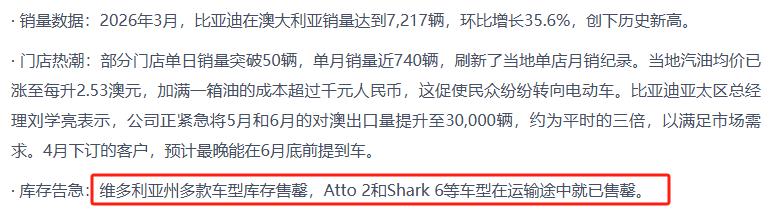
There are even reports of inventory shortages in many places. It is reported that in March this year, BYD urgently dispatched 20,000 vehicles to Australia. Cars like the Atto 2 and Shark 6 were sold out as soon as they were loaded onto the ship.
It seems that Douyin doesn't lie to us. Those exaggerated videos of foreign customers picking up Chinese cars that we saw before were actually real...

So, this year's export data of electric vehicles in China is quite remarkable. In the first quarter, China exported a total of 954,000 new energy vehicles (pure - electric + PHEV), a year - on - year surge of 120%.
In terms of structure, new energy vehicles already account for 43% of the total export volume, and soon it will be half electric vehicles and half gasoline - powered vehicles.
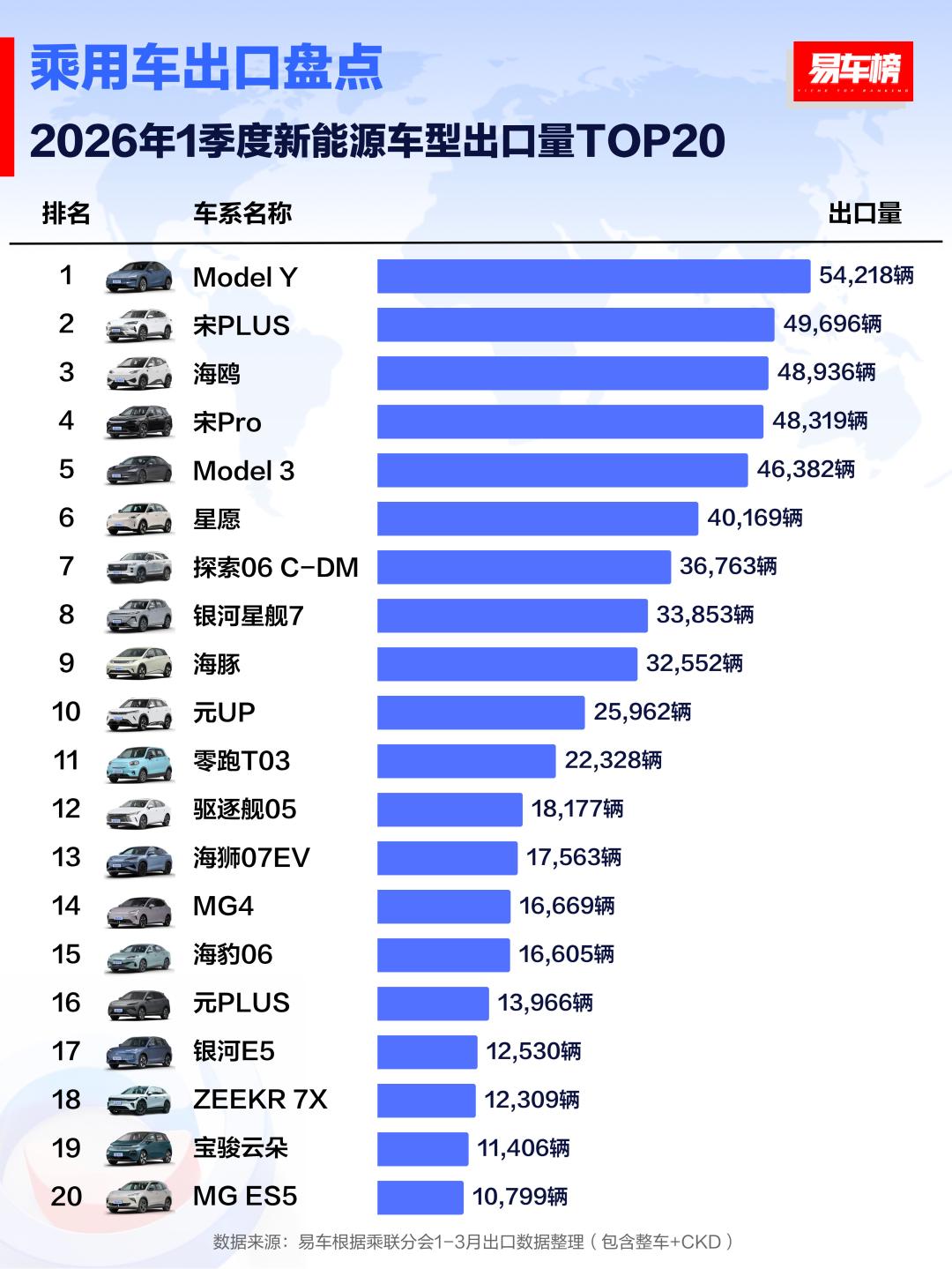
Previously, it was said that most of China's automobile exports were from Chery and SAIC. But in the new energy field, it's actually BYD that leads. In the first quarter of this year, it exported a total of 319,800 vehicles, a year - on - year increase of 65.1%. Models like the Song PLUS, Seagull, and Song PRO can sell more than 10,000 units per month overseas.

The brand with the fastest growth is actually Leapmotor. In the first quarter, it exported more than 40,000 vehicles, a year - on - year increase of 310%. Especially in the 16 European countries, the home of its old friend Stellantis, its sales soared by 726.5%, which is really amazing.
In addition, Geely also has good sales. It has taken all its models overseas. Electric vehicles that are popular in China, such as the Xingyuan, Galaxy E5, and ZEEKR 7X, are also very popular overseas.
You can see the following ranking. If you still think that China's electric vehicle exports rely entirely on Tesla, you might as well be living in the Qing Dynasty.
In short, thanks to this wave of rising oil prices, the export of domestic new energy vehicles is becoming out of control.
On the other hand, don't just focus on these data. In fact, there are many challenges behind these export stories. In my opinion, going global is not just about competing in product strength and cost - effectiveness, but also about using one system to compete against another system.
I contacted a friend in Thailand. He believes that the rising oil prices are only a short - term benefit for Chinese electric vehicles, and in the long run, it still takes time.
"If you're planning to buy an electric vehicle in Thailand recently, I suggest you buy a Tesla. If you can wait for 2 - 3 years, then buy a domestic brand. The supporting facilities for domestic brands still need some time to improve."
You may wonder if the problem of incomplete supporting facilities only occurs in Thailand. In fact, in most parts of the world, Chinese brands are in the transition stage from whole - vehicle exports to local production, and the lack of supporting facilities is not an isolated case.
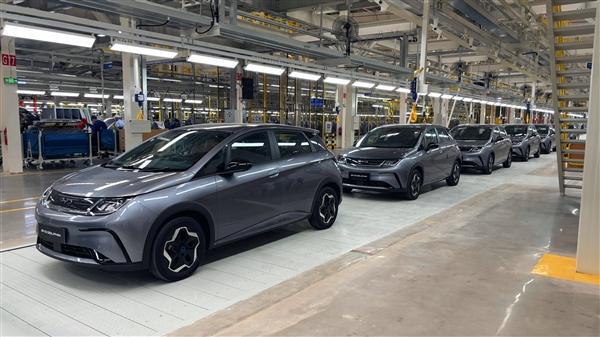
As the bridgehead for Chinese cars going global, the market share of Chinese brands in Thailand has actually reached 22.2% (in 2025). The problems in Thailand are obviously the most representative.
For example, although the orders for Chinese electric vehicles are really strong, the average delivery schedule of 2 - 4 months is not entirely due to the production capacity issue of "hard - to - get vehicles", but also the mechanism issue of "sell first, produce later".
Going global is not like setting up a stall at your doorstep. It actually involves sea transportation, customs declaration, commodity inspection, etc. Many car companies and dealers don't keep much inventory to reduce costs. Some models and parts can only be shipped from China by sea.
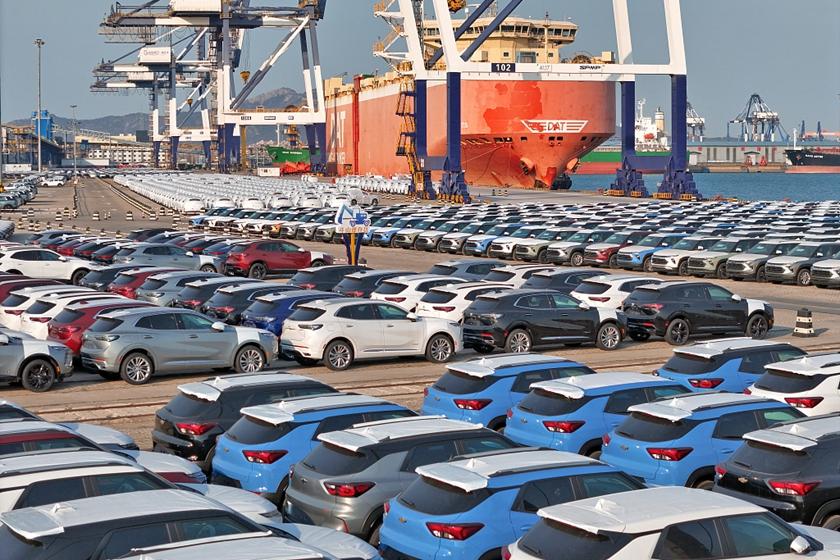
This process is like shopping on e - commerce platforms. Besides the actual "delivery" time, there is also the time to "group - buy" and fill the ship. If you bought an electric vehicle because of high oil prices, by the time the car is delivered to you, the war in the Middle East may have already ended...
But haven't Chinese car companies built many factories overseas? In Thailand alone, there are BYD, Great Wall, SAIC, Changan, Chery, GAC, etc. Moreover, most of them are not just CKD (Completely Knocked Down) assembly plants, but complete factories with four major processes.
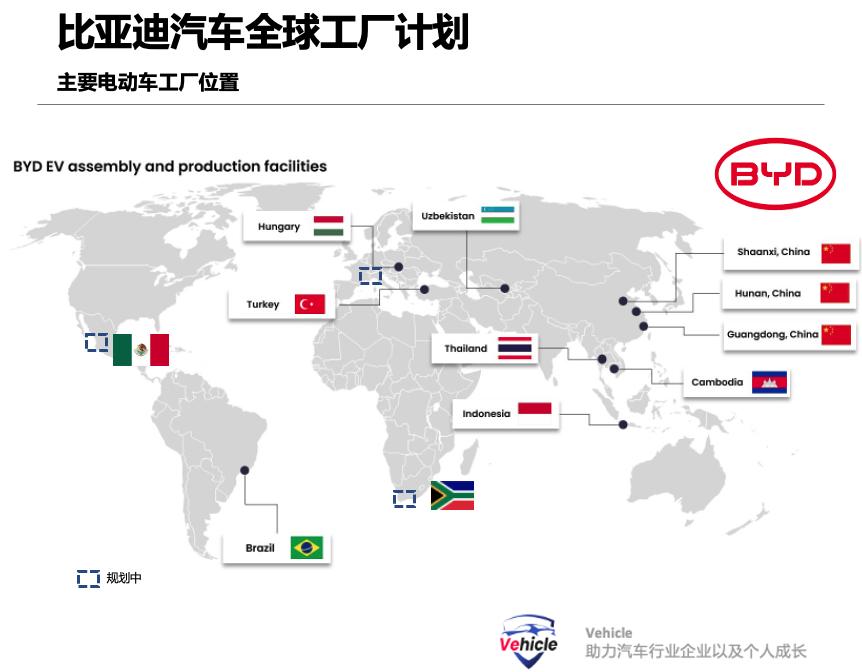
The problem is that automobile production doesn't just depend on factories, but also on the supply chain. The local production capacity of core components such as the "three - electric systems" is almost zero, and behind this is still a logistics problem.
Therefore, in addition to the difficulty in delivery, the pressure on overseas after - sales service is also quite high.
First of all, although the 4S stores of Chinese car companies are everywhere overseas, there are few repair shops that can repair electric vehicles outside the 4S store system. According to my friend, "There are no more than 10 companies in Thailand that can repair electric vehicles."
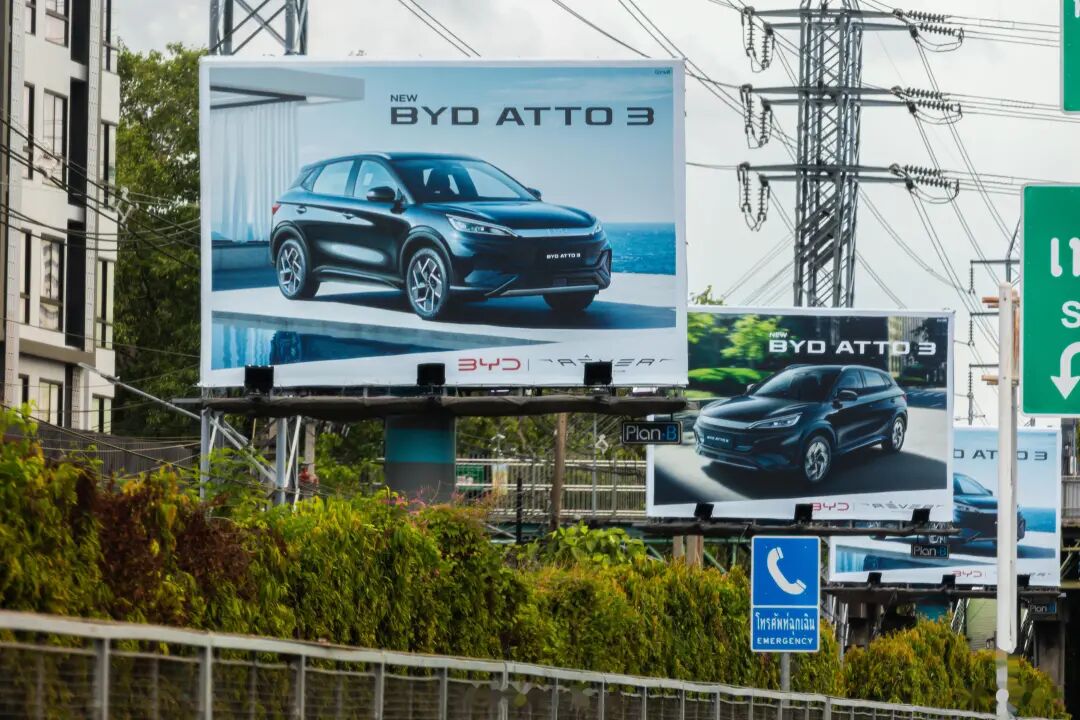
Going through the 4S store is also not easy. Many parts have to be ordered from China and shipped by sea, which takes at least 30 - 50 days. "My colleague's BYD Atto 3 had its front face hit. He waited for more than 60 days for the bumper, headlights, and sensors to be repaired."
So, following the current model, even if Chinese electric vehicles sell well, they haven't really taken root overseas like Japanese cars. If the supporting facilities can't keep up, the more they sell, the greater the risk to their reputation.
In addition, besides the lack of localization, the target audience of Chinese electric vehicles is still relatively narrow. Most of them are aimed at urban young people who have money to spare and love to try new things.
On the one hand, due to the rapid decline in the price