Founder of a16z: In the era of AI, technological leadership is no longer safe.
This article is compiled from an in - depth interview with Ben Horowitz, the co - founder of a16z. The original video link: https://www.youtube.com/watch?v=qAzLRlg0uJs
When Quincy Jones was recording "We Are the World", he posted a note at the studio door that read, "Leave your ego at the door." Years later, when Ben Horowitz, the co - founder of a16z, was asked who the most influential leader for him was, his answer was Quincy Jones - a man who could bring together a group of extremely talented and difficult - to - manage people to achieve things far beyond individual capabilities.
Horowitz has spent most of his life pondering the same thing: how to design a system that allows a group of top - tier but not necessarily easy - to - get - along - with people to make high - quality decisions continuously without being dragged down by internal strife. This conversation is his latest answer to this question. He talked about how he and Marc Andreessen turned the partnership logic of traditional venture capital on its head with the structure of "centralized control, decentralized investment", and how they cold - started one of the densest relationship networks in Silicon Valley through the counter - intuitive operation of "not paying themselves first". But what truly runs through is his core judgment about the AI era: the old ironclad rule in the venture capital industry, "You can't catch up with technology by throwing money at it", has completely failed. Code is no longer a moat, and the logic of capital itself is being rewritten. He also directly responded to the long - standing controversy over political donations and explained why Wall Street is making a huge mistake - the narrative of "SaaS Armageddon" won't stand the test of the weighing machine.
Core Content
1. The core structure of a16z: economic sharing, centralized control. In the traditional venture capital partnership, any reorganization is extremely difficult because reorganization means re - distributing power. By centralizing control, a16z can continuously enter new fields. Investment decisions are high - fidelity one - on - one conversations, and the optimal number of people is 7.
2. AI has rewritten the underlying logic of venture capital. "Nine women can't give birth to a baby in a month" - in the past, it was an ironclad rule that technology couldn't be caught up by money. But in the AI era, with enough GPUs and data, money can finally produce results. Code is no longer a moat, and the capital race has become a real thing.
3. The narrative of "SaaS Armageddon" will collapse. Take Navan, a travel management company, as an example: building a supply chain covering every airline and hotel globally, integrating old - fashioned enterprise systems, and establishing a sales channel targeting "travel managers" - these are not the small change that AI giants are interested in picking up. Wall Street's short - term trading narrative will be weighed in the long run.
4. Culture is a set of actions, not beliefs. As Bushido says well: culture is not about beliefs, but actions. Things like what time to arrive, how long to reply to messages, whether the best idea prevails or it depends on titles - these must be specifically agreed upon. If there are no agreed - upon standards, dissatisfaction has no way to be expressed and will evolve into politics, and the team will fall apart at the first difficult moment.
5. A company is not a democracy. In competitive confrontation, dictatorship always beats democracy because democratic decision - making is too slow. This is different from a country: a country needs to survive for hundreds of years, so it must guard against bad leaders. A company doesn't need to. When the founder is still at the helm, the organization must be efficient.
6. The real danger of AI is not unemployment, but fear. All data points in the opposite direction - even at Anthropic, the number of software engineer positions is growing rapidly. The real danger is over - regulation out of fear, which could lead to China forming a unipolar monopoly in super - intelligence. Historically, power concentration has never had good results.
Here is the complete transcript of this interview.
Anjney Midha (Host): Please welcome Ben Horowitz. How many of you here recognized the song played before the start? That's right, "We Are the World". This is a charity song recorded by a group of top musicians in 1985 to aid the famine in Ethiopia. I mention this because Ben is admirable in many ways - he is the co - founder of Andreessen Horowitz (a16z for short, a top - tier venture capital firm in Silicon Valley), and I was fortunate to work under him for a few years. But if I had to describe him in one sentence, I'd say: Ben Horowitz is the Quincy Jones of the tech world.
The documentary about the recording of "We Are the World" is called "The Greatest Night in Pop". There is a detail in it: Quincy posted a note at the studio door that read "Leave your ego at the door". He is a legend not only because of his talent but also because he can manage a group of extremely talented but difficult - to - manage geniuses. This is also what makes Ben most admirable - the leadership lessons he left behind are not fully understood by the world yet, but they will gradually become apparent over time. Today, our series of courses is about system design, and a16z is one of the most important innovations in the design of the venture capital system. What we want to talk about today is, among the bottleneck factors such as capital, culture, and computing that drive the technological frontier, how did you build a system back then to allow capital to flow to truly valuable technologies on a large scale?
Redefining VC, Designing Products for Entrepreneurs Instead of LPs
Ben Horowitz: When we founded the company in 2009, there were two "outdated" perceptions in the venture capital industry that we thought. The first one is that although the venture capital business has high returns for investors (LPs, limited partners), the product for entrepreneurs is actually very poor - they do almost nothing except provide money. We wondered if we could build a better product for entrepreneurs?
The second one is that at that time, the industry generally believed that there were only about 15 technology companies that could reach $100 million in annual revenue each year. So the whole industry's thinking was to "grab a share of those 15 companies". But we judged that software was about to "devour the world", and all new companies would essentially be technology companies. Therefore, instead of 15, 200 companies would emerge each year. This means that the scale of the entire industry and the allocable capital must be significantly increased.
The Key to System Design: Centralized Control, Decentralized Investment
Ben Horowitz: To scale up, several core structural issues need to be solved. Traditional venture capital is a partnership, where partners share economic benefits and control rights. But there is a fatal problem with sharing control rights: organizational change is almost impossible. Any reorganization is essentially a re - distribution of power, and there will always be someone who opposes it. If everyone has a veto power, you can't move forward.
Our solution is: economic benefits can be shared, but control rights must be centralized. This allows us to continuously reorganize the organization and enter new fields - American dynamism, crypto, biotech, etc. Another key issue is that investment decisions are one - on - one high - fidelity conversations, not large - scale meetings. You should never have more people in a room than the number that allows for a real conversation. A meeting of 30 people is not a conversation, but a report. The optimal number we found is 7 people - provided that the members have a good understanding of each other. Our approach is to continuously split the company into smaller teams, with each team focusing on a specific market.
Anjney Midha: Your first fund was only $300 million, and at that time, big institutions like David Swensen of the Yale Endowment (a legendary institutional investor) also said that "a good venture capital firm should be like a basketball team, with five or six people being enough". How did you convince these people to change their minds?
Ben Horowitz: With results. We invested a quarter of the money from our first fund in the acquisition of Skype. Everyone thought we were crazy. In that deal, eBay bought the Skype company but didn't buy the IP (intellectual property) of the underlying communication protocol, and the IP was still in the hands of the founders, so they could sue and shut down the service at any time. Everyone said, "This asset has legal risks." But we knew the two founders, and we knew that the most defining thing in their lives was creating Skype, and they would never destroy their own work. And that's exactly what happened. After the acquisition was completed, people started to think, "Well, maybe you're not completely crazy."

Network Effect: Why a16z Built Itself into a Network
Ben Horowitz: The essence of the network effect is the square - level value growth brought by the increase in the number of nodes - 5 people have 25 connections, and 6 people have 36 connections. At the scale of the Internet, it is almost impossible to replicate. We realized early on that if we operate the company as a network, the more relationships we have, the stronger the network effect will be, and it will become the best place for entrepreneurs to raise funds. So we did many things that other institutions don't do: we tried to establish relationships with every engineer, every executive, and every large technology - buying company in Silicon Valley.
Anjney Midha: But the most difficult part of any network is cold - starting. When you didn't have a brand, a fund, or a venture capital history, how did you get this network up and running?
Ben Horowitz: A very simple idea: Venture capital firms make a lot of money and pay themselves high salaries with management fees. We said, what if we don't pay ourselves first? Put all the money into building the network. We hired people specifically to build relationships. Another key technique - we sold our company to HP (Hewlett - Packard, an American technology company) before, and we knew the people in their corporate briefing center. We would call them every week and ask, "Which companies are coming to the briefing center this week? Can you give us their contact information?" Then we would invite those companies to our place to see our startups. In this way, within a few years, we knew more large companies than old - fashioned venture capital firms that had been in business for 50 years.
Anjney Midha: When I was at Kleiner Perkins (a well - established venture capital firm in Silicon Valley), I took your case to our CMO and said, "We should do the same." She took a look and said, "Isn't that just marketing?" I thought to myself: Yes, this is exactly your job, and what they're doing is effective. What kind of "immune reaction" did you encounter from your peers at that time?
Ben Horowitz: Every time our LPs met other venture capital firms, the other side would bad - mouth us. They gave us the nickname "A - ho". Some of it was really my own fault - when I first entered the industry, I wrote a blog called "Four Things I Hate About Venture Capital", and I also quoted Lil Wayne's lyrics at a conference: "When I see another VC giving me a peace sign, I only see a trigger and a middle finger." As a result, everyone hated me. But precisely because they hated me so much, they were reluctant to copy what we were doing - even though it was obviously effective. This can also be considered a moat.
The Fundamental Change of AI to the Venture Capital Logic: Money Can Finally Produce Results
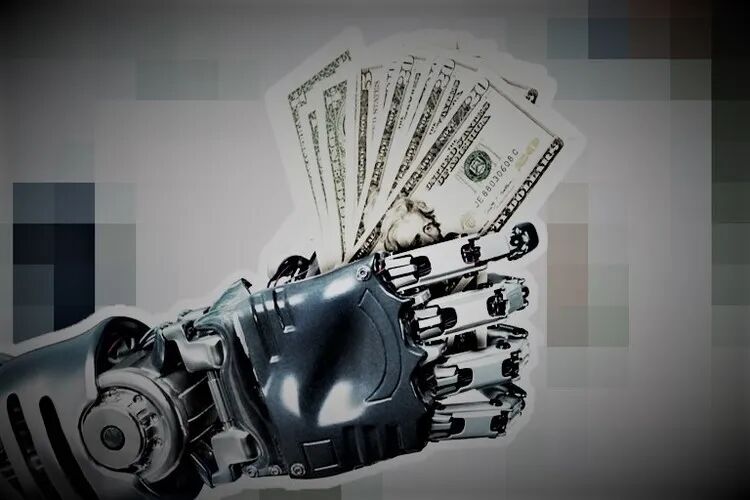
Ben Horowitz: In the nearly 20 years I've been in venture capital, there has been an ironclad rule: You can't catch up with a technology company by throwing money at it. If someone is two years ahead of you, hiring a thousand engineers won't help you catch up - "Nine women can't give birth to a baby in a month", and many things can't be done in parallel. My classic joke used to be: "What is a man - year? It's what 700 IBM engineers do before lunch - nothing."
But AI has completely changed this. If you have enough GPUs (graphics processing units, the core hardware for AI training) and enough data, you can now solve most problems. Code is no longer a moat, and neither is the user interface. The capital race has become a real thing. You have to rethink: What exactly can constitute a real competitive barrier? At the same time, the changes on the demand side are equally drastic. In the past, deploying SaaS software took two years and cost millions of dollars. Now, the AI products you use are just good, and you'll be amazed at "how it's done". When a technology product is truly "good" for the first time, the demand is infinite.
Anjney Midha: This also means that young people are facing a once - in - a - lifetime opportunity. The worst - case scenario now is to work for an old - fashioned company for 30 years and climb to the middle management through office politics. The best - case scenario is that the old world is collapsing, and the new world hasn't been built yet. You can step in and rewrite all the rules.
Ben Horowitz: I completely agree. The key is to truly understand the future, and then the future is yours. For good ideas, capital is almost infinite now. But the standard for good ideas has never changed: Can you create something that people really want? If I don't do it, will this thing still be created? Does the world really need it? The same logic applied to venture capital back then. Does the world need another venture capital firm? No. But does the world need a different venture capital firm? Absolutely. The same goes for OpenAI - at that time, everyone thought Google would monopolize AI, but if you think about it carefully: Does the world need an alternative to Google? Yes. That's a good idea.
Culture is a Set of Actions, Not a Set of Beliefs
Ben Horowitz: Entrepreneurship is extremely difficult in any era. It's normal for some teams to fail. But the reason many teams fall apart is that there is a problem with the culture. The definition of culture is very vague, but there is a key understanding: Culture is not a set of beliefs, but a set of actions. There is a great saying in Bushido: "Culture is not a set of beliefs, but a set of actions." What time do you come to the office? Do you go home at five or stay later? Do you reply to questions immediately or a week later? Does the best idea prevail, or does it depend on who the founder is? These things must be very specifically stated and jointly practiced by the team.
If you have clear standards and someone fails to meet them, it's simple - they violated the standards we agreed upon. If you've never set standards and someone goes home at five, you'll be unhappy but can't say why, and it will gradually turn into office politics. "Why did he go home?" "We never said we had to stay for how long." Then people start to be dissatisfied with each other, and they'll break up at the first difficult moment.
Anjney Midha: But what if the standards set six months ago need to be updated because the world is changing too fast?
Ben Horowitz: Culture can of course evolve, but it needs to evolve together, and a leader is needed to break the deadlock. That's why I extremely dislike ideas like "co - CEO" or "everyone is equal". A company is not a democracy. In competitive confrontation, dictatorship always beats democracy - because democratic decision - making is too slow. Of course, it's different at the national level. A country needs to last for hundreds of years, so it needs to guard against bad leaders, and power must be decentralized. But a company doesn't need to last that long. It