Having raised nearly one billion yuan in financing and with a valuation exceeding ten billion yuan, why is Pudu Robotics consistently favored by capital?
36Kr learned that “Pudu Robotics,” a leading global commercial service robot enterprise, recently announced the completion of a new round of financing of nearly 1 billion yuan. This round of financing was jointly led by Longgang Financial Holdings and Asia Investment Capital, with participation from BAIC Capital, Lens Technology, Shanghai Honghui, government-guided funds from the Pearl River Delta, the Yangtze River Delta, and other regions, as well as well - known hard - tech investment institutions. After this round of financing, Pudu Robotics has a valuation exceeding 10 billion yuan and may become the largest pre - listed company in the commercial service robot industry.
Currently, the domestic robot industry is experiencing a concentrated financing boom. Many intelligent enterprises, such as Self - variable Robotics and Qianxun Intelligence, have successively completed large - scale financings, and a group of unicorns with a valuation of over 10 billion yuan are emerging rapidly in the industry. However, looking at the current industry situation, most enterprises are still in the stages of technology R & D, prototype testing, and scenario verification, and their capabilities for large - scale implementation and commercial profitability are generally weak. Against this industry background, Pudu Robotics, with a cumulative global delivery volume of over 120,000 units, a global commercial network covering more than 80 countries and regions, and a sustainable business model, has become a scarce core target in the 10 - billion - yuan valuation camp, with both technological barriers, product implementation capabilities, and cash - flow resilience.
01
Build Capital Confidence with Robust Business Data
What really deserves attention behind this financing is a set of data.
Annual revenue has increased by over 100% year - on - year, and the proportion of overseas revenue has exceeded 80% for many consecutive years;
The business of commercial cleaning robots accounts for over 70% of the total revenue and has become the core growth curve.
Public data shows that as of the end of 2025, Pudu Robotics' cumulative global shipment volume exceeded 120,000 units, and it has maintained a doubling - level revenue growth for a long time, firmly ranking first in the global commercial service robot shipment volume. According to the authoritative industry statistics report of Frost & Sullivan, in 2023, Pudu Robotics ranked first in the global commercial service robot market with a market share of 23%.
Currently, Pudu's business map covers more than 80 countries and regions around the world. Its products are widely implemented in diverse overseas scenarios such as high - end European hotels, North American chain supermarkets, and Japanese and Korean restaurants, and the results of its global layout are continuously being realized.
The robust global layout has built Pudu's healthy and anti - cyclical revenue structure. More than 80% of the company's revenue comes from developed overseas economies such as Europe, the United States, Japan, and South Korea. These countries and regions generally face the pain points of labor shortages and high labor costs. Enterprises have clear needs for cost reduction and efficiency improvement, strong purchasing willingness, stable payment capabilities, and clear investment return cycles, with broad long - term market growth potential.
The continuous doubling of revenue growth rate intuitively confirms Pudu's ability to implement products overseas on a regular basis and be repurchased continuously. At the same time, the company's business quality has been optimized synchronously. It is reported that Pudu's EBITDA is now close to turning positive, and it is expected to achieve large - scale profitability first. At a time when the industry is generally in the early stage of commercial exploration, Pudu's commercial certainty and profit growth potential have become the core considerations for institutional capital to focus on.
In terms of business layout, Pudu initially focused on distribution robots for scenarios such as catering and hotels as its core business, establishing a first - mover advantage in the industry. At the end of 2021, it officially entered the commercial cleaning robot market. After years of refinement and in - depth exploration of scenarios, the cleaning business has grown into the company's core pillar business, accounting for over 70% of the revenue and forming a strong second growth curve.
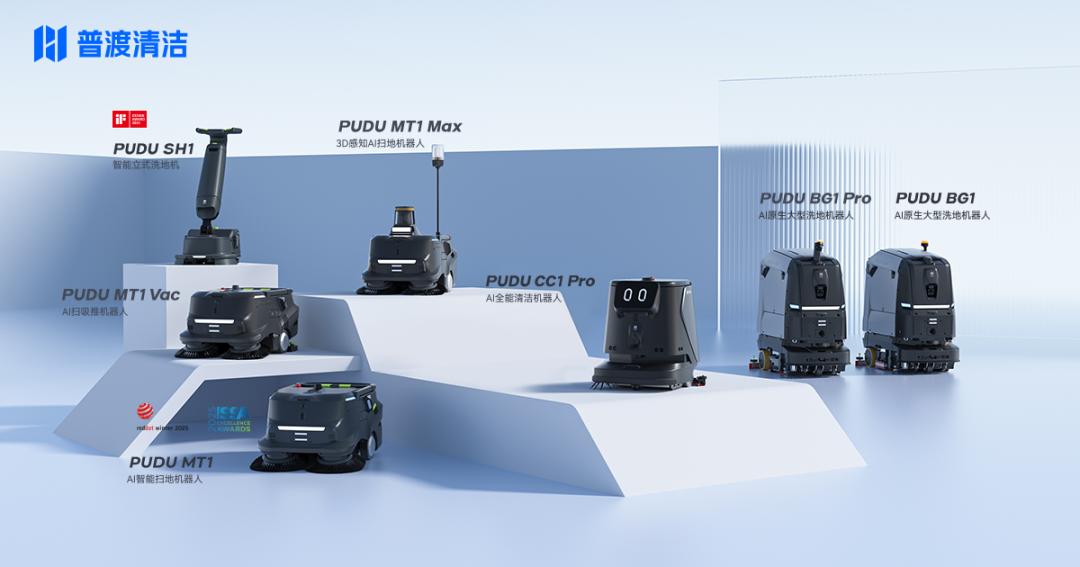
From the perspective of investment value, Pudu has built a diversified business pattern with strong long - term growth potential: the mature and stable distribution robot business provides continuous cash flow, the commercial cleaning robot business with broad market space opens up the growth ceiling, and combined with the pre - arranged multi - form embodied intelligence product matrix, the multi - matrix works together to form a risk - resistant and high - growth development model.
Pudu's leading industry position, high - quality business data, perfect product system, and global channel barriers together constitute the core decision - making basis for institutional investors to concentrate their investments in this round. The core competitiveness formed through more than a decade of precipitation is not only the foundation for Pudu to stand in the industry but also the underlying logic for the capital market to be optimistic about its future growth in the long term.
Relying on solid product strength and continuously realized business performance, Pudu has fully demonstrated to the capital market the company's development plasticity and long - term growth potential, becoming a high - quality investment target with long - term holding value in the hard - tech industry.
However, the advantages of the industry leader are not achieved overnight. Pudu can continue to lead the industry and gain long - term favor from capital mainly because of the technological know - how and scenario implementation experience accumulated through more than a decade of in - depth industry exploration. It always adheres to the customer - centered core orientation, focuses on real business pain points to create highly competitive products, and finally achieves a deep match between product technology and market demand.
02
Customer - Driven Full - Scenario Embodied Intelligence
The core reason why capital continues to be optimistic about Pudu is that Pudu has the R & D ability of embodied intelligence products with continuous iteration and full - domain expansion. While most enterprises in the industry focus on a single product and are involved in homogeneous competition, Pudu has already completed the layout of a multi - category, full - scenario, and multi - form product matrix, forming a differentiated competitive advantage.
The "inventor spirit" and "customer - centered" are Pudu's core values and also the core driving forces for Pudu to continuously iterate products and expand business boundaries. The successful development of commercial cleaning robot products is the most intuitive manifestation of this development concept.
In 2021, based on the real - scenario demands of a large number of customers, Pudu accurately captured the market gap and rigid - demand pain points in commercial cleaning and officially entered the commercial cleaning robot market. Guided by the actual needs of customers, combined with global multi - scenario research and industry prospect judgment, Pudu officially started the implementation layout of commercial cleaning robot products, and now the revenue from this business accounts for more than 70%.
This demand - driven product - building logic is also extended to the product layout of industrial AMRs: in the early stage, some customers flexibly applied Pudu's catering distribution robots in factory scenarios, and the actual operation performance was stable and efficient. The front - line team promptly captured market feedback. After on - site scenario surveys, pain - point analysis, and technical adaptation evaluations, Pudu launched targeted industrial distribution product series. Now, it has built a product matrix covering 150kg - 600kg, accurately meeting the intelligent handling needs of small and medium - sized industrial customers.
Moreover, Pudu deeply understands the differences in customer needs. Taking cleaning as an example, different scenarios such as industrial factories, commercial office buildings, commercial complexes, and medical institutions have significant differences in cleaning modes, operation standards, and environmental conditions.
For example, industrial scenarios focus more on high - intensity floor - washing operations, with strict requirements for equipment operation efficiency, fuselage stability, and adaptability to complex environments; while office buildings and business parks mainly focus on daily dust removal and cleaning, with frequent cleaning frequencies, and they value the equipment's intelligence level, mute performance, and safety of human - machine cooperation more.
Therefore, based on the differentiated pain points of scenarios, Zhang Tao, the founder and CEO of Pudu, innovatively added three core dimensions of Industry, Scenario, and Task on the basis of the traditional industry PMF theory, forming the PISTF core methodology applicable to B - end robot products. By deeply analyzing the core demands of different industries, segmented scenarios, and customized tasks, it guides product R & D and sales in reverse, and accurately creates robot products that meet the needs of a wider range of users.
Take the newly released BG1 series, the world's first large - scale floor - washing robot, last month as an example. Its R & D and implementation have a clear industry foundation: after years of market education, the demand for intelligent commercial cleaning has been fully released, and the procurement demands of large - scale property groups, professional cleaning service providers, and other major customers have exploded. The pain points such as the intelligent shortcomings and operation blind spots of traditional large - scale cleaning equipment in large - scale scenarios need to be solved urgently, and the window period for industry upgrading has fully arrived.
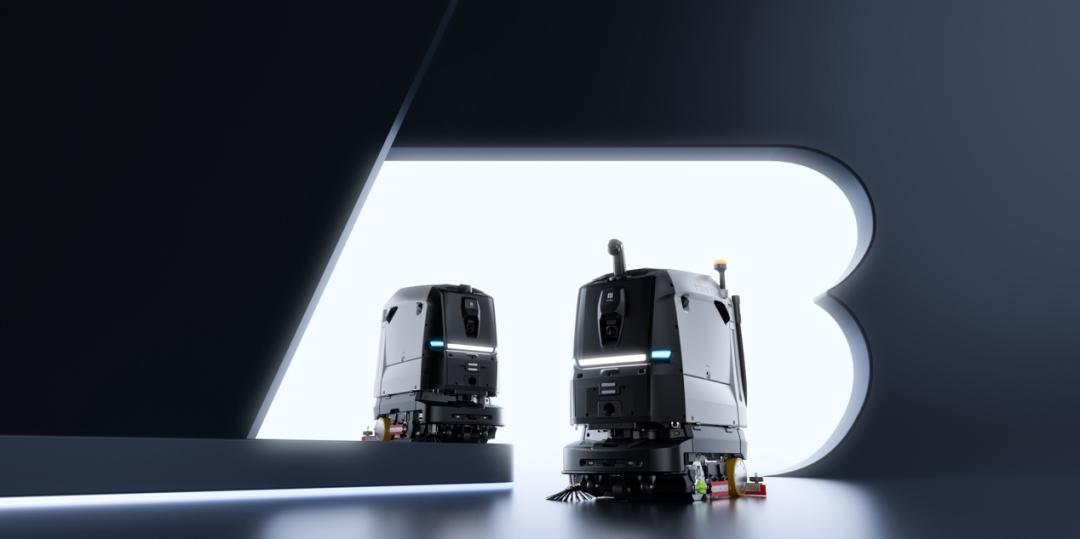
AI - native large - scale floor - washing robot BG1 series
Different from the functional design of traditional large - scale cleaning equipment in the market, BG1 takes AI - native as the core R & D concept. Relying on self - developed cutting - edge AI technology, it specifically solves various practical problems in the implementation process of traditional cleaning equipment, greatly improving the scenario adaptability and operation efficiency.
In the past, cleaning equipment generally had basic functions such as front - sweeping and rear - washing and edge cleaning, but there were obvious implementation shortcomings for a long time: cleaning liquid waste was prone to cause secondary pollution, and the limitations of the fuselage structure led to missed sweeping and mopping in areas such as corners and gaps, requiring a large amount of manual secondary supplementation, which seriously affected the actual user experience of customers.
Based on the real pain points of front - line customers, Pudu relies on the self - developed AI Magic Cleaning intelligent cleaning algorithm to achieve accurate identification and intelligent classification of dry and wet waste. The equipment can automatically identify the form of ground waste and dynamically switch cleaning modes; when detecting liquid stains, it automatically raises the side brush and completes the sewage collection through the high - pressure floor - washing mode, eliminating the problem of secondary pollution from the source.
In the corner cleaning process, BG1 is equipped with a mechanically expandable floor - washing brush. When performing floor - washing operations, it can automatically extend and fit the edges of walls and columns, achieving zero - clearance and dead - angle - free cleaning, and completely solving the industry pain point of "difficult corner cleaning" of traditional cleaning equipment, filling the last shortcoming in cleaning operations.
Guided by the "customer - centered" value concept and the PISTF implementation methodology, Pudu has launched a full - spectrum of cleaning products covering the entire scenario, such as MT1, CC1 Pro, and BG1, and built a complete commercial cleaning robot matrix, firmly ranking among the top in the global commercial cleaning robot industry.
The success of the cleaning business reflects that on the basis of the mature distribution business, Pudu has the core ability to continuously create a second growth curve. The product matrix takes into account the breadth of scenarios, the depth of technology, and the price gradient, and can match the differentiated procurement needs of customers of different scales, budgets, and scenarios, forming a leading "seven - force product advantage".
With a perfect product layout, mature implementation experience, and continuously iterative technological capabilities, Pudu has become one of the most mature and competitive robot enterprises in global commercial implementation. Facing the second half of the embodied intelligence industry, the company has already pre - arranged multi - form embodied intelligence and continues to explore greater development boundaries.
03
From AI - Native to One - Brain - Multiple - Forms: Building a Multi - Form Embodied Intelligence Product Ecosystem
Pudu is one of the early enterprises in the industry to layout the R & D and product implementation of embodied intelligence technology. As early as 2022, it launched the quadruped robot dog PUDU D1, aiming to solve the limitation that wheeled robots cannot pass through complex terrain scenarios. Although it failed to achieve commercialization at that time, it represented the early exploration and technological accumulation in the industry.
However, relying on leading technological accumulation, Pudu quickly completed the implementation of multi - form products, successively launching products such as the first - generation humanoid robot D7, the full - size bipedal humanoid robot D9, the humanoid embodied service robot Lightning Box Arm, and the quadruped robot D5, and took the lead in realizing the layout of multi - form embodied intelligence products, achieving efficient transformation from technological reserve to product implementation.
Deep down, Pudu's ability to achieve leap - forward development in the embodied intelligence track mainly stems from more than a decade of continuous technological precipitation, the accumulation of a large amount of real - scenario data, and engineering implementation experience.
As a high - tech product with a high degree of coupling between software and hardware, there is a significant engineering gap and implementation barrier between the theoretical technology in the laboratory and the real commercial scenario implementation of robots. Technologies and products that are not polished in actual scenarios are often difficult to adapt to complex environments, cannot solve the real pain points of customers, and ultimately fall into the dilemma of disconnection between R & D and the market.
After more than a decade of in - depth exploration in the industry, Pudu has deeply rooted in various offline scenarios around the world. In the continuous customer service and product iteration, it has polished the technological precision, optimized the hardware stability, and accumulated a large amount of real - environment data. Finally, it has built an efficient, reusable, and easily iterative self - developed system - the "one - brain - multiple - forms" general technology architecture.
The so - called "one - brain - multiple - forms" means relying on a unified self - developed underlying general algorithm large model to create a standardized AI core brain. Robots of different forms such as distribution, cleaning, industrial, humanoid, and quadruped can share the same underlying technology base; only by performing lightweight adaptation training according to different operation scenarios and task requirements can they be quickly deployed and implemented. This architecture can not only significantly reduce the cost investment in the simultaneous R & D of multiple product lines but also effectively shorten the R & D cycle of new products and accelerate the commercial implementation of products.
This leading technology architecture deeply reflects Pudu's long - term insight into the commercial development of robots.
The real - world offline scenarios are complex and diverse, and customer needs are fragmented and customized. A single - form robot is difficult to cover all types of operation needs. The coordinated layout, complementary functions, and scenario adaptation of multi - form robots are the optimal development form for the future service robot industry.
Zhang Tao once proposed a forward - looking industry concept - the degree of freedom of a robot per unit working area, which quantifies and measures the multi - task processing ability, environment adaptation ability, and flexible operation ability of the equipment in a limited space by the ratio of the overall degree of freedom of the robot to the working area.
Based on this core theory, Pudu divides robots into three development forms: special - purpose robots, humanoid - like robots, and humanoid robots. The three types of products have clear positioning, complementary advantages, and perform their respective duties, and can maximize the operation efficiency in different scenarios, jointly building a diversified and comprehensive future service robot ecosystem.
Through the "one - brain - multiple - forms" general technology base, Pudu can quickly complete product iteration, new product R & D, and function upgrading according to market demand and customer requirements, and maintain the technological leadership and market competitiveness of the entire product line in the long term. At the same time, the real - operation data continuously precipitated by a large number of devices in global scenarios can be fed back to optimize the underlying algorithm model, continuously improving the general ability of AI perception, decision - making, and execution, forming a closed - loop growth flywheel of product implementation - data precipitation - technology iteration - product upgrading.
Now, relying on this mature technology architecture and R & D system, Pudu has taken the lead in completing the layout of a full - category, multi - form embodied intelligence product matrix.
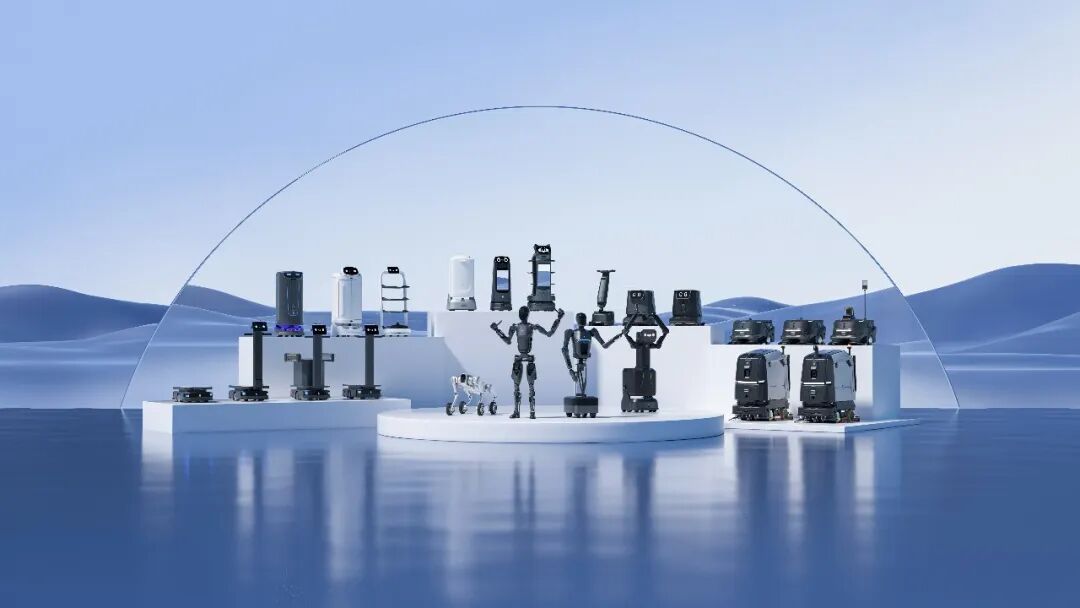
From service distribution robots, commercial cleaning robots, to industrial distribution robots,