The world's largest auto show witnesses history: From the old - money style to the Biden vibes, who is defining cars after 2026?
In April 2026, at the New China International Exhibition Center in Shunyi, Beijing. With an exhibition area of 380,000 square meters, 1,451 exhibition vehicles, and 181 world premiere vehicles - the numbers themselves are enough to illustrate the physical scale of this auto show. But the real question worth asking lies behind the numbers: When we focus such intense attention on an exhibition, what exactly are we witnessing?
A media colleague was surrounded by a group of viewers asking where the most interesting places were. His answer was brief and direct: "Don't flock to the luxury area in Hall W. It's too old - fashioned. Now all the young people are going to Areas A4, E, and B4." This impromptu guidance outlined the direction of the power shift more sharply than any industry report - the crowd was flowing from the venues where traditional luxury brands were gathered to the positions of Chinese brands. But this is not a silent "changing - of - the - guard ceremony"; it's more like an endless displacement. History rarely announces a turning point with fanfare at an auto show. The turning point often occurs in the unconscious steps of the crowd.
If we have to define the 2026 Beijing Auto Show, it may not be "the coronation ceremony of Chinese automobiles" but a slightly distorted magnifying glass: It magnifies the drastic restructuring of an industry and also magnifies a certain collective optimism and anxiety. The slogan has changed from "New Automobiles" in the previous session to "Intelligent Future". This is not only an upgrade of the industry narrative but also a self - declaration of the eagerness to define the "sovereignty in the second half". What's really worth thinking about is not who occupies a larger booth and attracts more people, but: When artificial intelligence starts to redefine driving, and when the "Huawei factor" becomes a more popular parameter than the number of engine cylinders, what changes are taking place in the essence of automobiles? And who exactly holds the dominance of these changes?
Passenger flow equals voting rights: The dominant popularity of Chinese brands
At 10 a.m., the crowd flooded into Hall E3.
BYD has taken over the entire hall here. The five major matrixes of Dynasty Network, Ocean Network, Denza, Fangchengbao, and Yangwang are lined up in an echelon formation. From the 100,000 - yuan - class national cars to the million - yuan - class Yangwang U9, it has completed a "parade" across the entire price range. The pre - sale of the new flagship, the Tang, has started, with a starting price of 250,000 yuan. The entire Ocean 8 Series, including the Seal 08 and Sea Lion 08, are all standard - equipped with fast - charging technology and will be launched in the second quarter. Core self - developed achievements such as the Heavenly Eye 5.0, the second - generation Blade Battery, and fast - charging technology are open to the audience in the form of an immersive experience area.
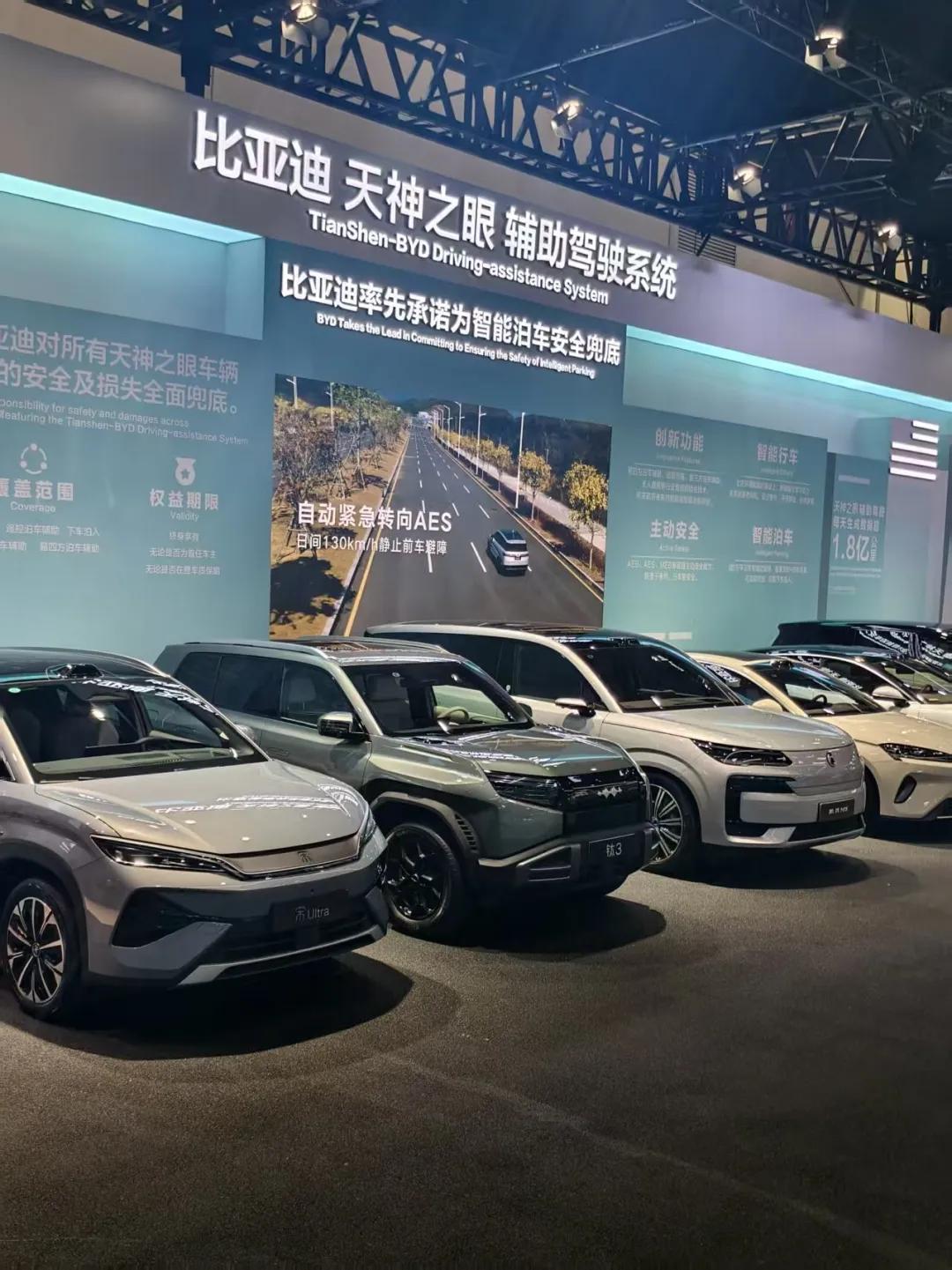
The situation in Hall W, across from Hall E3, is completely different. Mercedes - Benz has brought the 300SL Gullwing and the first - generation Mercedes - Benz 1 to the booth. BMW and Porsche have presented their museum - class classic cars, and Audi has exhibited its Silver Arrow racing cars and F1 vehicles - using nostalgic stories to attract the audience, a "emotional discount" strategy that a brand has to adopt when it is slow in the electrification transformation. These classic cars only caused a brief moment of "taking pictures as a souvenir" in the crowd, and then the crowd flowed elsewhere.
Passenger flow is the most direct voting right. In Hall A4, the booths of Li Auto and Xiaomi face each other, staging a head - on confrontation of domestic new - energy vehicles. Li Auto has "the largest exhibition scale in history" - from the popular L6 to the new globally premiered L9 Livis, nearly 20 exhibition vehicles are lined up in a row. A new father started to calculate the usage scenarios after buying the L9: "With the newly upgraded intelligent driving system, I don't need to drive when going back to my hometown. I can even heat milk and let my child do homework in the back row. It's much better than that 500,000 - yuan joint - venture MPV I used to have."
The booth of Xiaomi across the way is also extremely popular. On the first professional visitors' day, Xiaomi provided 100,000 1:64 scale car models for free distribution. The queue extended from the booth to the outside of the venue, and it was called a "real superstar" by the media. Lei Jun, the founder of Xiaomi, stood at the booth for more than two hours, surrounded by people in layers. This is the personal IP effect of the CEO of a new brand - a mobile phone company that has been transforming into car - making for less than two years has already gained the same level of attention in the hearts of the Chinese people as century - old luxury brands.
In Hall B4, the "Huawei factor" has reached an all - time high. The Hongmeng Intelligent Mobility booth has a total area of over 4,400 square meters and more than 20 exhibition vehicles. Cooperative brands such as Wenjie, Zhijie, and Shangjie are lined up in a row. The real - time demonstration of Huawei ADS 5.0, the collective debut of the Five Realms and Three Environments, and the linkage between the Hongmeng cockpit and multiple devices - the crowd in front of the booth is so dense that people have to queue up to enter. Judging from the number of foreign visitors alone, Hongmeng Intelligent Mobility leads the new forces by a large margin. The places where the most foreigners gather are the places they consider to be the greatest threat to the global automotive industry.
The "change in the crowd flow" at the auto show is very impressive: By randomly counting in front of several booths, on average, one in every four people has a foreign face. The voices of "English, Arabic, Japanese, and Korean" are intermingled in the hall. Dealers, analysts, and technicians from around the world are flocking to the booths of Chinese brands, verifying an increasingly clear fact - the rules of the game in the automotive industry are being rewritten.
AI - native cars become the protagonists
If the Germans defined the automobile with the internal combustion engine last century, then today, China is trying to re - define it with AI.
The most fundamental change at the 2026 Beijing Auto Show is that intelligence is no longer an optional feature but has become the core attribute of automobiles. The large - scale mass - production and implementation of L3 - level autonomous driving has become a milestone event at this auto show. Huawei's Kunpeng ADS 5.0 was officially unveiled, skipping the intermediate versions and directly supporting high - speed L3 legal hands - off driving. Legal test sections have been opened in 23 cities across the country. The Qijie GT7, as the first model to be equipped with it, has obtained the L3 road test permit in Guangzhou. The new - generation Huawei Kunpeng adopts a multi - sensor fusion perception solution. Its perception hardware is equipped with an 896 - line dual - optical - path image - level lidar, which can identify an obstacle the size of a can of Coke from 120 meters away.
XPeng has proved with actions that "AI changes the world" is not just an empty slogan. The second - generation VLA (Vision - Language - Action) intelligent driving system has launched functions such as campus roaming and basement roaming, getting closer to truly universal intelligent driving. Its mass - production achievements are quite amazing - among the users of the Ultra models, the proportion of users who turn on the intelligent driving system every day in the first week after purchasing a new car is as high as 98.52%. As of mid - April, BYD has more than 2.85 million vehicles equipped with assisted - driving systems, ranking first in the industry; the data generated by the Heavenly Eye every day exceeds 180 million kilometers, also ranking first in the industry.
In the field of intelligent cockpits, the competition is shifting from "installing large - scale models in cars" to "installing intelligent agents in cars". Huawei has released a full - scenario cross - domain interactive cockpit intelligent agent, enabling cars not only to understand instructions but also to actively provide services - from ordering meals, coffee to listening to podcasts, all can be done with just one sentence. In the new - generation Hongmeng cockpit Harmony Space equipped on the Qijie GT7, the new Xiaoyi intelligent agent can not only achieve smooth dialogue interaction, but the interactive intelligent partner above the center console can also actively turn towards the user after receiving instructions, "nodding" and "shaking its head", turning the car into an emotionally - charged mobile intelligent space.
What makes the traditional luxury brands shiver is that AI technology is no longer an exclusive label for high - priced cars. The unit price of Huawei's 896 - line lidar has dropped from 3,000 - 5,000 yuan to the thousand - yuan level. Configurations such as the 800V high - voltage platform, advanced intelligent driving, and AI models, which used to only appear on 500,000 - yuan - class luxury cars, are now available on 200,000 - yuan - class models, and some core configurations can even be found on 100,000 - yuan - class models. The arms race of simply piling up configurations like "refrigerators, color TVs, and big sofas" has been eliminated. The real competition lies in AI, computing power, data, and operating systems - and in these fields, Chinese enterprises are leading across the board.
The attraction effect brought about by this level of technology is huge. In the first quarter of this year, although the domestic market experienced a short - term correction, exports continued to grow at a high speed - 2.226 million automobiles were exported, a year - on - year increase of 56.7%. Among them, 954,000 new - energy vehicles were exported, with an increase of up to 120%. The Chinese market has become a must - compete for the global automotive industry.
The "Sinicization" self - rescue of BBA
For BMW, Mercedes - Benz, and Audi, the 2026 Beijing Auto Show is a self - rescue full of helplessness.
BMW's situation is quite representative. At the Capital International Exhibition Center, its "New Generation" iX3 and the long - wheelbase version of the i3 - domestic models developed based on an exclusive pure - electric platform - claim that 70% of the operating system source code was developed by the Chinese team. This car has also jointly customized a large AI model with Alibaba and cooperated with the intelligent driving solution provider Momenta to develop a full - scenario navigation assistance system. The well - tuned chassis bears the inheritance of the skills of German engineers over the decades, but in the hearts of Chinese consumers, this "inheritance" seems less important in the face of intelligence.
Audi's situation is even more dramatic. The all - electric A6L e - tron actually uses Huawei's intelligent driving solution, and the new - generation fuel - powered A6L also introduces Huawei's Kunpeng intelligent driving for the first time. When the former luxury benchmark giants are entrusting their "souls" to Chinese suppliers they once looked down upon, it is a helpless compromise due to the technological reality. And the intelligent driving system of the new - generation Mercedes - Benz S - Class is led by a local Chinese team in design and development. "Only by being well - versed in the characteristics of Chinese roads can the intelligent driving system be more down - to - earth," said the team.
But localization cannot immediately restore the diluted brand loyalty. In 2020, the share of joint - venture brands in the passenger car market was still 64.3%; by 2025, this figure had dropped to 35.4%. Among the eight major joint - venture automakers, five had negative sales growth, and three had double - digit declines. Even at this auto show, Dongfeng Nissan put the NX8 in the most prominent position at the booth, with a starting price of 149,900 yuan, standard - equipped with a large battery, advanced intelligent driving, and fast - charging; the starting price of the new FAW - Volkswagen Sagitar S is 79,800 yuan. Two years ago, the price of this car was still over 110,000 yuan - these prices would have been almost unimaginable five years ago.
But can radical pricing make up for the gap in brand narrative?
An interesting sign is that BBA brands are starting to put classic old cars on the booth. The Mercedes - Benz 300SL Gullwing, the first - generation Mercedes - Benz 1; Audi's Silver Arrow racing cars and new F1 vehicles; BMW and Porsche's museum - class legendary models - when an automaker has to rely on displaying museum collections to attract attention instead of future - oriented intelligent new cars, it is a significant signal of the decline of brand narrative power.
The supply chain takes the center stage: Role reconstruction
In the deepest - level competition at this auto show, the quietest but most subversive scene took place on the map of the exhibition hall.
In Hall W4 of the Shunyi Exhibition Center, CATL is on an equal footing with luxury brands such as BMW, Porsche, and Lotus, sharing the same hall for display. In Hall B3, WeRide, Horizon Robotics, and iFlytek are on the same stage as Toyota and Changan. Huawei's Kunpeng and Huawei Digital Energy have each set up independent booths, perfectly integrating into the vehicle exhibition area.
The "tacit master - subordinate relationship" between traditional vehicle manufacturers and suppliers is being completely broken at this Beijing Auto Show. Auto parts manufacturers are no longer the former "supporting roles as the second - party": CATL held its Super Technology Day on April 21, Horizon Robotics held its annual technology press conference on April 22, and Huawei's Kunpeng held a technology conference on April 23 - the heavy - weight information was almost completely detonated by the supply - chain end before the "official start" of the auto show.
Consumers' car - buying logic has also started to regard "what parts are used" as the primary consideration when buying a car - the ranking of battery brands in users' decision - making has risen rapidly, and "what kind of battery is equipped in this car" has become a frequently - asked question. 47% of consumers regard intelligent driving functions as an important evaluation criterion, and 71% think that price transparency still needs to be improved. This means that the value of these technology suppliers is almost completely endorsed by the market rather than OEMs, thus gaining bargaining chips for renegotiation in the relationship between vehicle manufacturers and parts suppliers.
The real cost of this role - reshaping is causing shockwaves in the European and Japanese automotive industries. Multinational automakers have to change their attitudes towards Chinese technology: Volkswagen has integrated XPeng's underlying technology into its electronic and electrical architecture; General Motors has embedded Momenta's large intelligent driving model into the core of its products; Toyota has expanded its Chinese chief engineer team from four to seven people. Multinational automakers are incorporating Chinese suppliers' technologies into their global standard configurations. At this year's Beijing Auto Show, the cognitive transformation between multinational automakers and Chinese enterprises has been reversed in the consensus that China has become the global strategic origin.
The Beijing moment of the global automotive industry
If you want to find a scene to define the most significant historical meaning of the 2026 Beijing Auto Show, you can go straight to Hall E1 of Chery.
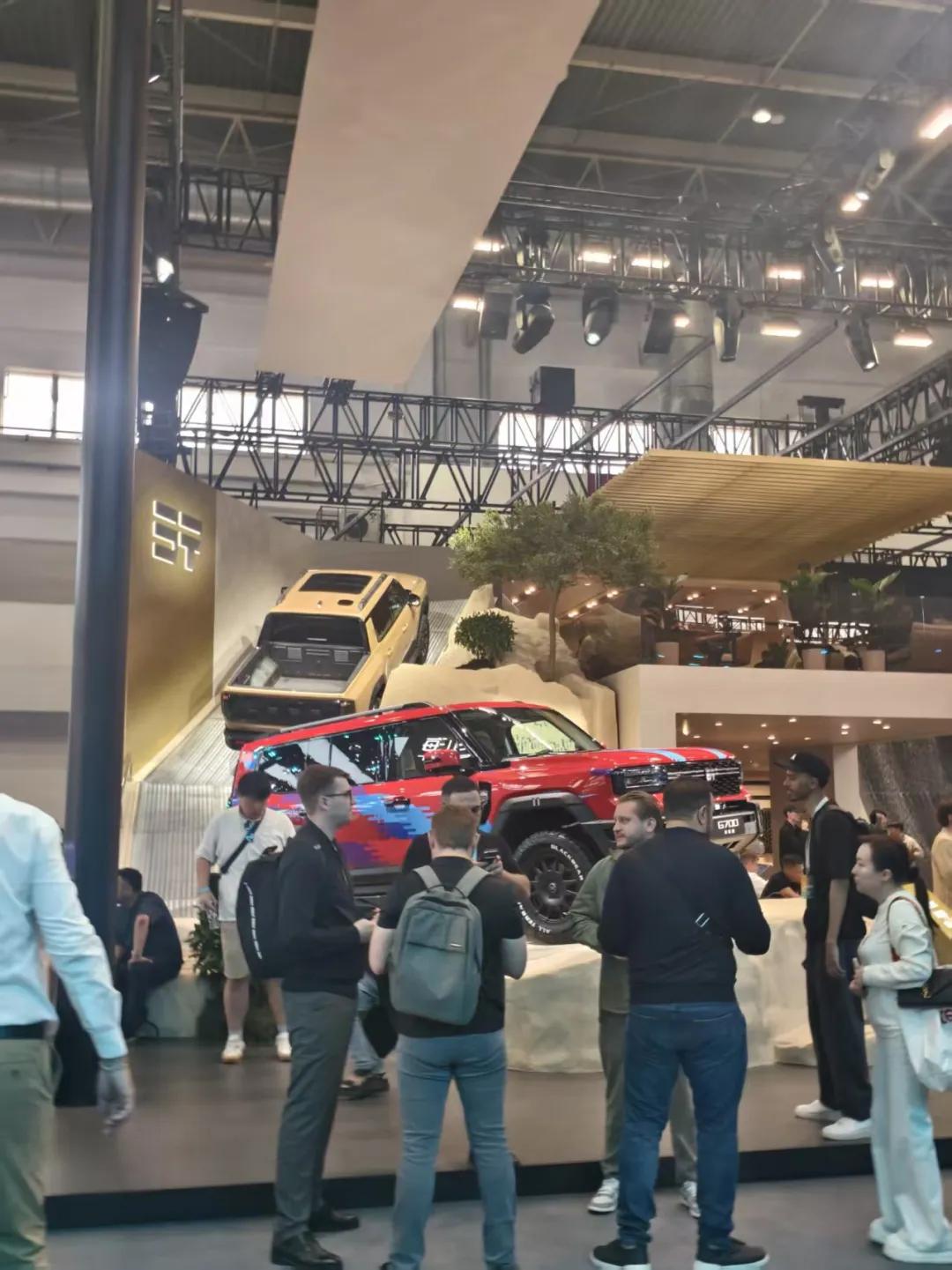
Even though the journey has become more troublesome than before due to geopolitical conflicts, many executives of multinational automakers still list attending the Beijing Auto Show as a must - do. At the same time, many Middle Eastern auto dealers are making a meaningful decision in the exhibition hall - replacing the word "Toyota" in the top position in their hearts with Chinese brands such as "BYD", "Jietu", and "Chery".
The Middle Eastern market used to be the stronghold of Japanese