Elon Musk is making ever grander promises, and there aren't enough resources to go around for Tesla and SpaceX.
Elon Musk is the world's most skilled entrepreneur at "telling stories" - from cars to commercial spaceflight, from robots to AI, Musk wields his "magic pen" to draw dazzling blueprints and create a reality distortion field, driving Tesla's market value to new heights, even when its performance is not ideal at times.
Early on April 23rd Beijing time, Tesla released its financial report for the first quarter of 2026. How well can Musk, the "magic pen wielder", stand the test this time?
In the previous quarter, Tesla's revenue reached $22.387 billion, a year-on-year increase of 16%. This is the highest year-on-year growth rate for a single quarter since the second quarter of 2023, reversing the 3% year-on-year decline in the fourth quarter of last year.
This is a very "stable" financial report. In different dimensions of operation and finance, Tesla has achieved double-digit year-on-year growth rates. Although it lags far behind the rapidly advancing AI companies, it is still an outstanding performer compared to its peers in the automotive industry.
The outside world had long anticipated this. Tesla had previously disclosed its vehicle production and sales figures for the first quarter as usual, and Wall Street had made a preliminary judgment on its performance based on this. The performance announced today was rather uneventful.
However, the secondary market was not calm. After the release of the financial report, Tesla's stock price rose by 4% in after-hours trading at one point, but then reversed and fell by 0.29%, reflecting investors' ambivalent feelings towards this quarter's performance.
The root of the contradiction lies in: Can the glorious future that Musk has outlined for Tesla be realized, and when?
In the long run, the ups and downs of the automotive sector will have less and less impact on Tesla's stock price. The valuation basis in the secondary market mainly lies in those "pie-in-the-sky" businesses - Robotaxi, the "Optimus" robot, the Terafab chip factory, etc.
Previously, in the fields of electric vehicles and commercial spaceflight, Musk has repeatedly turned the "big pies" he drew into reality, silencing the naysayers and reaping huge profits. At the same time, he has also accumulated influence and credibility for his next round of "pie-drawing".
Now, Musk is once again wielding his "magic pen" to paint a grand and exaggerated picture of the future for everyone. Can he succeed this time?
A
Tesla's revenue still mainly comes from cars, but "selling cars" is being replaced by "selling software".
In the previous quarter, Tesla produced a total of 408,000 vehicles, a year-on-year increase of 13%; and delivered 358,000 vehicles, a year-on-year increase of 6%.
During the reporting period, Tesla's automotive business revenue reached $16.234 billion, a year-on-year increase of 16%, significantly better than the -10% in the fourth quarter of last year, and became the key to the significant increase in revenue this quarter.
According to Tesla, the growth in vehicle sales and sales revenue is largely due to the "more affordable versions" of the Model 3 and Model Y, which have become the main contributors to sales.
Focusing on affordable models has not dragged down Tesla's profit performance.
Tesla achieved a gross profit of $4.72 billion in the previous quarter, a year-on-year increase of 50%, compared with only 20% in the fourth quarter of last year; the gross profit margin was 21.1%, up one percentage point from the previous quarter.
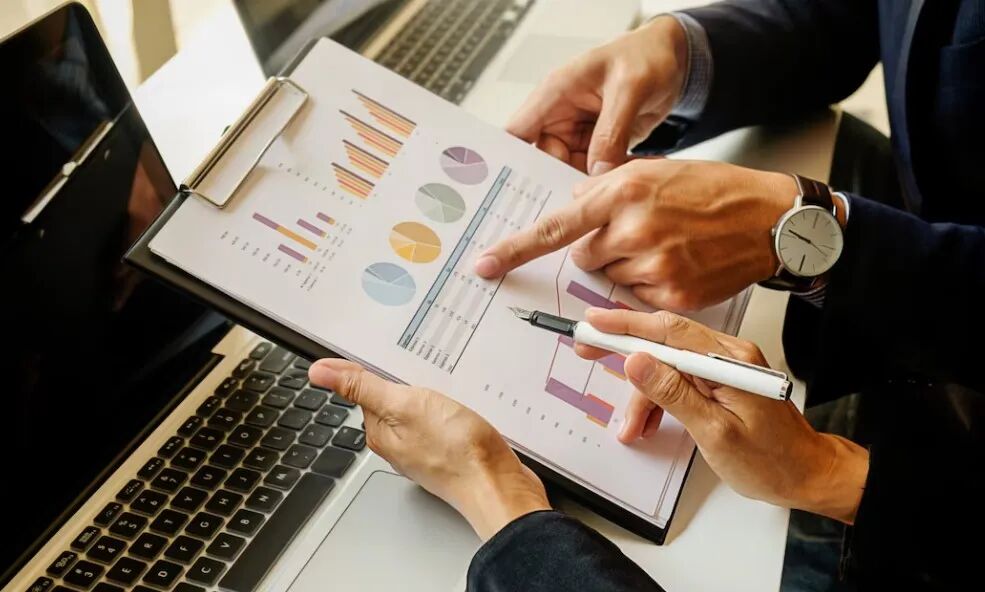
After including expenses, calculated according to non-GAAP, Tesla's net profit in the previous quarter was $1.453 billion, a year-on-year increase of 56%; earnings per share were $0.41, higher than the market expectation of $0.37.
The financial report states that this is due to a reduction in the average cost per vehicle and "one-time benefits" related to tariffs and vehicle warranties.
Compared with other automakers, Tesla still performs well. However, if it remains in the traditional automotive business logic, its revenue and profit are destined to return to the industry average, that is, a dull "stagflation" - type growth.
Tesla is trying to break through this ceiling. The breakthrough lies in FSD (Full Self - Driving) and Robotaxi, which are also the new stories that Musk has been hyping up in recent quarters.
Among the two much - anticipated "special forces", FSD is progressing faster.
In the previous quarter, the number of global paid users of Tesla's FSD reached approximately 1.3 million. Currently, this autonomous driving software is mainly used in the US market. However, on April 11th, the Netherlands became the first to approve the supervised version of FSD to be on the road, opening the way for its entry into Europe; the Chinese market is also expected to open its doors to FSD within this year.
Tesla's CFO, Vaibhav Taneja, disclosed that the company has changed its vehicle sales strategy. "Now we emphasize that FSD is the product, and the car is just the delivery mechanism."
Musk is extremely confident in the safety of FSD. He said, "In version v14, we are already significantly better than human driving; version v15 will take this advantage to a new level."
The bad news is that older models equipped with HW3 hardware cannot support the unsupervised version of FSD. This will limit the popularization speed of FSD to a certain extent. To address this, Tesla plans to set up upgrade centers similar to micro - factories in major cities to provide hardware upgrade services.
In addition, Tesla does not have a controllable schedule for launching FSD in markets outside the US. Musk said that this largely depends on the approval of regulatory authorities.
On the other hand, Robotaxi has finally taken steps to expand.
Last weekend, Tesla announced that it would expand its Robotaxi service to parts of Dallas and Houston in Texas. Previously, the service was only available in the San Francisco Bay Area in California and Austin in Texas.
The financial report states that Tesla plans to expand the service to 8 - 10 major cities, including Phoenix, Miami, Orlando, Tampa, and Las Vegas, in the first half of the year. Musk emphasized that Robotaxi has maintained a zero - accident record so far, and safety is the key factor limiting expansion.
He estimates that Robotaxi will not bring much revenue this year, but it will contribute substantial revenue next year.
However, this expansion speed is far behind Musk's "pie - in - the - sky" plan.
In July last year, Musk claimed that Robotaxi service would be available to half of the US population by the end of 2025. Now, Robotaxi has just entered 4 cities, far from the previous goal, and there is little hope of catching up.
The good news is that Tesla's Cybercab has entered the trial production stage at the Texas Superfactory, and large - scale mass production will start as planned this year. With the mass production of this special Robotaxi model, Musk's "big pie" can finally be made a little more complete.
B
In addition to cars, Tesla's second growth curve - the Optimus humanoid robot - has also made new progress.
At the earnings conference, Musk said, "Optimus will be our biggest product. Not only is it the biggest product in Tesla's history, but it may also be the biggest product of all time."
Tesla plans to build its first large - scale Optimus factory in Fremont, California, and install the first - generation production line, replacing the original Model S/X production line, with a designed annual production capacity of 1 million units. Tesla had previously announced its plan to stop producing two high - end models at the beginning of May.
Musk believes that if everything goes smoothly, this factory will start the robot production line in late July or August and begin mass production. He calls it "crazy speed".
In addition, the second - generation production line at the Texas Austin Superfactory is also in preparation, and it is expected to be put into production in the summer of 2027, with a long - term goal of an annual production capacity of 10 million units.
However, since the robot requires more than 10,000 different parts, the initial production volume will be quite low. "The entire progress depends on the part with the worst luck, the slowest speed, and the most problems."
Regarding the humanoid robot, Musk has been "drawing big pies" in a row, claiming that the commercial potential of the robot may exceed $10 trillion, higher than that of cars.
In January this year, he said that Optimus would be publicly available for sale before the end of 2027. In addition, Optimus V3 was originally planned to be unveiled in March this year, but only a short promotional video was released in the end.
For this delay, Musk gave an unexpected reason: competitors copying Optimus.
"Competitors will analyze every frame of what we release and imitate it." He said, "Therefore, we think it's not necessary to make new technologies public until the product is close to mass production."
Currently, the design of Optimus V3 is almost complete, and its functions are working properly, but some appearance details are still to be determined. It is expected to be officially released in the middle of this year.
A project with even more imagination than the robot is AI.
The financial report reveals that in the first quarter of this year, Tesla's Cortex 2 supercomputing cluster at the Texas Superfactory was officially launched and began training.
Tesla is developing customized chips to reduce training costs. A little over a week ago, Musk announced that the AI5 chip had completed tape - out. At this earnings conference, he said that the team "worked every weekend and holiday for six consecutive months, and of course, I was also involved throughout."
In March this year, Tesla also released a plan to build the Terafab chip factory.
The goal of this factory is to build a chip manufacturing base with an annual production capacity of 1 terawatt of computing power, equivalent to 50 times the current global total AI computing power output. The outside world estimates that the entire project will require $5 - 13 trillion in capital investment; even if only the initial production capacity target of 100 - 200 gigawatts per year is achieved, it will require $500 billion - $1 trillion.
However, at this earnings conference, Tesla only set aside approximately $3 billion for Terafab. This may indicate that the completion, operation, and even the groundbreaking of the entire factory are still very far away.
C
Driven by Musk's continuous "pie - drawing", Tesla's stock price once reached a record high, approaching $500. However, since the beginning of this year, Tesla's stock price has been continuously falling, with a cumulative decline of nearly 14%, and the stock price has fallen below $400.
During this period, Tesla's fundamentals and long - term plans have not changed much. What has changed is actually the market sentiment: As Musk makes more and more "wild" promises, the skeptical looks will also increase.
At the earnings conference, Musk continued to wield his "magic pen".
He said, "This year, we will significantly increase our investment in the future... This will bring huge returns." The company's capital expenditure in 2026 is expected to exceed $25 billion.
This money will be used for six factories that are or will be put into production, AI infrastructure, Robotaxi expansion, robot production line construction, and the chip manufacturing factory.
Obviously, Musk hopes to reshape Tesla's narrative, transforming it from an ordinary electric vehicle company into an AI hardware company with terminal hardware (electric vehicles, Robotaxi, robots) + chip factory (Terafab) + computing power cluster (Cortex).
However, the problem is that although Musk's AI narrative is trendy, it also has obvious shortcomings - AI software.
Tesla does not have its own large - scale AI models and applications and needs to cooperate with other companies. At the end of January this year, Tesla announced that it would invest $2 billion in xAI. Previously, many users found that Tesla's in - car system had achieved a shallow linkage with Grok, such as allowing Grok to plan routes with multiple destinations.
In China, Tesla's Model Y L is equipped with Doubao and DeepSeek models, both accessed through Volcengine. On April 20th, Tesla's in - car voice large - scale model service completed the filing.
However, cooperation at the business level cannot fundamentally solve the problem of Tesla's absence in the AI era. Although the computing power of the Cortex cluster is powerful, it is used for the training of FSD and the robot's neural network, and its potential has not been fully released.
This also means that based on the current development blueprint, Tesla cannot become a true full - stack AI company. This underlying defect is destined to drag down Tesla's long - term value.
Another looming challenge is SpaceX, which plans to go public this year.
SpaceX is expected to go public in June, with a possible financing amount of up to $75 billion and a maximum valuation of up to $2 trillion, becoming the world's largest IPO. Considering its sister - company relationship with Tesla, SpaceX's listing seems beneficial to Tesla, especially since the two have established cooperation around Terafab.
However, the actual situation may not be so.
Tesla's new story can actually be regarded as a "simplified version" of SpaceX's story, removing more "sexy" elements such as commercial space launches, Starlink satellite communications, and space AI computing power. Compared with Tesla's painstakingly constructed full - stack AI hardware narrative, SpaceX's story is not only more solid but also has much stronger scarcity and competitive barriers.
So, after SpaceX enters the capital market, a large amount of funds that were originally invested in Tesla are likely to leave and instead invest in SpaceX. Like other traditional enterprises, Tesla will also feel the fierce competition from SpaceX, the "catfish".
The deeper problem is that buying Tesla's stock is essentially "buying into Musk". In the past, Tesla was the only target for "investing in Musk", and the market had no other choice; but after SpaceX goes public, individuals and institutions willing to follow Musk with real money can place more bets on the new stock, and Tesla's attractiveness will be weakened.
The outside world has already noticed this problem. Previously, James Picariello, an analyst at BNP Paribas, said, "The potential IPO of SpaceX may put heavy pressure on Tesla's stock price. The new retail funds that might have flowed into Tesla will instead pour into SpaceX."
However, Musk is powerless in this regard.
When the financial report was released this time, he and the management presented one "substantial piece of information" after another to prove Tesla's prosperity; but few people will think that these actions, whether already implemented or still in the air, will enable Tesla to overtake SpaceX and once again become the star under Musk's command.
To get out of this strategic disadvantage, Tesla may ultimately follow in the footsteps of xAI and merge with SpaceX.
In the investment circle, some people have already put forward such an idea. Before the release of the financial