The man at Netflix who is best at "overthrowing the old model" has overthrown himself.
In the spring of 2026, Netflix announced that co-founder Reed Hastings would leave the board of directors after his term ended.
This means that, counting from the company's founding in 1997, Hastings' nearly three - decade formal association with Netflix has finally come to an end. Netflix has completely bid farewell to the founder era.
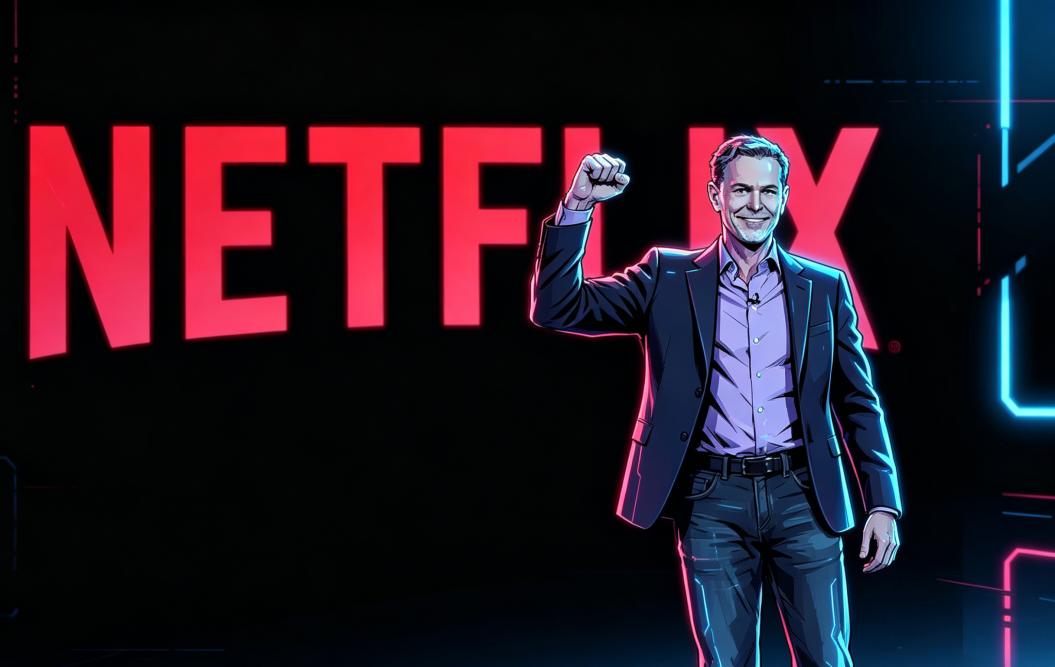
Interestingly, this farewell was almost devoid of drama. There was neither a "power struggle" nor the tug - of - war of a founder reluctant to step down. Hastings left quietly.
Hastings first stepped down as CEO in 2023, handing over the daily operations to the next - generation management. Three years later, he also gave up his board seat. The whole process was as smooth as a well - rehearsed handover.
This is so typical of Hastings.
He is best at overthrowing the old model with his own hands before it completely fails. When DVDs were still profitable, he led Netflix into the streaming media business; when Netflix was still distributing others' content, he targeted original content and laid the foundation with "House of Cards"; when the company was mature enough, he removed himself from the center of Netflix.
If a company really shouldn't rely on a single hero, then the founder must also accept this rule. The man in Silicon Valley who is best at leading a company to "self - disrupt" has finally overthrown himself.
A
"You're either born cautious or born to take risks."
Many years later, when Hastings was interviewed, he was asked a question: Why aren't you afraid of failure? His answer was so calm that it was almost a downer. He said that a large part of it came from random genes.
Hastings clearly considers himself to be the kind of person with an "adventurous gene" from birth.
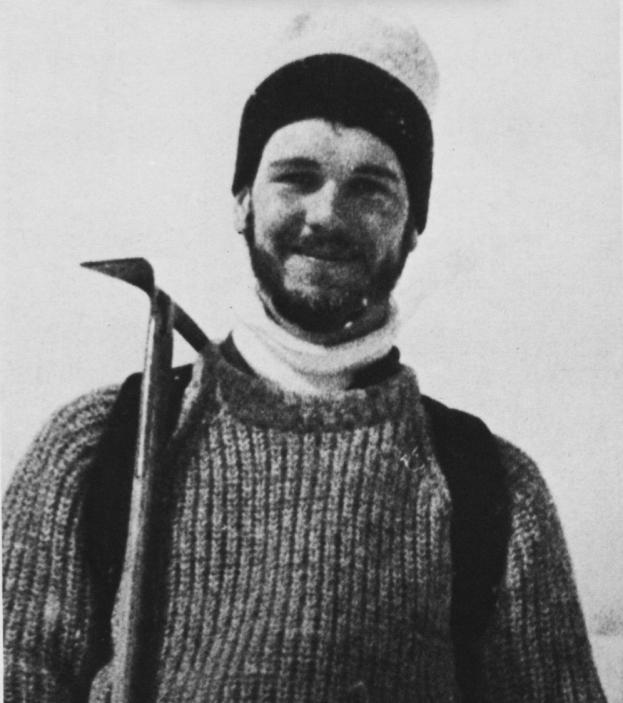
Caption: A photo of Hastings in the 1983 yearbook of Bowdoin College, holding an ice pick.
People prefer the Silicon Valley mythical figures who have fought their way up from the bottom. Hastings is not like that. He has a fairly good family background. In 1960, Hastings was born in Boston. His father was a lawyer and once served in the U.S. Department of Health, Education, and Welfare during the Nixon administration; his mother came from a well - known New England family.
But the boy who grew up in this decent family seemed to have little patience for the safe path from an early age.
After graduating from high school, he didn't go to college right away. Instead, he postponed his enrollment for a year and took a job that didn't sound "elite" at all: door - to - door selling of "Rainbow" vacuum cleaners.
After entering Bowdoin College, he majored in mathematics. But his college life wasn't just sitting in the library proving theorems. Hastings later mentioned that he often traveled around by freight train during his college years. That kind of travel was neither comfortable, nor decent, nor safe.
He also briefly entered another world of discipline. During college, Hastings participated in the U.S. Marine Corps' officer training program and went to officer candidate school in the summer of 1981. But he didn't really become an officer. After graduation, he chose the Peace Corps and went to Africa to be a math teacher for several years. He also taught an introductory beekeeping course.
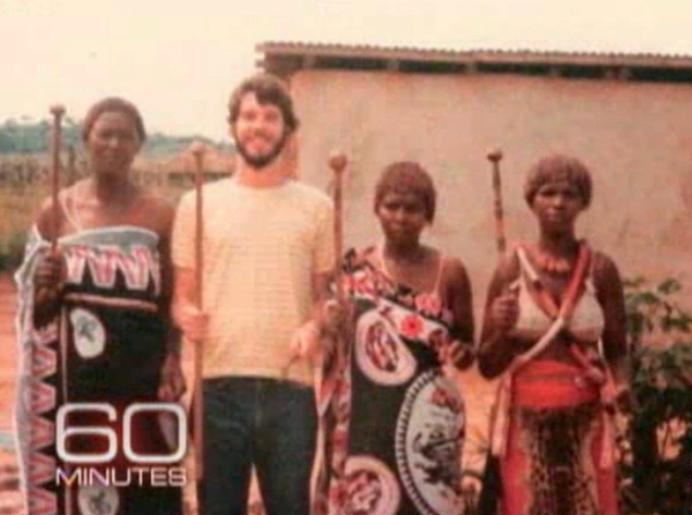
Caption: After obtaining a bachelor's degree in mathematics, Hastings joined the Peace Corps and served as a teacher in Swaziland, Africa, for two years.
In Hastings' words: When you've traveled across Africa with only $10 in your pocket, starting a business doesn't sound so scary.
Around 1985, Hastings finally "had enough of the trouble" and returned to the United States to apply for graduate school. He failed to get into his first - choice Massachusetts Institute of Technology and went to Stanford University instead. He got a master's degree in computer science in 1988, with a research focus on artificial intelligence.
After graduation, Hastings started working as a software engineer and gradually fell in love with software. He later told The New Yorker, "I really love software. I've never loved anything so much."
In 1991, 31 - year - old Hastings founded his first company, Pure Software. This company developed tools for software developers. Its core product, Purify, could help engineers find bugs in programs.
This direction hit the pain point during the rapid expansion of the software industry in the 1990s - as software became more and more complex, engineers needed better debugging tools. Pure Software thus grew rapidly, with its sales doubling year after year in the first half of the 1990s. It completed an IPO just four years after its establishment.
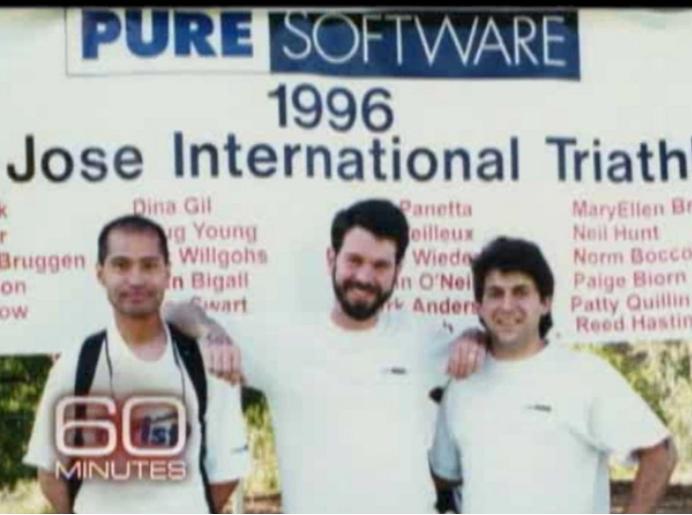
In 1997, the company was acquired for $700 million, and Hastings earned his first pot of gold.
To the outside world, this was undoubtedly a brilliant entrepreneurial victory. But to Hastings himself, the taste was much more complicated.
He later admitted that although the products of Pure Software were good, his management style was very poor.
As the company's scale expanded from dozens of people to hundreds, he increasingly felt "underwater" and completely overwhelmed by the growth. He even wanted the board of directors to replace him as CEO twice because he felt he was losing confidence. The board didn't agree, so he had to make mistakes while learning to transform from an engineer into a manager.
Hastings made three acquisitions within 18 months. He recalled that it was in a complete mess at that time. The company's scale expanded, the product line became more diverse, and the number of employees increased, but the company didn't have a clear corporate culture. Pure became an extremely high - pressure and head - down - charging place. Although the sales were still growing, a large number of senior executives left, and the meetings were often full of confrontations.
It was also during that time that Patty McCord, who later participated in building Netflix's corporate culture, gave Hastings a nickname: Animal.
This "beast - type boss" was tough, stubborn, and full of energy, leading the team forward all the way, but not very good at moderating.
This nickname pointed out the core shortcoming in Hastings' first entrepreneurial attempt: he had the adventurous spirit, the product judgment, and the brute force to push things forward; but when the company became an organization of hundreds of people, brute force alone was no longer enough.
After Pure was sold, Hastings had a strong sense of failure.
While it seemed wonderful to the outside world, Hastings was in painful reflection, ready to overthrow his past self. This way of thinking of "self - iteration and self - disruption" would appear repeatedly in Hastings' career.
B
At 8 a.m. on April 14, 1998, the vice president of engineering pressed the keyboard, and Netflix officially went online. The first day was not smooth. The server crashed, and the mailing labels ran out. They rushed to ship the products before the post office closed in a hurry. At the end of the day, the company gained 200 new customers.
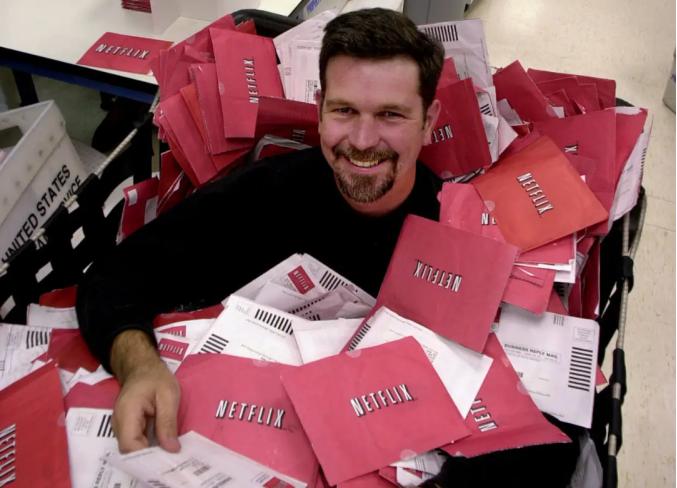
What really made the business take off was the monthly subscription launched in 1999: users could pay $19.95 per month to rent DVDs unlimited times, with no due date and no late fees. In 2002, Netflix went public on the NASDAQ. At that time, it had about 670,000 subscribers, with an issue price of $15 per share, raising about $82.5 million.
Hastings in his second entrepreneurial attempt was already a 2.0 version.
The "Animal" from the Pure Software era was still there. He still dared to bet all his chips on DVDs before they were popular, confront Blockbuster, the giant, head - on, and continue to burn money and move forward after the burst of the Internet bubble.
But this time, he began to transform his personal brute force into organizational capabilities, instead of just charging forward alone.
This transformation had a lot to do with Patty mentioned earlier, the old acquaintance who gave Hastings the nickname "beast".
Patty once worked with Hastings at Pure Software and later joined Netflix as an early human resources leader. She and Hastings together created the Netflix culture handbook that later became famous in Silicon Valley.
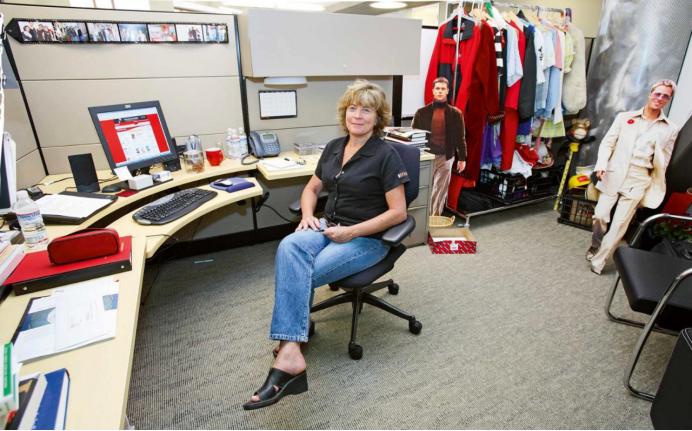
Caption: Patty McCord, former chief talent officer of Netflix
The Netflix culture sounds very appealing: freedom and responsibility. But it's not gentle at all.
Netflix describes itself as a "professional sports team". The company pursues a high density of talents. Managers have to conduct regular "retention tests": if an employee wants to leave, will you try your best to keep him? If you were to recruit again today, would you still hire this person?
Once the answer is no, the company will give a decent severance package and let the employee leave.
This statement comes from Hastings' childhood memory. When he was seven or eight years old, he caught a big fish, and his father said, "That’s a keeper, Reed." Many years later, this sentence became Netflix's cruel and clear talent principle.
The reason why this "counter - intuitive" principle can appear at Netflix is because of Hastings' thinking habit: to question and challenge those so - called "common senses" and to be cautious about those seemingly reasonable "attributions".
Around 2000, Netflix was in a very difficult situation. After the burst of the Internet bubble, the financing environment suddenly became cold, and the company might not be able to survive at any time. Hastings and Randolph even went to talk to Blockbuster, hoping to sell Netflix to them for $50 million or make Netflix Blockbuster's online business. At that time, Blockbuster had about 9,000 stores and 60,000 employees and was a giant in the video rental industry. Blockbuster didn't accept the offer, so Netflix had to survive on its own.
A few years later, Blockbuster finally started to fight back, launched an online DVD rental service, and approached Netflix. Netflix also came up with many ideas internally, such as advertising, promotion, and selling second - hand DVDs, trying to give employees and investors an answer: Why will we win? What will we win by?
Many years later, when Hastings was reviewing this competition, he gave a very interesting analogy. He said that he remembered a dishwashing detergent from his childhood. The advertisement said that it could clean better because of the "green crystals". In fact, this is a very common human psychology: always trying to find a visible and explainable reason for the result.
Netflix also needed its own "green crystals" at that time, so it did a lot of things that seemed like strategic moves.
This reflection is very crucial. Netflix did win in the end. Blockbuster filed for bankruptcy protection in 2010, and the blue - and - yellow signs that used to be everywhere on the streets of the United States gradually disappeared. But Hastings didn't simply attribute the victory to Netflix itself - this battle with Blockbuster was actually won because of the opponent's mistakes.
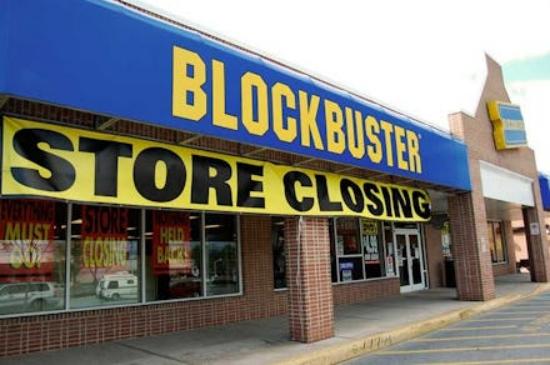
Looking back later, what might be really important is more simple: sending DVDs faster, reducing damage, optimizing envelopes, and improving the core experience. Hastings believes that if Netflix had focused on these things, it could have defeated Blockbuster a few years earlier.
A company can easily mistake luck, opponents' mistakes, and industry trends for its own strategic genius, but Hastings' "counter - intuitive" and "cautious attribution" way of thinking keeps him away from such misunderstandings.
Hastings still makes mistakes, but he can also turn his mistakes into "self - iteration".
In 2011, Netflix had its most famous setback: the price increase and the Qwikster incident. The company suddenly separated the pricing of DVDs and streaming media and announced that it would split the DVD business into an independent brand, Qwikster. Users would face two websites, two accounts, and two sets of bills. Users were very dissatisfied.
Soon, Hastings publicly apologized, uploaded a video to YouTube, and generously admitted, "I messed up." Three weeks later, Netflix withdrew Qwikster.
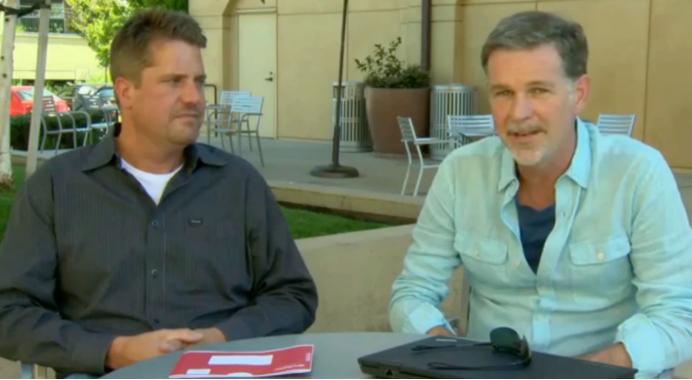
Caption: A screenshot of Hastings' (right) YouTube video apologizing for the Qwikster incident
After this farce, Hastings began to intentionally "cultivate dissenters" at Netflix.
He thought that the Qwikster incident exposed a big problem, that is, he was like a "savior", firmly believing that he was leading Netflix in the right direction. But he didn't know that many people inside had doubts about this decision. If they had enough channels to express their dissent, this wouldn't have happened.
Since then, Hastings has established a clear mechanism for soliciting opinions on major decisions at Netflix, allowing the top 50 or 100 executives to participate in the discussion.
Compared with the Animal who only knew how to lead the charge in the Pure Software era, Hastings in the Netflix era is better at disassembling risks, institutionalizing opposing opinions, and turning failures into the next round of rules.
Under his