The curtain rises on the 2026 Beijing Auto Show: Domestic brands target AI in exclusive pavilions, multinational automakers accelerate electric counterattacks, and the "automobile manufacturers and suppliers in the same pavilion" model of the supply chain takes center stage.
On April 24th, the 2026 (19th) Beijing International Automobile Exhibition (hereinafter referred to as the 2026 Beijing Auto Show), themed "Lead the Era, Intelligent Future", officially kicked off. As one of the world's highest - level Class A auto shows, this year's auto show for the first time adopted the dual - venue linkage model of the Shunyi Hall of the China International Exhibition Center and the Capital International Convention and Exhibition Center. The total exhibition area reached 380,000 square meters, setting a record for the scale of global auto shows.
It is understood that this auto show attracted more than 2,000 enterprises from 21 countries and regions to participate. The total number of exhibition vehicles reached 1,451, including 181 globally premiered models and 71 concept cars. Both the number of premieres and the technological content reached new historical highs.
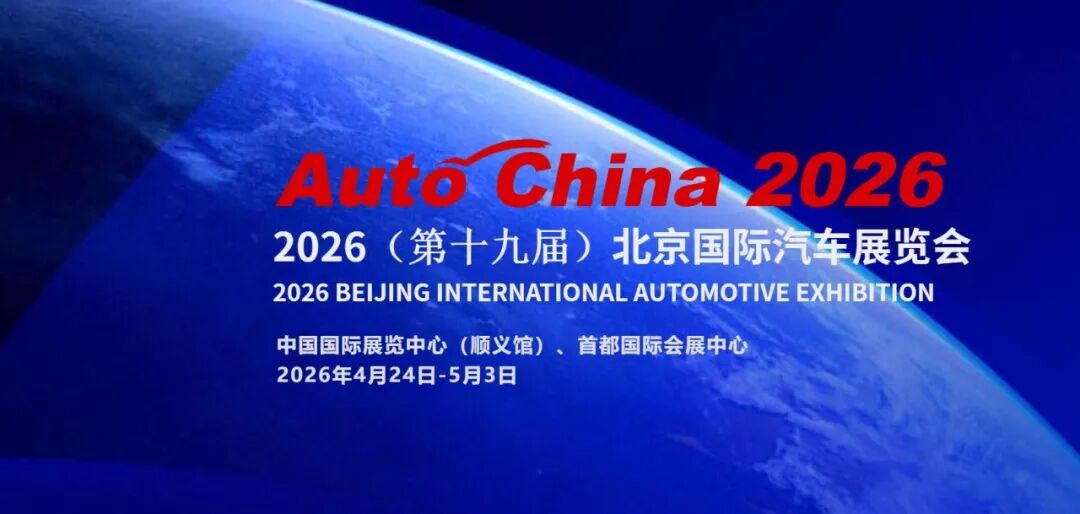
Image source: Official website of the Beijing Auto Show
At this auto show, domestic brands presented their full - brand matrix in a "venue - exclusive" manner. Multinational automakers accelerated their localization transformation and launched an electrification counter - attack. Supply - chain enterprises took the opportunity of "automobile manufacturers and parts suppliers in the same hall" to step into the spotlight from behind the scenes. The three major camps competed on the same stage and worked together, presenting a panoramic view of the new trend of the global automotive industry's electrification and intelligent transformation.
Domestic brands "occupy the halls" collectively and focus on the AI technology ecosystem
At this Beijing Auto Show, domestic brands and new - force automakers collectively presented their full - brand and full - technology line - ups. Relying on their first - mover advantages in electrification and intelligence, they continued to break through and became the most - watched camp at the auto show.
It has become an industry norm for domestic brands to occupy large - scale exhibition halls. At this auto show, BYD and Chery respectively occupied Hall E3 and Hall E1, comprehensively displaying the achievements of their multi - brand layouts. Among them, BYD participated in the exhibition with four brands: Dynasty, Denza, Yangwang, and Fangchengbao, and also set up independent booths for technological brands such as Flash Charge and Sky Eye. Chery gathered five brands: Chery, iCAR, EXEED, Jetour, and Zongheng. Among them, the new luxury electric - hybrid off - road brand "Zongheng" participated in the exhibition independently for the first time. On the eve of the auto show, several new models under Chery were launched. Among them, the EXEED EX7 offers both pure - electric and range - extended power options, with an early replacement price ranging from 194,900 to 258,900 yuan. The Chery pickup Weilin R08 PRO released two versions, the Premium and the Off - road, with official guide prices of 144,800 and 169,800 yuan respectively.
Regarding "AI (Artificial Intelligence) + Automobiles", domestic brands showed a strong willingness to embrace it. Geely Automobile made its appearance in a "semi - exclusive hall" form, gathering brands such as Zeekr, Lynk & Co, Geely Galaxy, and China Star, and displaying the latest achievements of the all - domain AI 2.0 and all - domain Safety 2.0 technology systems. Geely Automobile set up an independent technology - ecosystem booth for the first time, presenting cutting - edge technologies such as Super Eva, Qianli Haohan G - ASD 4.0, and Intelligent Egg Cabin. Roewe released a new AI "Jiayue" product series on the eve of the auto show, which is the strategic result of its cooperation with Volcengine, and three concept cars were unveiled simultaneously.
Brands related to the Huawei ecosystem became the focus of the auto show. Huawei's "Jing" series participated in the exhibition independently for the first time, and two new models, the Yijing X9 and the Qijing GT7, had their global premieres. The Hongmeng Smart Mobility booth covered an area of over 4,400 square meters, with more than 20 exhibition vehicles, including cooperative brands such as AITO, Zhijie, and Shangjie. Among them, the Zhijie V9 and the new - generation AITO M9 officially started pre - orders, equipped with Huawei's Qiankun Intelligent Driving System, supporting full - coverage of urban NOA.
Meanwhile, brands that have in - depth cooperation with Huawei also collectively displayed their latest technological achievements. Among them, Mengshi Automobile and Huawei Qiankun jointly released a new intelligent off - road architecture on the eve of the auto show, marking the official upgrade of their cooperation from "product co - creation" to "in - depth empowerment", and this new architecture was also unveiled at the auto show. In the next two years, Mengshi Automobile will gradually implement new intelligent off - road technologies in more than four new models to build a more complete product matrix. The Dongfeng Fengxing's annual strategic model, the Xinghai V6, made its debut. The new car is positioned as a six - seat pure - electric SUV, equipped with Huawei's Qiankun Intelligent Driving ADS system, with functions such as high - speed navigation - assisted driving (high - speed NOA) and automatic parking.
Among the new - force automakers, NIO for the first time gathered its three brands, NIO, LeDao, and Firefly, on the same stage. Li Auto globally premiered the new L9 Livis, priced at 559,800 yuan, equipped with four lidars and dual Mach 100 chips, with a CLTC pure - electric range of 420 kilometers and full - fledged intelligent configurations.
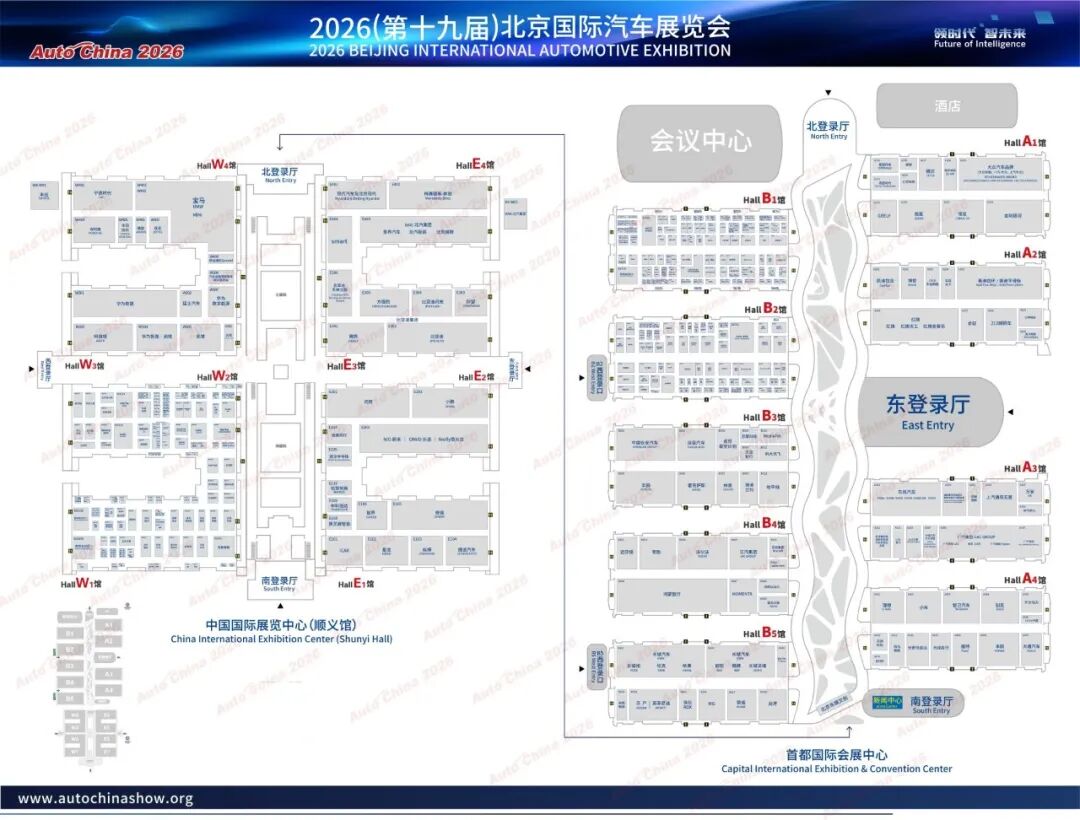
Image source: Official website of the Beijing Auto Show
Multinational automakers accelerate the all - round electrification counter - attack
Facing the profound changes in the Chinese market, multinational automakers are no longer "just participating". They launched an electrification counter - attack with a high - profile exhibition lineup, focusing on localized R & D and product adaptation, trying to reverse their passive situation in the new - energy market. Except for some ultra - luxury brands, all mainstream multinational automakers attended. German, Japanese, and American brands all presented new electrified products specially designed for the Chinese market.
German luxury brands were particularly active. BMW globally premiered the new - generation i3 and the long - wheelbase version of the iX3 developed specifically for the Chinese market, which were built on an exclusive pure - electric platform, completely bidding farewell to the "converted from gasoline - powered" architecture. Mercedes - Benz brought 40 models to the exhibition, among which the new long - wheelbase pure - electric GLC SUV had its global premiere. Based on the MB.EA platform, it is equipped with an 800 - volt electrical architecture and a silicon - carbide inverter, comprehensively improving its electrification performance. Audi covered both the fuel and pure - electric tracks. The pure - electric A6L e - tron was developed on the PPE platform, supporting 800V high - voltage fast charging. At the same time, the new - generation A6L fuel version introduced Huawei's Qiankun Intelligent Driving System for the first time, achieving an intelligent upgrade. Volvo Cars' "Pure - Electric Flagship 90 Family" composed of the EX90, ES90, and EM90 made its appearance at the Beijing Auto Show, achieving full - matrix coverage of the three core categories of SUVs, sedans, and MPVs.
Japanese and American joint - venture brands accelerated their electrification layout, and their product positioning declined comprehensively. Toyota, Honda, Nissan, etc. intensively launched electric models exclusive to the Chinese market. Nissan unveiled two new concept cars, and Changan Mazda released its future new - energy strategic vision. Volkswagen brought its strongest new - energy product matrix ever. The ID. series, the ID.ERA, and the ID.AURA series all participated in the exhibition. Among them, Volkswagen's first flagship range - extended SUV, the ID.ERA 9X, was launched at the auto show, focusing on the car - using needs of Chinese consumers. The Buick E7 Zhijing was officially launched and started delivery on the eve of the auto show, with a replacement price ranging from 154,900 to 194,900 yuan. The smart #6 started pre - sales at the auto show, and the prototype concept car of the smart #2 also made an appearance on the same stage, further enriching the electrification product matrix of joint - venture brands.
It is worth noting that under the impact of the electric - intelligent wave, multinational automakers have strengthened their cooperation with Chinese local supply - chain enterprises, achieving "R & D in China, production in China". For example, the long - wheelbase version of the BMW iX3 is equipped with a high - level intelligent driving system jointly developed with Momenta, and the SAIC Audi E7X is equipped with high - performance battery cells from CATL, reflecting the depth of multinational automakers' localization transformation in the Chinese market. They are trying to regain consumers' recognition through products and technologies that fit the Chinese market.
In addition, Dongfeng Peugeot and Dongfeng Citroën, which had been absent from mainstream auto shows for three years, announced their return. Dongfeng Peugeot released its brand - renewal strategy and globally premiered several intelligent electric concept cars. Dongfeng Citroën also launched a new car with a futuristic positioning. Brands such as Hyundai and Lotus also returned to the stage of the Beijing Auto Show, highlighting the importance that multinational automakers attach to the Chinese market.
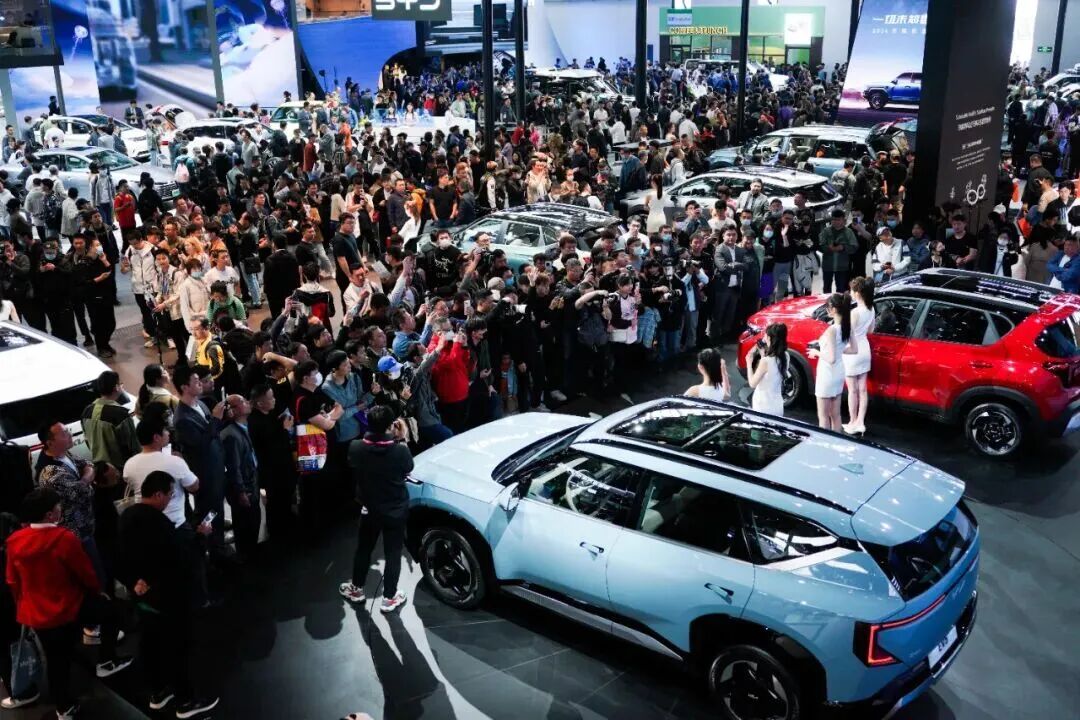
Image source: Official website of the Beijing Auto Show. File photo
The first show of "automobile manufacturers and parts suppliers in the same hall", and the supply chain steps into the spotlight from behind the scenes
It is worth mentioning that the number of countries and regions covered by the participating parts enterprises and institutions in this session increased from 13 in 2024 to 21, and for the first time, "automobile manufacturers and parts suppliers were in the same hall". The co - exhibition of core suppliers and vehicle manufacturers not only improved the efficiency of visiting the exhibition but also intuitively sent a clear signal that the industry is moving from "vertical integration" to "ecological collaboration", promoting the competition in the automotive industry to upgrade from single - point competition of vehicle manufacturers to all - industrial - chain ecological confrontation.
At this auto show, leading enterprises in core supply - chain fields such as power batteries, intelligent driving, and automotive - grade chips collectively made their appearances, comprehensively displaying cutting - edge technological achievements. CATL built a 1,500 - square - meter "Energy Technology Experience Area" at the entrance of the exhibition hall, showing a full - chain energy solution from battery - cell production, battery - swapping network to battery recycling and cascade utilization. Enterprises such as CALB and BYD Battery also displayed their latest battery technologies. Solid - state batteries and sodium - ion batteries entered the prototype - display stage, and many manufacturers planned to mass - produce and install them from 2027 to 2028.
Intelligent supply - chain enterprises also attracted much attention at this Beijing Auto Show. Huawei Qiankun, Baidu Apollo, iFlytek, etc. all set up independent booths, displaying cutting - edge achievements such as intelligent driving algorithms, automotive - grade chips, and cockpit AI solutions. Enterprises such as Horizon Robotics, Black Sesame, and Xinchi Technology launched the latest automotive - grade chips, breaking the overseas monopoly. Among them, the chip computing - power solutions provided by Horizon Robotics were adopted by many automakers. Neusoft Reach brought an AI automotive intelligent - evolution product matrix including an AI automotive digital base, a vehicle - cloud collaborative AI computing platform, and a full - stack intelligent - assisted - driving AI solution. Traditional parts giants such as Bosch and Continental focused on the electrification and intelligent transformation, displaying core products such as electronic oil pumps, electronic - control housings, and autonomous - driving domain controllers, promoting the upgrade of traditional parts to high - end and intelligent levels.
Cui Dongshu, the secretary - general of the Passenger Car Association, said that currently, global auto shows are generally in a slump. Well - known auto shows in Europe, America, Japan, and South Korea have been reducing their scales or even canceling. The 2026 Beijing Auto Show has become the only booming top - level auto show in the world. This contrast is a direct reflection of the century - long major transformation of the world's automotive industry. As the world's largest and most technologically - intensive automotive event, the Beijing Auto Show accurately anchors the industry trend, showcases achievements, magnifies benefits, and promotes the leap of the Chinese automotive industry from a "big country" to a "powerful country", confirming the irreversibility of the global automotive industry's center of gravity shifting to China.
This article is from the WeChat official account "NBD Auto". Author: Every Economic News Reporter. Republished by 36Kr with authorization.