Can Apple still change the world after Cook's departure?
In 2011, Jobs called Cook to his home.
At that time, Jobs was seriously ill, but he didn't talk to Cook about his illness or products. He just said one thing: Never ask me what I would do. Do what you think is right.
Fifteen years have passed. Cook, who succeeded Jobs, has done one of the most important things in his position as Apple's CEO - increasing the market value from $350 billion to $4 trillion.
Two days ago, Apple officially announced that Cook will step down as CEO on September 1st this year and become the Executive Chairman. The successor is John Ternus, the head of Apple's hardware engineering. He said excitedly at the staff meeting:
"We are about to change the world again."
Everything indicates the same thing: The Cook era is over.
The question is, what kind of Apple did he leave behind? And what kind of Apple will the new CEO bring?
Jobs created dreams, Cook made money
In October 2011, Cook first took the stage as CEO to launch the iPhone 4S.
He was wearing a dark blue shirt with the hem tucked into his pants. He paced on the stage somewhat nervously, looking like a product manager who had just learned how to give a presentation. He handed over the specific product demonstration to other executives and only took charge of the opening and linking parts, emphasizing "teamwork" throughout the process.
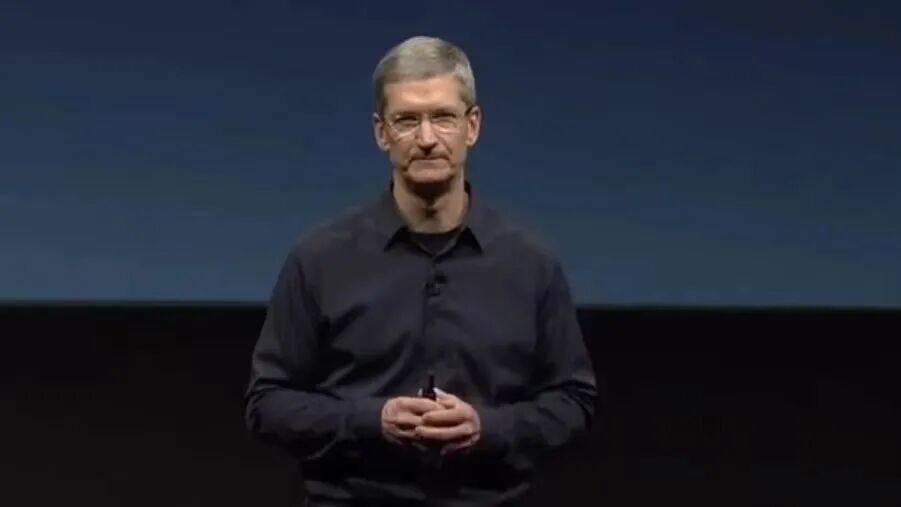
Cook attended the iPhone 4S launch event for the first time as CEO
Jobs was not like this.
He wore a black turtleneck sweater, round rimless glasses, and jeans. He paced on the stage with his iconic steps and was very good at presenting products with infectious language and scenarios. When he swiped the unlock button of the iPhone 4 or took out the first - generation MacBook Air from the file bag, the audience went wild, and the whole world witnessed a new era.
Cook's first show was severely criticized by the media. Words like "disappointing", "falling short of expectations", and "lacking surprises" came in droves. From that moment on, the words "lack of innovation" stuck to Cook like a dog - skin plaster.
Interestingly, after this much - maligned launch event, the iPhone 4S sold like hotcakes. After Jobs' death, the 4S unexpectedly became a souvenir, and some people even interpreted it as "4S means For Steve".
Cook and Jobs also had significant differences in their management styles.
Jobs would call the supplier in the middle of the night to scold them because the plating of a screw was not shiny enough. He would throw things on the spot during a launch event if there was a problem with the product demonstration. Of course, he could turn a product into a work of art, making people feel that "this is the future" and making users queue up in tents three days in advance.
Cook is not such a person. He gets up at three or four o'clock every morning to check emails. His office is full of data dashboards, and he always asks in meetings, "What's the inventory turnover days?" Apple employees privately say that he is like a ascetic, reviewing global sales data and having meetings until late at night.
Their diplomatic skills are also worlds apart.
Jobs never came to China. In his eyes, China was just a code for a factory and a market. China never got the chance for the first - round release of new products, and the WiFi function could even be directly removed.
Cook is the complete opposite. After taking over as CEO in 2011, he set China as the first stop of his overseas visits. Since then, he has come to China once or twice a year, with the cumulative number of visits exceeding 20 times.
In 2016, when Sino - US relations began to tense, Cook visited China more frequently. On one hand, he had dinner with Trump at the White House and promised to invest an additional $100 billion in the United States; on the other hand, he met with Chinese senior officials in Beijing and clearly stated that "China is the most important place in Apple's supply chain."
He said different things to both sides, but both sides trusted him.
Analysts describe him as "90% CEO and 10% diplomat".
Over the past fifteen years, Cook's report card is very impressive: Apple's annual revenue has increased from $108 billion to $416 billion, more than tripling, and the net profit has reached $112 billion. Since resuming dividends in 2012, Apple has returned nearly $1 trillion in cash to shareholders.
His supply - chain management is even more remarkable. He reduced Apple's inventory turnover from 30 days to 3 - 7 days. On average, the goods in the warehouse can be sold in three days. No other consumer electronics company in the world can achieve this level.
Cook has really mastered the art of making money. As a leader to safeguard the existing business, he is qualified.
However, there are also unqualified aspects, such as products.
During the Cook era, Apple's products became mediocre
The iPhone has changed from a revolutionary product that amazed the world to a product with routine upgrades like squeezing toothpaste.
Every September, Apple fans sit in front of the screen waiting for the launch event, hoping that Cook will finally come up with something new. But every year, it's just the camera being moved to a different position, the chip getting a new name, one more color option, and a slightly higher price. The most frequently - posted comment in the live - stream chat is:
"Is that all?"
Some netizens joked: During the Jobs era, people bought the iPhone because it was amazing. During the Cook era, people buy the iPhone because the battery is dead.
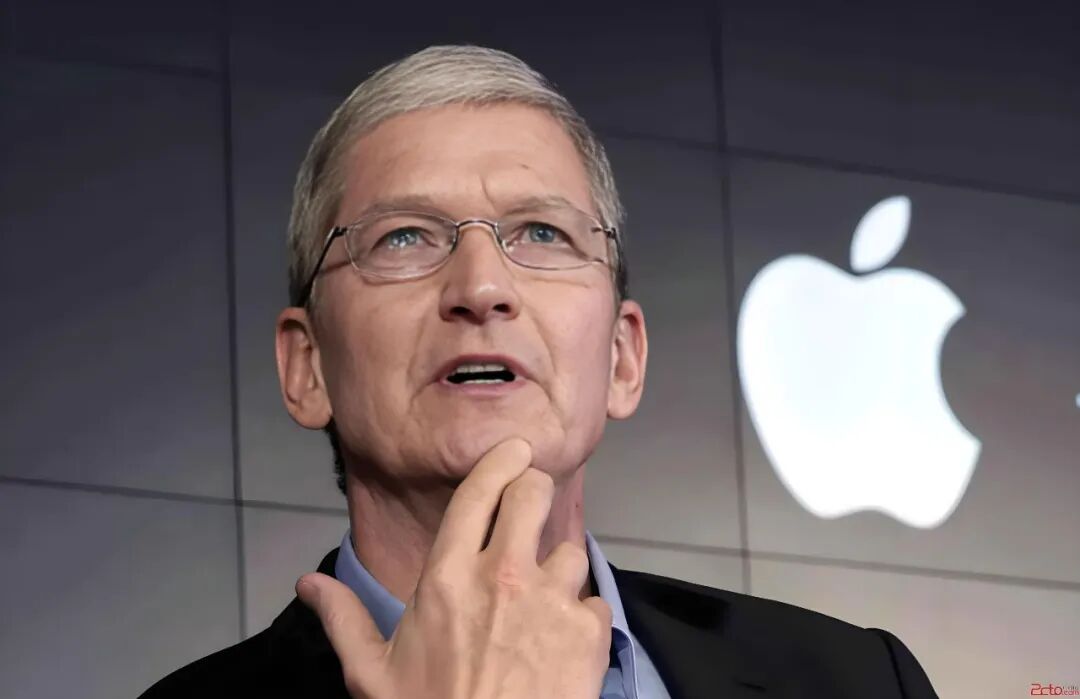
Apple Car has burned money for ten years. During this period, there have been a lot of rumors, concept pictures, and disclosures from insiders. Cook has never publicly admitted this project, but the news from the supply chain has never stopped. Finally, what came was not a car but an internal email:
The project is terminated, and the team is disbanded.
The Vision Pro is more like a performance art.
When it was launched, there was a huge publicity campaign. Cook said it was "the beginning of the spatial computing era". It costs $3,499, and scalpers in China resold it for 40,000 yuan each. Silicon Valley tech bloggers wore it while shopping, dining, and taking the subway, and posted a lot of curious videos.
However, less than two months later, a wave of returns came. Many users reported that they felt dizzy when wearing it, the battery life was poor, and they didn't know what they had done in the past half - hour after taking it off. It only sold three or four hundred thousand units a year, which is not even a fraction compared to the iPhone's sales in the tens of millions.
One user who returned the product joked on social media: It made me feel a kind of dizziness as if I were from the future. Later, I found out it was because it was too heavy and it hurt my neck.
The most embarrassing thing is AI.
In the 2011 launch event, Siri was introduced as the highlight feature. Cook stood on the stage, unable to hide his excitement, and said it was a "revolutionary intelligent personal assistant".
However, fifteen years have passed. When you tell Siri to "set an alarm for me", it replies, "This is the information I can find about alarms." When you ask it "What's the weather like today?", it asks you to unlock your phone first. If you have more than two rounds of conversation with it, it will forget what you just said.
In the era when AI is becoming more and more popular, netizens' evaluations of Siri are highly consistent: Its only use is to change songs without looking at the screen while driving. And even for this, it often mishears the song names.
In the AI field, Apple has been left behind by its peers such as Google, Microsoft, and Meta, and the gap is becoming more and more obvious.
Before he passed away, Jobs said, "Do what you think is right." Cook did just that - he turned Apple into the most profitable company in the world. But Jobs also said:
Making money is not the goal. Creating great products is.
Cook has achieved the first part to the extreme. He failed to achieve the second part.
This is the difference between the two: Jobs regarded products as his faith, while Cook regarded faith as a business.
Apple is making incremental upgrades, while domestic smartphones are overtaking
While Cook was making a fortune and Apple's products were having incremental upgrades, domestic smartphone manufacturers have completed a collective leap from being followers to catch - up players and then to partial leaders.
In 2012, the domestic smartphone market was just starting. IDC data shows that at that time, Apple's market share in the Chinese market was 11%, while Samsung's was 19%. Lenovo, Huawei, Coolpad, and ZTE were collectively referred to as "China's Cool Alliance", and their combined market share was barely on par with Samsung.
At that time, there was a fixed part in the domestic manufacturers' launch events: listing the iPhone's parameters on the big screen, comparing them item by item, and then announcing that "we have caught up with or even surpassed Apple in some aspects". The applause from the audience was just polite because everyone knew it was the attitude of a chaser.
But by 2025, the situation had completely reversed. IDC data shows that in 2025, the shipment volume of the Chinese smartphone market was about 285 million units. Huawei topped the annual list with a shipment volume of 46.7 million units and a market share of 16.4%, returning to the top in China after five years. Apple and vivo tied for second place, both with a market share of 16.2%. Xiaomi and OPPO followed closely with a market share of over 15%.
In 2026, Huawei's momentum continued to grow. According to Omdia data, in the first quarter of 2026, the shipment volume of the mainland Chinese smartphone market was 69.8 million units. Huawei continued to lead with a shipment volume of 13.9 million units and a market share of 20%. Apple ranked second with 13.1 million units. Although its shipment volume increased by 42% year - on - year, its market share was still 1 percentage point behind Huawei.
From catching up to competing on an equal footing and then to partial overtaking, the competition between domestic smartphone manufacturers and Apple is not limited to one or two parameters but a comprehensive and systematic attack.
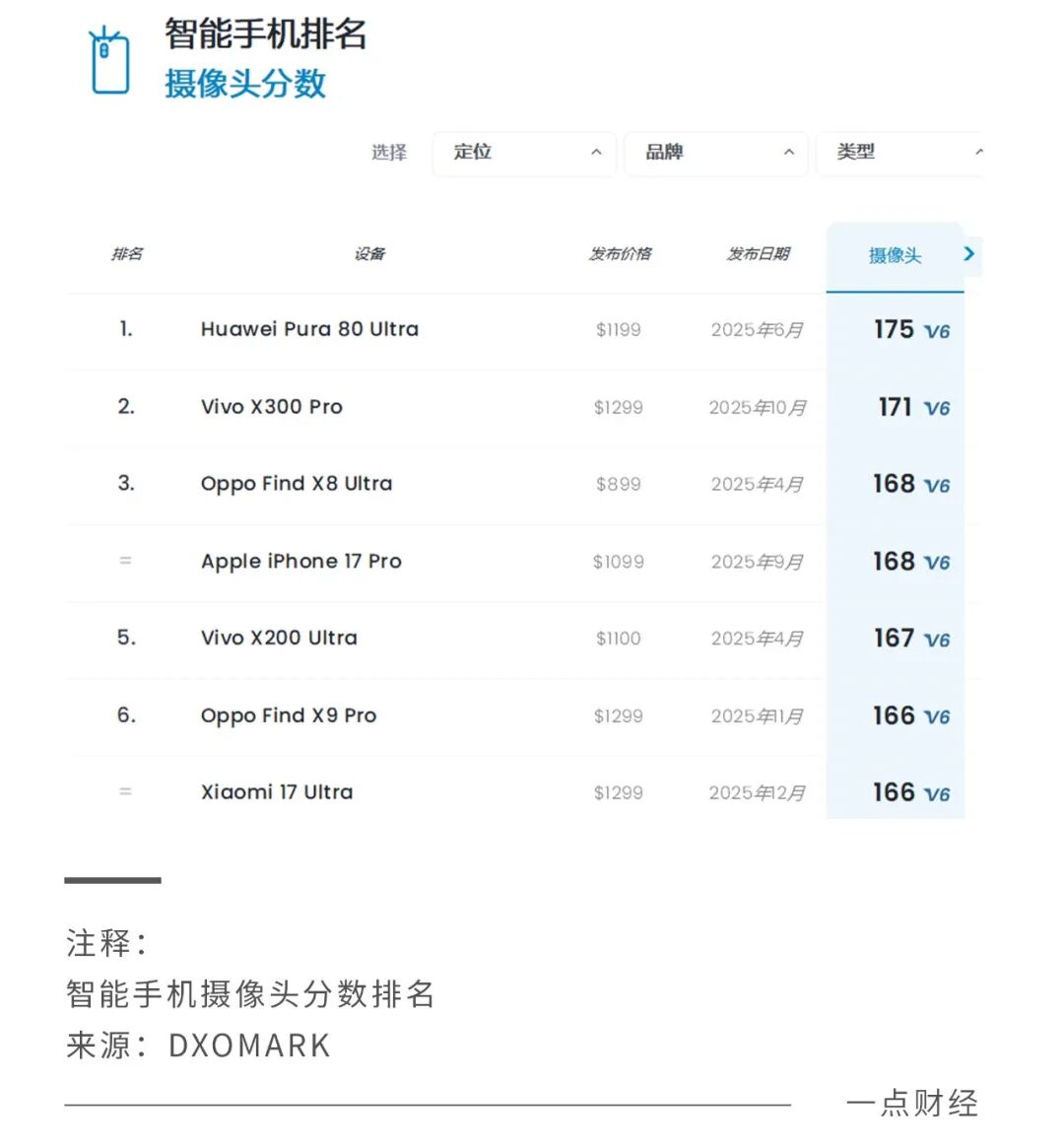
For example, in terms of imaging, according to the latest imaging ranking of DXOMARK, the Huawei Pura 80 Ultra ranked first with 175 points, the vivo X300 Pro ranked second with 171 points, and the Apple iPhone 17 Pro and the OPPO Find X8 Ultra tied for third place with 168 points. Most of the top - ten positions were occupied by domestic brands. Although Apple's best result was among the top three, the top position has been firmly held by domestic flagships.
Apple's foldable phone is an annual joke.
The Android camp has been competing fiercely since 2019. Samsung's Galaxy Fold has reached its seventh generation, Huawei's Mate X series has been very popular, and Xiaomi, OPPO, VIVO, and Honor have brought the price down to six or seven thousand yuan. Apple users ask every year: Where is our foldable phone? The answer is always the same every year: Next year. This "next year" has been said for five years.
Netizens made up a joke: By the time Apple's foldable phone comes out, the Android camp will have finished competing in foldable phones, triple - fold phones, scroll - screen phones, and will start having "clearance sales of foldable phones".
Objectively speaking, Apple still has a wide moat. But an undeniable fact is on the table: In terms of product experience, Apple is no longer the only all - around leading benchmark.
This is the Apple that Cook left to Ternus: extremely wealthy but lacking the previous aggressiveness.
The new CEO Ternus: From engineer to leading Apple
Not much is known about Ternus to the outside world.
He has no social media accounts, and his family background is almost a blank. There are few personal photos on the Internet. A person who is about to take charge of a $4 - trillion empire lives like a hermit.
However, his resume is very solid. He graduated from the Department of Mechanical Engineering at the University of Pennsylvania in 1997. In 2001, at the age of 26, he switched to Apple and was assigned to Jonathan Ive's design team. His first task was to design the Cinema Display external monitor, the most unremarkable product.
Then he gradually climbed up the ladder. In 2013, he was promoted to vice - president of hardware engineering, and in 2021, he took over as the senior vice - president of hardware engineering, entering the top management. He has worked his way up through practical product work.
There are two stories about him that show why he was chosen as the new CEO.
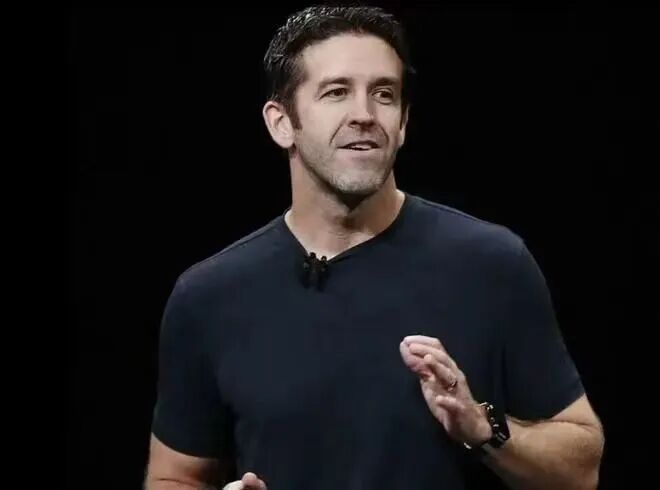
The first story is about failure.
In the early stage of Ternus' career, it happened to be the peak period when Ive's aesthetic dominated Apple. The design philosophy at that time was simple: thin, the thinner the better.
As a result, the keyboards became more and more fragile, and the butterfly - style keyboard structure had problems at the slightest touch. The interfaces were continuously removed until only Type - C was left, and a Touch Bar that almost no one used was added. Users complained about it for three whole years.
Ternus was an eyewitness and participated in the development of these products.
In 2021, when he became the head of hardware, the first product he led after his promotion was the 2021 MacBook Pro. He removed the Touch Bar, replaced the butterfly - style keyboard, and reinstalled the HDMI interface and SD card slot. Users' reaction was not "What new thing has Apple made?" but "Apple has finally corrected what it did wrong before."
Participating in making a product and then changing it with his own hands shows that he is not the kind of manager who values face more than substance. He admits his mistakes and corrects them.
The second story is about a comeback.
Mac had used Intel chips for more than a decade, and its performance was crushed by the Windows camp. Apple fans felt embarrassed. Ternus led a project: to get rid of Intel and develop its own chips.
This was an extremely complex task. The motherboard had to be redesigned, the heat dissipation system had to be redone, the software had to be adapted one by one, and the developer tool chain