SOP Agent, the "Ace" Entry Point for Enterprise-level AI Implementation
As the capabilities of large models gradually converge, the competition in AI Agents has entered a new stage.
In the past two years, the boundaries of AI capabilities in content generation and interactive dialogue have been rapidly leveled. However, in enterprise scenarios, intelligent agents still have difficulty entering the core business processes. The complex processes, fragmented systems, permission constraints, and execution risks have kept the seemingly powerful AI in a single - point auxiliary role for a long time.
Consequently, the industry's focus has shifted to a more practical issue: how to enable AI to have the full - chain capabilities from recognition to judgment and then to decision - making and execution in a complex organizational system. The engineering exploration around this capability has gradually become a new direction for the implementation of enterprise - level AI.
Against this trend, Uniview was the first to offer a solution. At its partner conference this year, Uniview launched the "Enterprise - level SOP Intelligent Agent" path. By disassembling the processes into executable nodes and orchestrating them uniformly, AI is embedded in each specific business link, extending from auxiliary judgment to process execution and promoting the intelligent agent to gradually enter the actual business processes of enterprises.
SOP Takeover: The Bottleneck in Enterprise - level AI Applications
SOP (Standard Operating Procedure) is an essential tool for efficiency improvement in the operation of modern enterprises. Through the standardization, disassembly, and solidification of business processes, enterprises can reduce the uncertainty in operations and achieve "entropy reduction" in organizational efficiency.
Further subdivided, SOP can be divided into two categories: position - level and process - level. The former standardizes single - position operations, while the latter emphasizes cross - position and cross - department collaboration, playing a key role in improving the overall efficiency of the enterprise. For large - scale enterprise organizations, the establishment and optimization of process - level SOP are of self - evident importance, but the difficulty also increases with the expansion of the organizational scale.
This is usually because, on the one hand, the internal processes of enterprises often show obvious fragmentation characteristics, and there are gaps between different departments; on the other hand, it is difficult to integrate the data between business systems, forming internal information silos. In addition, a large number of key links still rely on manual experience, making the processes difficult to reuse and hard to be quantitatively evaluated.
These problems are particularly prominent in industries such as manufacturing and energy that rely on continuous process operation. For example, in equipment inspection and quality control scenarios, front - line personnel usually need to manually record the abnormalities first and then report them through the system or communication tools. Different positions are responsible for judgment and processing respectively. Data detection, processing records, and result feedback are scattered in multiple systems and rely on manual experience for final implementation, so there is a lack of unified standards and a complete tracking mechanism.
This also means that a large number of standardized processes in enterprises actually only stay at the superficial stage of reasonable division of labor and can never be truly automated and taken over by the system, nor can they be optimized and improved in efficiency during operation. That is to say, most enterprises' SOPs only answer the question of how people in different positions in the organization should be defined, but do not solve the practical efficiency dilemma of how things can be systematically executed.
The implementation of AI in enterprises is thus limited. Although the model capabilities have been continuously improved in the past few years, due to the lack of understanding and embedding ability of the processes themselves, AI is still mostly limited to serving as an efficiency - enhancing auxiliary tool for single - point links and has difficulty entering the complete enterprise business chain. As a result, SOP cannot be systematically and structurally executed by AI.
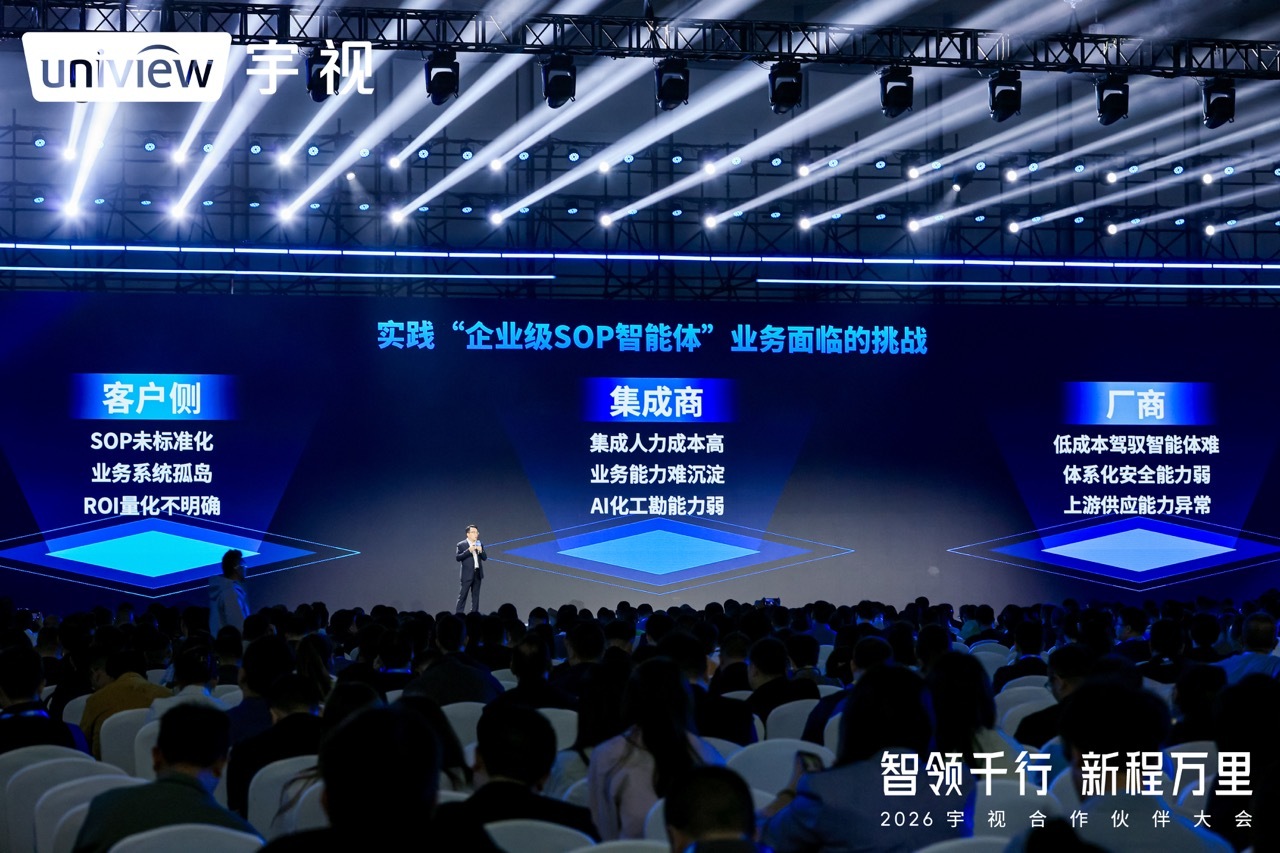
This bottleneck in current enterprise - level AI applications has led to the fact that a large amount of enterprise capital expenditure on AI has failed to yield the desired returns, which also constitutes the core point of doubt in the current AI bubble theory.
Defining the Enterprise - level SOP Intelligent Agent
Against this background, the enterprise - level SOP intelligent agent defined by Uniview addresses the pain points of enterprise AI applications.
It is essentially an AI system that can automatically complete tasks according to the company's processes. Compared with the improvement of single - point capabilities, the SOP intelligent agent focuses more on how to achieve stable execution in the established processes. In actual operation, the process is disassembled into a series of clear execution nodes. Under the constraints of rules and process control, the intelligent agent first identifies the input information at key links, then makes judgments based on rules and models, and triggers subsequent processes according to the results, including recording, notification, or processing actions, gradually forming a closed - loop operation taken over by the system from the original manual - linked operations.
To make this AI system a reality, relying solely on model capabilities is far from enough. More importantly, a complete set of engineering systems is needed for support.
The operation of the process is not completed at once but is continuously triggered and advanced between multiple nodes. This requires the system to have the ability to orchestrate the processes, connecting different tasks in accordance with the established logic. At the same time, the scheduling mechanism is used to promote the forward operation of the process, ensuring that each step of the task is correctly executed.
More importantly, in the enterprise environment, any execution action needs a constraint mechanism to ensure controllable results. This involves permission control and rule setting, enabling the intelligent agent to be implemented within a safe and controllable range. In addition, the entire process needs to have a complete recording and tracking ability to support verification during the execution process and review after the execution is completed.
This complete set of capability systems built around process control and execution constraints coincides with the core of the new concept - harness engineering widely discussed in the AI field recently, both emphasizing controllable execution and enabling AI capabilities to maximize the output of actual task results. From this perspective, the underlying logic of the SOP intelligent agent lies not in being smarter but in being more practical.
When this enterprise - level SOP intelligent agent is applied to the above - mentioned equipment inspection scenario, the original inspection process is first sorted out into a clear execution chain: detection, judgment, triggering, and execution. Each link is standardized and orchestrated according to the established logic. On this basis, AI is embedded. It identifies the equipment status through visual capabilities, makes abnormal judgments in combination with rules and models, and automatically triggers alarm, recording, and subsequent processing processes, enabling the entire process to run continuously in the system.
The ultimate business effect is that equipment detection no longer relies on manual cycles but operates around the clock. Abnormalities can be identified and processed immediately, avoiding the risks of missed detection or misjudgment caused by human errors.
Uniview has also verified the process reshaping by similar SOP intelligent agents in many other business scenarios. In the production process, the automated execution of processes reduces material losses and risks of manual operations; in the smart office scenario, local deployment and process collaboration reduce the risk of data leakage and compress communication and decision - making costs; in scenarios that require on - site response, through the collaboration between mobile devices such as embodied intelligent robots and the central system, the process can be monitored in real - time and directly executed by the devices, significantly shortening the response time.
The true implementation of enterprise AI has never been just a model problem but a systematic engineering problem. It can be seen that the answer provided by the SOP intelligent agent is to turn the process itself into the operating track of AI, enabling capabilities to be continuously called and executed in the established path. The implementation and verification in multiple scenarios confirm that this idea is no longer just a product form but is becoming the underlying methodology for enterprises to build AI execution capabilities.
Uniview's Path for Enterprise - level AI Applications
As process takeover becomes a practical issue that enterprise - level AI applications have to face, the capability boundaries of different manufacturers in the AI industry chain are also emerging.
Model manufacturers are good at promoting the improvement of the upper limit of AI capabilities, but their capabilities often stay at the general level; SaaS manufacturers are strong in system encapsulation and delivery, but their perception and execution capabilities in complex scenarios are relatively limited. In contrast, as an AIoT manufacturer, Uniview, relying on its long - term accumulated visual perception capabilities and on - site scenario experience, has more advantages in business scenarios that require continuous interaction with the physical world. It is also based on this ability that Uniview has been able to further promote AI from understanding tasks to participating in execution, and finally explored the enterprise SOP intelligent agent path centered on process takeover.
To enable the SOP intelligent agent to enter more business scenarios on a large scale, Uniview launched the enterprise - level SOP intelligent agent platform "Yangguan". The core purpose is to provide partners with a reusable capability base, solving the problem that enterprise - level AI has always been highly dependent on customized development.
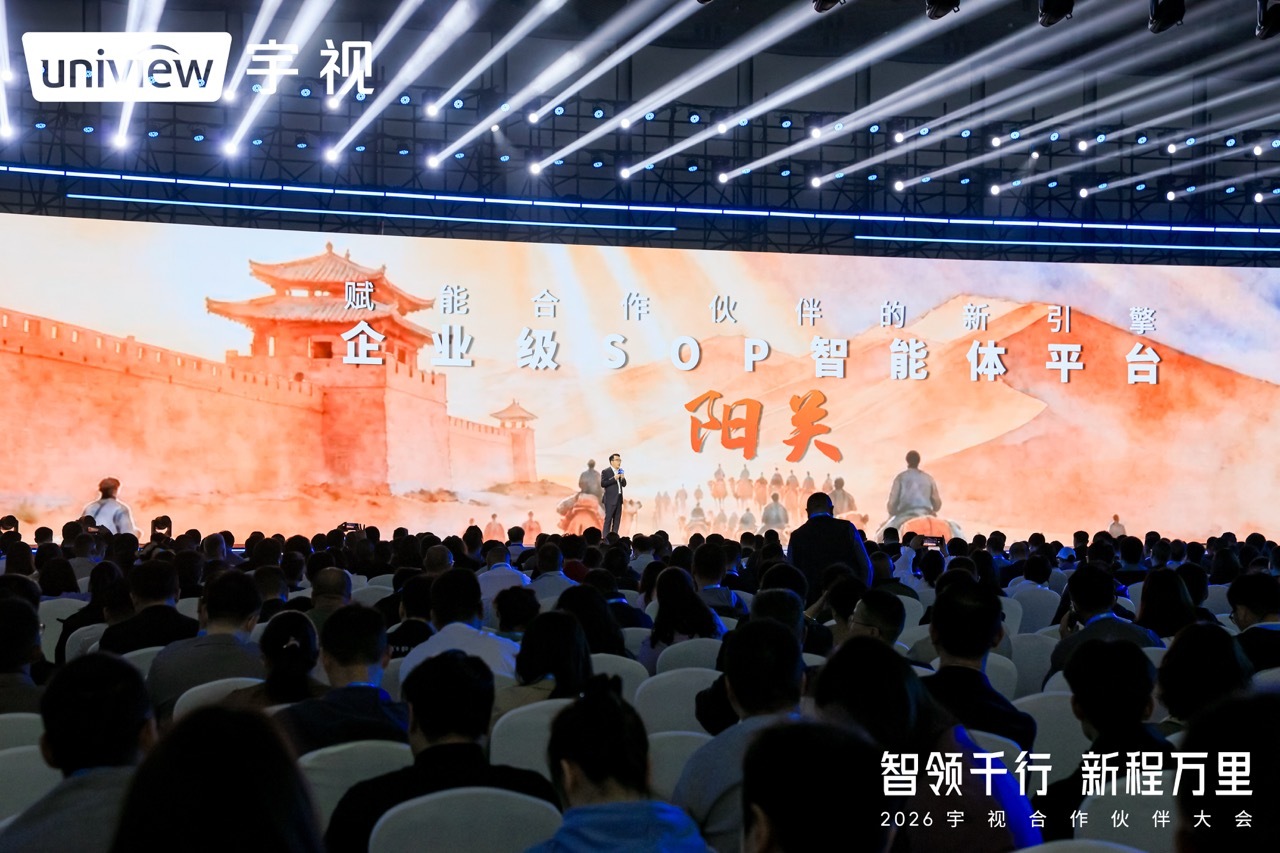
From the perspective of the architecture, "Yangguan" is more like a central control system for process execution. On the one hand, through the orchestration and scheduling capabilities, it connects different tasks according to the established logic, enabling the intelligent agent to run continuously in the business process; on the other hand, it relies on Uniview's self - developed "Wutong" model to provide support for recognition, judgment, and execution, making the process execution stable and accurate.
In the specific implementation process, this system first solves the problems of deployment and security. Through edge computing, AI can complete inference and execution locally, reducing the dependence on central computing power and avoiding the risks caused by data leakage; by means of semantic interaction, the process configuration and development process are greatly simplified, and partners can complete the construction and deployment of intelligent agents with low - code; supporting the adaptation to different types of device environments allows enterprises to complete the deployment in the existing environment, reducing the overall investment cost.
Relying on the long - term accumulated front - end device foundation, Uniview has also built a product system around edge computing and private - domain deployment, covering different levels from the core engine to terminal devices. The intelligent agent can thus be deployed and run in actual business scenarios, and enterprises can choose the appropriate adaptation scheme according to their own needs, achieving a more cost - effective AI implementation path while ensuring data security.
Uniview has explored a clear promotion idea for the subsequent development path of enterprise - level intelligent agents.
The current layout of intelligent agents around SOP scenarios is the first step for enterprise - level AI to truly enter the business process. As the collaborative operation of multiple SOP intelligent agents is realized, the application effect will continue to be magnified, and enterprises will continuously achieve overall efficiency improvement and cost reduction.
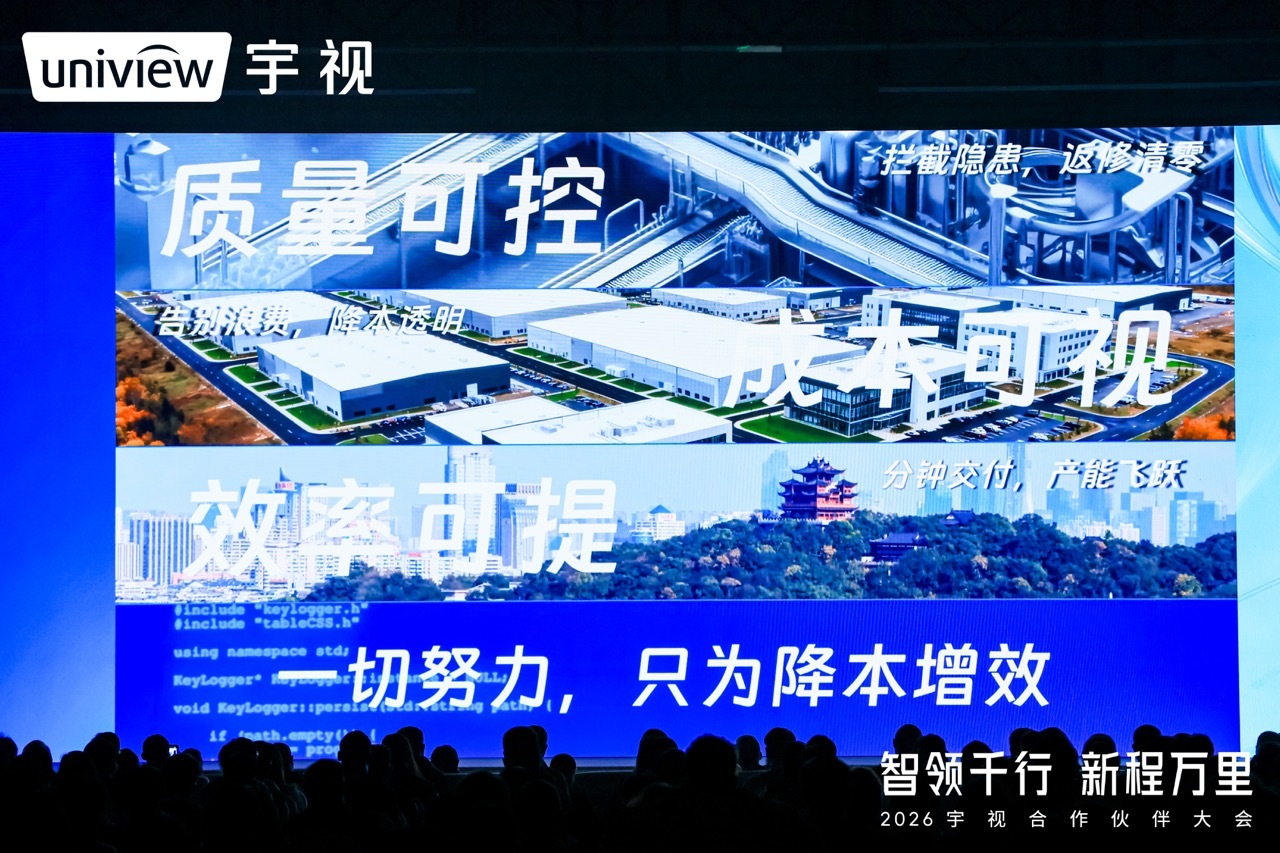
In the future, the role of intelligent agents is expected to further extend to the enterprise management level. By structuring and precipitating the long - term accumulated experience of enterprises and transforming it into reusable model capabilities, the capability boundaries of intelligent agents will be broadened to participate in higher - level management and decision - making.
Meanwhile, Uniview is also exploring a new deployment path, that is, keeping high - frequency business running within the enterprise and entrusting low - frequency services to external public service platforms, so as to optimize the overall cost structure of enterprises in AI applications. From this longer - term path, Uniview is trying to build a set of system capabilities that enable AI to truly enter the business and assume the execution role.
The implementation of AI in enterprise scenarios is undoubtedly moving from auxiliary efficiency improvement to the critical stage of participating in execution. Compared with the improvement of single - point capabilities, how to achieve stable and controllable operation in complex processes has become the core proposition of enterprise - level AI applications. In this process, SOP is no longer just a management tool but has become the key entry point for AI implementation; the intelligent agent system built around SOP has thus become the key path for enterprise - level AI to move from capability indicators to actual business industries at the current stage.