Exclusive interview with CTO of Eight Sleep: The AI mattress that has been bought out by Elon Musk and others. Cut the subscription fee first when entering China.
Author | Ou Xue
Editor | Yuan Silai
After gaining popularity overseas for several years and reaching a valuation of over $1.5 billion, Eight Sleep, the unicorn in the AI sleep system, has finally decided to enter the Chinese market.
In April, they officially launched the Pod 5 intelligent deep - sleep system with a starting price of 19,999 yuan at the INNO100 Global Innovation Flagship Store in Nanshan, Shenzhen, and it is sold through channels such as WeChat Mini - Programs, JD.com, and Tmall. For the first time, Eight Sleep waived the $199 software subscription fee for Chinese regular users - at least in this regard, Eight Sleep understands the Chinese market well.
Eight Sleep is no stranger to the Chinese market.
In 2015, when Eight Sleep was still developing its first product, CTO Massimo Bassi frequently shuttled between factories in Shenzhen and Huizhou. Almost all of the world's mattresses and consumer electronics are produced in these two cities.
Ten years have passed. His team has expanded from a few people to hundreds globally, and Eight Sleep's sales have exceeded $500 million. Its users include celebrities like Elon Musk, Mark Zuckerberg, and F1 driver Charles Leclerc.
However, they have never entered the Chinese market. When asked about the reason, Massimo admitted that "we are a startup with limited resources."
After rounds of battles among e - commerce, mobile phone, and social media giants, Chinese users have become the most discerning group in the world. Many giant foreign companies have failed here. A startup like Eight Sleep "must ensure that it doesn't make mistakes."
Eight Sleep has not faced many setbacks in the past. Its origin is a classic vision - based narrative: Co - founder Matteo Franceschetti, a former professional athlete and lawyer, wanted to solve sleep health problems through technological means. So, he and Massimo, who has a background in big data, decided to establish a "sleep company."
They have indeed created highly technological products: The AI intelligent bed cover can achieve precise temperature control from 13°C to 43°C through a water - circulation system. The built - in non - contact sensors can track heart rate, heart rate variability, breathing rate, and sleep stages in real - time, with an accuracy comparable to medical - grade ECG devices. The AI engine Autopilot is trained based on over 1 billion hours of sleep data and automatically makes over 3,000 temperature adjustments every night.
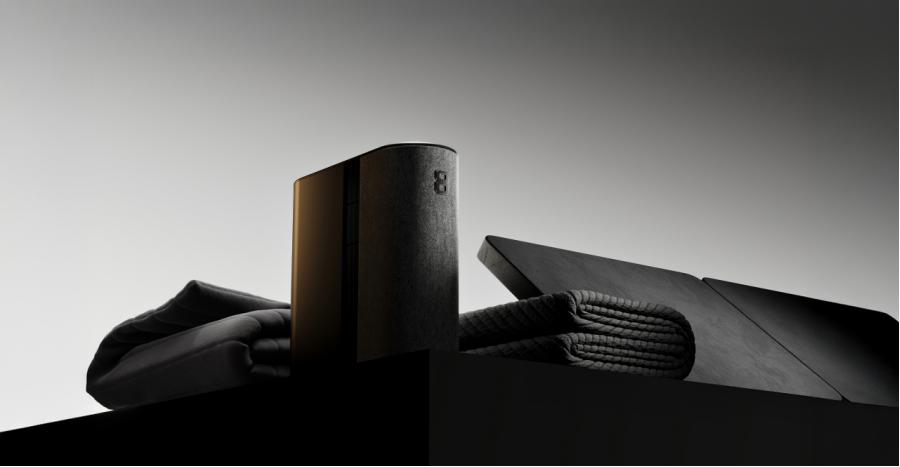
Product form of Pod Ultra (Source/Enterprise)
It took Eight Sleep 12 years to become a leading company in its niche. Now, to take the next step, Eight Sleep must enter the real battlefield of smart hardware, which is the Chinese market.
Next, Eight Sleep may face a fierce battle it has never encountered before. They clearly have expectations. In a conversation with him that lasted over an hour, Massimo maintained a sincere and restrained rhythm.
He doesn't package every answer into a perfect public - relations response. When asked about the class - action lawsuit, he didn't avoid it. When asked why the $3,000 product is so expensive, he seriously calculated that it costs $4 to $5 per night.
Massimo didn't try to make everything sound more appealing. He just explained things as they are. In the first step, Eight Sleep has controlled the rhythm well.

Officially Entering the Chinese Market
Yingke: Why did Eight Sleep choose to officially enter the Chinese market this year?
Massimo: We've always wanted to enter China. Many friends have said that our products would sell well in China. But we're a startup with limited resources. The Chinese market is huge, and we must ensure that we don't make mistakes - a poor user experience would erode the trust of early users.
We've invested a lot in the past year. The Chinese team has grown from 15 to 45 people. We've deployed our infrastructure in the Chinese mainland, localized the app, and improved the machine - learning algorithm, customizing it according to the temperature preferences and daily routines of the Chinese market - indeed, the preferences of Chinese users are somewhat different from those of American users.
Yingke: How do you view the competition in the Chinese sleep - related product market? How does Eight Sleep plan to position itself?
Massimo: Competition is a good thing. The more companies talk about sleep and educate the market, the faster the market will grow.
We're not entering the mattress market; we're entering the health - tech market. Mousse and Sleepeasy make great mattresses, but they're furniture companies that have added smart features to mattresses. We're a tech company that just happens to deliver products through the medium of beds. The core of Pod lies in active water - cooling temperature control, clinical - grade biosensing, and an AI that learns and adapts every night. This is a completely different category.
Moreover, we're very familiar with China's manufacturing system. Over the past decade, our production has been deeply integrated with the Chinese supply chain. This isn't a foreign company parachuting in - we have a real operational foundation.
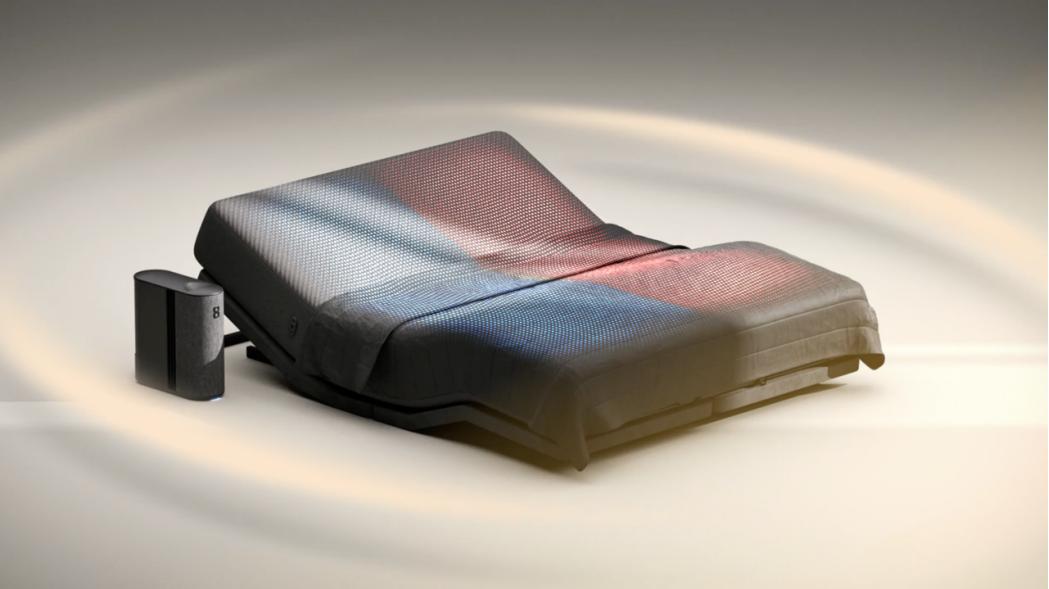
Zone - controlled temperature of Pod Ultra (Source/Enterprise)
Yingke: Eight Sleep has started selling on Chinese online platforms. What's the customer - acquisition strategy? How to balance online and offline sales?
Massimo: The initial strategy is similar to that in the US: First, focus on a small group of extreme users, make them extremely satisfied, and turn them into brand advocates. This group is easily reachable in the tech circle, and many people are already following what US KOLs say about our products.
We've launched products in 35 countries and regions, and China is where we've done the most in - depth localization. We'll cooperate with KOLs to bring together people in the tech and fitness circles.
We're targeting high - end consumers who already have an awareness of investing in health - those who are already spending on health, fitness, and performance. The high - end health market in China is huge and growing rapidly. We'll use platforms like Xiaohongshu and Douyin and adapt our globally proven content strategies to the behavior patterns of Chinese consumers.
The initial strategy is a high - end positioning. Chinese initial members can get a free full - access subscription to Autopilot AI - this is an experience we've learned from other markets: First, let users experience the full value, build trust, and then talk about scale.

Business Model: "The Profit Margin of Subscriptions is Naturally Higher than that of Hardware"
Yingke: You've just completed a $50 - million financing round led by Tether, with a valuation of $1.5 billion, only six months after the previous round. What metrics do investors care about the most?
Massimo: It's not any single metric but a combination. We achieved positive free cash flow in 2025.
But the core factor that made Tether act quickly is the quality of our revenue engine. We're growing at a year - on - year rate of over 200% without a proportional increase in the marketing budget - because 30% to 40% of our revenue comes from word - of - mouth.
Investors also pay great attention to repurchase data. About 20% of our revenue comes from existing users upgrading to the latest generation within an 18 - to 24 - month cycle. This is the repurchase model of smartphones, not mattresses. This shows that we've created a product category, not just a product.
The positive free cash flow proves that this model can continuously reinforce itself. We've cumulatively generated over $500 million in revenue and are now making a profit. This means we can boldly invest in R & D - such as FDA clinical work and the expansion into the Chinese market - without burning money.
Yingke: Can you break down the revenue structure?
Massimo: Most of our revenue comes from hardware - the Pod itself and the accessory ecosystem, including smart temperature - controlled pillowcases, smart temperature - controlled quilt cores, and smart pressure - relieving bases. This is natural because we're still acquiring new users.
But subscriptions are the fastest - growing part. The Autopilot subscription costs $199 to $399 per year. Hardware is the platform, and subscriptions are the intelligence. Every night, we make over 3,000 temperature adjustments for each user and process 15 to 16 TB of user data per day.
The profit margin of subscriptions is naturally higher than that of hardware. As the installed base grows, the revenue structure will become more favorable. So, there are three layers: new hardware acquisition, subscription monetization, and upgrade revenue. The positive free cash flow is not achieved by a single measure but by the combined effect of these three layers.
Yingke: You cover 35 countries and regions. Can you share the data and performance in different markets?
Massimo: The US is still the largest market by a large margin - it's where we started, and our brand penetration is the deepest. Europe is the second - largest region and is growing rapidly, especially in the UK, Germany, and the Nordic countries. Considering the size of the high - end consumer group in China, we expect it to become one of the top three markets in a few years.
Yingke: About 20% of your revenue comes from repeat customers. What are the core driving factors for this high stickiness?
Massimo: The 20% repurchase revenue shows that people who bought our early products are willing to come back and spend thousands of dollars on the latest generation. The upgrade cycle is 18 to 24 months, similar to that of smartphones. For the mattress category, this ratio is actually quite high - people usually buy a new mattress once every 5 to 7 years. There are many reasons for repurchase: new hardware features, wanting to place one in the guest room, or giving it to parents. This ratio has been quite stable in the past three or four years.
It's neither hardware - locked nor subscription - locked. We've fundamentally changed people's sleep experience, and this experience accumulates.
After a person sleeps on an Eight Sleep bed for a few months, the AI will learn their patterns - the ideal temperature curve and how the body responds to exercise, travel, or stress. The system gets better every week. After a year, your Pod knows more about your sleep physiology than any doctor can through a single sleep study.
In terms of hardware, there are no other equivalent products to switch to. We use active water - cooling and heating - not air, not phase - change materials - combined with custom sensors, and no wearable devices are required. To replicate Eight Sleep, you need to combine a smart temperature controller, a clinical - grade sleep tracker, and an AI training platform and make them work seamlessly together. No one else has achieved this.
Yingke: The subscription model has caused a lot of controversy among users and even faced a class - action lawsuit. How do you respond to the question "I've spent thousands of dollars on the device. Why do I still have to pay an annual fee?"
Massimo: Spending $3,000 to $6,000 on hardware and then having to pay an annual fee, the instinctive reaction is "I've already paid." This is a reasonable emotional response.
But what does the subscription support? Every night, our system runs complex AI models, processes your biological data, cross - compares it with a dataset of over 1 billion hours, and makes over 3,000 real - time temperature adjustments. This requires a large amount of cloud - computing infrastructure. We process 15 to 16 TB of data every day. We also continuously push OTA updates with new features and better algorithms.
By analogy: No one questions paying for Tesla's FSD subscription because they understand that software needs continuous improvement and a large amount of computing power. Our AI does the same thing for sleep.
Regarding that lawsuit - class - action lawsuits are very common in the US consumer field. We take feedback seriously and are optimizing. Now, the subscription levels range from $199 to $399. The basic hardware functions can work without a subscription. Autopilot is the part that requires a subscription. The vast majority of subscribers renew their subscriptions voluntarily.
Moreover, when you buy a Pod and a subscription, you're not just buying a physical product but also a continuously iterative service. We launched a snoring - detection algorithm last year and pushed it to 100% of existing users - some people who bought the product in 2015 also got this feature. If a service is free, it usually means you're just getting a hardware product. We don't do that.
To show our sincerity to Chinese users, the standard - version subscription is free for life for the first - batch Chinese users who purchase the product. Eight Sleep has never done this before because there is a cost for each person every year.
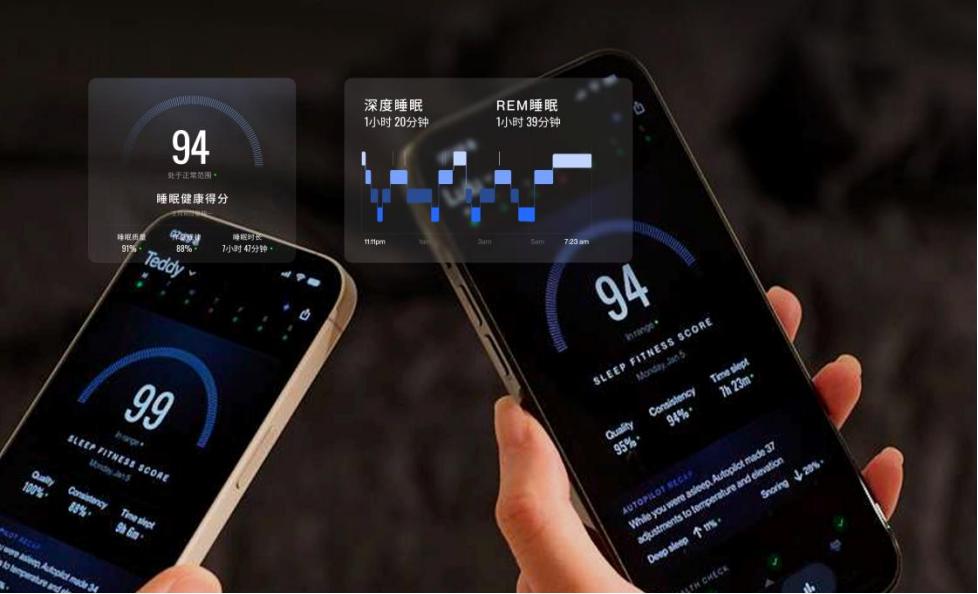
Autopilot sleep report (Source/Enterprise)
Yingke: The top - of - the - line Pod 5 Ultra costs over $6,000, plus an annual subscription fee of $199 to $399, which is much higher than traditional mattress products. What's the pricing logic?
Massimo: We're not a mattress company, and users don't compare us with mattresses. They compare the value of "better sleep."
Let's do the math. A top - of - the - line Pod 5 Ultra costs about $6,000. Amortized over a 5 - year expected lifespan, it's about $3.3 per night. Add the subscription - even if it's $1 per day. So, for $4 to $5 per night, you get a system that can actively adjust the temperature, track health indicators, and continuously optimize sleep through AI. People spend more on coffee every day. And no cup of coffee can give you an extra 30 minutes of deep sleep.
This price reflects the real value of the product. Custom - engineered hardware - a water - cooling + heating system, clinical - grade non - contact sensors, a Hub for local data processing, and an AI layer that makes over 3,000 adjustments every night. The material cost and R & D investment are closer to those of medical devices or consumer robots.
Our users are those who are already investing in health. For them, the question isn't "Why is it so expensive?" but "Why should I spend 8 hours every night on something that can't actively