Finally, Tim Cook stepped down, but not completely. Apple now forms a troika.
First of all, we need to clarify one thing. Apple has indeed changed its leadership, but Tim Cook is not leaving.
On April 21, 2026, Apple announced that Tim Cook would transition to Executive Chairman of the Board on September 1st, and John Ternus, the Senior Vice President of Hardware Engineering, would succeed him as CEO.
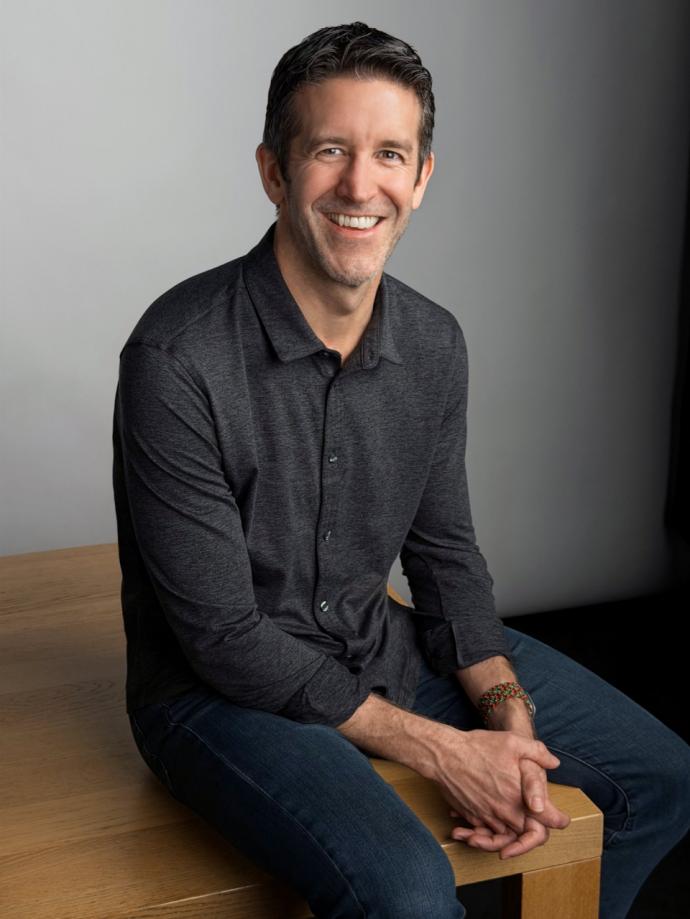
On the same day, there was another major event. Johny Srouji was promoted to Apple's Chief Hardware Officer.
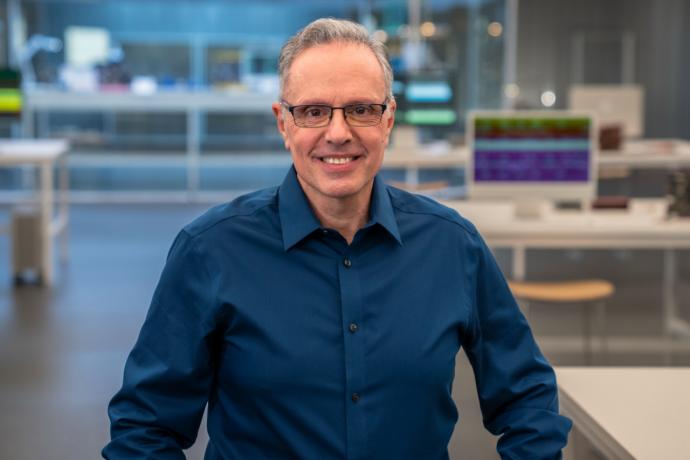
Apple is refocusing the entire company on the hardware system. The CEO position goes to the head of hardware engineering, and the Chief Hardware Officer position goes to the person in charge of chips and underlying technologies. Cook is moving to the board, while a product engineer steps forward, and a chip veteran holds the fort.
Cook joined Apple in 1998 and succeeded Steve Jobs as CEO in 2011.
At that time, everyone thought Steve Jobs was the soul of Apple. Since Cook was neither a hardware engineer nor a software engineer, Wall Street was bearish on Apple.
However, according to Apple's official disclosure, during Cook's tenure, the company's market value increased from approximately $350 billion to $4 trillion, annual revenue grew from $108 billion in fiscal year 2011 to over $416 billion in fiscal year 2025, the active device installed base exceeded 2.5 billion units, and the service business scale exceeded $100 billion.
Apple in the Steve Jobs era was good at turning product launches into cultural events, while Apple in the Tim Cook era turned the iPhone into a cash - flow machine supported by the supply chain, service subscriptions, in - house chip development, retail networks, and regulatory negotiations.
Steve Jobs was good at creating a cool new iPhone, while Tim Cook is good at making Apple increasingly irreplaceable.
After selling the hardware, Cook keeps users within iCloud, the App Store, Apple Pay, and the entire Apple service ecosystem.
There are also many regrets in the Cook era. Where are the growth opportunities in AI, agents, and Apple's next big thing?
The Vision Pro didn't quickly replicate the success of the iPhone, and Apple's car project was aborted. Cook left behind quite a few "unfinished projects" for Apple.
However, Cook's transition to Executive Chairman doesn't mean he's leaving. Apple officially stated that he will continue to assist the company with certain matters, including communicating with global policymakers.
This arrangement is very much in line with Cook's style.
He keeps the most external and political aspects for himself and entrusts the next round of product and technology bets to his successor.
After joining Apple's product design team in 2001, Ternus started as a junior engineer. He became the Vice President of Hardware Engineering in 2013 and was promoted to Senior Vice President of Hardware Engineering and joined the executive team in 2021.
During his 25 - year tenure at Apple, he participated in the development of almost all important product lines, from the iPad, AirPods, to multiple iterations of the iPhone, Mac, and Apple Watch. His influence can be seen in all these well - known hardware devices.
Ternus's contributions are not limited to the products themselves.
According to Apple's official report, he led his team to introduce new technologies in reliability and durability, making Apple products more robust. In terms of environmental protection and sustainable development, he promoted the use of recycled aluminum alloy, the application of 3D - printed titanium in the Apple Watch Ultra 3, and improved product repairability to extend product lifespan.
The recently launched MacBook Neo, iPhone 17 series, and iPhone Air are also the results of his team.
Ternus has a low - key and practical work style. He rarely appears in public, and even when he does at product launches, he usually just briefly introduces the technical details of the products.
Interestingly, the internal evaluation of him at Apple is surprisingly consistent. Everyone says he has a gentle temper, pays attention to details, and has in - depth knowledge of the supply chain.
Ternus was 50 years old when he took over as CEO, the same age as Cook was when he succeeded Steve Jobs.
In Apple's official statement, Ternus said, "I am deeply honored to continue Apple's mission. I've dedicated almost my entire career to Apple. I was fortunate to work under Steve Jobs and receive guidance from Tim Cook. It's a privilege to be part of shaping products that have changed the world and the way people communicate. I'm very optimistic about the future and am glad that the most talented people on the planet are at Apple, determined to be part of something greater than any of us."
Cook said, "John has the mind of an engineer, the soul of an innovator, and the character to lead with integrity and honor. He is a visionary, and his contributions during his 25 - year tenure at Apple are countless. There's no doubt that he's the right person to lead Apple into the future. I have full confidence in his abilities and character and look forward to working closely with him during the transition and in my new role as Executive Chairman."
John Ternus's succession as CEO is an obvious move, while Johny Srouji's promotion to Chief Hardware Officer is a less - obvious development.
Srouji is not very well - known. Inside Apple, he represents chips, sensors, displays, cameras, batteries, modems, and all the underlying technologies that turn the "Apple experience" into an engineering reality.
Apple's announcement states that Srouji previously served as the Senior Vice President of Hardware Technologies. After this promotion, his responsibilities will be expanded to lead both the hardware engineering and hardware technology organizations. In other words, Apple is further integrating product hardware engineering and core hardware technologies.
This is not an ordinary promotion.
In 2008, Srouji joined Apple and was in charge of developing the A4, Apple's first in - house system - on - a - chip.
Since then, the A - series chips have supported the performance narrative of the iPhone and iPad, and the M - series chips have helped the Mac transition from Intel architecture to Apple's in - house architecture. A large part of the reason why Apple can achieve synergy between its phones, computers, headphones, and watches, which is difficult for others to replicate, is that it has continuously taken back control of key technologies.
This control will become even more crucial in the AI era.
In the past decade, Apple's most important battlefield has been "selling hardware to as many people as possible and keeping them within the ecosystem."
What about the future?
Cook has brought Apple to a market value of $4 trillion, but obviously, the maintenance cost is a bit high.
Users demand that Apple have AI, and they also want Apple products to be thinner, lighter, and more power - efficient.
Therefore, the real signal released by this personnel adjustment is not "Cook is leaving," but that Apple doesn't want to rely solely on Cook's stable operation approach to embrace the future.
It hands the CEO position to hardware engineer John Ternus, entrusts the hardware foundation to chip veteran Johny Srouji, and keeps Cook on the board to deal with the outside world.
This article is from the WeChat official account "Alphabet AI", author: Miao Zheng. It is published by 36Kr with permission.