Mobile phone market reshuffle: Huawei and Apple watch the price increase with a smile, while Xiaomi drops out of the top five
Recently, those planning to buy a new phone may have noticed that phones have become more expensive.
This is not just because manufacturers "want to make more money," but rather the cost pressure brought about by the rising prices of storage, which has directly disrupted the market rankings.
In mid - April, Omdia and IDC successively released reports on the Chinese smartphone market for the first quarter of 2026: Huawei firmly held the first place, Apple came second, and OPPO and vivo ranked third and fourth respectively.
The difference lies in the fifth place. Omdia showed that Xiaomi ranked fifth with a shipment volume of 8.7 million units; IDC, on the other hand, placed Honor in the fifth position with 8.9 million units shipped, and Xiaomi dropped out of the top five. Such ranking differences between the two institutions have occurred before. Although there are slight differences in their statistical criteria, both reports indicate that among the leading manufacturers, Xiaomi had the largest year - on - year decline this quarter.
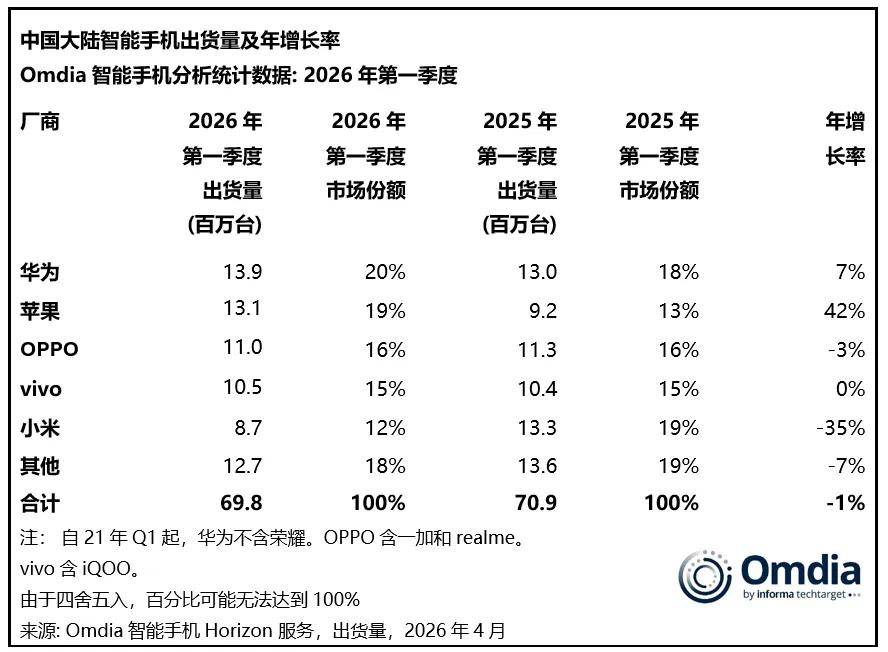
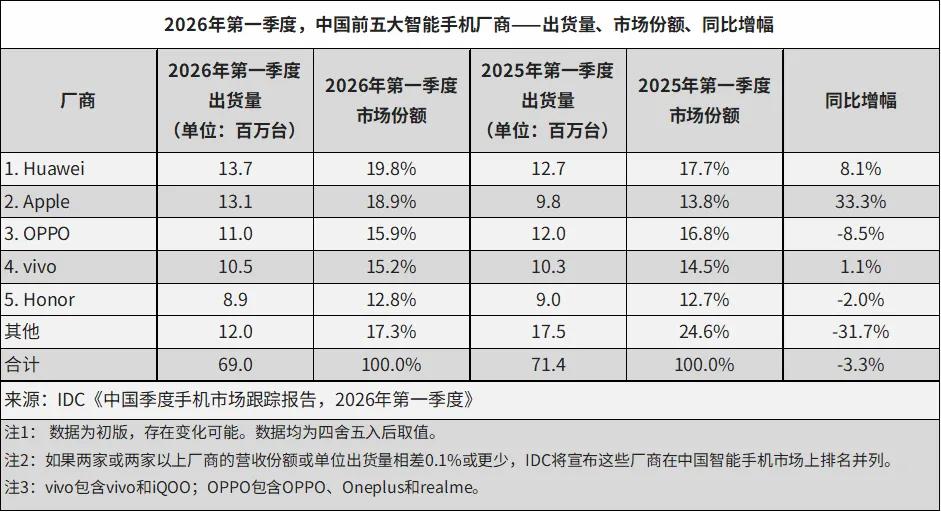
Looking back a year ago, in the first quarter of 2025, Xiaomi returned to the top of the domestic market for the first time in a decade with a shipment volume of 13.3 million units. Lei Jun posted multiple Weibo posts to express his gratitude. One year later, the situation has changed: the market shares of Huawei and Apple have increased, while Xiaomi's has significantly declined.
The global market is also undergoing reshuffling. IDC data shows that in the first quarter of 2026, 289.7 million smartphones were shipped globally, a year - on - year decline of 4.1%. This is the first decline in the global market since mid - 2023. Samsung returned to the top globally (62.8 million units); Apple came second (61.1 million units), and Xiaomi maintained its third - place position (33.8 million units), but its year - on - year decline of 19.1% was also the largest among the top five globally. OPPO and vivo ranked fourth and fifth respectively.
The variable that has shaken the entire situation is the storage chips. In the first quarter, the contract price of DRAM (mobile phone running memory) increased by 90%, and the price of NAND Flash (mobile phone storage space) also increased by 50% - 60%. Storage already accounts for a significant proportion of the material cost of mobile phones. Facing such a large price increase, every manufacturer has to respond.
Which manufacturers have the ability to absorb the costs, which are forced to reduce production, and which allocate resources overseas - these factors will determine the market trend in 2026.
01. Huawei and Apple Smile at the Price Hike, while Xiaomi Actively "Cuts Production"
Facing the rising storage prices, mobile phone manufacturers have three ways to respond: raise prices accordingly, bear the cost themselves, or reduce shipments to protect profits first.
In the first quarter of 2026, Huawei and Apple insisted on not raising prices, Xiaomi actively cut production, and OPPO and vivo chose a compromise solution.
Let's first look at the group that didn't raise prices but even lowered them.
Huawei shipped 13.9 million units in the Chinese market in the first quarter, a year - on - year increase of 7%. The Mate 80 series and nova 15 series were sold at the same price as their previous generations. Among them, the starting price of the standard version of the Mate 80 series (4,699 yuan) was even lower than that of the previous Mate 70 series (5,499 yuan).
In a situation where competitors had to raise prices, Huawei attracted consumers who were price - sensitive but still wanted to buy mid - to high - end models. A practitioner engaged in channel research said that the Mate 80 series has been selling well since the end of 2025, and the replenishment rhythm of Huawei stores in the first quarter was significantly faster than that of its competitors.
Apple not only maintained its original price but also effectively "lowered the price," thanks to its high - end product structure across the board and its bargaining power in the supply chain.
In this quarter, Apple shipped 13.1 million units in the Chinese market, with the fastest growth rate (a year - on - year increase of 42%) among the top five manufacturers, and the gap with Huawei narrowed to only 800,000 units.
The main growth driver was still the iPhone 17 series. Hou Lin, the chief analyst at Omdia, previously commented on this product: The iPhone 17 maintained the starting price of the previous generation, with upgrades in storage and screen specifications. The contribution of the basic version to the product portfolio exceeded that of previous generations.
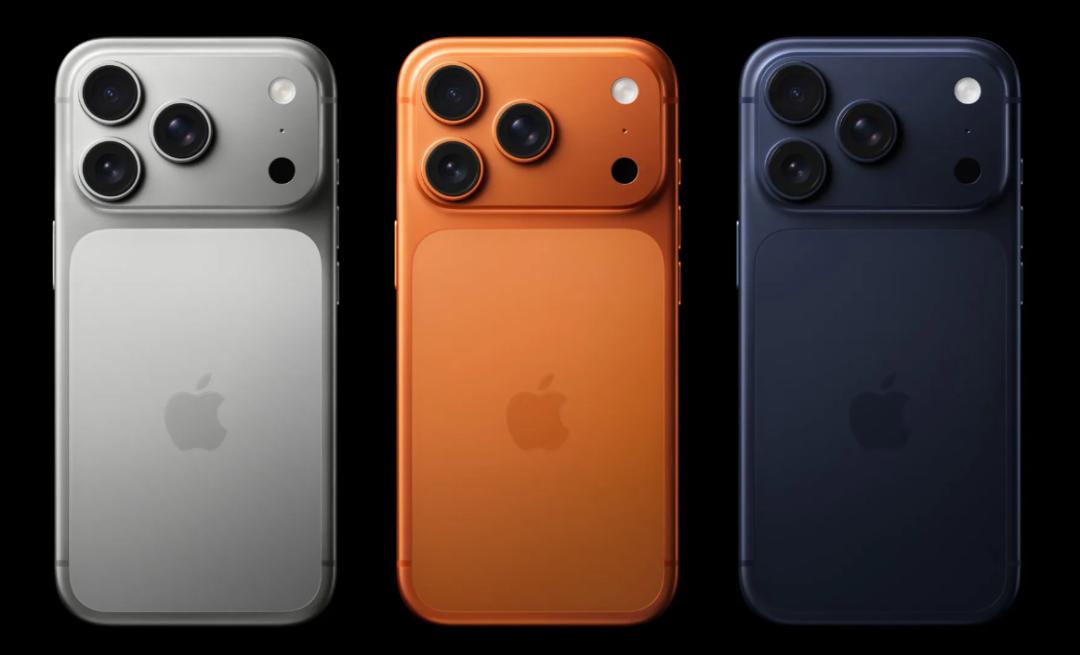
Source / Screenshot from Apple's official website
Another driving factor was government subsidies and discounts: the pricing of the basic version of the iPhone 17 (starting at 5,999 yuan) fell within the scope of government subsidies. Apple's official channel stores also offered a 300 - yuan discount on the Pro and Pro Max models, directly lowering the purchase threshold for models at various price points and stimulating the demand for phone upgrades.
Except for Huawei and Apple, the remaining players are all "abandoning high - volume sales to protect profits," just to different degrees.
Xiaomi is the one that made the most radical adjustments and had the most obvious shrinkage in shipments. Omdia data shows that Xiaomi shipped 8.7 million units in the Chinese market in the first quarter of 2026, a year - on - year decline of 35%. IDC data shows that Xiaomi dropped out of the top five.
Its actions were mainly reflected in two aspects: First, it advanced the release of the Xiaomi 17 Ultra, originally planned for the first quarter of 2026, to December 2025, aiming to lock in higher - profit sales in advance and leave room for the active contraction in the first quarter. Second, it compressed the shipment rhythm of Redmi's mid - to low - end models and raised the prices of some models starting from April 11. A former Xiaomi channel dealer said that before the price adjustment, Xiaomi had already reduced the shipment of loss - making models by controlling the inventory. The price increase of the Redmi Note 15 series Pro/Pro + versions had already shown the profit pressure on Xiaomi's mid - to low - end product lines.
OPPO and vivo belong to the compromise group. They don't raise prices across the board or cut production significantly. They mainly hedge the costs through product structure adjustment, at the cost of a slight decline in shipments.
OPPO shipped 11 million units in the domestic market in the first quarter of 2026, a year - on - year decline of 3%. This was the first quarter after realme was officially included in the OPPO Group's statistical scope. Its strategy was to raise prices by product line. In March this year, it clearly raised the prices of the entry - level A series, mid - range K series, and the entire OnePlus series by 200 - 500 yuan, while keeping the prices of the high - end Find series and mid - to high - end Reno series unchanged.
vivo shipped 10.5 million units in the domestic market during the same period, with basically no year - on - year change. Its strategy was similar to OPPO's but more conservative: only slightly raising the prices or reducing the configurations to maintain the prices of mid - to low - end models, while keeping the pricing of the high - end X300 series unchanged. Part of the reason was that its high - end strategy had achieved some success. The IDC report mentioned that , thanks to the X300 series and iQOO 15 series, vivo firmly ranked among the top three domestic brands in the high - end market above $600. The high - end profits provided a certain buffer space for the cost fluctuations of mid - to low - end models.
02. Xiaomi, OPPO, vivo, Honor, and Transsion All Go Overseas to Seek Gold
The domestic market is already a highly competitive stock market. In the first quarter of 2026, the top six manufacturers together accounted for 94% of the market share.
Since it's difficult to compete in the domestic market, naturally, they have to look overseas. Omdia data shows that in 2025, 1.25 billion smartphones were shipped globally, and 282 million units were shipped in the Chinese market, accounting for 22%. That is to say, 78% of the global shipments were outside China.
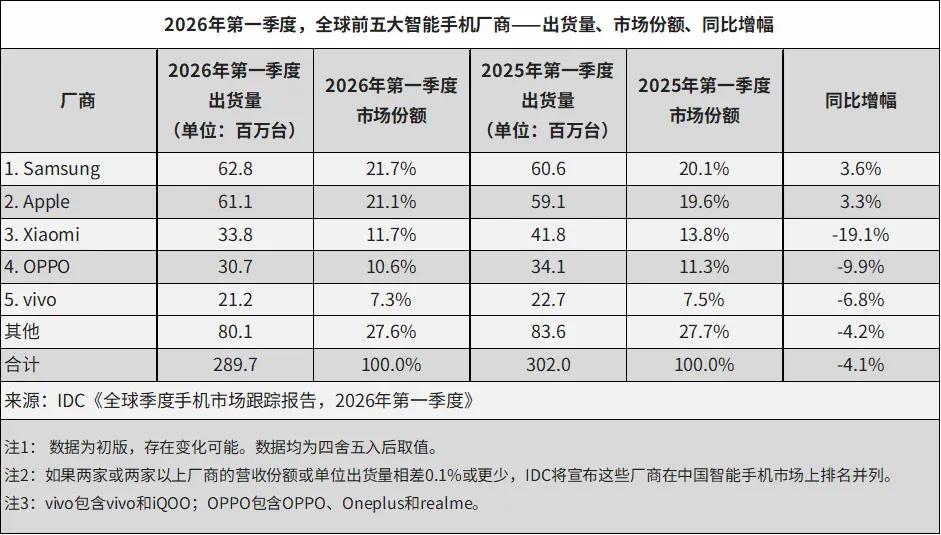
However, the overseas battlefield is also not optimistic. In the first quarter of 2026, the top five Chinese brands in terms of global shipments were under pressure. IDC data shows that Xiaomi, OPPO, and vivo all declined, and the combined shipment of the three decreased by nearly 13 million units.
Xiaomi had the largest decline (a year - on - year decrease of 19.1%) but still maintained its third - place position globally. IDC pointed out that Xiaomi "strategically reduced the shipment of old - model phones to avoid significant price increases," which was consistent with its domestic strategy of "putting profit ahead of sales volume."
However, looking at different regions, Xiaomi faced pressure in multiple markets: In Europe, it maintained its market share but had weak growth; it withdrew from the Indian market; and it relied on POCO in Southeast Asia. The biggest highlight of Xiaomi's globalization was that it was still the largest - scale Chinese player in Europe, shipping 21.8 million units there in 2025 and ranking third.
OPPO's global market share decreased by 9.9%. Although its domestic market was stable, its international market dragged it down. The core reason was that OPPO and realme's overseas high - volume models were mainly priced below $200 (about 1,300 - 1,400 yuan), which were greatly affected by the rising storage prices. And consumers in emerging markets are the most price - sensitive, so price increases directly affected sales.
However, when evaluating the integration of realme, we can't just look at its performance in the current quarter. OPPO's inclusion of realme in its system is essentially a way to support each other in the industry's tough times. The overall procurement scale of the three brands (OPPO, OnePlus, and realme) is larger, giving them stronger bargaining power with upstream storage manufacturers. At the same time, it can also re - organize the overlapping competition of the three brands in the 2,000 - 3,000 - yuan price range and concentrate resources on the core battlefield.
vivo had the smallest decline (6.8%) among the three Chinese brands globally. The reason was that its shipment markets were highly concentrated, with the Chinese, Indian, and Southeast Asian markets accounting for more than 90% of its global sales.
The risks are also obvious: When the two major markets of China and India are under pressure, vivo has no other markets to share the risks in the short term. Omdia's 2025 data shows that vivo did not rank among the top five in Europe, Latin America, the Middle East, and Africa. Whether it can break through its "Asia - Pacific dependence" depends on the subsequent performance of new markets such as Brazil and Europe.
Besides these three, there are two other Chinese manufacturers worth paying attention to.
Honor is the leading manufacturer with the highest global growth rate this quarter. The IDC report for the first quarter of 2026 mentioned that Honor's year - on - year growth rate reached 24%, the highest among the top ten global manufacturers.
Honor's strategy is very different: It doesn't get entangled in the domestic stock market but focuses its resources overseas. Instead of relying on cost - effectiveness to compete in the overseas market, it targets the mid - to high - end price range of $300 - 499. In 2025, Honor ranked fourth in Latin America, the Middle East, and Africa.
Transsion still did not enter the global top five this quarter. Its shipment volume in 2025 decreased by 8% year - on - year (Omdia data). The market share of this "King of African Phones" continued to be eroded: In the fourth quarter of 2025, its growth rate in the African market was only 3%, while Samsung and Honor grew by 27% and 88% respectively during the same period. Under the impact of the supply chain and intensified competition, Omdia expects its African market to decline by 23% in 2026.
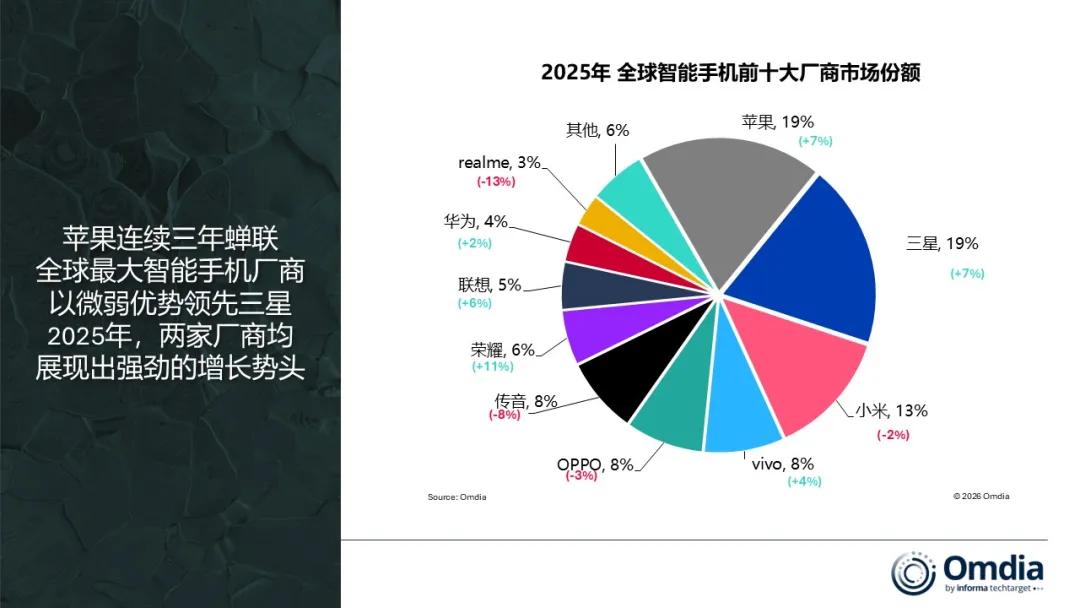
It should be noted that Huawei's overseas market is still in the recovery period. It ranked about seventh globally in 2025 (Omdia data), and the overseas market is not its main battlefield in the short term.
03. Three Thresholds Determine the Outcome: Cost Accounting, Supply Chain, and Brand Power
A notable signal is that in the first quarter of 2026, Huawei and Apple together accounted for 39% of the Chinese market share. This is the highest point since Huawei was sanctioned.
Why is the industry share accelerating towards the leading manufacturers under the general increase in costs? The core reason is the cost structure. Industry estimates show that for low - end phones priced below $200, storage costs account for more than 30% of the BOM; for high - end phones priced above $800 (about 5,700 yuan), this proportion is less than 10%.
This means that in the face of a 90% increase in DRAM prices, to maintain the original profit, the retail price of low - end phones has to increase by 40% - 50%, while high - end phones only need to increase by 5% - 8%, or the manufacturers can even absorb the cost themselves. The impact of rising storage prices on different price segments is not on the same scale.
Most of Apple's products are priced above $800, and Huawei's ASP (average selling price) in the Chinese market exceeds 4,000 yuan. Both focus on the high - end market, so the cost impact is minimal, and they have sufficient pricing space.
It's worth mentioning that IDC data shows that the shipment of Huawei's Pura X, priced above 10,000 yuan, exceeded 1.5 million units in the first quarter. "The shipment volume of Huawei's foldable phones exceeded the total of the foldable phones of the other three manufacturers," said the aforementioned practitioner engaged in channel research. The increase in the sales volume of high - margin foldable phones is one of the reasons why Huawei can withstand the pressure of rising storage costs.
vivo and OPPO are in the middle - tier group, mainly relying on the profits of their high - end product lines