After 20 years of humiliation, the snow has finally melted. Elon Musk's biggest nightmare is coming. Apple and Amazon are joining forces. Is the space hegemony about to change hands?
Elon Musk once earnestly advised Jeff Bezos, "We tried that, and it turned out to be really stupid. So don't do what we did."
Years later, Bezos ignored Musk's "advice" and declared a direct challenge. This week, Bezos executed a well - planned move. Amazon announced an approximately $11.6 billion acquisition of satellite operator Globalstar, which is the network service provider for Apple's safety - focused features. As a result, Amazon has naturally become Apple's satellite communication partner, and the Amazon Leo network will serve as the service provider for Apple's phones and watches.
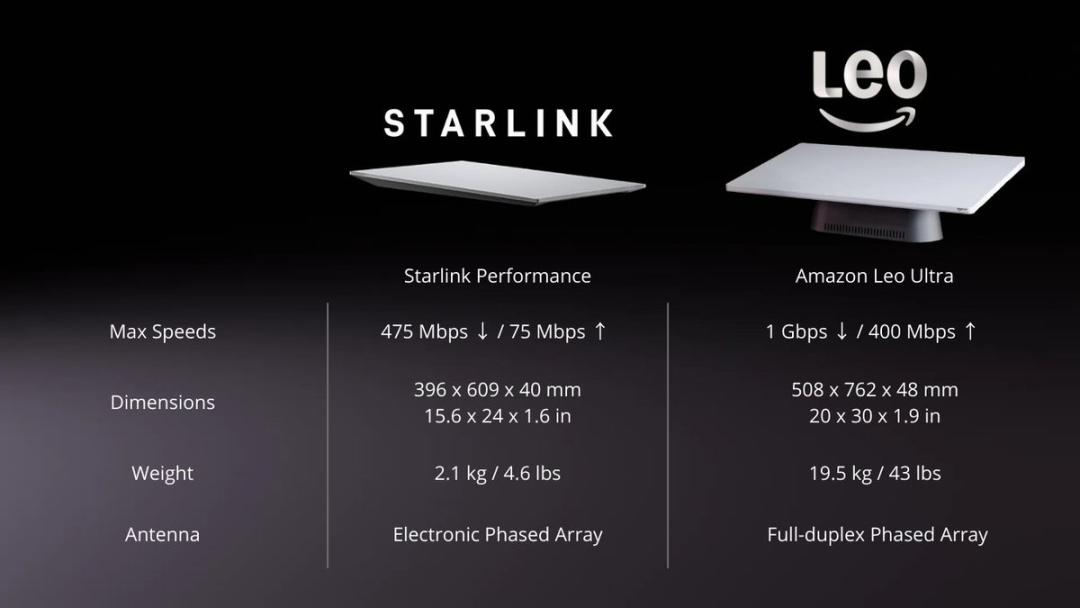
On the same day, Amazon launched the low - orbit satellite aviation antenna, Amazon Leo Ultra. It is equipped with Amazon's self - developed chip, features a flat design without moving parts, can be installed on an aircraft in one day, supports a downlink rate of 1Gbps, and its commercial peak performance is significantly better than current similar products of Starlink. American airline JetBlue has become Amazon's first customer.
Three pieces of news in one day all point to the same strategy: Bezos is building a complete satellite internet ecosystem. After being mocked by Musk for 20 years, Bezos has finally completed the full - ecosystem strategic layout and is now capable of competing directly with SpaceX in the satellite internet field.
Musk Advises Bezos
This competition didn't start recently. For over 20 years, Bezos has been the underdog in the aerospace field, constantly mocked by Musk. Although their relationship improved after Donald Trump was re - elected, the memory of those mockeries has never faded from Bezos's mind. Even after stepping down as Amazon's CEO, Bezos remains actively involved in the aerospace field, promoting the space businesses of both Amazon and Blue Origin.
The rivalry between the two in the space field dates back more than 20 years, specifically to an awkward dinner in 2004. At that time, Musk had founded SpaceX just two years prior and reached out to Bezos, hoping to visit each other's space projects. It's worth noting that Bezos founded Blue Origin in 2000, two years before Musk founded SpaceX.
Like Musk, Bezos had a dream of exploring space since childhood. The theme of his high - school graduation speech was "Moving humanity to other planets and turning Earth into a national park." In 2000, not long after Amazon went public, Bezos hired some top - notch scientists and science - fiction novelists to establish a secret aerospace laboratory.
According to Walter Isaacson's "Elon Musk," after Bezos visited SpaceX, Musk sent a "rather brief" email complaining that Bezos hadn't reciprocated the visit to Blue Origin. Bezos then invited Musk and his wife to dinner, but the atmosphere was far from pleasant. When Bezos presented his numerous ideas, the confident Musk didn't hold back and started instructing Bezos on what to do.
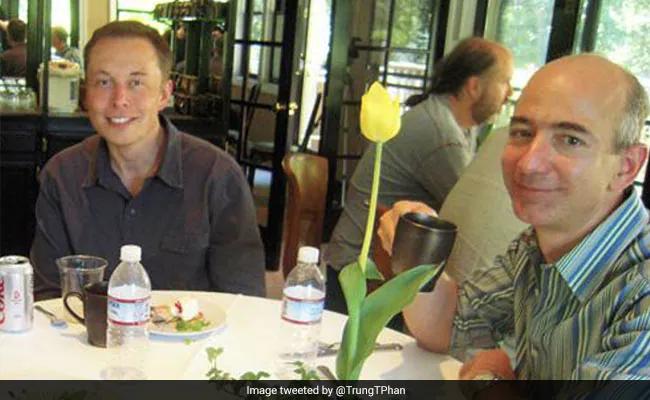
Musk later recalled that he simply told Bezos, "We tried that, and it turned out to be really stupid. So I'm telling you not to do what we did."
Musk thought he was giving well - intentioned advice. "I really tried my best to give good advice, but he basically ignored it." Bezos didn't respond, but perhaps the equally confident Bezos only felt that Musk's advice was full of a condescending tone.
This unpleasant dinner laid the groundwork for their aerospace competition in the following 20 years. The real public conflict erupted in 2013. SpaceX wanted to exclusively lease Launch Complex 39A at NASA's Kennedy Space Center for a 20 - year term. However, this plan was opposed by Blue Origin and United Launch Alliance. Bezos proposed converting the launch pad into a commercial spaceport for all companies to use, rather than allowing it to be monopolized by SpaceX.
This dispute made Musk stop holding back against Bezos. In 2015, after Blue Origin's New Shepard successfully recovered its booster following a sub - orbital flight, Bezos excitedly tweeted, "Welcome to the club." Musk didn't mince words and pointed out that Blue Origin's sub - orbital recovery was completely different from orbital - level recovery. Although Bezos didn't engage in a war of words with Musk, the space race between the two tech billionaires has never stopped since then.
Amazon Focuses on Ecosystem Integration
Amazon Leo's predecessor was Project Kuiper. Bezos personally initiated this satellite business in 2019, and it was approved by the Federal Communications Commission (FCC) in 2020. The plan is to deploy 3,236 low - Earth - orbit satellites. In November 2025, Amazon renamed it Amazon Leo, with the new name meaning Low Earth Orbit. This is a strategic signal: Leo has officially transitioned from an internal project to an Amazon product line.
Amazon has also launched three user terminals: Leo Nano (approximately 18 cm × 18 cm, with a rate of 100Mbps), Leo Pro (approximately 28 cm × 28 cm, with a rate of 400Mbps), and the Leo Ultra, which targets the enterprise and aviation markets this time (with a rate of 1Gbps). The Leo Ultra is equipped with Amazon's self - developed and customized chip and is currently the product with the highest rate among mass - produced commercial phased - array antennas. It has started shipping to preview users such as JetBlue.
As of April 2026, Amazon Leo has approximately 240 satellites in orbit, a huge disparity compared to Starlink's over 10,000. Clearly, Musk has a crushing first - mover advantage. SpaceX's Falcon 9 completed 132 launches in 2024 alone, with a success rate close to 99%, setting the current world record for the highest - frequency commercial launches.
The Starlink constellation already has over 10,000 satellites in orbit, serving more than 5 million users globally across 125 countries and regions. Meanwhile, Starlink continues to iterate: the direct - to - phone service has been launched on the T - Mobile network, inter - satellite laser links have further reduced latency, and the deployment of aviation and maritime versions among major airlines is accelerating.
Facing this situation, Bezos's strategy is to avoid a head - on collision. Amazon Leo has set its orbital altitude between 590 and 630 kilometers, slightly higher than Starlink's 340 to 570 kilometers, providing a wider coverage area but with some signal strength loss. To compensate for this gap, the Leo antenna uses a larger phased - array area and a more efficient self - developed chip, ultimately achieving a theoretical performance that surpasses Starlink's peak rate in commercial products.
Moreover, Amazon's strategy is not to win by quantity but by ecosystem integration. Amazon Leo is deeply integrated with AWS cloud services, allowing enterprise customers to seamlessly integrate satellite connections into their cloud - computing infrastructure, something that Starlink cannot currently offer. Amazon has signed contracts with large customers such as Australia's National Broadband Network (NBN), L3Harris, and JetBlue, following a strategy of targeting the B - to - B market first and then expanding to the C - to - C market.
Buying Spectrum and Big Customers
The acquisition of Globalstar is also part of Bezos's competitive strategy. Globalstar is not an ordinary satellite company. Founded in 1991, it has an in - orbit constellation of over 200 satellites. More importantly, it holds globally authorized L - band and S - band Mobile Satellite Service (MSS) spectrum licenses. These spectrums are the core foundation of Direct - to - Device (D2D) technology, enabling mobile phones to communicate directly with satellites without the need for dedicated hardware or ground base stations.
Apple naturally attaches great importance to this satellite service provider. In 2024, Apple invested $1.5 billion in Globalstar in exchange for approximately 20% equity and locked in 85% of its network capacity to support the satellite Emergency SOS function of the iPhone. This was also the most complex part of the acquisition negotiation: Amazon had to reach an agreement with Apple before acquiring Globalstar.
The final solution is a win - win - win situation for all three parties. According to the agreement, Amazon will acquire all of Globalstar's satellite infrastructure, spectrum licenses, and operational assets. Apple will then sign a new agreement with Amazon, with Amazon Leo taking over the next - generation satellite services, including Emergency SOS, messaging, location sharing, and roadside assistance.
After Amazon announced the acquisition, Greg Joswiak, Apple's senior vice - president of worldwide product marketing, said that Apple has a long - standing cooperation foundation with Amazon and looks forward to continuing this cooperation on the Amazon Leo platform.
Amazon plans to launch a next - generation D2D system starting in 2028, directly providing voice, text, and data services from satellites to consumer devices. This means that Amazon Leo will not only be a broadband access pipeline but also an extension of mobile phone signals. In the wilderness, deep sea, or disaster areas without ground base stations, users can still connect to the internet with their iPhones.
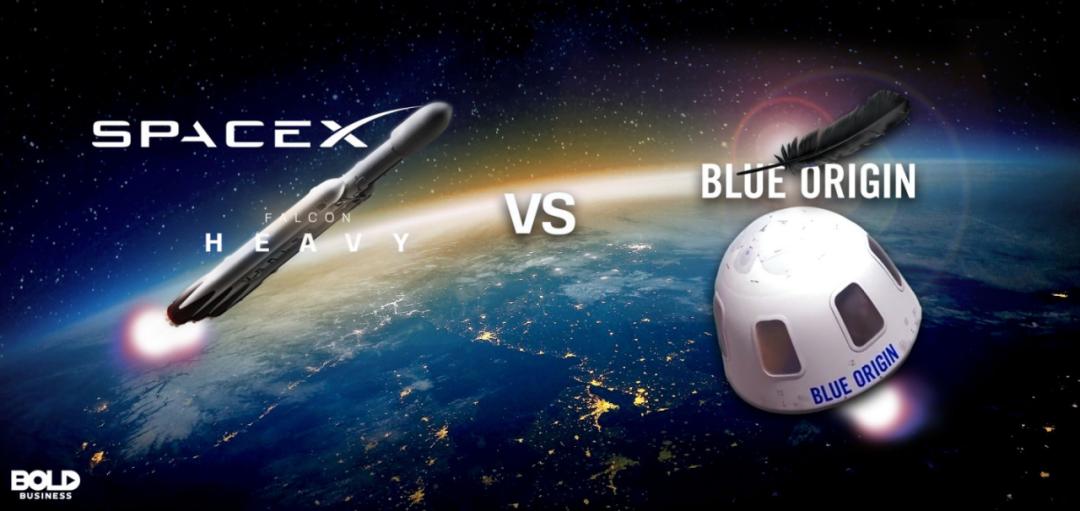
Bezos's Complete Ecosystem Layout
Looking back at Bezos's layout, several pieces fit together to form a complete ecosystem.
The first piece is the rocket. Blue Origin's New Glenn heavy - lift launch vehicle completed its first flight and successfully entered orbit in January 2025, and achieved the first - stage booster recovery at sea in November. It has become the world's second commercial company to master the reusable orbital - class rocket technology. The first is, of course, SpaceX. Blue Origin has signed a contract with Amazon for 12 New Glenn launches to deploy the Amazon Leo constellation. Now Bezos has his own launch capabilities.
The second piece is the satellite network. Amazon Leo is being deployed through the largest - scale commercial rocket procurement plan in history: a total of 92 launches have been booked, covering the Atlas V and Vulcan of the United Launch Alliance (ULA), the Ariane 6 of Europe, and the New Glenn of Blue Origin. In addition, Amazon has also approached SpaceX and is willing to cooperate with its competitor if necessary to accelerate the constellation construction.
The third piece is direct device connection. The acquisition of Globalstar has completed this final link. At this point, Bezos's satellite internet ecosystem is fully formed: New Glenn is responsible for sending satellites into space, Amazon Leo provides broadband access, Globalstar's spectrum and D2D technology enable direct mobile phone connection, and the Apple ecosystem provides an entry point for billions of end - users. Bezos's chain is now closed, from orbit to the mobile phone screen.
The satellite internet is just the prelude to Bezos's space ambitions. In the longer - term layout, there is a faint clue worthy of attention: satellite data centers.
Amazon AWS is the world's largest cloud - computing service provider, with an endless demand for computing power and data transmission. The low - orbit satellite network can not only transmit data but also theoretically support edge - computing nodes. When the D2D direct - connection technology matures and the inter - satellite laser links are deployed, the satellite nodes in orbit can become edge data centers in space - computing occurs in orbit, with extremely low latency and global coverage.
This direction aligns well with Bezos's long - term vision. He has publicly described the future blueprint multiple times: moving industrial production and high - pollution industries to space and turning Earth into a "national park" for humanity. The Orbital Reef commercial space station being developed by Blue Origin has received NASA contract support and is targeted for launch around 2027. With satellite broadband, low - orbit data centers, and commercial space station operations, Bezos's space - based chessboard is much larger than what the outside world can see.
It's worth mentioning that Blue Origin, another aerospace exploration company under Bezos, also has its own satellite network plan, TeraWave. It plans to deploy 5,408 satellites in Earth's orbit, capable of "providing a symmetric data transfer rate of up to 6 Tbps anywhere on Earth," far exceeding the current leader in the field, SpaceX's Starlink. The TeraWave satellite constellation will be officially deployed by the end of next year.
This means that Bezos plans to adopt a dual - track strategy in the satellite internet field: Amazon Leo will follow the "mass broadband + AWS ecosystem" route, while TeraWave will take the "high - end B2B/data center + ultra - high - speed backbone" route. This approach avoids internal direct competition in the market, challenges Starlink in different market segments, and also creates more launch demand for Blue Origin's rocket business.
Of course, Bezos's space blueprint still faces significant challenges. The most pressing one is the schedule. The FCC requires Amazon to deploy approximately 1,600 satellites by July 2026, but as of now, Amazon has only about 240 satellites in orbit. Amazon has applied to the FCC to extend the deadline to 2028. If it fails to meet the coverage threshold on time, the FCC may impose restrictions on its spectrum license, which could further affect its commercial service authorization.
The scale gap is also significant. Starlink already has over 10,000 satellites in orbit, while Amazon Leo's initial constellation size is 3,236. Blue Origin has announced a more powerful New Glenn 9×4 version, but it's still uncertain whether the mass - production pace can keep up. A deeper challenge is that Starlink has already established brand awareness and user loyalty in the consumer market, while Amazon Leo's C - to - C user service won't start until the end of 2026 at the earliest.
However, Amazon's self - developed chips and antennas show potential in cost control. AWS's enterprise customer base is a moat that Starlink doesn't have. And Apple's participation gives Amazon Leo access to the world's top - tier consumer - level entry point from the start.
With Bezos's layout completed, the satellite internet industry is undergoing a structural change. It is shifting from SpaceX's dominance to a two - strong competition pattern, with Bezos and Musk, two super - rich individuals, becoming direct competitors. This is a good thing for the entire industry. Competition means lower prices, faster innovation, and wider coverage. For airlines, government agencies, and users in remote areas, having an additional reliable supplier option means more choices.
In early 2025, after Blue Origin's New Glenn heavy - lift rocket successfully completed its first flight and first - stage recovery in Florida, the over - decade - long cold - war stalemate between Musk and Bezos was broken for the first time. Musk publicly retweeted Blue Origin's launch video on X (formerly Twitter) and captioned it, "Welcome to the recovery club. This is an important step towards making humanity a multi - planetary species." Bezos, in a rare move, replied and expressed his gratitude.
This interaction marked a shift from their past legal disputes and media attacks to professional respect for each other's technical approaches. Bezos praised SpaceX's remarkable foresight in rapid - iteration development in a public interview, while Musk commended Blue Origin for "having a grand vision."
The competition between Bezos and Musk is never just a business - level contest. The former represents the steady and ecosystem - integrated Amazon - style approach, while the latter represents the rapid - iteration and highly vertically - integrated SpaceX - style adventure. Both philosophies are being tested in the ultimate arena of space.
However, as Bezos truly becomes Musk's competitor, the delicate relationship between the two may change again.
This article is from the WeChat official account "Sina Technology," written by Zheng Jun